
Orquestre insights de IA em ações

Tendências
Categories
Korean Air and Skyports Sign Memorandum of Understanding on Air Traffic
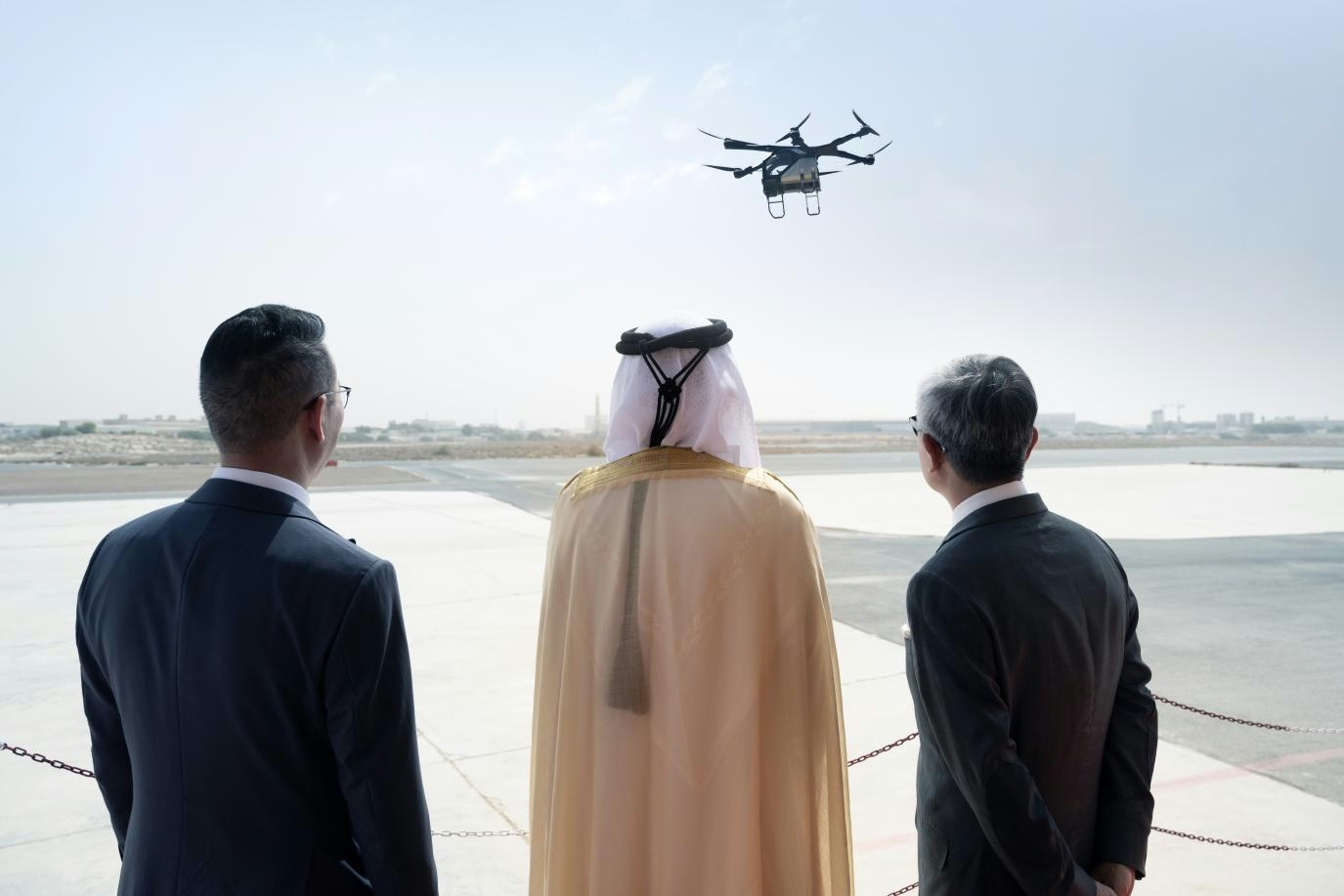
Korean Air and Skyports Forge Partnership to Advance Urban Air Mobility
Korean Air, South Korea’s national flag carrier, has formalized a Memorandum of Understanding (MoU) with Skyports Infrastructure, a prominent specialist in vertiport design, to collaborate on the future management of urban air mobility (UAM) services. The agreement, signed during the 2026 Drone Show Korea (DSK) exhibition, seeks to jointly develop and analyze air traffic management solutions tailored for next-generation aviation technologies.
Collaboration on Air Traffic Management Systems
The partnership will focus on leveraging the strengths of both organizations by integrating Skyports’ Vertiport Automation System (VAS) with Korean Air’s Air Control & Routing Orchestrated Skyway System (ACROSS). This collaboration aims to facilitate the seamless operation of vertiports—specialized hubs designed for electric vertical take-off and landing (eVTOL) aircraft—within urban landscapes. By doing so, the two companies hope to revolutionize the movement of passengers and cargo in densely populated areas, potentially reshaping urban transportation networks.
Challenges and Industry Context
Despite the promising outlook, the initiative faces notable challenges, particularly in regulatory compliance. Korean Air is currently embroiled in a dispute with South Korean competition authorities concerning fines related to its proposed merger with Asiana Airlines. This ongoing regulatory uncertainty may affect the pace and scope of the UAM project, introducing risks that have elicited cautious responses from some investors.
Market reactions to the partnership have been mixed. While some stakeholders remain wary due to the regulatory environment surrounding Korean Air, others recognize the innovative potential of the vertiport concept and its capacity to transform urban mobility. The collaboration may also influence competitive dynamics within the aviation sector, prompting rival airlines to consider similar strategic alliances to maintain relevance amid rapid technological change.
The broader aviation industry is contending with significant disruptions, as evidenced by recent operational challenges across Asia’s air transport network. Such instability could further complicate the rollout and success of emerging ventures like the vertiport initiative.
Nonetheless, Korean Air and Skyports have reaffirmed their commitment to advancing urban air mobility. Their partnership exemplifies a wider industry trend toward embracing innovation and adapting to evolving transportation demands and technological progress.

Etihad Airways Suspends Airbus A380 Flights on Key Route

Aditya Birla Group Seeks Approval for Aircraft Leasing in GIFT City

Qatar Airways Highlights Innovation and Connectivity at Arabian Travel Market 2026

Hong Kong's Five-Year Plan Includes Andrew Fan's Aircraft Parts Processing Hub Proposal

ACIA Aero Leasing Delivers ATR72-600 to Air Nostrum

RTX Appoints Jill Albertelli as Head of Pratt & Whitney

TAT Technologies Joins Beyond Aero Hydrogen Aircraft Program

AURAK Study Highlights Barriers to Air Taxi Adoption in Emerging Economies

Xiamen Air Selects Altitude for 787 Maintenance at Heathrow

Etihad and Swissport Extend Global Partnership
