
Orquestre insights de IA em ações

Tendências
Categories
Korean Air Converts Part of Airbus A350 Order to Freighters
Korean Air Converts Part of Airbus A350 Order to Freighters
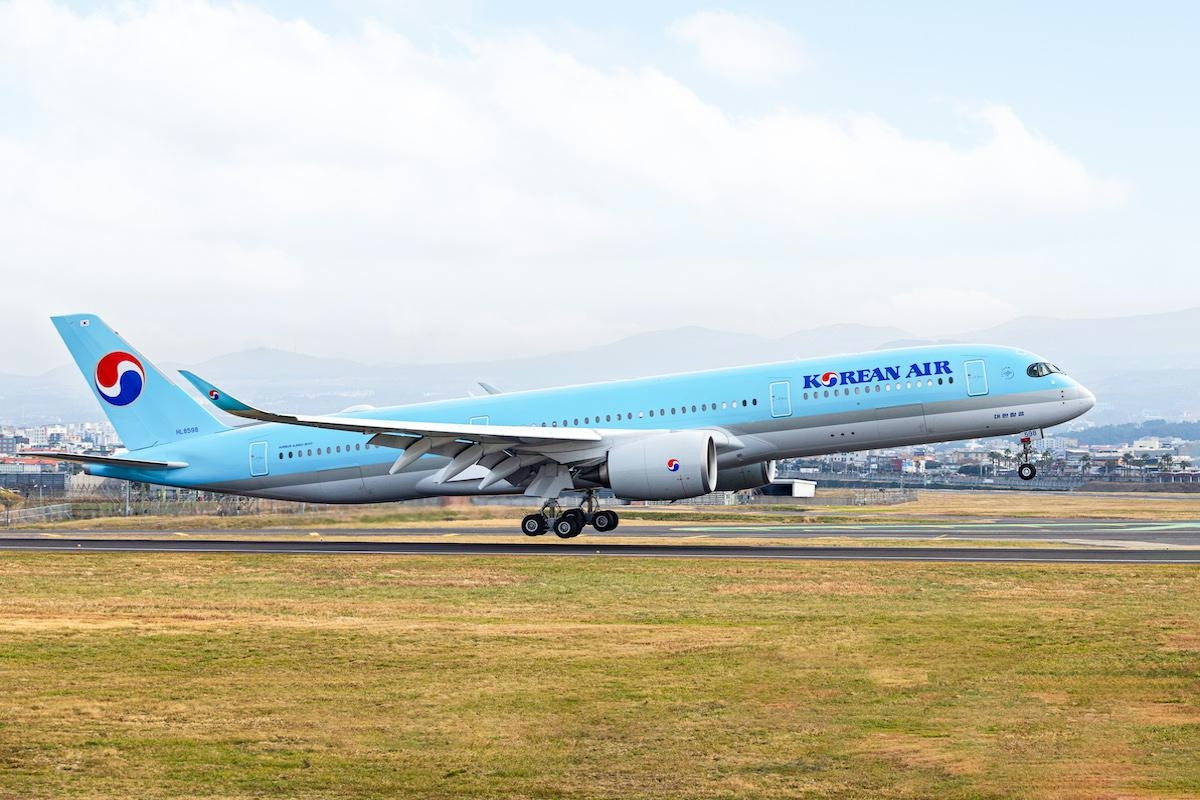
Korean Air has announced the conversion of seven of its existing Airbus A350-1000 passenger aircraft orders into the A350F freighter variant, a strategic move aimed at enhancing its cargo capabilities amid evolving market conditions. This decision positions Korean Air as the latest customer for the A350F, the world’s only all-new large freighter currently under development.
Enhancing Cargo Capacity with the A350F
Benoît de Saint-Exupéry, Airbus Executive Vice President of Sales for Commercial Aircraft, described Korean Air’s decision as “a significant endorsement of the aircraft’s unique capabilities.” He emphasized that the A350F will offer the airline “the most efficient solution in the large freighter segment.” The aircraft is engineered to carry up to 111 tonnes of payload over a range of 4,700 nautical miles (8,700 kilometers), powered by Rolls-Royce Trent XWB-97 engines. Airbus highlights that the A350F achieves up to 40% lower fuel consumption and carbon emissions compared to previous-generation freighters with similar payload and range.
The A350F incorporates the industry’s largest main deck cargo door and features a lightweight airframe composed of more than 70% advanced materials. This design results in a take-off weight that is 46 tonnes lighter than its closest competitor. Additionally, the A350F is the only freighter designed to fully comply with the International Civil Aviation Organization’s (ICAO) enhanced CO₂ emissions standards, which are set to take effect in 2027.
Implications for Korean Air and the Market
Following this conversion, Korean Air’s total A350 order now comprises 33 aircraft: 20 A350-1000s, seven A350Fs, and six A350-900s, two of which have already been delivered. The airline also maintains orders for 39 Airbus A321neo single-aisle aircraft, supporting its broader passenger and cargo growth strategies.
However, the shift from passenger to freighter aircraft presents potential challenges. The conversion process may introduce delays and additional costs as production schedules are adjusted. Market reactions have been mixed; some investors express concern over potential impacts on passenger service revenue, while others view the move as a strategic response to increasing demand for air freight. This development may also prompt competitors to accelerate their own cargo fleet expansions, potentially intensifying competition within the freighter market.
As of September 2025, the Airbus A350 Family had amassed 1,445 orders from 63 customers worldwide, including 65 A350Fs from 10 cargo airlines and one lessor. This underscores the growing significance of dedicated freighter aircraft in the global aviation industry.

Etihad Airways Suspends Airbus A380 Flights on Key Route

Aditya Birla Group Seeks Approval for Aircraft Leasing in GIFT City

Qatar Airways Highlights Innovation and Connectivity at Arabian Travel Market 2026

Hong Kong's Five-Year Plan Includes Andrew Fan's Aircraft Parts Processing Hub Proposal

ACIA Aero Leasing Delivers ATR72-600 to Air Nostrum

RTX Appoints Jill Albertelli as Head of Pratt & Whitney

TAT Technologies Joins Beyond Aero Hydrogen Aircraft Program

AURAK Study Highlights Barriers to Air Taxi Adoption in Emerging Economies

Xiamen Air Selects Altitude for 787 Maintenance at Heathrow

Etihad and Swissport Extend Global Partnership
