
Orquestre insights de IA em ações

Tendências
Categories
Largest Air Force Confirms Delivery of 17 F-35 Jets with Installed Radars
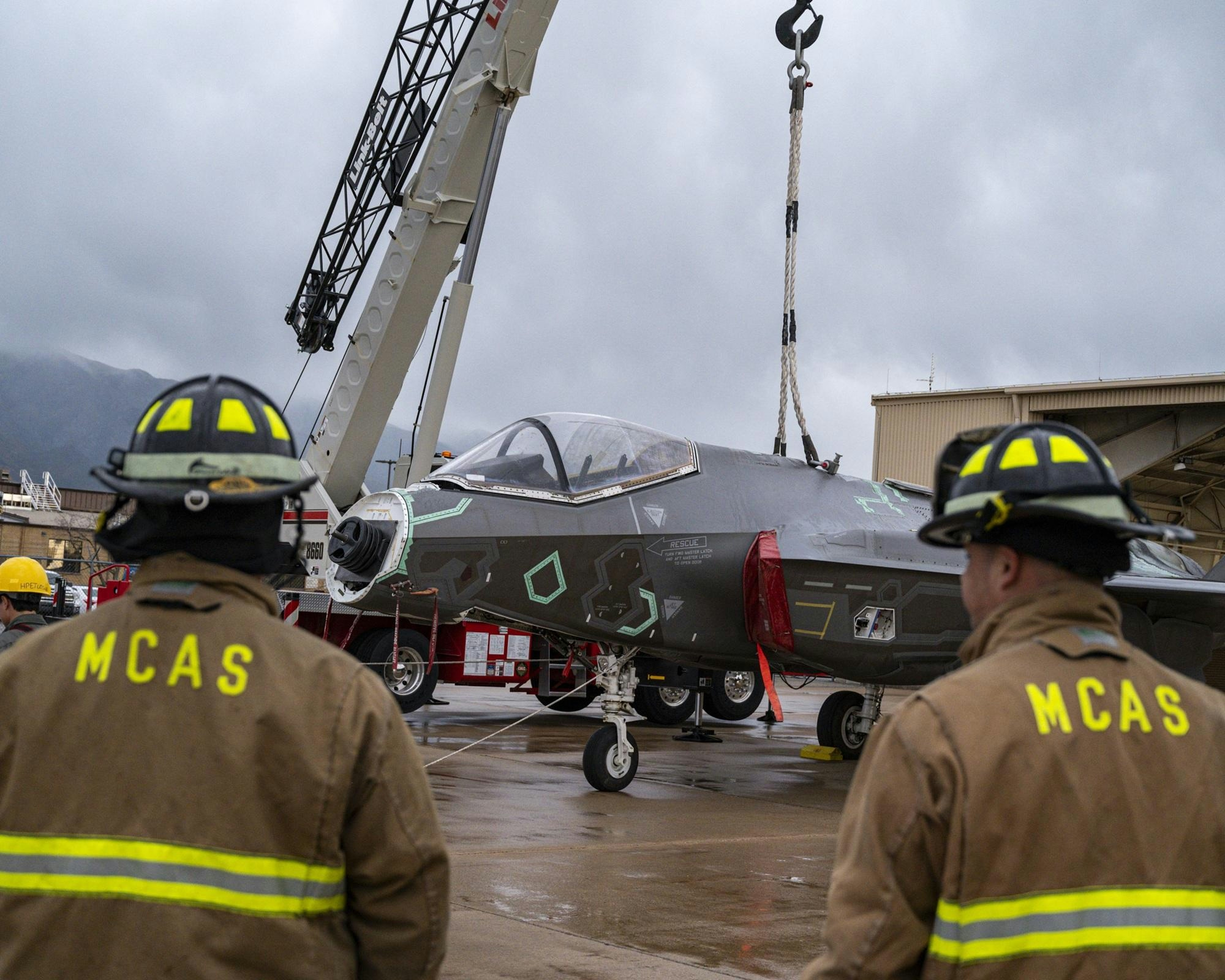
US Air Force Confirms Delivery of 17 F-35A Jets Equipped with Operational Radars
The United States Air Force has officially confirmed that all 17 F-35A Joint Strike Fighters delivered under Lot 17 are equipped with fully operational radar systems. This announcement directly addresses earlier reports suggesting that some of these aircraft arrived without radars amid the transition to Northrop Grumman’s new AN/APG-85 radar system. A spokesperson clarified that the Lot 17 jets are fitted with the existing APG-81 radars, dismissing claims that certain aircraft operated without radar and relied solely on data links for targeting. The Air Force also emphasized that details regarding the integration of the APG-85 radar remain classified due to security concerns.
Block 4 Modernization and Technical Challenges
The APG-85 radar is a central element of the F-35’s Block 4 modernization program, which encompasses a suite of upgrades including the replacement of the AN/AAQ-37 Distributed Aperture System, enhancements to the Electro-Optical Targeting System, a new electronic warfare suite, and expanded computing and sensor capabilities. While the Air Force has identified the electronic warfare improvements as a high-priority objective, the Block 4 program continues to face significant schedule delays and escalating costs.
The integration of these advanced systems demands increased electrical power and improved thermal management, both of which depend on engine upgrades that are currently behind schedule. Despite assurances from the Air Force, uncertainties persist regarding the compatibility between the existing APG-81 radar and the forthcoming APG-85 system. Defense analysts have noted that aircraft configured for the APG-85 may not be able to temporarily accommodate the APG-81 without structural modifications, potentially requiring a redesign of the forward fuselage. Program officials have refrained from providing further technical details, citing operational security.
Strategic Context and Regional Implications
The delivery of radar-equipped F-35As occurs amid escalating regional tensions, particularly in the Asia-Pacific region, where China’s expanding military capabilities and the development of advanced stealth fighters such as the J-20 have raised concerns among US allies. Concurrently, Russia’s efforts to deploy next-generation fighter aircraft contribute to an increasingly competitive global military environment.
The enhanced capabilities of the F-35 are expected to influence defense spending and strategic planning across the region, potentially accelerating the development of rival stealth fighter programs. This development also renews discussions about the future of legacy platforms like the AV-8B Harrier II, which the US Marine Corps plans to retire by 2026 as it expands its fleet of F-35B aircraft.
Delivery Schedule and Future Outlook
Initial projections anticipated the arrival of F-35s equipped with the full Block 4 upgrade suite by 2025. However, a recent Government Accountability Office report indicates that only a limited subset of these upgrades will be delivered initially, with full Block 4 capabilities delayed by at least five years. This revised timeline underscores ongoing challenges in integrating advanced radar, sensor, and power systems, even as the Air Force strives to maintain technological superiority in the face of evolving global threats.

Etihad Airways Suspends Airbus A380 Flights on Key Route

Aditya Birla Group Seeks Approval for Aircraft Leasing in GIFT City

Qatar Airways Highlights Innovation and Connectivity at Arabian Travel Market 2026

Hong Kong's Five-Year Plan Includes Andrew Fan's Aircraft Parts Processing Hub Proposal

ACIA Aero Leasing Delivers ATR72-600 to Air Nostrum

RTX Appoints Jill Albertelli as Head of Pratt & Whitney

TAT Technologies Joins Beyond Aero Hydrogen Aircraft Program

AURAK Study Highlights Barriers to Air Taxi Adoption in Emerging Economies

Xiamen Air Selects Altitude for 787 Maintenance at Heathrow

Etihad and Swissport Extend Global Partnership
