
Orquestre insights de IA em ações

Tendências
Categories
Lufthansa and Munich Airport Expand Partnership with Hub Development
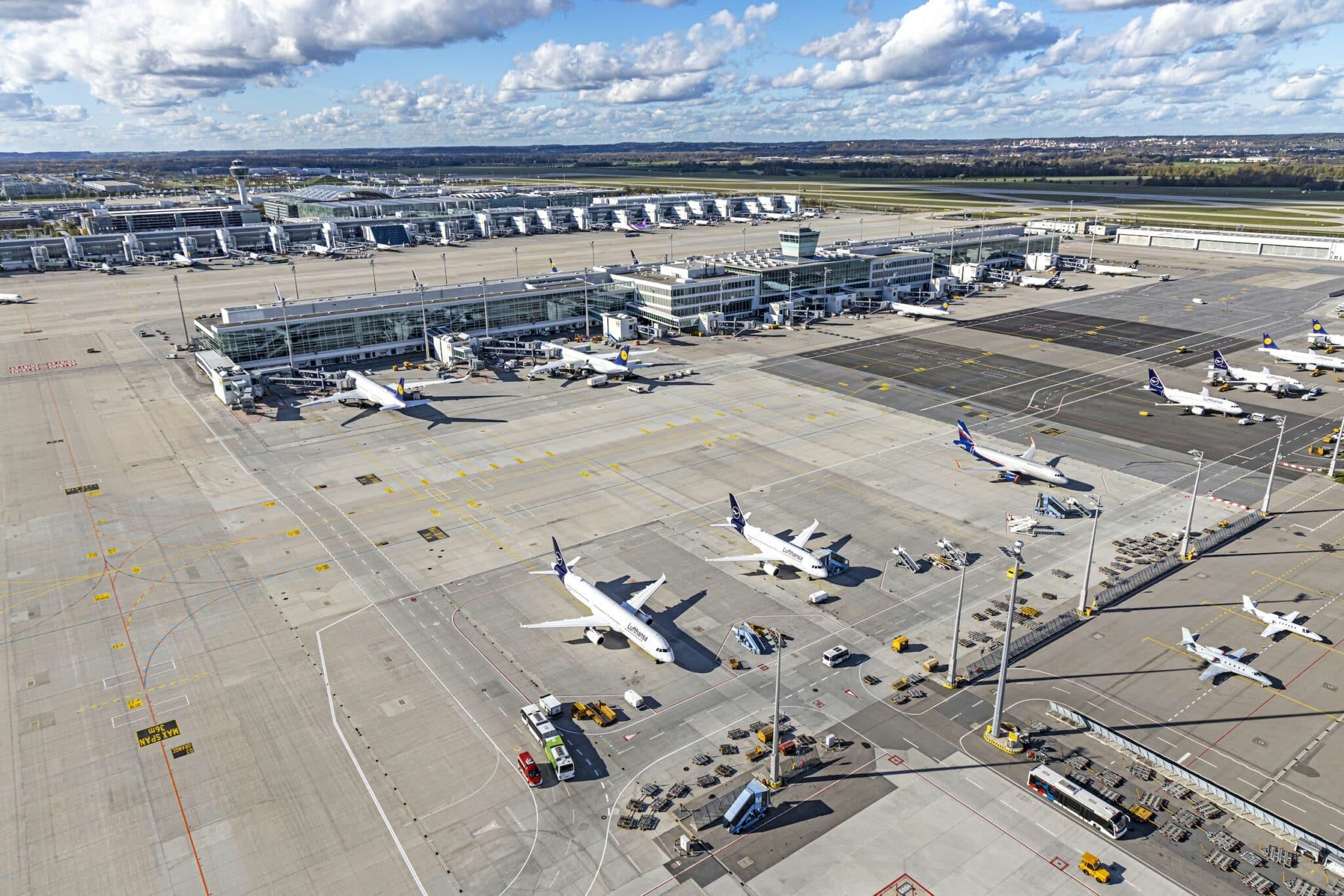
Lufthansa and Munich Airport Extend Partnership Through 2056
Lufthansa Group and Munich Airport (FMG) have announced the extension of their longstanding partnership until 2056, reaffirming Munich’s position as a premier European aviation hub. Central to this renewed collaboration is the planned expansion of Terminal 2, which will include the construction of a new “T-Pier” connecting at a right angle to the existing satellite building. Set to open in 2035, the T-Pier is expected to increase Terminal 2’s capacity by up to ten million passengers annually. This expansion aims to accommodate rising demand and facilitate the growth of long-haul operations from Munich.
The project represents a significant milestone for Germany’s second-largest airport and reflects a shared commitment to enhancing global connectivity. The announcement also initiates the detailed planning phase, underscoring the ongoing success of the Lufthansa–FMG partnership.
Navigating Challenges and Market Dynamics
The expanded partnership unfolds amid a competitive and evolving European aviation landscape. Lufthansa and Munich Airport face challenges including intensified rivalry from other major hubs, potential operational disruptions linked to geopolitical conflicts, and the necessity to adapt to shifting passenger demands. Recent trends indicate a marked increase in demand for Lufthansa flights to Asia and Africa, partly influenced by ongoing conflicts in the Middle East. This shift in passenger preferences is likely to impact future route planning and capacity distribution.
Market responses to the expansion may involve realignments in airline alliances and infrastructure investments by competitors seeking to attract travelers. In this context, Lufthansa and FMG are strategically investing in modern, high-capacity facilities to maintain Munich’s competitiveness and meet evolving market requirements.
Economic Impact and Strategic Vision
Beyond infrastructure development, the expansion is anticipated to generate significant economic benefits, including the creation of secure, high-quality jobs in the airport region and enhanced competitiveness for Germany as an international aviation hub. Lufthansa CEO Carsten Spohr emphasized the importance of a long-term, trust-based collaboration in transforming Munich into a high-performance hub recognized globally for quality, reliability, and customer focus. He characterized the investment as more than an infrastructure project, framing it as a clear commitment to Bavaria as a gateway to the world and to Germany’s role in global aviation.
Spohr also highlighted the strategic importance of robust aviation infrastructure amid an increasingly complex geopolitical environment, noting that strong, well-connected hubs are essential for maintaining independent global links. Alongside the Munich expansion, Lufthansa will continue to invest in its Frankfurt hub, reinforcing its broader mission to connect Germany and Europe with the world.

Etihad Airways Suspends Airbus A380 Flights on Key Route

Aditya Birla Group Seeks Approval for Aircraft Leasing in GIFT City

Qatar Airways Highlights Innovation and Connectivity at Arabian Travel Market 2026

Hong Kong's Five-Year Plan Includes Andrew Fan's Aircraft Parts Processing Hub Proposal

ACIA Aero Leasing Delivers ATR72-600 to Air Nostrum

RTX Appoints Jill Albertelli as Head of Pratt & Whitney

TAT Technologies Joins Beyond Aero Hydrogen Aircraft Program

AURAK Study Highlights Barriers to Air Taxi Adoption in Emerging Economies

Xiamen Air Selects Altitude for 787 Maintenance at Heathrow

Etihad and Swissport Extend Global Partnership
