
Orquestre insights de IA em ações

Tendências
Categories
Magnetic Engines Takes CFM56 Rotor Balancing In-House
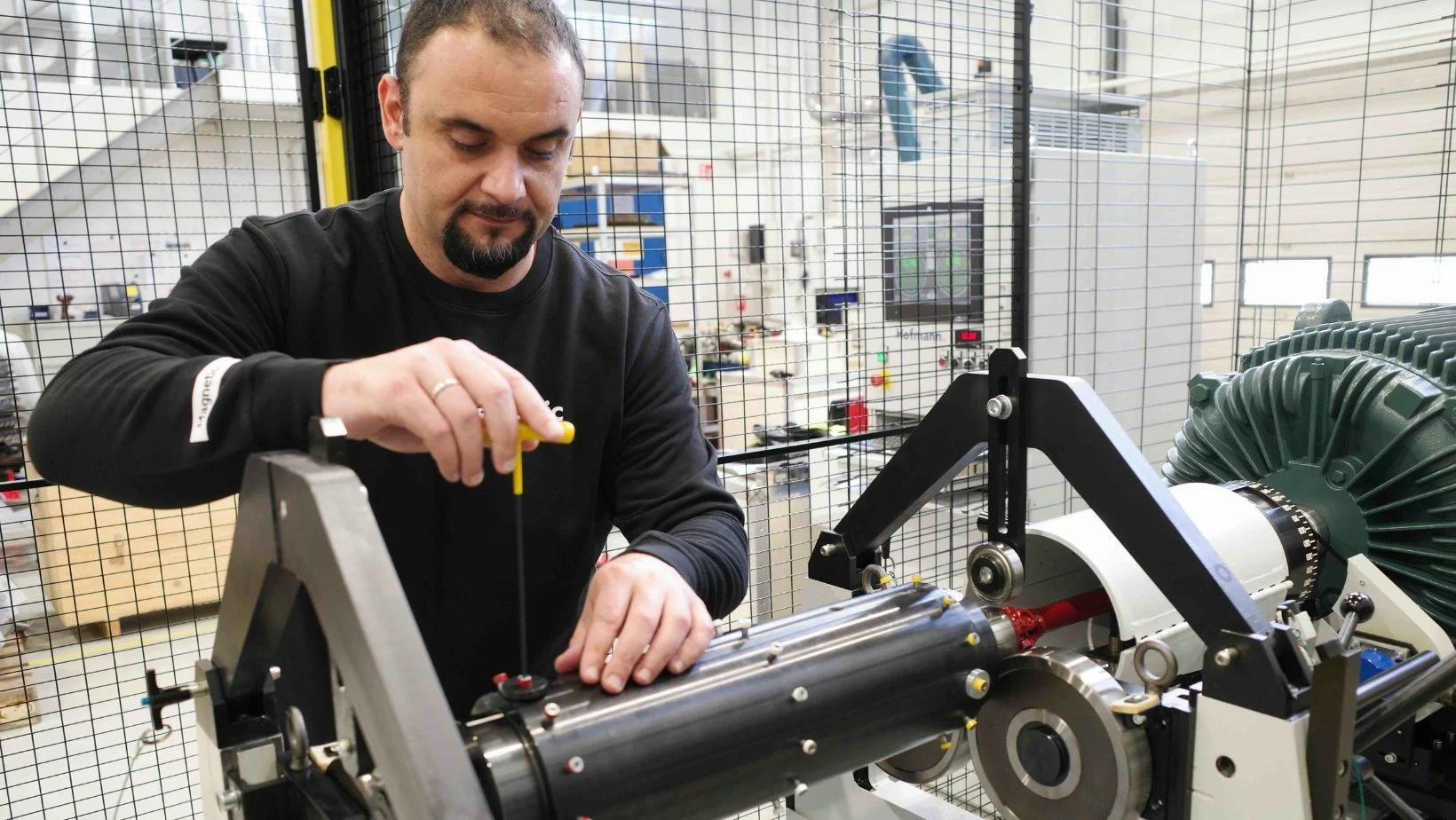
Magnetic Engines Brings CFM56 Rotor Balancing In-House Amid Industry Supply Chain Pressures
Magnetic Engines has significantly enhanced its CFM56 engine repair capabilities by introducing in-house rotor balancing. This strategic development aims to expand the company’s repair and module rebuild services while reducing dependence on external subcontractors. By investing in both vertical and horizontal balancing machines, Magnetic Engines can now manage blades, discs, and spools across the entire CFM56 engine family.
Expanded Repair Capabilities and Commercial Opportunities
The new in-house rotor balancing capability enables Magnetic Engines to offer low-pressure turbine (LPT) Major Module rebuilds for third-party customers as well as for its own engine assets, thereby creating a new commercial revenue stream. Rotor balancing is a vital process following performance restoration or the replacement of life-limited parts, ensuring that rotating engine modules operate smoothly without excessive vibration. This service now supports all four major CFM56 rotor assemblies: the low-pressure compressor, high-pressure compressor, high-pressure turbine, and low-pressure turbine.
With these enhancements, Magnetic Engines is equipped to perform full overhauls and rebuilds of the LPT Major Module, overhaul and rebuild the Fan and Booster Shop Module (SM21), and replace life-limited parts on high-pressure compressor and high-pressure turbine rotors. These expanded capabilities complement the company’s existing Core Performance Restoration services, which already include life-limited parts replacement.
Victoria Goodenough, business development manager at Magnetic Engines, emphasized the significance of this investment, stating, “This investment allows us to offer a broader range of repairs while keeping more of the process under our own control. For customers, that means fewer external interfaces, shorter turnaround times, and access to workscopes that were previously unavailable through Magnetic Engines. It is another important step in strengthening our position as a comprehensive CFM56 support provider.”
Strategic Response to Industry Challenges
Previously, Magnetic Engines relied on partner facilities for rotor balancing, a dependency that added time and complexity to repair programs and limited the company’s ability to undertake certain workscopes, such as the multi-step balancing process required for LPT Major Module assembly. Bringing rotor balancing in-house addresses these limitations and enhances operational efficiency.
This move comes amid ongoing supply chain disruptions affecting the aviation industry. Industry leaders, including Willie Walsh, have underscored the urgent need to resolve these challenges to prevent long-term engine shortages. By internalizing more of its production process, Magnetic Engines positions itself to better manage production timelines and maintain quality control, although market observers will closely monitor the company’s performance given the broader industry difficulties with engine delays and reliability.
Competitors are expected to respond by intensifying efforts to secure their own supply chains and accelerating in-house manufacturing initiatives to mitigate similar risks. Magnetic Engines’ decision may thus reflect a wider industry trend toward greater self-sufficiency in critical repair and manufacturing processes.
Looking ahead, Magnetic Engines plans to extend its balancing capabilities to LEAP engines as its support program for this newer engine type expands.

Etihad and Swissport Extend Global Partnership

Sepehran Airlines B737 Returns to Mashhad After Tyre and Engine Issues

Etihad Deploys Widebody Fleet to Meet Strong Demand

Korean Air Finalizes $36.2 Billion Deal with Boeing

Australia’s RFDS Queensland Section Orders Six King Air 260Cs

Korean Air Finalizes Order for 103 Boeing Jets and Engines

Embraer E195-E2 Features Distinctive Engine Placement Among Regional Jets

What Passengers Can Expect on Boeing’s New 777X Jet

How Ethiopian Airlines Became Africa’s Leading Carrier Amid Gulf Competition

Joby Aviation Extends Autonomous Flight Capabilities with Cross-Country Tour
