
Orquestre insights de IA em ações

Tendências
Categories
MTU Aero Engines Reaches Key Milestones in Fuel Cell Aviation
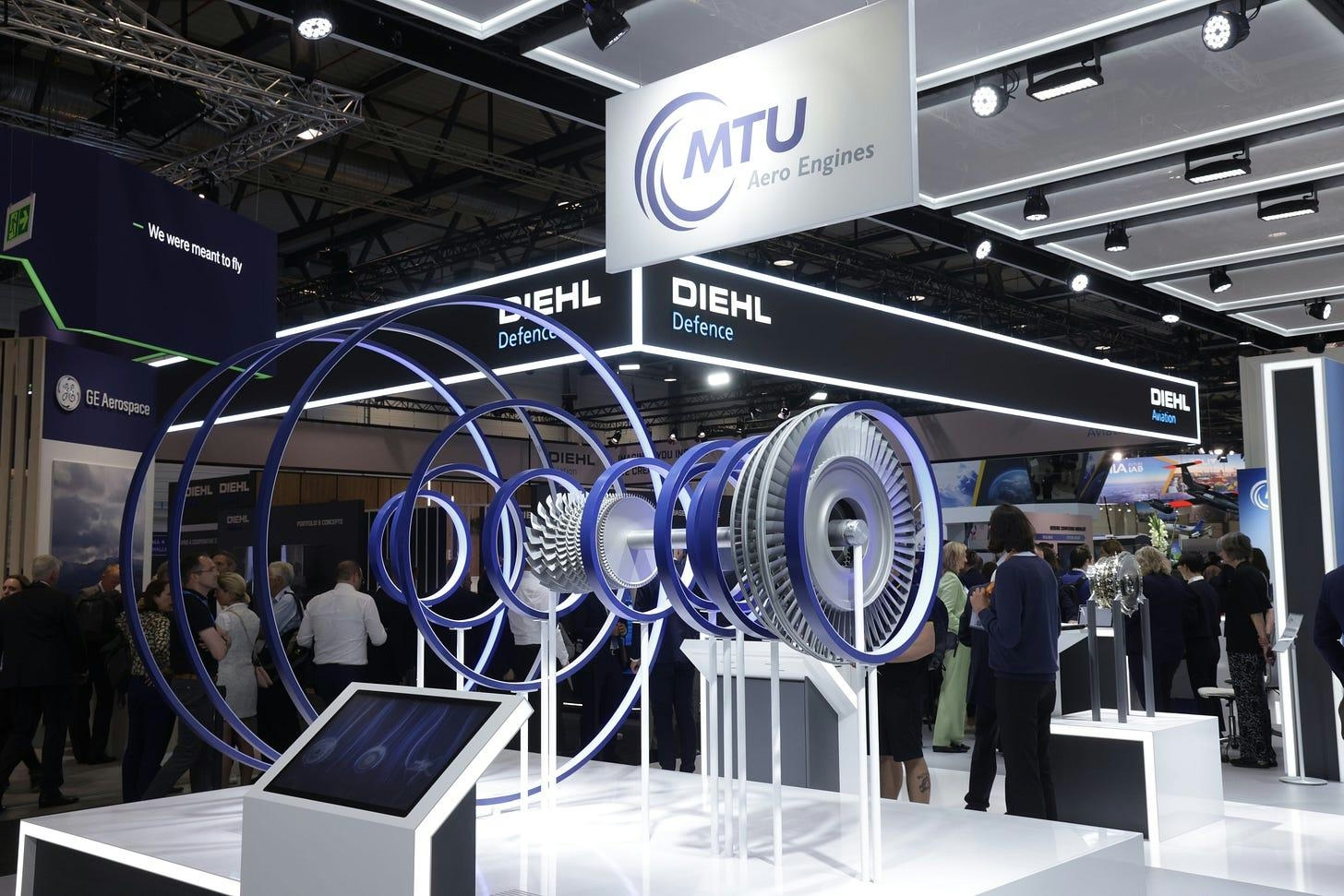
MTU Aero Engines Advances Hydrogen Fuel Cell Technology for Aviation
Munich, July 22, 2026 – MTU Aero Engines has announced significant progress in the development of its Flying Fuel Cell™ (FFC) technology, marking a pivotal advancement in hydrogen-powered aviation. Following the successful validation of both central hydrogen and air supply systems, the company is now preparing its first integrated demonstrators for the next phase of rigorous testing. These developments coincide with an intensified collaboration between MTU and Airbus, who have revealed plans to establish a joint venture aimed at industrializing hydrogen-based fuel cell propulsion systems.
Validation of Core Systems
Recent testing conducted at MTU’s Munich facility has confirmed the robustness and reliability of the FFC’s critical energy and supply components. Both the liquid hydrogen fuel system and the fuel cell hydrogen system, responsible for delivering gaseous hydrogen to the fuel cell, have demonstrated successful performance under demanding operational conditions. Additionally, the air supply systems underwent stringent validation processes, with central performance and regulation models now fully qualified for further development. These validated supply systems provide the essential foundation for the forthcoming integration and demonstration programs.
Progression to Integrated Demonstrators
With the supply systems validated, MTU is now focusing on integrated testing of the Flying Fuel Cell technology. The company is in the process of constructing its first near-production 350 kW fuel cell stack, alongside a comprehensive full-system demonstrator designed to evaluate the interaction of all components and subsystems. These test campaigns, scheduled to commence later this year in Munich, aim to assess system performance under simulated flight conditions and generate critical data to inform future aircraft propulsion development. Testing will be conducted within two dedicated fuel-cell test cells, which are currently being commissioned.
Advancements in the HEROPS Project
MTU’s progress is further bolstered by its involvement in the European HEROPS (Hydrogen-Electric Zero Emission Propulsion System) research initiative. In collaboration with partner organizations, MTU is developing a hydrogen-powered drivetrain intended for regional aircraft with an entry into service targeted for 2035. Having completed the design phase, the project now shifts focus to the validation of key technologies. Central to this effort is a 1.8-megawatt system under development and simulation in Munich, which is designed to demonstrate scalability to power outputs ranging from two to four megawatts through a modular engine architecture.
Industry Implications and Market Response
MTU’s advancements arrive amid increasing industry momentum toward hydrogen propulsion. The company’s partnership with Airbus, formalized through the planned joint venture, underscores a shared commitment to the industrialization of hydrogen fuel cell technology. MTU is also collaborating closely with the European Aviation Safety Agency (EASA) to establish certification pathways for hydrogen-fuel cell propulsion systems, a critical step toward regulatory approval.
Market response to MTU’s progress has been favorable. The company recently raised its free cash flow guidance and reported strong half-year financial results, reflecting investor confidence in its strategic direction. Nevertheless, MTU faces ongoing challenges, including competition from international players, the cyclical nature of the airline industry, capital market volatility, currency fluctuations, and evolving regulatory frameworks.
As MTU Aero Engines continues to push the boundaries of hydrogen fuel cell technology, its achievements are setting new standards for sustainable aviation and contributing to the advancement of zero-emission flight.

Etihad Airways Suspends Airbus A380 Flights on Key Route

Aditya Birla Group Seeks Approval for Aircraft Leasing in GIFT City

Qatar Airways Highlights Innovation and Connectivity at Arabian Travel Market 2026

Hong Kong's Five-Year Plan Includes Andrew Fan's Aircraft Parts Processing Hub Proposal

ACIA Aero Leasing Delivers ATR72-600 to Air Nostrum

RTX Appoints Jill Albertelli as Head of Pratt & Whitney

TAT Technologies Joins Beyond Aero Hydrogen Aircraft Program

AURAK Study Highlights Barriers to Air Taxi Adoption in Emerging Economies

Xiamen Air Selects Altitude for 787 Maintenance at Heathrow

Etihad and Swissport Extend Global Partnership
