
Orquestre insights de IA em ações

Tendências
Categories
NASA Drop Test Advances Air Taxi Safety and Certification
NASA Drop Test Advances Air Taxi Safety and Certification
Evaluating Impact Resistance of Next-Generation Air Taxis
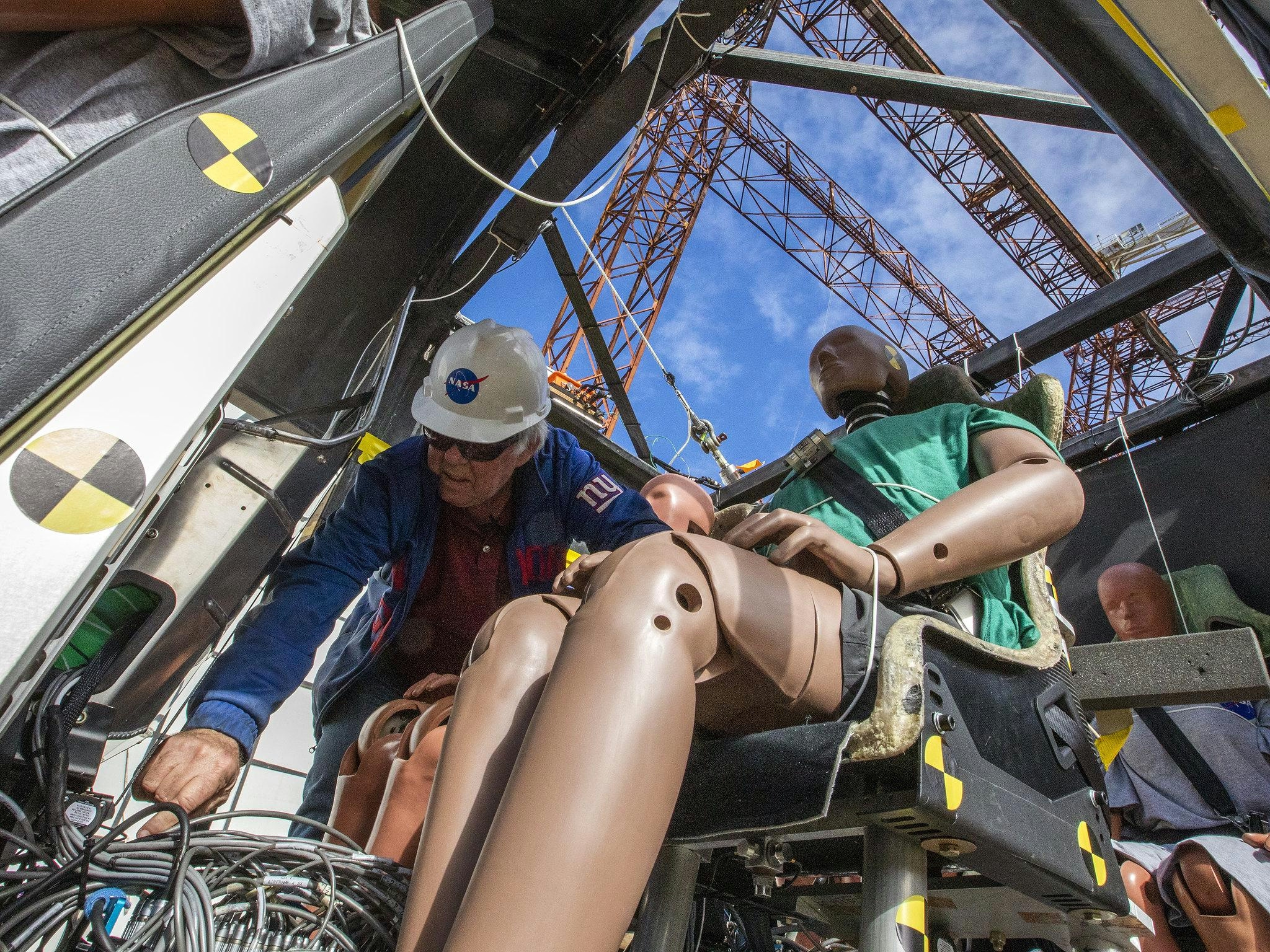
On June 26, NASA conducted a critical drop test at its Langley Research Center in Hampton, Virginia, to advance the safety and certification of emerging air taxi technologies. The test involved an aircraft body modeled after an air taxi, equipped with weighted test dummies, which was released from a height of 35 feet at the Landing and Impact Research Facility. This experiment is part of NASA’s broader initiative to assess how innovative, lightweight materials used in next-generation air taxis absorb impact forces during crash scenarios.
The aircraft was suspended by cables atop a steel gantry before being released to swing forward and impact the ground. Notably, this test incorporated a 10-degree yaw, or twist, to the aircraft’s descent, replicating a certification condition mandated by the Federal Aviation Administration (FAA) for advanced air mobility vehicles. Researchers meticulously evaluated the structural integrity of the aircraft and the resilience of its battery systems upon impact. The material failures observed during the test closely aligned with predictions from computer simulations, which had been refined using data from a similar test conducted in 2022.
Justin Littell, the test lead at Langley, emphasized the significance of these experiments, stating, “By showcasing elements of a crash alongside how added energy-absorbing technology could help make the aircraft more robust, these tests will help the development of safety regulations for advanced air mobility aircraft, leading to safer designs.”
Implications for Industry and Regulatory Frameworks
As the aviation sector accelerates the development of electric air taxis and other advanced aircraft, understanding the crashworthiness of novel materials is paramount for both passenger safety and regulatory certification. The data generated from NASA’s drop tests will provide valuable insights to manufacturers and regulators, facilitating the design of safer vehicles and the establishment of more effective safety standards.
Despite these technological advancements, the widespread adoption of air taxis faces significant hurdles. Rising costs associated with airport infrastructure and persistent supply chain disruptions pose challenges to deployment and scalability. Additionally, ethical concerns are emerging, particularly regarding data privacy, as air taxis are expected to rely heavily on digital systems and the collection of passenger information.
Market responses to these challenges have included heightened scrutiny of air taxi companies’ safety protocols and regulatory compliance. In turn, competitors are accelerating the development of AI-driven safety systems and forging strategic partnerships with established airlines to bolster their market positions and reassure both regulators and the public.
NASA’s research highlights the critical role of rigorous testing and transparent data sharing in advancing air taxi safety and certification. As the industry continues to evolve, collaboration among manufacturers, regulators, and technology partners will be essential to address both technical and ethical challenges, ultimately enabling the safe integration of air taxis into the national airspace.

Etihad Airways Suspends Airbus A380 Flights on Key Route

Aditya Birla Group Seeks Approval for Aircraft Leasing in GIFT City

Qatar Airways Highlights Innovation and Connectivity at Arabian Travel Market 2026

Hong Kong's Five-Year Plan Includes Andrew Fan's Aircraft Parts Processing Hub Proposal

ACIA Aero Leasing Delivers ATR72-600 to Air Nostrum

RTX Appoints Jill Albertelli as Head of Pratt & Whitney

TAT Technologies Joins Beyond Aero Hydrogen Aircraft Program

AURAK Study Highlights Barriers to Air Taxi Adoption in Emerging Economies

Xiamen Air Selects Altitude for 787 Maintenance at Heathrow

Etihad and Swissport Extend Global Partnership
