
Orquestre insights de IA em ações

Tendências
Categories
NTSB: Bird Strike Caused Engine Failure and Smoke Alert on Alaska Cargo A330 in Cincinnati
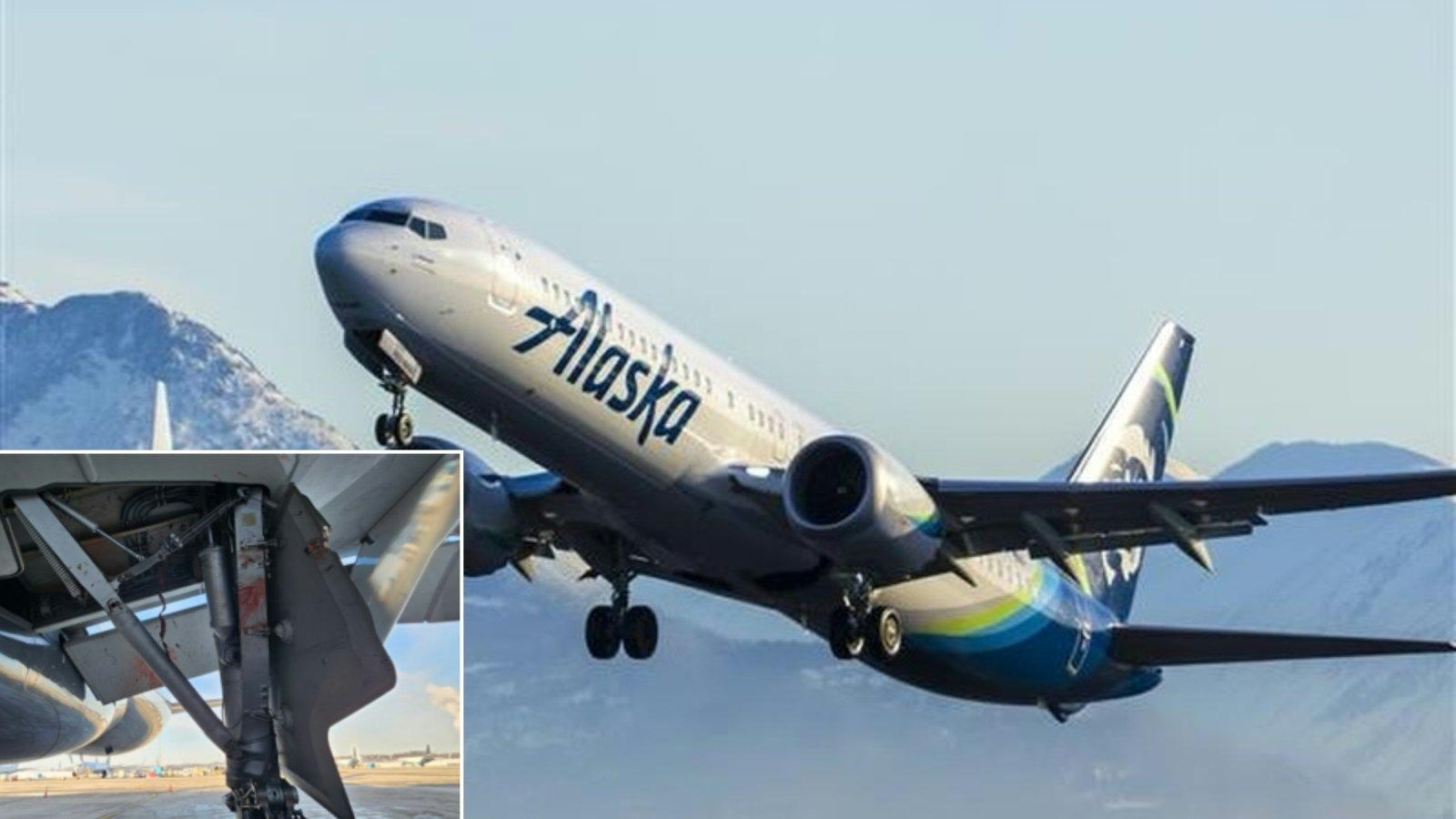
Bird Strike Causes Engine Failure and Smoke Alert on Alaska Airlines Cargo Flight in Cincinnati
A preliminary report from the National Transportation Safety Board (NTSB) has confirmed that a bird strike was responsible for an engine failure and subsequent smoke alert aboard an Alaska Airlines cargo Airbus A330-343. The incident forced an emergency return to Cincinnati/Northern Kentucky International Airport (CVG) on January 28, 2026.
Incident Overview
The aircraft, registered as N5827K and operating as Flight 2616 from CVG to Houston’s George Bush Intercontinental Airport, encountered a flock of Canada geese shortly after takeoff. The event occurred at approximately 3:05 p.m. EST, with two crew members on board. Fortunately, no injuries were reported.
The flight departed from Runway 27 at CVG in clear weather conditions. While climbing through an altitude of 900 to 1,000 feet, the aircraft struck multiple birds on both sides. This resulted in the flight crew receiving an “ENG 1 FAULT” alert, quickly escalating to an “ENG 1 FAIL” warning, indicating failure of the left Rolls-Royce RB211 engine. The captain promptly declared an emergency and requested an immediate return to CVG. The aircraft was vectored for landing on Runway 36R.
During the return, the crew reported smoke in the cockpit accompanied by a Main Deck Smoke alert. Both pilots donned oxygen masks and initiated emergency procedures. The smoke dissipated prior to landing. The first officer, serving as pilot flying, executed a safe landing. Rescue teams were on standby and discharged fire suppression agents into the affected engine as a precaution, although no fire was detected. The aircraft was subsequently towed to the ramp for a detailed inspection.
Damage and Investigation
The NTSB’s preliminary findings reveal significant damage to several components of the aircraft. The left main landing gear door and strut, left wing inboard flap, right engine pylon, and right wing leading edge slat and slat track all sustained damage. Both engines showed evidence of bird ingestion. The left engine exhibited fan blade damage, restricted rotation, and visible misalignment, while the right engine sustained acoustic liner damage and bird remnants but remained operational. Airport personnel recovered the remains of eight Canada geese from the runway vicinity.
Weather conditions at the time were reported as visual meteorological conditions, with winds at 15 knots and temperatures at –9°C. The flight was operating under an instrument flight rules (IFR) plan.
Safety Implications and Industry Response
This incident underscores the persistent safety challenges posed by bird strikes, engine failures, and in-flight smoke alerts. The NTSB’s findings are expected to prompt renewed scrutiny of airline safety protocols and may have implications for insurance policies within the aviation sector. In response, competing carriers might implement enhanced safety measures or issue public statements reaffirming their commitment to operational safety.
The NTSB has previously advocated for software updates to mitigate risks associated with engine failures, such as those involving the CFM Leap-1B engine, highlighting the ongoing need for continuous safety improvements across the industry.
The investigation into the Alaska Airlines incident remains active as the NTSB continues to analyze the causes and explore potential preventive strategies.

Etihad Airways Suspends Airbus A380 Flights on Key Route

Aditya Birla Group Seeks Approval for Aircraft Leasing in GIFT City

Qatar Airways Highlights Innovation and Connectivity at Arabian Travel Market 2026

Hong Kong's Five-Year Plan Includes Andrew Fan's Aircraft Parts Processing Hub Proposal

ACIA Aero Leasing Delivers ATR72-600 to Air Nostrum

RTX Appoints Jill Albertelli as Head of Pratt & Whitney

TAT Technologies Joins Beyond Aero Hydrogen Aircraft Program

AURAK Study Highlights Barriers to Air Taxi Adoption in Emerging Economies

Xiamen Air Selects Altitude for 787 Maintenance at Heathrow

Etihad and Swissport Extend Global Partnership
