
Orquestre insights de IA em ações

Tendências
Categories
Overview of the GEnx Engine
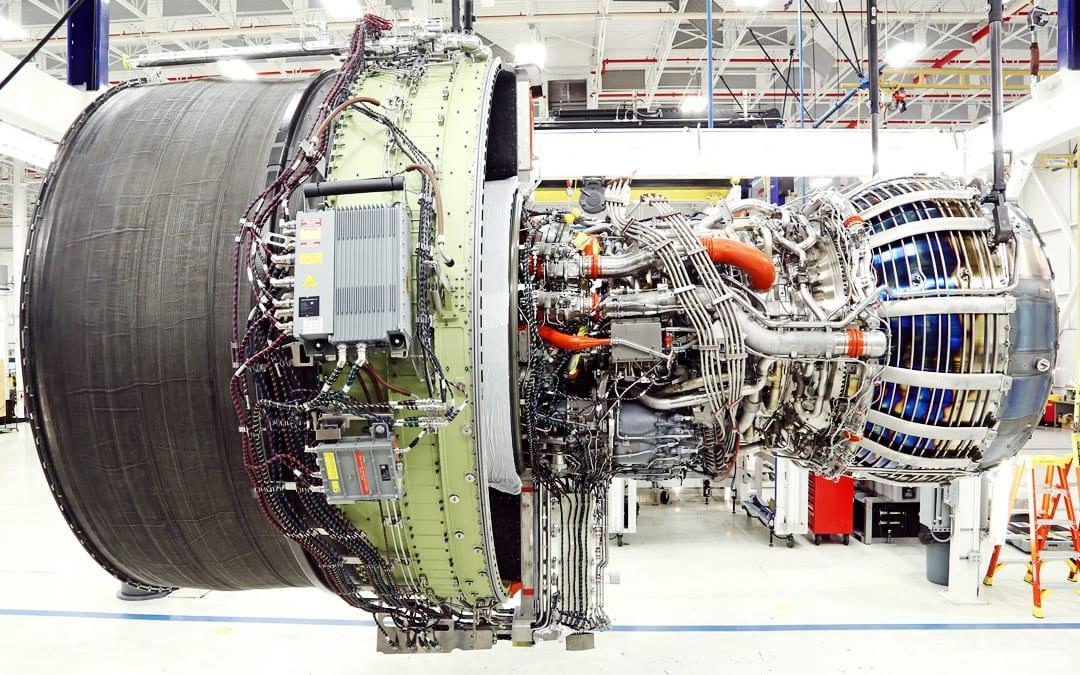
Overview of the GEnx Engine
Advancements in Design and Efficiency
Building upon the pioneering use of composite fan blades introduced with the GE90 engine in 1995, General Electric has further refined this technology in the GEnx engine. The GEnx incorporates carbon-fiber composite fan blades that feature a more streamlined and efficient design, reducing the blade count from 22 to 18. This, combined with a composite fan case, significantly decreases the overall engine weight. These design enhancements contribute not only to improved fuel efficiency but also to a substantial reduction in the engine’s carbon emissions, aligning with the aviation sector’s increasing emphasis on sustainability. Furthermore, the GEnx employs an advanced acoustic design that lowers noise levels, thereby improving passenger comfort and lessening the environmental impact on communities surrounding airports.
Industry Impact and Competitive Response
The introduction of the GEnx has elicited a strong response from competitors, who are rigorously benchmarking its technological innovations and reevaluating their own product development strategies. Rival manufacturers are investigating new materials and design approaches while also reconsidering pricing and market positioning to sustain their competitiveness. This market reaction highlights the GEnx’s influence as a driving force behind industry-wide technological advancement and adaptation.
By integrating state-of-the-art materials and design features, the GEnx establishes a new benchmark in aviation engineering. It exemplifies General Electric’s sustained commitment to innovation and environmental stewardship, while simultaneously reshaping the competitive dynamics of the commercial aircraft engine market.

Etihad Airways Suspends Airbus A380 Flights on Key Route

Aditya Birla Group Seeks Approval for Aircraft Leasing in GIFT City

Qatar Airways Highlights Innovation and Connectivity at Arabian Travel Market 2026

Hong Kong's Five-Year Plan Includes Andrew Fan's Aircraft Parts Processing Hub Proposal

ACIA Aero Leasing Delivers ATR72-600 to Air Nostrum

RTX Appoints Jill Albertelli as Head of Pratt & Whitney

TAT Technologies Joins Beyond Aero Hydrogen Aircraft Program

AURAK Study Highlights Barriers to Air Taxi Adoption in Emerging Economies

Xiamen Air Selects Altitude for 787 Maintenance at Heathrow

Etihad and Swissport Extend Global Partnership
