
Orquestre insights de IA em ações

Tendências
Categories
Pilots’ Roles Evolve in an AI-Assisted Future
Pilots’ Roles Evolve in an AI-Assisted Future
The Integration of AI in Aviation
The concept of self-piloting vehicles has long fascinated the public, but today artificial intelligence (AI) has moved beyond science fiction to become a transformative force across various industries, including aviation. Airlines are investing heavily in AI technologies to enhance operational efficiency and maintain competitiveness. These systems are already assisting pilots by managing fatigue, optimizing flight routes, and predicting maintenance requirements, thereby improving overall safety and performance.
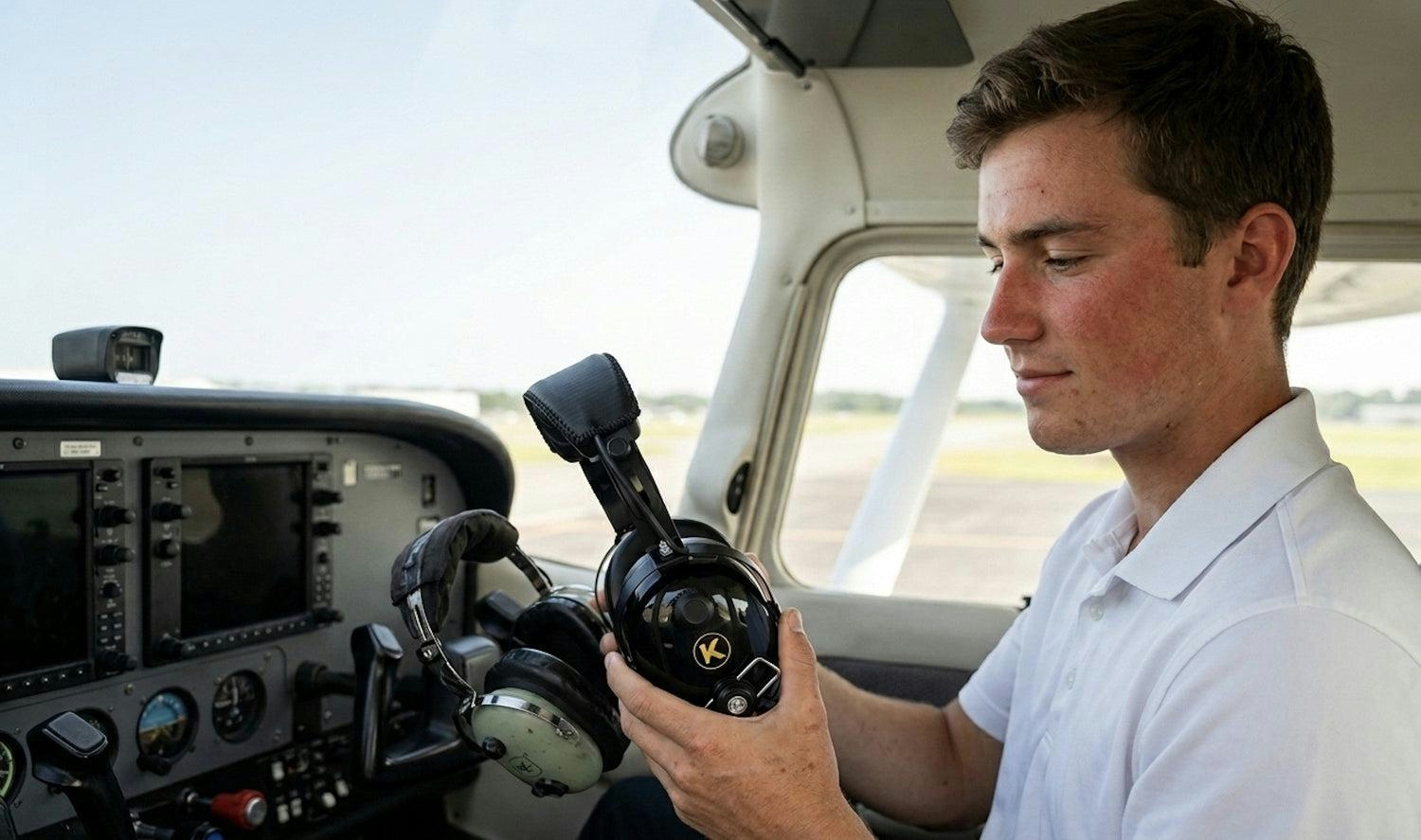
Despite these technological advancements, the role of human pilots remains indispensable. Chad Kendall, associate professor of Aviation and Aerospace Science at Metropolitan State University of Denver, underscores the importance of human judgment in aviation. He notes that when unforeseen circumstances arise, it is the pilot who must make critical decisions and bear accountability. While AI can provide valuable information, identify potential threats, and mitigate risks, ultimate responsibility—and the trust of passengers—continues to rest with the individuals in the cockpit.
AI as a Support Tool, Not a Replacement
Currently, AI functions primarily as a support mechanism rather than a substitute for pilots. Airlines employ AI extensively behind the scenes to improve crew scheduling, maintenance planning, and performance analysis. Predictive maintenance models analyze vast amounts of data to detect potential mechanical issues before they escalate, thereby reducing downtime and preventing delays. Similarly, AI-driven scheduling tools evaluate crew fatigue by monitoring work patterns and rest periods, facilitating safer and more efficient shift management. In addition, AI processes large datasets related to fuel consumption and weather conditions to optimize flight routes and enhance safety.
The aviation industry’s cautious adoption of AI is mirrored in stringent regulatory frameworks and comprehensive oversight. This cautious stance was reinforced in early 2026 when the U.S. Congress passed an aviation safety bill requiring at least two qualified pilots to be present on the flight deck of all commercial airline flights. This legislation highlights the enduring necessity of human oversight even as technological capabilities advance.
Challenges and Opportunities in an AI-Driven Landscape
The evolving role of pilots in an AI-assisted environment presents several challenges. Concerns about job displacement have led to resistance, including worker strikes and legislative debates. Nevertheless, the broader technology job market remains strong. Recent increases in software job openings indicate that AI is generating new employment opportunities alongside transforming existing roles. Companies such as Aon are revising compensation databases to account for emerging AI-driven positions, while AI adoption in manufacturing continues to accelerate. This dynamic illustrates a complex landscape where technology simultaneously disrupts traditional careers and creates new pathways.
For those entering the aviation profession, the future appears “future-proof” not because it resists change, but because it embraces adaptation. The likely scenario is not one of pilotless passenger aircraft but rather highly skilled pilots managing increasingly sophisticated AI systems. As AI continues to reshape the aviation sector, the next generation of pilots will be required to combine technical proficiency with the human judgment and accountability that remain essential to safe and reliable flight.

Etihad Airways Suspends Airbus A380 Flights on Key Route

Aditya Birla Group Seeks Approval for Aircraft Leasing in GIFT City

Qatar Airways Highlights Innovation and Connectivity at Arabian Travel Market 2026

Hong Kong's Five-Year Plan Includes Andrew Fan's Aircraft Parts Processing Hub Proposal

ACIA Aero Leasing Delivers ATR72-600 to Air Nostrum

RTX Appoints Jill Albertelli as Head of Pratt & Whitney

TAT Technologies Joins Beyond Aero Hydrogen Aircraft Program

AURAK Study Highlights Barriers to Air Taxi Adoption in Emerging Economies

Xiamen Air Selects Altitude for 787 Maintenance at Heathrow

Etihad and Swissport Extend Global Partnership
