
Orquestre insights de IA em ações

Tendências
Categories
Pipeline Security Efforts Increase Output to 1.53 Million Barrels Per Day
Pipeline Security Efforts Boost Output Amid Global Aviation Fuel Supply Challenges
The global aviation industry is experiencing a significant transformation in its fuel supply networks, driven by geopolitical risks, supply chain disruptions, and infrastructure limitations. These challenges have compelled airlines and energy traders to reevaluate traditional sourcing strategies. This evolving landscape was a focal point at recent gatherings, including the International Air Transport Association (IATA) Aviation Energy Forum in Paris and the African Airlines Association (AFRAA) Stakeholders Convention in Johannesburg, where industry leaders and policymakers deliberated on the future of aviation energy security in an increasingly volatile environment.
Geopolitical Tensions and Supply Chain Vulnerabilities
Recent disruptions have revealed critical weaknesses in existing fuel distribution systems, particularly those dependent on a narrow range of transit corridors and production hubs. The aviation sector is navigating a complex post-pandemic recovery phase, compounded by rising maritime insurance costs and escalating geopolitical tensions in the Middle East. While the June 2026 Memorandum of Understanding between the United States and Iran is anticipated to offer temporary stability for shipping through the Strait of Hormuz, experts warn that the broader implications of recent crises will continue to influence global supply chain strategies.
Efforts to enhance the security of critical infrastructure have begun to bear fruit. Improved pipeline security measures have increased output to 1.53 million barrels per day, providing some relief to strained markets. However, industry reactions remain divided. U.S. Energy Secretary Chris Wright noted that nearly 7 million barrels of oil exit the Persian Gulf daily, a figure contested by Chevron CEO Mike Wirth, who suggested actual volumes are considerably lower. Exxon has also expressed concerns about an unprecedented oil supply issue, highlighting potential market instability.
Complicating the global energy landscape further, the U.S. Treasury Department’s recent waiver on Iranian oil sanctions is projected to increase Iran’s earnings by an estimated $37.4 million to $51 million per day. Although initial estimates of lost Gulf oil since the onset of the Iran conflict were high, updated data indicates the actual loss is less severe than previously feared.
Shifts in Regional Supply and Emerging Players
Within Europe, jet fuel distribution infrastructure is under increasing pressure. Italy currently imports approximately 30 percent of its jet fuel requirements, while Germany’s Leipzig logistics hub—one of the continent’s principal air freight centers—is operating amid tightening supply constraints.
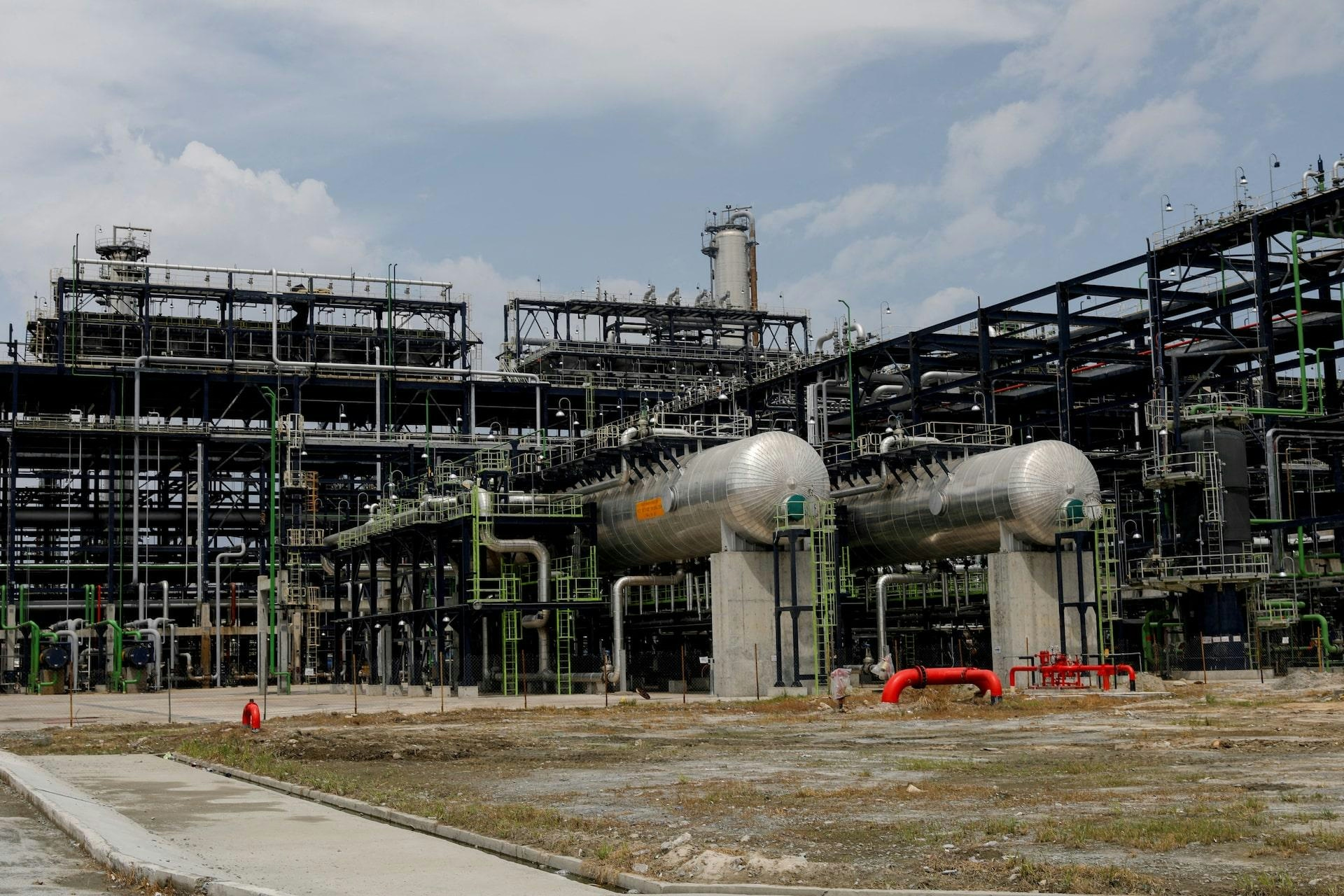
A notable development highlighted at the forums is the emergence of Nigeria’s Dangote Refinery as a significant force in the global jet fuel market. With expanded refining capacity and growing exports, Dangote has reportedly become the world’s largest exporter of jet fuel this year. The refinery is also working to increase its crude flexibility to 130 grades and aims to double its output to 1.4 million barrels per day. This positions Africa as a crucial contributor to global aviation fuel security at a time when traditional supply chains face mounting pressures.
Modupe Ladipo, a chartered marketer and B2B energy strategy consultant who observed both summits, emphasized that recent geopolitical agreements should not overshadow the need to address long-term vulnerabilities. “The U.S.-Iran agreement may provide temporary relief, but the fundamental fragility of the Western supply chain has been completely exposed,” Ladipo stated. “Africa is no longer just catching up; it has demonstrated its ability to serve as a reliable component of global aviation supply during periods of international disruption. The companies that will thrive are those building diversified and resilient procurement networks.”
As the aviation sector adapts to these new realities, the emphasis is increasingly on diversification, infrastructure security, and the integration of emerging suppliers to ensure sustainable energy resilience.

Hong Kong's Five-Year Plan Includes Andrew Fan's Aircraft Parts Processing Hub Proposal

ACIA Aero Leasing Delivers ATR72-600 to Air Nostrum

RTX Appoints Jill Albertelli as Head of Pratt & Whitney

TAT Technologies Joins Beyond Aero Hydrogen Aircraft Program

AURAK Study Highlights Barriers to Air Taxi Adoption in Emerging Economies

Xiamen Air Selects Altitude for 787 Maintenance at Heathrow

Etihad and Swissport Extend Global Partnership

Sepehran Airlines B737 Returns to Mashhad After Tyre and Engine Issues

Etihad Deploys Widebody Fleet to Meet Strong Demand

Korean Air Finalizes $36.2 Billion Deal with Boeing
