
Orquestre insights de IA em ações

Tendências
Categories
Pratt & Whitney Progresses XA103 Engine Program
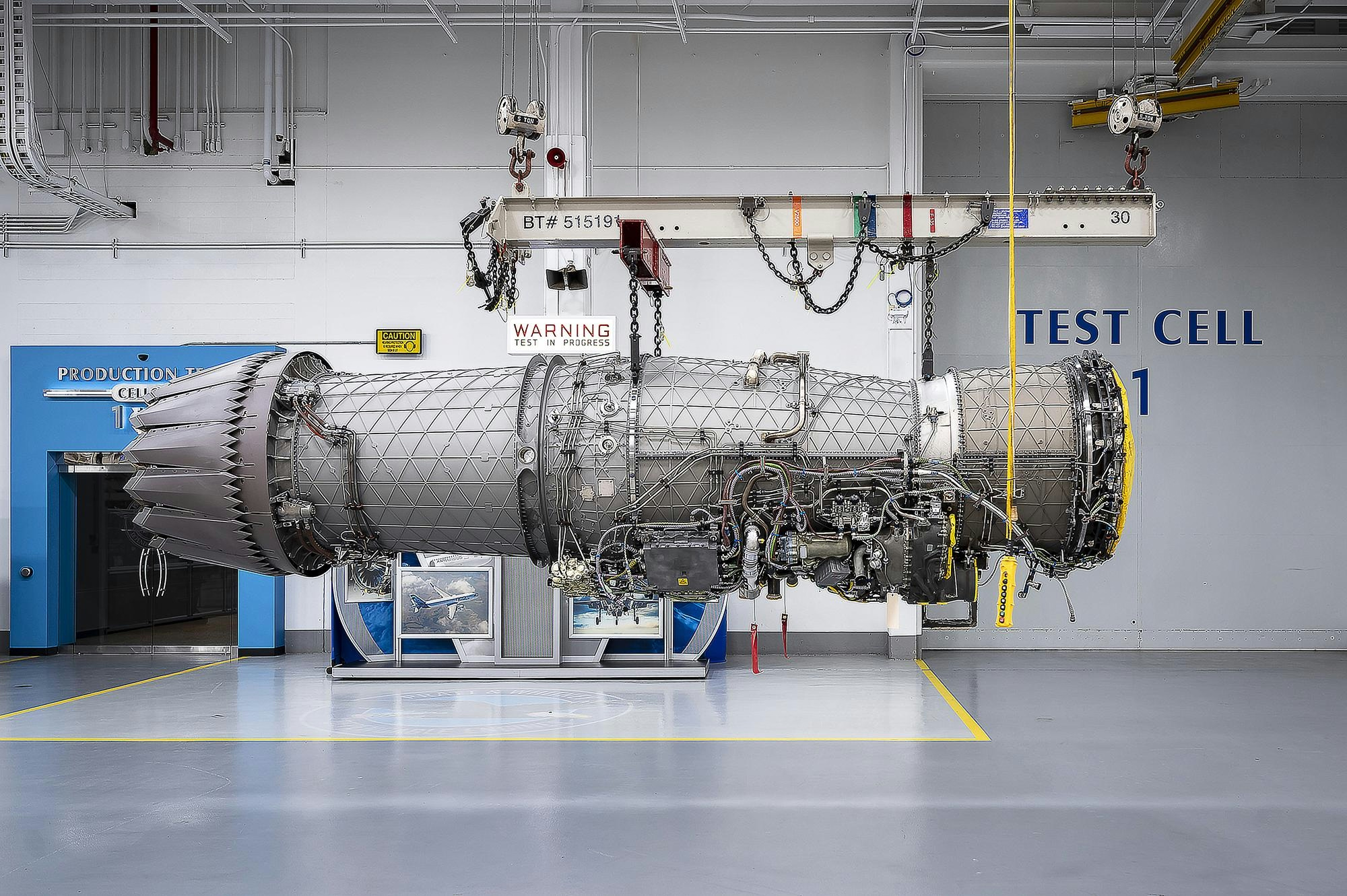
Pratt & Whitney Advances XA103 Engine Program Amid Competitive Pressures
Pratt & Whitney has achieved a critical milestone in the development of its XA103 engine by completing a fully digital technical assessment under the U.S. Air Force’s Next Generation Adaptive Propulsion (NGAP) program. This assembly readiness review signifies the transition from digital design to the procurement and manufacture of physical engine components, setting the stage for hardware production and subsequent testing phases.
Progress in Digital Engineering and Program Development
The milestone highlights Pratt & Whitney’s sustained investment in advanced digital engineering and its close collaboration with the U.S. Air Force. Jill Albertelli, President of Pratt & Whitney’s Military Engines business, emphasized the company’s integrated digital infrastructure, which has streamlined development processes. She noted that the NGAP team is now preparing for engine assembly and testing, while simultaneously developing new digital validation tools to support the program’s advancement.
The XA103 engine, designed with adaptive technology, aims to deliver significant improvements in survivability, fuel efficiency, power generation, and thermal management for next-generation combat aircraft. Pratt & Whitney anticipates that the XA103 will outperform any current propulsion system in service, underscoring the strategic importance of continued investment in military engine innovation. The company is actively working with suppliers to procure components for assembly, with engine testing expected to commence in the late 2020s.
Competitive Landscape and Market Dynamics
Despite these advancements, the XA103 program faces a competitive environment. GE Aerospace’s Leap engine, a principal rival, reported a notable year-on-year increase in deliveries during the first quarter of 2026, reflecting strong market momentum. GE Aerospace is also developing durability improvement kits for its Leap engines to sustain its market position as Pratt & Whitney progresses with the XA103.
Market perceptions of the XA103 may also be influenced by Pratt & Whitney’s ongoing efforts to resolve durability issues with its PW1000G engines, which recently prompted a recall. The company’s initiatives to expand maintenance capacity and increase production of critical components for its PW1100G turbofans could affect customer confidence and market dynamics as the XA103 advances toward testing and eventual deployment.
The NGAP program forms part of the U.S. Air Force’s broader strategy to develop advanced propulsion systems for future combat platforms, emphasizing extended operational range, improved efficiency, and enhanced mission capability. Adaptive engine technology is considered vital for supporting next-generation aircraft amid evolving defense requirements and increasingly demanding operational environments.
As Pratt & Whitney moves forward with the XA103, the company must successfully navigate both technical challenges and competitive pressures to support the U.S. Air Force’s objective of maintaining air superiority in the coming decades.

Etihad Airways Suspends Airbus A380 Flights on Key Route

Aditya Birla Group Seeks Approval for Aircraft Leasing in GIFT City

Qatar Airways Highlights Innovation and Connectivity at Arabian Travel Market 2026

Hong Kong's Five-Year Plan Includes Andrew Fan's Aircraft Parts Processing Hub Proposal

ACIA Aero Leasing Delivers ATR72-600 to Air Nostrum

RTX Appoints Jill Albertelli as Head of Pratt & Whitney

TAT Technologies Joins Beyond Aero Hydrogen Aircraft Program

AURAK Study Highlights Barriers to Air Taxi Adoption in Emerging Economies

Xiamen Air Selects Altitude for 787 Maintenance at Heathrow

Etihad and Swissport Extend Global Partnership
