Imagem

Orquestre insights de IA em ações

Entre na lista de espera da AeroGenie hoje mesmo!

Tendências

Categories

Robots, Air Taxis, and Culture Featured at MITE
April 12, 2026By ePlane AI
Robots, Air Taxis, and Culture Featured at MITE
0
0
Urban Air Mobility
eVTOL Aircraft
Aviation Technology

Robots, Air Taxis, and Culture Take Center Stage at MITE

For three days, the Venetian Macao’s Cotai Expo became a vibrant hub of innovation and cultural exchange during the 14th Macao International Travel (Industry) Expo (MITE), held from April 10 to 12. Organized by the Macao Government Tourism Office (MGTO), the event brought together over 700 exhibitors representing 59 countries and regions. Spanning 30,000 square meters, the expo showcased the latest developments in travel, technology, and cultural engagement under the theme “Global Convergence, Future Horizons.”

Technological Innovation and Urban Mobility

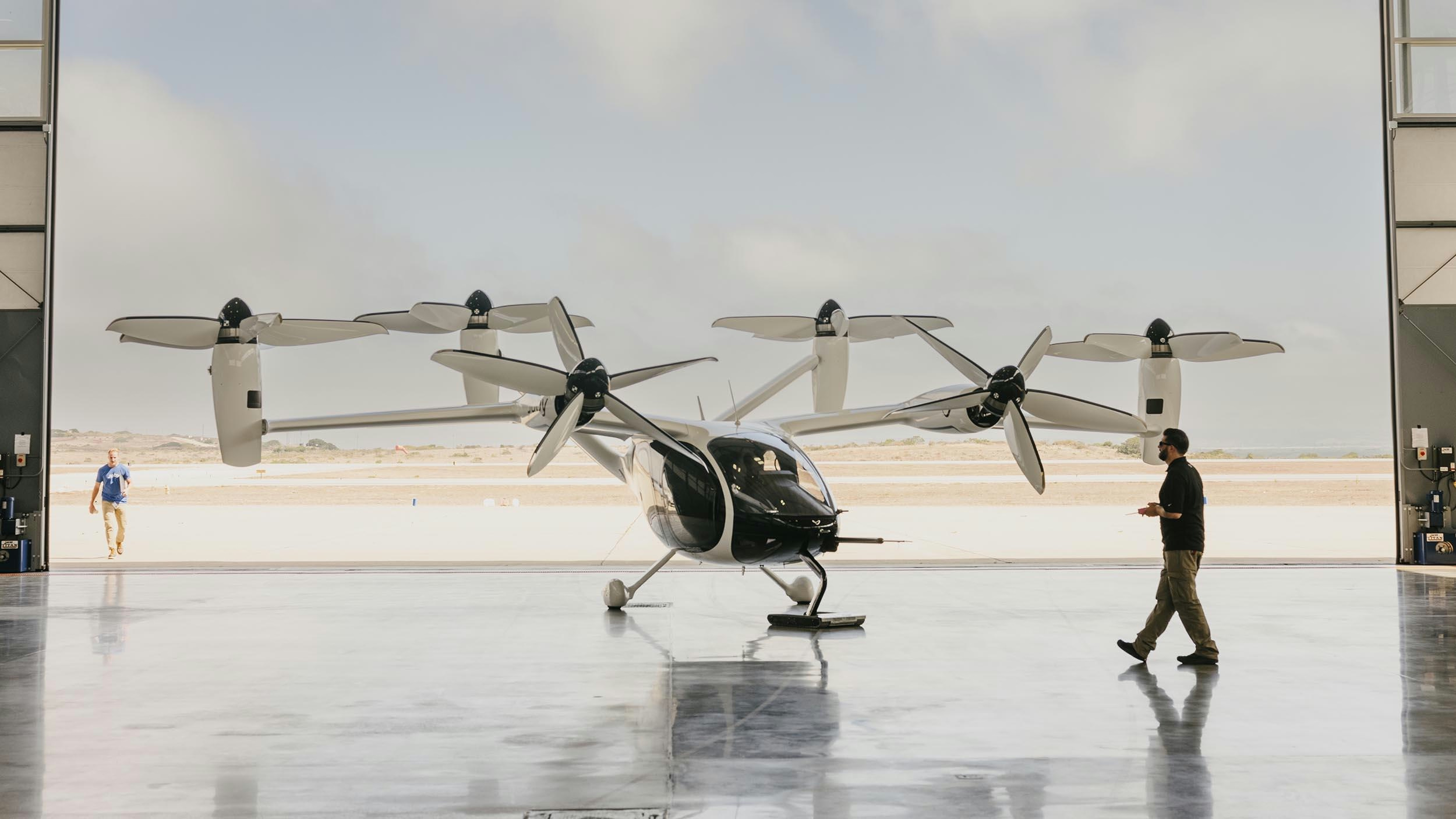
This year’s MITE placed a pronounced focus on technological advancement within the travel industry. The inaugural Tourism Technology Exhibition Hall attracted significant attention with interactive displays featuring robot dogs and humanoid machines that welcomed visitors, illustrating the increasing integration of intelligent services in tourism. The Low-Altitude Economy Pavilion highlighted the future of urban mobility by presenting a pilotless electric vertical takeoff and landing (eVTOL) aircraft. These air taxis, designed for city tours and urban transportation, underscore Macao’s commitment to technology-driven tourism and align with broader innovation trends in the Greater Bay Area.

Despite the excitement surrounding these advancements, the widespread adoption of electric air taxis faces considerable challenges. The sector is marked by intense competition and ongoing legal disputes, such as trade secret conflicts between companies like Joby Aviation and Archer Aviation. Public skepticism regarding self-driving vehicles and regulatory uncertainties further complicate the path forward, even as federal support for air taxi pilot programs indicates growing institutional interest. Beyond tourism, the rapid expansion of agricultural robotics is transforming farming practices, demonstrating how robotics are reshaping multiple industries and emphasizing the need to balance technological potential with market realities.

Health, Wellness, and Cultural Diversity

Health and wellness tourism also featured prominently at MITE. The Islands Healthcare Complex – Macao Medical Center of Peking Union Medical College Hospital showcased advanced healthcare technologies, including smart skin and body composition analyzers, reflecting the increasing significance of health-focused travel experiences.

Diversity and inclusivity were central themes, particularly at the revamped Silk Road – Halal Products Pavilion, which hosted networking sessions dedicated to Muslim-friendly tourism. This initiative highlights Macao’s ongoing efforts to accommodate a wider range of travelers and mirrors a broader industry trend toward cultural inclusiveness. Similarly, global brands are adopting culture-first strategies, exemplified by Sprite’s new identity platform that emphasizes freshness and cultural relevance.

Cultural Exhibits and Industry Engagement

Macao’s hotel industry made a notable impact, with integrated resorts and hotels showcasing their signature attractions. The Londoner Macao’s booth, staffed by employees dressed in King’s Guard regalia, featured a basketball hoop symbolizing the NBA’s flagship store. Meanwhile, Wynn Palace captivated visitors with immersive projections from “The Odyssey of Jingdezhen Porcelain,” celebrating the rich heritage of Chinese ceramics.

Beyond the exhibition halls, attendees benefited from access to travel deals and participated in over 130 themed sessions, including destination presentations, industry forums, workshops, and live performances. The event underscored how the convergence of technology, culture, and collaboration is shaping the future of travel, while also presenting new challenges and opportunities for the industry.

More news
FAA proposes $60K fine against Lycoming Engines over maintenance violations

FAA proposes $60K fine against Lycoming Engines over maintenance violations

FAA Proposes $60,000 Fine Against Lycoming Engines Over Maintenance Violations The Federal Aviation Administration (FAA) has announced a proposed civil penalty of $60,000 against Lycoming Engines, a prominent aircraft engine manufacturer based in Williamsport. The enforcement action concerns alleged violations of federal maintenance regulations related to work performed in September 2024 on four Lycoming TEO-540-C1A engines. Details of the Alleged Violations According to the FAA, Lycoming’s aircraft repair station failed to adhere to the manufacturer’s maintenance manual during the servicing process. The agency specifically alleges that the company did not replace the Exhaust Bypass Valve Assemblies on the engines as mandated before returning them to service. The FAA has not indicated whether these alleged maintenance lapses resulted in any safety incidents or operational issues involving the affected engines. Lycoming Engines has been given 30 days to respond to the FAA’s enforcement letter. Potential Impact on Lycoming and the Industry The proposed fine may subject Lycoming to heightened regulatory scrutiny, with possible repercussions for the company’s market position and reputation. Competitors in the aviation sector could leverage the FAA’s action to underscore their own compliance and safety standards, potentially influencing customer preferences. Market analysts predict that the announcement might lead to a short-term decline in Lycoming’s stock value and encourage some clients to explore alternative engine suppliers. Beyond the immediate case, the FAA’s enforcement highlights ongoing concerns regarding aviation safety and regulatory compliance. This action could trigger more extensive regulatory reviews and prompt manufacturers and repair stations across the industry to reassess and strengthen their maintenance practices to avoid similar penalties. Lycoming Engines has not issued any public statement regarding the proposed fine or the specific allegations at this time.
Wingflex Begins Pre-Orders for Modular Airbus Gear and Autobrake Panel

Wingflex Begins Pre-Orders for Modular Airbus Gear and Autobrake Panel

Wingflex Launches Pre-Orders for Modular Airbus Gear and Autobrake Panel Wingflex, a prominent manufacturer of modular Airbus cockpit components, has announced the opening of pre-orders for its latest product: the Gear Management Panel (GMP). This new addition broadens the company’s existing portfolio—which includes the MCDU, FCU and EFIS cubes, RMP, and the full A320 overhead panel—by addressing a previously unserved segment of the Airbus cockpit: the gear and brake control systems. Innovative Design and Features The GMP is specifically designed for flight simulation enthusiasts constructing physical A320 cockpits. It integrates the gear lever, autobrake panel, brake pressure indicator, and chronometer into a single modular unit, aiming to complete the Wingflex Airbus cockpit experience. The panel is compatible with nearly all third-party Airbus aircraft available in Microsoft Flight Simulator (MSFS). The GMP is composed of two distinct modules. The first module contains the autobrake controls, landing gear indicators, and associated switches, while the second module houses the gear lever alongside a circular brake pressure gauge. Together, these modules replicate the lower center section of the A320 cockpit panel, featuring LDG GEAR unlock lights, AUTO BRK LO/MED/MAX buttons, A/SKID and N/W STRG selectors, BRK FAN, TERR ON ND, and an aviation clock. Wingflex emphasizes user flexibility through its “Mount Your Way” philosophy, allowing operators to configure the modules to fit a variety of cockpit frame designs. The gear lever itself is a standout element, constructed from aluminum-alloy die-cast material and equipped with a pull-to-release safety mechanism that closely mimics the authentic A320 lever. Tuned spring tension and adjustable damping provide realistic tactile feedback, while a Hall-effect sensor minimizes mechanical wear. Additional realism is delivered through the brake pressure indicator and aviation clock, the latter offering chronometer, UTC, and elapsed-time functions. An ambient light sensor automatically adjusts display brightness, and the clock continues to operate independently of the simulator, doubling as a functional desk clock. Software Integration and Compatibility From a software perspective, Wingflex has prioritized ease of integration. The GMP is recognized by Windows as a standard HID game controller, eliminating the need for additional drivers. The company’s proprietary Wings-Bridge software facilitates automatic device detection, enabling users to map controls directly within the simulator or through third-party applications such as MobiFlight or SPAD.neXt for more advanced configurations. Market Environment and Industry Challenges Wingflex’s expansion into gear and brake control hardware arrives amid evolving market conditions. The company faces potential regulatory challenges and must contend with a broader market affected by sluggish order growth for Airbus freighter aircraft. While some competitors have absorbed rising costs, others have expressed concerns regarding the sudden shifts in market dynamics and the long-term sustainability of specialized modular Airbus gear and autobrake panels. Industry responses vary, ranging from adaptation to new market realities to skepticism about the viability of such niche hardware products. Despite these uncertainties, Wingflex is placing its confidence in the appeal of authenticity and modularity for cockpit builders. The GMP’s comprehensive feature set and flexible installation options position it as a compelling solution for Airbus simulation enthusiasts seeking to complete their cockpit setups.
Volato Group and Alignment Engine Inc. Announce AI Infrastructure Merger

Volato Group and Alignment Engine Inc. Announce AI Infrastructure Merger

Volato Group and Alignment Engine Inc. Announce AI Infrastructure Merger Volato Group, known for its Vaunt empty-leg program, has entered into a definitive agreement to merge with Alignment Engine Inc., an Ohio-based AI infrastructure company, in an all-stock transaction valued at approximately $500 million. This merger signifies a strategic transformation for Volato, which will now concentrate its efforts on data centers, high-performance computing, and artificial intelligence infrastructure. Strategic Shift and Corporate Realignment The merger follows Volato’s recent divestment from its fractional and jet card aviation businesses, which were transferred to FlyExclusive through a strategic agreement. Several of Volato’s divisions have been sold to FlyExclusive, where Volato’s CEO, Matt Liotta, also holds the position of chief business officer. Earlier this year, Volato terminated a separate merger agreement with critical minerals firm M2i, further underscoring its shift away from its traditional aviation focus. Volato’s existing portfolio includes the Vaunt private aviation membership marketplace and an aviation AI software business. The company has developed AI-driven operational software tailored for aviation enterprises, notably through its Parslee autonomous-work platform, which integrates business context, shared memory, and human oversight to enhance operational efficiency. Alignment Engine’s Role and Future Leadership Alignment Engine is currently constructing a campus in Ohio designed to support high-density computing workloads essential for AI training, inference, machine learning, and other advanced computing applications. Its platform integrates powered data center infrastructure, GPU computing, advanced networking, and proprietary technologies. Upon completion of the merger, Alignment Engine’s CEO, Chris Ensey, will assume leadership of the combined entity. Ensey emphasized the critical importance of power and compute capacity in sustaining AI’s continued expansion. The transaction is expected to close shortly after the execution of the definitive agreement. The merged company will be publicly traded through Volato’s SOAR listing on the New York Stock Exchange. As of the latest market data, Volato Group’s market capitalization stands just below $15 million, with SOAR shares having traded between $0.10 and $3.87 over the past year and opening at $0.25 today. Opportunities and Challenges Ahead While the merger positions Volato to broaden its scope beyond software into tangible AI infrastructure, it also presents significant challenges. The integration of operations and retention of key personnel pose risks, alongside potential disruptions to ongoing business activities. Market reactions have been mixed; some investors express concern over integration complexities, whereas others remain optimistic about the potential synergies and growth prospects. The merger may also prompt competitors in the AI infrastructure sector to accelerate their expansion efforts, intensifying competition. Furthermore, both companies must navigate the rapidly evolving AI landscape, which includes risks related to algorithmic flaws and the fast pace of technological change. This transaction marks a major pivot for Volato, aligning its future with the burgeoning demand for AI infrastructure and high-performance computing, while simultaneously exposing the company to new operational and market risks as it moves away from its aviation origins.
Namibia’s Flight Operations Disrupted by Contaminated Jet Fuel

Namibia’s Flight Operations Disrupted by Contaminated Jet Fuel

Namibia’s Flight Operations Disrupted by Contaminated Jet Fuel Contamination Crisis and Operational Impact Namibia is currently grappling with significant disruptions to its flight operations following the discovery of contaminated jet fuel supplied by Vivo Energy Namibia, a subsidiary of the Vitol Group. The contamination, reportedly caused by cross-contamination with petrol aboard an imported shipment, was identified last week and has led to a shortage of usable jet fuel. This shortage has compelled airlines to reroute flights and implement operational adjustments, with the situation expected to persist until at least the weekend. The Namibia Airports Company has been actively coordinating efforts to mitigate the impact of the fuel shortage. However, the disruption has already forced Deutsche Lufthansa and its subsidiary Discover Airlines to divert direct flights from Namibia to Germany, necessitating unscheduled refueling stops at Luanda International Airport in Angola. Lufthansa Cargo has also been instructed to temporarily reduce cargo loads to conserve fuel, underscoring the operational challenges faced by carriers reliant on Namibian aviation fuel supplies. Government Response and Supply Chain Vulnerabilities Following the discovery, the contaminated jet fuel shipment was quarantined after inspection by Puma Energy Namibia, a unit of Trafigura Group, which was scheduled to receive the shipment as a replacement for fuel previously lent to Vivo. The Ministry of Mines and Energy has indicated that the shortage will likely continue until Saturday, as Vitol works to deliver replacement consignments. One new shipment has already been cleared and dispatched, while another is en route to Walvis Bay, though specific details regarding timing and volume remain undisclosed. Beyond immediate aviation concerns, the incident has exposed broader vulnerabilities within Namibia’s petroleum supply system. The country’s heavy reliance on imported fuel—including petrol and diesel critical to various sectors—has been increasingly strained by global energy market disruptions. Namibia’s traditional fuel sources from Persian Gulf producers have been affected by the ongoing conflict in the Middle East, which has constrained exports of refined products and prompted refineries to prioritize higher-paying European markets. In response to these pressures, the Namibian government granted Vitol exclusive rights to supply petrol and diesel from July through September. This emergency measure has sparked criticism from opposition lawmakers and competing energy firms, who have questioned both the necessity and transparency of the decision. Looking Ahead: Managing Risks in Namibia’s Energy Sector The Namibia Airports Company continues to manage the unfolding situation, emphasizing that no off-specification fuel was distributed for aircraft use. While the cause of the contamination remains under investigation, the incident highlights the critical need for strategic fuel reserves and robust contingency supply agreements to safeguard against future disruptions. As Namibia endeavors to restore normal flight operations, the crisis serves as a stark reminder of the importance of resilient supply chains and proactive risk management within the country’s energy sector.
Santa Monica Included in Olympic Air Taxi Plans

Santa Monica Included in Olympic Air Taxi Plans

Santa Monica Included in Olympic Air Taxi Plans Archer Aviation Targets Santa Monica for Electric Air Taxi Service Santa Monica is emerging as a potential key hub in Archer Aviation’s ambitious plan to introduce an electric air taxi network ahead of the 2028 Los Angeles Olympics. The company’s all-electric “Midnight” aircraft, designed for vertical takeoff and landing, aims to provide efficient urban air mobility by connecting Santa Monica with major Southern California destinations such as Los Angeles International Airport (LAX), downtown Los Angeles, and Orange County. Capable of carrying four passengers and a pilot at speeds up to 150 miles per hour, the aircraft combines elements of drones, planes, and helicopters while generating significantly less noise than conventional helicopters. Archer envisions these air taxis completing trips within 10 to 20 minutes, offering a rapid alternative to ground transportation. The fully electric design promises zero emissions, aligning with Santa Monica’s long-standing commitment to reducing noise pollution and improving air quality. This initiative could represent a transformative step in the city’s efforts to promote sustainable urban transit. Challenges and Competitive Landscape Despite the promise of this innovative transportation mode, Archer faces considerable obstacles before the service can become operational. Regulatory approvals, safety protocols, and the high costs associated with electric air taxi operations remain significant barriers. Industry analysts have expressed doubts about the maturity of the technology and whether the service can be priced competitively to attract a broad customer base. The announcement has also intensified competition within the emerging air taxi market. Rivals such as Joby Aviation are expected to accelerate their own development efforts in the Los Angeles area, potentially triggering price competition and rapid technological advancements as companies vie for market leadership in time for the Olympics. Santa Monica’s Role and Future Prospects Santa Monica has been part of Archer’s network plans since early 2024, positioning the city at the forefront of clean urban flight initiatives as global attention focuses on Los Angeles. However, the proposal remains preliminary, with no formal agreements between Archer and the city currently in place. For a community that has long championed quieter skies and cleaner air, the introduction of electric air taxis could mark a significant milestone. The realization of this vision will depend on how effectively the technological, regulatory, and market challenges are navigated in the coming years leading up to the 2028 Olympic Games.
Los Angeles Plans Air Taxi Vertiport for 2028 Olympics

Los Angeles Plans Air Taxi Vertiport for 2028 Olympics

Los Angeles to Launch Air Taxi Vertiport Ahead of 2028 Olympics As Los Angeles gears up to host the 2028 Olympic and Paralympic Games, the city is introducing an innovative solution to its notorious traffic congestion: electric air taxis. In a collaborative effort, sports and entertainment conglomerate AEG and electric aircraft manufacturer Archer Aviation have announced plans to develop the city’s first vertiport at L.A. LIVE, the expansive four-million-square-foot sports and entertainment district located in downtown Los Angeles. A New Mode of Urban Transportation The vertiport will function as a dedicated takeoff and landing hub for Archer’s fully electric Midnight aircraft, designed to carry up to four passengers at speeds reaching 241.4 kilometers per hour. This initiative forms part of Archer’s broader vision to establish a comprehensive air taxi network throughout the Los Angeles metropolitan area. By enabling rapid aerial transit, the service aims to reduce travel times across the city to between 10 and 20 minutes, a significant improvement over conventional road travel. For instance, a flight from Hawthorne Airport to Orange County—a favored destination for cruises and whale watching—would take approximately 12 minutes by air, compared to nearly an hour by car. Similarly, a journey from Hollywood Burbank Airport to Inglewood’s SoFi Stadium, which will be renamed “2028 Stadium” for the Games, is projected to last just 14 minutes by air, versus close to 60 minutes on congested roads. Enhancing Mobility for the Olympic Games Scheduled to be operational in time for the 2028 Games, the L.A. LIVE vertiport will offer a direct and efficient travel option for athletes, fans, artists, and visitors navigating one of the world’s busiest urban centers during a major international event. By providing an alternative to ground transportation, the project seeks to alleviate pressure on the city’s roadways and improve the overall experience of attending the Olympics. Archer Aviation was designated the Official Air Taxi Provider for the LA28 Games and Team USA last year. To commemorate this partnership, Archer unveiled a special Team USA livery on its Midnight aircraft during a public display at L.A. LIVE. The vertiport initiative highlights Los Angeles’ commitment to pioneering sustainable urban mobility solutions as it prepares to welcome the global community in 2028.
Key Considerations for Cross-Border Aircraft Transactions

Key Considerations for Cross-Border Aircraft Transactions

Key Considerations for Cross-Border Aircraft Transactions Cross-border aircraft transactions represent intricate undertakings influenced by a complex interplay of legal, logistical, and market factors. Central to the success of any such deal is a meticulously drafted purchase agreement (PA), which functions as the guiding framework for both parties involved. This agreement must proactively address a spectrum of risks that can affect delivery timelines, many of which extend beyond the manufacturing process itself. Contractual and Compliance Challenges Aviation contracts are inherently subject to evolving variables throughout their duration. Due to the persistent two-year backlog experienced by major original equipment manufacturers (OEMs), purchase agreements seldom specify exact delivery dates. Instead, they typically provide estimated delivery windows by quarter, with more precise notifications issued as schedules become clearer. This approach offers a pragmatic timeline and helps manage the expectations of all stakeholders. Compliance remains a critical concern in cross-border transactions. OEMs are required to navigate a stringent regulatory environment, including adherence to national and international frameworks such as the International Traffic in Arms Regulations (ITAR) and Export Administration Regulations (EAR), which govern dual-use aerospace technologies. Additionally, sanctions imposed by the Office of Foreign Assets Control (OFAC) target blacklisted entities and embargoed nations, necessitating rigorous compliance checks that commence well before contract execution and culminate in comprehensive reviews prior to delivery. Supply Chain Disruptions and Market Pressures External pressures, particularly supply chain disruptions, continue to challenge the aviation sector. The residual impact of the COVID-19 pandemic is evident in ongoing shortages of skilled labor and essential raw materials, including aluminum and acrylics, as well as critical components such as aircraft windshields. These shortages have extended lead times and directly affected assembly line operations. Although parts availability has seen some improvement, vulnerabilities persist. The pandemic has also revived discussions surrounding force majeure clauses, specifically the differentiation between excusable and non-excusable delays. Currently, delays attributed to enduring supply chain or labor issues are generally expected to be anticipated and incorporated into contract planning. Trade tariffs have further complicated the transactional landscape. Canadian exporters, for example, face levies on steel, aluminum, and copper, prompting some contracts to undergo reassessment or even temporary delivery suspensions. Geopolitical tensions, such as those in the Strait of Hormuz, introduce additional uncertainty by disrupting international trade routes. Concurrently, ongoing US-China trade negotiations and extended tariff exclusions continue to influence the global competitiveness of American products, indirectly impacting aircraft transactions. Insurance Market Evolution and Logistical Constraints The insurance sector is undergoing notable changes. Heightened competition among general aviation underwriters, fueled by the migration of experienced professionals to managing general agents (MGAs) and facility-backed placements, is exerting downward pressure on premium rates. Conversely, claims inflation and persistent parts shortages are driving up repair costs. The general aviation market is softening as MGAs and facilities reshape competitive dynamics, compelling insurers to recalibrate pricing strategies and concentrate on niche market segments to sustain their market share. Logistical bottlenecks remain a significant impediment to timely aircraft delivery. Limited availability of paint booth capacity and a global shortage of certified service providers contribute to delays affecting both new and pre-owned aircraft. Furthermore, aviation authorities mandate extensive and rigorous testing protocols before any aircraft can be cleared for delivery, which further extends delivery timelines. Ultimately, the success of cross-border aircraft transactions depends not on the elimination of risk but on the capacity to anticipate, manage, and communicate these risks effectively from contract signature through to final delivery. In an environment characterized by supply chain fragility, regulatory complexity, and shifting market dynamics, proactive planning and robust contractual frameworks are indispensable for navigating the challenges ahead.
FlightSafety International to Acquire Acron Technologies’ Commercial Training Division

FlightSafety International to Acquire Acron Technologies’ Commercial Training Division

FlightSafety International to Acquire Acron Technologies’ Commercial Training Division FlightSafety International Inc. (FSI), a global leader in aviation training and simulation technology, has reached a definitive agreement to acquire the Commercial Training Solutions (CTS) division of Acron Technologies, a portfolio company of TJC LP. This acquisition encompasses CTS’s Training Systems, Training Services, Aviation Academy, and Driver Training portfolio, significantly enhancing FSI’s capabilities within the commercial aviation sector. Expanding Training Expertise and Global Reach CTS brings over 80 years of experience in commercial aviation training and simulation, with a distinguished record of delivering more than 850 training devices and over 300 full-flight simulators currently operational worldwide. The division maintains facilities across the United States, the United Kingdom, and Thailand, supporting a diverse range of pilot and driver training systems alongside comprehensive airline academy programs. Eric Hinson, CEO of FlightSafety International, expressed enthusiasm about the acquisition, stating that CTS’s expertise in commercial simulation and training aligns closely with FSI’s long-term growth strategy. He emphasized that the integration would enable FlightSafety to better address the evolving training needs of airlines globally. David Coward, President of CTS, echoed this sentiment, highlighting the complementary capabilities and shared commitment to delivering world-class training solutions. He noted that the transaction would facilitate further investment in training technologies, expand global reach, and enhance value for customers while maintaining high service standards. Industry Context and Integration Challenges The acquisition occurs amid increasing global demand for commercial aviation training. Industry forecasts anticipate the worldwide commercial airline fleet will expand from approximately 28,000 aircraft in 2025 to over 50,000 by 2045, necessitating greater training capacity and advanced simulation technologies. Despite the strategic benefits, integrating CTS into FSI’s operations presents several challenges. FlightSafety will need to harmonize the new division’s operations with its existing training programs, ensure compliance with stringent aviation training standards, and address potential cultural and operational differences between the organizations. The acquisition may also intensify competition, prompting rival training providers to enhance or differentiate their offerings. Furthermore, the deal could attract regulatory scrutiny, requiring FSI to adapt its business model to fully capitalize on CTS’s assets and expertise. The transaction is anticipated to close in the fourth quarter of 2026, subject to customary closing conditions. RBC Capital Markets, LLC and Harris Williams served as financial advisors to Acron Technologies, with Kirkland & Ellis LLP acting as legal counsel. Baker McKenzie provided legal advisory services to FlightSafety International. Company Profiles Founded in 1951, FlightSafety International is a premier provider of professional aviation training and advanced flight simulators, serving commercial, government, and military clients worldwide. The company operates one of the largest fleets of full-flight simulators across six continents and will mark its 75th anniversary in 2026. Acron Technologies is an aerospace and defense technology platform focused on safety and innovation, with specialized businesses in avionics, connectivity, image processing, and analytics.
MH370: What Is Known Twelve Years Later

MH370: What Is Known Twelve Years Later

MH370: What Is Known Twelve Years Later Twelve years after the disappearance of Malaysia Airlines Flight MH370, the fate of the Boeing 777 and its 239 occupants remains one of the most enduring mysteries in aviation history. Despite the most extensive and costly underwater search ever conducted—covering over 200,000 square kilometers of seabed—no definitive wreckage site has been located. The facts and inferences surrounding the flight are limited, and much of the public discourse remains speculative. Although the search has been scaled back, efforts continue amid evolving challenges. Established Facts and Flight Timeline MH370 departed Kuala Lumpur International Airport at 00:42 local time on 8 March 2014, bound for Beijing, with sufficient fuel for approximately seven and a half hours of flight. The aircraft’s ACARS datalink ceased transmitting at 01:06. At 01:19:30, Captain Zaharie Ahmad Shah made the final radio contact with air traffic control, signing off with the words, “Good night. Malaysian three seven zero.” Two minutes later, near the waypoint IGARI, the aircraft’s transponder was switched off as it approached the boundary between Malaysian and Vietnamese airspace. Military radar tracked the plane making a sharp turn and flying back across the Malay Peninsula at altitudes between 31,000 and 33,000 feet. It passed near Penang at 01:52 and continued northwest over the Andaman Sea before disappearing from radar at 02:22. Satellite data played a crucial role in reconstructing the flight’s path after radar contact was lost. The aircraft’s satellite terminal briefly lost power but reconnected at 02:25. For the next six hours, it responded to hourly “handshakes” from an Inmarsat satellite. Although these signals did not provide precise location data, their timing and frequency enabled investigators to plot a probable flight path along an arc across the southern Indian Ocean. The final ground-initiated handshake occurred at 08:10, followed by a log-on request from the aircraft at 08:19:29, possibly indicating fuel exhaustion and subsequent power restoration. No further communications were received after this point. Debris Recovery and Identification The first confirmed piece of debris linked to MH370 was a right flaperon, which washed ashore on Réunion Island on 29 July 2015. French investigators definitively identified this component as belonging to the missing aircraft. Additional fragments, including an outboard flap section discovered on Pemba Island, were confirmed by Malaysian authorities in 2016. By 2017, a total of 20 pieces of debris had been recovered, with 18 almost certainly originating from MH370. Ongoing Challenges in the Search The search for MH370 remains complicated not only by the vast expanse of the Indian Ocean but also by geopolitical and economic factors. Regional tensions, such as Iran’s missile attacks on US bases, have implications for global trade routes and aviation safety standards, potentially influencing international cooperation and resource allocation for the search. Furthermore, shifts in market dynamics, including the entry of new competitors like North African oil giant Sonatrach into markets traditionally dominated by firms such as Dangote, may affect fuel supply logistics and aviation operations in the region. These developments could have indirect consequences for the coordination and execution of search efforts. Unresolved Questions Despite extensive investigations and international collaboration, the precise location of MH370 and the circumstances surrounding its disappearance remain unknown. The search continues, shaped by advances in technology and the broader context of global security and economic changes. For the families of those lost and the aviation community, the quest for answers endures.
Boeing’s Overwing Strut and the Open Fan Design

Boeing’s Overwing Strut and the Open Fan Design

Boeing’s Overwing Strut and the Open Fan Design The aviation industry is confronting a pivotal engineering challenge as it prepares for the next generation of single-aisle airliners: integrating the open fan engine architecture, widely regarded as the most promising propulsion technology for the 2030s. Open fan engines feature rotors nearly twice the diameter of current turbofans, rendering traditional underwing mounting on aircraft the size of a Boeing 737 impractical due to the risk of blade strikes on runways. Innovative Overwing Strut Concept Boeing’s response to this challenge is encapsulated in a recently filed patent titled “Aircraft with Overwing Engine Position” (US20250250017A1, EP4596417A1). The design introduces a novel overwing strut that extends from beneath the wing, curves over its upper surface, and supports the engine above the wing itself. This configuration is engineered to accommodate both open fan and conventional ducted turbofan engines on a single aircraft platform, providing flexibility as engine technologies evolve. The patent, assigned to The Boeing Company and filed in February 2024 with publication anticipated in August 2025, outlines a strut system that supports engines with diameters ranging from 120 to 168 inches—approximately double the size of current turbofan rotors for a typical 150-seat twin-engine aircraft. This design aims to support the CFM RISE initiative’s target of achieving a 20 percent reduction in fuel burn compared to today’s most efficient engines. As of mid-2026, open fan technology has undergone around 500 test campaigns and more than 3,000 endurance cycles, with flight testing scheduled for later this decade. Historical Context and Renewed Interest The open rotor concept is not without precedent. In the 1980s, General Electric’s GE36 unducted fan, developed in partnership with Snecma, was flight-tested on Boeing 727 and McDonnell Douglas MD-80 aircraft. Logging 281 flight hours, the GE36 demonstrated fuel efficiency improvements exceeding 20 percent over contemporary turbofans. Similarly, Pratt & Whitney and Allison tested the geared propfan 578-DX on an MD-80. Despite these promising results, both programs were ultimately discontinued due to low oil prices, high development costs, and concerns over cabin noise, which dampened enthusiasm among airlines and manufacturers. Today, the imperative for enhanced fuel efficiency and reduced emissions has reignited interest in open fan designs. However, Boeing’s overwing strut concept must overcome significant regulatory hurdles, as evidenced by the protracted certification process experienced with the 737 MAX 7. Airlines may also approach the innovation cautiously, balancing potential efficiency gains against safety considerations and operational impacts. Meanwhile, competitors are expected to intensify their research efforts into similar propulsion technologies to maintain competitive positioning. Industry Challenges and Future Prospects The broader aviation sector is simultaneously undergoing rapid digital transformation and emphasizing operational resilience, factors that add complexity to the integration of radically new aircraft designs. Boeing’s advancement of the overwing engine concept will require navigating not only technical and certification challenges but also evolving market demands and competitive pressures. Whether Boeing’s overwing strut combined with open fan technology will come to define the next generation of single-aisle aircraft remains uncertain. Nonetheless, the company’s patent represents a significant and bold step toward reimagining airliner design in pursuit of greater efficiency and sustainability.
line









