
Orquestre insights de IA em ações

Tendências
Categories
Safety Alert Could Ground Thousands of Airbus A320s
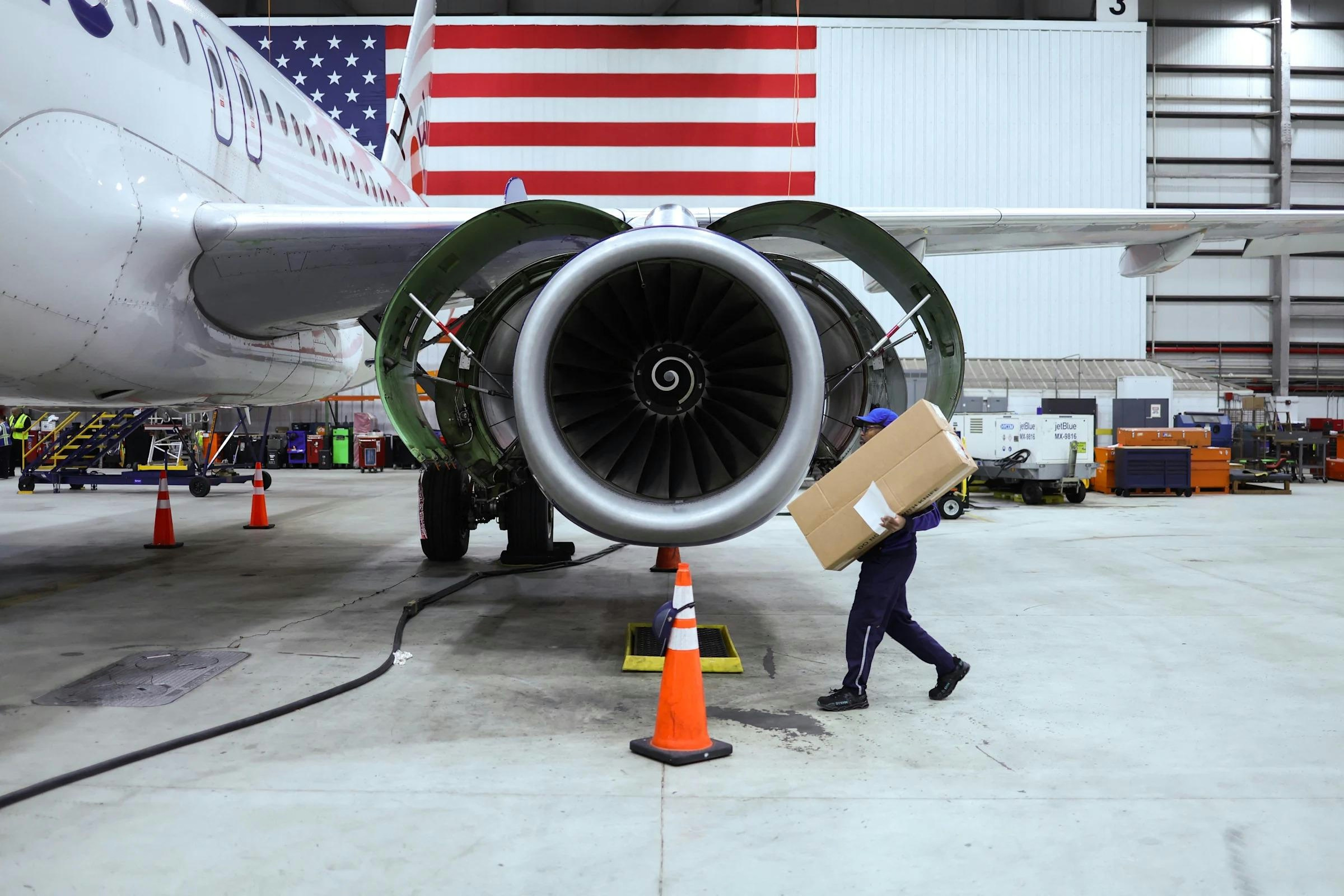
Safety Alert Could Ground Thousands of Airbus A320s
The Airbus A320 family, encompassing the A318, A319, A320, and A321 models, constitutes a fundamental component of global commercial aviation. As of September 2025, over 11,275 aircraft from this family are in active service with 375 airlines worldwide. In the United States alone, approximately 1,490 A320-family jets operate regularly, with American Airlines maintaining the largest fleet of 483 aircraft. Other major U.S. operators include Delta with 316 jets, JetBlue with 229, United Airlines with 203, Frontier with 172, and Spirit Airlines with 132. These aircraft are essential for short- and medium-haul routes across North America, Europe, and Asia, collectively facilitating tens of thousands of daily flights.
Urgent Safety Notice and Operational Impact
This week, Airbus issued an urgent safety alert following an analysis that revealed intense solar radiation could compromise critical flight control data on certain A320-family aircraft. The manufacturer identified a substantial number of in-service jets potentially vulnerable to this issue, triggering one of the largest software-related recalls in the history of commercial aviation. The timing of this alert is particularly challenging, coinciding with one of the busiest travel periods of the year, especially in the United States, where A320-family aircraft dominate domestic air traffic.
American Airlines has confirmed that approximately 340 of its A320-family aircraft require a software update, noting that the process will take around two hours per aircraft. United Airlines has reported that its fleet is not affected by the update. At the time of the announcement, roughly 3,000 A320-family aircraft were airborne worldwide, highlighting the scale and urgency of the situation.
Industry Response and Passenger Advisory
Airlines around the world now face significant operational challenges as they undertake the necessary software updates and hardware protections for an estimated 6,000 affected A320 aircraft. This process is expected to cause widespread disruptions, including delays and cancellations, which will impact passenger schedules and increase operational costs. To mitigate these effects, airlines may prioritize the use of non-A320 fleets or seek alternative aircraft to maintain service continuity during the grounding and update period.
Market reactions have already begun as carriers adjust schedules and implement contingency plans to minimize disruption for travelers. Airbus is collaborating closely with aviation authorities and operators to address the issue, underscoring that safety remains the paramount concern. The company has committed to supporting airlines throughout the update process to ensure a swift and coordinated response.
Passengers are advised to stay informed by checking with their airlines for the latest updates on potential delays or schedule changes. The aviation industry is mobilizing rapidly to resolve the issue, aiming to restore full operational capacity while upholding the highest safety standards.

Etihad Airways Suspends Airbus A380 Flights on Key Route

Aditya Birla Group Seeks Approval for Aircraft Leasing in GIFT City

Qatar Airways Highlights Innovation and Connectivity at Arabian Travel Market 2026

Hong Kong's Five-Year Plan Includes Andrew Fan's Aircraft Parts Processing Hub Proposal

ACIA Aero Leasing Delivers ATR72-600 to Air Nostrum

RTX Appoints Jill Albertelli as Head of Pratt & Whitney

TAT Technologies Joins Beyond Aero Hydrogen Aircraft Program

AURAK Study Highlights Barriers to Air Taxi Adoption in Emerging Economies

Xiamen Air Selects Altitude for 787 Maintenance at Heathrow

Etihad and Swissport Extend Global Partnership
