Imagem

Orquestre insights de IA em ações

Entre na lista de espera da AeroGenie hoje mesmo!

Tendências

Categories

SkySelect and Armac Address MRO Procurement Gap
June 8, 2026By ePlane AI
SkySelect and Armac Address MRO Procurement Gap
0
0
MRO Procurement
Aviation Supply Chain
Inventory Optimization

SkySelect and Armac Collaborate to Address MRO Procurement Challenges

SkySelect, an AI-driven platform specialising in aviation parts procurement, has entered into a strategic partnership with Armac Systems, a prominent provider of aviation inventory optimisation solutions. This collaboration seeks to resolve persistent inefficiencies in the maintenance, repair, and overhaul (MRO) supply chain by bridging the longstanding divide between inventory planning and procurement execution. The partnership emerges amid growing pressures on airlines and MRO providers, who face labor shortages, material constraints, and escalating costs.

Tackling Industry Pressures Through Integration

Aviation operators and maintenance providers are increasingly challenged to reduce working capital tied up in inventory, lower procurement expenses, and maintain high service levels essential for aircraft availability. Historically, these objectives have been hindered by fragmented systems, manual workflows, and limited visibility into market conditions. The current environment, marked by workforce shortages and supply chain disruptions, has intensified these difficulties, underscoring the need for more efficient procurement and inventory management solutions.

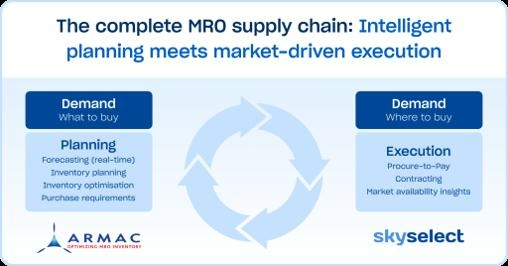
The alliance combines Armac’s demand intelligence and real-time forecasting capabilities with SkySelect’s procurement execution platform. Armac’s technology facilitates precise inventory planning, optimisation, and the generation of purchase requirements. SkySelect then converts these demand signals into actionable procurement activities through automated procure-to-pay workflows, dynamic contracting, and access to a global supplier network. This integrated approach aims to deliver significant improvements in three critical areas: optimising working capital by right-sizing inventory and reducing excess stock; lowering procurement costs through market-driven sourcing and automation; and enhancing service levels by ensuring timely availability of parts, thereby mitigating aircraft-on-ground risks.

Industry Impact and Future Outlook

Erkki Brakmann, CEO of SkySelect, emphasised that Armac’s planning engine is already trusted by airlines and MRO providers worldwide. He stated, “By combining Armac’s predictive intelligence with SkySelect’s market access and autonomous procurement, we are closing the loop on end-to-end optimisation.” Similarly, Micheál Armstrong, CEO of Armac Systems, highlighted the longstanding demand for a seamless connection between inventory recommendations and procurement execution, describing SkySelect as the ideal partner to translate optimisation outputs into tangible results.

This partnership arrives at a time when the MRO sector faces intensifying competition, with companies striving to overcome procurement inefficiencies and adapt to ongoing supply chain challenges. Industry analysts anticipate that this collaboration may catalyse further innovation, prompting competitors to pursue new strategic alliances, acquisitions, or the development of advanced technologies aimed at addressing similar gaps in MRO services.

As the aviation industry continues to contend with labor and material shortages alongside rising costs, integrated solutions such as the one offered by SkySelect and Armac have the potential to establish new benchmarks for efficiency and resilience in MRO procurement.

More news
Global Airline Profits Decline as PAL and Cebu Pacific Reduce Routes

Global Airline Profits Decline as PAL and Cebu Pacific Reduce Routes

Global Airline Profits Decline Amid Rising Fuel Costs and Route Reductions Airlines around the world are confronting a significant downturn in profitability as escalating jet fuel prices and ongoing geopolitical tensions disrupt operations and inflate expenses. The International Air Transport Association (IATA) has revised its forecast, projecting that global airline profits will nearly halve this year, with combined net income expected to reach only $23 billion. This represents a 45 percent decline from the initial estimate of $41 billion and falls well short of the $45 billion profit recorded in 2025. Financial Pressures and Industry Outlook IATA anticipates that airline profit margins will contract sharply to just 2 percent, down from 4.2 percent last year and below the earlier forecast of 3.9 percent. Although total airline revenues are expected to increase by 9.4 percent to $1.17 trillion, operating costs are rising at a faster pace, projected to climb 13 percent to $1.12 trillion. The surge in expenses is largely driven by soaring jet fuel prices, which are forecasted to rise nearly 40 percent to $350 billion this year, up from $252 billion in 2025. The average price of jet fuel is expected to reach $152 per barrel, a 70 percent increase from last year’s $90 per barrel. IATA Director General Willie Walsh attributed the worsening outlook to disruptions caused by conflicts in the Middle East and the resulting spike in fuel costs. While some airlines have attempted to mitigate these pressures through fare increases, Walsh emphasized that such measures have been insufficient to maintain previous profit levels. Net profit per passenger is projected to fall to $4.50 this year, roughly half of last year’s $9.10. Walsh remarked, “Under the circumstances, that shows resilience. But it won’t even buy you a hot dog at most of the FIFA World Cup venues and it does not leave much of a buffer should other costs or taxes start rising.” Regional Impacts and Route Adjustments The Asia-Pacific region is particularly hard hit, with IATA forecasting a combined net profit of $6.6 billion for airlines in the area—33 percent lower than last year’s $9.8 billion. The region’s dependence on crude oil imports from the Middle East has exacerbated fuel shortages and price increases relative to other markets. Additionally, airspace restrictions have forced longer flight routes, increasing fuel consumption and unit costs. These factors have compelled airlines to adjust capacity and reconsider their networks. In the Philippines, major carriers Philippine Airlines (PAL) and Cebu Pacific have responded by reducing certain routes, especially those servicing the Middle East, in an effort to manage soaring fuel expenses. Cebu Pacific has issued warnings about anticipated losses and is actively restructuring its network to contain costs. Similar challenges are evident elsewhere in Asia; India’s IndiGo has temporarily cut routes within the region and plans further reductions in its European network and Boeing 787-9 fleet. Meanwhile, Ryanair CEO Michael O’Leary has cautioned that sustained high oil prices could lead to financial failures among more airlines. As the global aviation industry grapples with these mounting pressures, carriers are making difficult operational decisions to sustain their businesses and safeguard profitability in an increasingly volatile environment.
Willie Walsh Exits IATA, Issues Warning on Aviation’s Fragile Recovery

Willie Walsh Exits IATA, Issues Warning on Aviation’s Fragile Recovery

Willie Walsh Exits IATA, Issues Warning on Aviation’s Fragile Recovery Willie Walsh concluded his tenure as director general of the International Air Transport Association (IATA) with a sobering assessment of the aviation industry’s precarious post-pandemic recovery. Addressing delegates at the 82nd IATA Annual General Meeting in Rio de Janeiro, Walsh outlined a series of systemic challenges that continue to impede the sector’s rebound. These include significant delays in aircraft and engine deliveries, soaring fuel prices, limited airport capacity, outdated air traffic management systems, increasing tax burdens, and climate policies that are advancing more rapidly than the availability of sustainable aviation fuel (SAF). Challenges Threatening the Industry’s Recovery Walsh’s departure coincides with a critical period for global airlines. Jet fuel prices have surged by 70 percent year-on-year, a rise largely driven by ongoing conflict in the Middle East. This geopolitical instability has also caused a 46.6 percent decline in demand for carriers operating in the affected region. The resulting fuel price shock has added approximately $100 billion to the collective fuel expenses of airlines worldwide, compelling many to consider cutting unprofitable routes to safeguard their financial margins. Despite robust passenger demand, airfares remain elevated as carriers struggle to absorb these escalating costs. The industry’s dependence on sustainable aviation fuel further complicates recovery efforts. Walsh highlighted that climate policies are progressing faster than the supply of SAF, placing additional strain on airlines striving to meet environmental targets without sufficient resources. Moreover, persistent delays from engine manufacturers exacerbate operational challenges, hindering airlines’ ability to expand or renew their fleets efficiently. Financial Outlook and Industry Implications Reflecting these mounting pressures, IATA has revised its financial forecasts downward. The association now anticipates that global airline profitability will be halved by 2026, with net profits expected to decline from $45 billion in 2025 to just $23 billion the following year. This sharp adjustment underscores the sector’s vulnerability to external shocks and ongoing operational bottlenecks. In his closing remarks, Walsh emphasized the paradox facing the industry: the very systems designed to support aviation are now undermining its recovery. “Once again, we meet in challenging and unpredictable times,” he told delegates, urging coordinated action among manufacturers, regulators, and governments to address the sector’s most urgent challenges as it prepares for another difficult year ahead.
AerFin Completes Acquisition of 450th Asset

AerFin Completes Acquisition of 450th Asset

AerFin Reaches Landmark with 450th Asset Acquisition AerFin has announced the completion of its 450th whole asset acquisition, marking a significant milestone that reflects the company’s rapid growth and solidified standing within the global aviation aftermarket. This achievement underscores AerFin’s vigorous origination and trading activities, supported by a disciplined investment approach centered on assets that provide sustained value over time. Since its establishment, AerFin has developed a diverse portfolio encompassing multiple airframe and engine platforms. This breadth enables airlines, lessors, and maintenance, repair, and overhaul (MRO) providers to access cost-effective materials, extend the operational life of assets, and secure flexible aftermarket support. The company’s ongoing expansion in technical capabilities and global reach has further reinforced its reputation as a trusted partner in the sector. Simon Goodson, Chief Executive Officer of AerFin, remarked, “Completing our 450th whole asset acquisition is a strong moment for AerFin. It reflects the confidence the market has in how we operate, how we invest, and how we work alongside our customers to help them find the way ahead. Every asset we acquire is approached with a clear technical and commercial strategy to maximise value, support fleet availability, and deliver practical, reliable solutions in a complex aftermarket. Reaching this milestone is a direct result of the expertise, commitment, and progressive mindset of our teams across the business.” Navigating Challenges Amid Expansion While celebrating this milestone, AerFin also confronts challenges associated with its rapid expansion. Efficient integration of newly acquired assets presents operational risks that require careful management. Furthermore, increased competition within the aviation aftermarket may compel rivals to enhance their offerings or broaden their market presence, intensifying the competitive landscape. The scale of AerFin’s acquisitions could also invite heightened scrutiny from regulatory authorities, necessitating rigorous compliance with evolving legal frameworks and industry standards. Market responses to AerFin’s latest achievement remain to be seen, but the company’s emphasis on disciplined investment and customer-focused solutions positions it to effectively navigate the opportunities and challenges inherent in the dynamic aviation aftermarket.
Richard Alexander Named Chief Engineer for Certified Programs at Horizon Aircraft

Richard Alexander Named Chief Engineer for Certified Programs at Horizon Aircraft

Richard Alexander Appointed Chief Engineer for Certified Programs at Horizon Aircraft Horizon Aircraft has announced the appointment of Richard Alexander as Chief Engineer for Certified Programs, a strategic decision aligned with the company’s accelerated development of its hybrid-electric vertical take-off and landing (eVTOL) aircraft, the Cavorite X7. In this role, Alexander will be instrumental in shaping Horizon’s certification strategy, overseeing engineering development, and guiding commercialization efforts as the program advances toward delivering a certifiable and operationally ready aircraft. Extensive Experience in Aerospace Engineering With a distinguished career spanning 38 years, Alexander brings a wealth of expertise to Horizon Aircraft. His professional background includes senior engineering positions at Bombardier, where he managed complex projects involving aircraft design, development, production, and certification. He also held the position of Head of Flight Physics at Vertical Aerospace, contributing to the VX4 eVTOL program, and most recently served as Electric Aircraft Integrator at CAE, leading the battery-electric conversion of the Piper Archer training aircraft. At Horizon, Alexander will collaborate closely with co-founder Brian Robinson, integrating his technical knowledge with the company’s existing engineering capabilities. His appointment arrives at a critical juncture as Horizon seeks to strengthen its position within a competitive aviation sector dominated by established manufacturers such as Boeing and Airbus. Alexander’s expertise is expected to enhance Horizon’s certification processes, a vital component in meeting stringent regulatory requirements and industry standards. Strategic Implications and Industry Response Industry analysts suggest that reactions to Alexander’s appointment may vary. Some view it as a calculated move to reinforce Horizon’s standing in the emerging eVTOL market, while competitors may respond by bolstering their own engineering teams and certification strategies to protect market share. For Horizon, ensuring robust and compliant certification procedures will be essential to mitigate risks of delays or setbacks as the Cavorite X7 approaches commercial deployment. Alexander expressed optimism about his new role, emphasizing the unique capabilities of the Cavorite X7. The aircraft’s design enables vertical take-off and landing through distributed electric propulsion, followed by a transition to conventional propulsion for extended flight durations. This versatility positions the Cavorite X7 to undertake rapid, long-range missions in remote areas with limited infrastructure, potentially unlocking diverse practical applications. As Horizon Aircraft progresses under Alexander’s leadership, the industry will closely monitor the company’s certification milestones and the broader impact of the Cavorite X7 in a rapidly evolving market.
Market for Chip-Resistant Nose and Leading Edge Coatings Expected to Grow Through 2035

Market for Chip-Resistant Nose and Leading Edge Coatings Expected to Grow Through 2035

Market for Chip-Resistant Nose and Leading Edge Coatings Set for Sustained Growth Through 2035 The global market for chip-resistant nose and leading edge coatings, which play a vital role in protecting aircraft components from damage and extending their operational lifespan, is projected to experience steady growth through 2035. According to the latest IndexBox report, this specialized segment is crucial for both commercial and military aviation and is expected to benefit from increasing aircraft utilization rates, fleet expansions, and the growing adoption of composite-intensive airframes. Increasing Demand Driven by Composite Airframes and Operational Needs These advanced coatings are applied primarily to aircraft nose cones and leading edges to guard against foreign object debris (FOD), rain erosion, and ultraviolet degradation. As the aerospace industry increasingly incorporates composite materials, the demand for high-performance, chip-resistant coatings has intensified. The cost of replacing composite components such as radomes or winglets far exceeds that of applying protective coatings, prompting original equipment manufacturers (OEMs) to specify more sophisticated, adhesion-promoting elastomeric chemistries. The market is characterized by significant barriers to entry, including lengthy and costly OEM qualification processes. These factors contribute to stable, long-term supplier relationships but also restrict the entry of new competitors. Procurement practices vary: OEMs and major airlines typically source integrated coating systems directly from formulators, while independent maintenance, repair, and overhaul (MRO) providers often acquire products through certified distributors. A principal driver of market expansion is the ongoing transition toward composite airframes, which demand coatings capable of withstanding the unique stresses of modern aerospace environments. Suppliers are responding to increasingly stringent performance requirements by investing heavily in research and development to produce more durable and advanced formulations. Strategic partnerships are also being formed to enhance technological capabilities and expand market reach. Regional Trends and Market Dynamics Geographically, demand growth aligns with the expansion of aircraft fleets and MRO hubs in the Asia-Pacific region and the Middle East. Nevertheless, specification authority and the majority of supplier relationships remain concentrated in North America and Europe. The MRO segment is anticipated to remain the largest source of demand, driven by aging fleets and the necessity to extend the service life of high-cycle components. OEM demand will be supported by new aircraft deliveries, particularly for models such as the Boeing 737 MAX, Airbus A320neo family, and next-generation military platforms. Market projections estimate a compound annual growth rate (CAGR) of approximately 5.8% from 2026 to 2035, with the market index expected to reach 168 by 2035 (2025=100). Key growth factors include the rising cost of composite component replacement, increasing regulatory pressure for enhanced durability and reduced maintenance intervals, and the expansion of low-cost carrier fleets in emerging markets. Challenges and Competitive Landscape Despite these positive trends, the market faces several challenges. Volatile raw material prices, prolonged qualification timelines for new formulations, and potential competition from advanced surface treatments such as laser peening or plasma-sprayed coatings pose risks to growth. Supply chain vulnerabilities are particularly pronounced regarding the availability of specialized chemical precursors and certified application technicians. The competitive landscape remains concentrated among a small number of global formulators with established OEM relationships and extensive qualification portfolios. As the market evolves, continuous innovation and strategic collaboration will be essential for suppliers seeking to meet the aerospace sector’s escalating performance demands.
United Airlines CEO Criticizes Rolls-Royce Amid Aviation Contract Dispute

United Airlines CEO Criticizes Rolls-Royce Amid Aviation Contract Dispute

United Airlines CEO Criticizes Rolls-Royce Amid Aviation Contract Dispute United Airlines CEO Scott Kirby has issued a rare and pointed public criticism of British engine manufacturer Rolls-Royce, escalating a significant contractual dispute that highlights vulnerabilities within the global aviation supply chain. The conflict centers on the pricing and reliability of Rolls-Royce’s Trent XWB engines, which power United’s Airbus A350 fleet. The dispute has already prompted United to cancel an order for 45 A350 aircraft, an unprecedented decision that underscores the gravity of the situation. Contract Dispute and Its Implications The core of the disagreement lies in Rolls-Royce’s attempt to revise its “power-by-the-hour” maintenance contracts by increasing rates to improve its profitability. These contracts require airlines to pay a fixed hourly fee for engine usage, with the manufacturer responsible for all maintenance and overhaul expenses. However, ongoing supply chain disruptions have caused prolonged engine downtimes, leaving aircraft grounded for months while airlines continue to pay premium fees for non-operational equipment. Kirby has been unequivocal in his condemnation, stating that Rolls-Royce is “in the doghouse” and rejecting the new contract terms, which he argues unfairly transfer the financial consequences of supply chain failures onto airlines. The cancellation of United’s A350 order also exposes the risks inherent in exclusive engine supplier arrangements, as Rolls-Royce is the sole provider for the A350. This exclusivity leaves airlines exposed to significant operational vulnerabilities when supply issues arise. Broader Industry Challenges The dispute between United and Rolls-Royce reflects wider systemic challenges affecting the aerospace sector. Material shortages, particularly of aerospace-grade titanium and advanced composites, have slowed the production of critical engine components. Additionally, the pandemic has resulted in a substantial loss of skilled engineers and technicians, creating a persistent labor shortage. Modern engines, while more efficient, demand more frequent and intensive maintenance, placing further strain on repair facilities. Globally, airlines face billions of dollars in grounded aircraft awaiting replacement engines, undermining route profitability and operational flexibility. Kirby’s criticism extends beyond Rolls-Royce to aircraft manufacturers, whom he accuses of exacerbating risks through reliance on single engine suppliers. He warns that such exclusivity agreements magnify vulnerabilities, especially as engine shortages increasingly constrain airline growth and fleet management. Industry Response and Future Outlook The public nature of the United-Rolls-Royce dispute has drawn widespread attention to issues of engine supplier reliability and supply chain resilience. Market analysts are closely monitoring how Rolls-Royce and competitors such as General Electric respond to growing demands for greater transparency and contractual flexibility. Airlines may increasingly pursue diversified engine partnerships or seek to renegotiate exclusivity clauses to reduce exposure to similar risks. Competitors are also reevaluating their supplier strategies to avoid becoming embroiled in comparable conflicts. This episode signals a potential shift in industry dynamics, as airlines push back against monopolistic practices and advocate for more robust and responsive supply chains. The dispute between United Airlines and Rolls-Royce represents more than a contractual disagreement; it serves as a critical juncture in the commercial aviation industry’s ongoing struggle with supply chain fragility and the challenges posed by exclusivity agreements. Both manufacturers and airlines face mounting pressure to adapt to these realities or risk further disruption in an already strained sector.
Andhra Pradesh Approves New Aviation Policy to Boost Eastern Connectivity

Andhra Pradesh Approves New Aviation Policy to Boost Eastern Connectivity

Andhra Pradesh Approves New Aviation Policy to Boost Eastern Connectivity A Strategic Vision for Aviation Growth Andhra Pradesh has taken a decisive step to establish itself as India’s “Eastern Gateway” with the approval of the Andhra Pradesh Aviation Policy 2026-31 (APAP-2026). Endorsed by the state Cabinet and formalized through a Government Order on June 6, this policy replaces the previous decade-old civil aviation framework with a comprehensive five-year strategy. The new policy aims to integrate connectivity, industry, and investment to significantly enhance the state’s aviation sector. Currently, Andhra Pradesh accounts for only 1.5% of India’s passenger air traffic, trailing behind states such as Maharashtra and Karnataka. APAP-2026 sets ambitious targets to increase this share to 4% by 2035 and 7% by 2047. Achieving these goals will require expanding the annual passenger handling capacity from 6.2 million to over 30 million. Central to this expansion is the government’s commitment to ensuring that every citizen resides within 150 kilometers of an airport. This will be realized through the development of nine new airports, the establishment of a network of regional waterdromes, and upgrades to existing minor domestic airstrips across the state. Potluri Bhaskara Rao, president of the Andhra Pradesh Chambers of Commerce, described the policy as “the first of its kind in India,” highlighting its broader ambition to position Andhra Pradesh not only as a passenger transport hub but also as a center for aviation, aerospace, logistics, and aircraft maintenance. Challenges Amid a Complex Aviation Landscape Despite the policy’s ambitious framework, Andhra Pradesh faces a challenging and evolving aviation environment. Industry experts caution that regulatory pressures and operational complexities could slow the pace of airline route development. The International Air Transport Association (IATA) recently forecasted stagnation in air connectivity growth in Europe for 2025, attributing this to rising regulatory costs, elevated prices for sustainable aviation fuel, and increased airport charges. These factors may similarly affect the implementation of Andhra Pradesh’s aviation plans. Market responses to APAP-2026 have been cautiously optimistic, yet the policy’s success will depend heavily on the state’s ability to navigate these broader industry headwinds. The experiences of airlines operating in difficult environments, such as Pakistan International Airlines—which struggles with absorbing war-risk premiums—underscore the importance of stable external conditions for sustainable growth. Furthermore, the policy’s impact on enhancing eastern connectivity will be shaped by wider geopolitical and economic dynamics influencing global aviation routes. Andhra Pradesh’s aspiration to become a regional aviation leader will require adaptability to these external pressures. With its integrated approach and ambitious targets, the Andhra Pradesh Aviation Policy 2026-31 represents a significant milestone in advancing connectivity and economic development in the region. The coming years will be critical in determining the state’s capacity to overcome industry challenges and realize its vision of becoming India’s eastern aviation gateway.
SAS Scandinavian Airlines Announces Widebody Fleet Renewal for Long-Haul Routes

SAS Scandinavian Airlines Announces Widebody Fleet Renewal for Long-Haul Routes

SAS Scandinavian Airlines Announces Widebody Fleet Renewal for Long-Haul Routes SAS Scandinavian Airlines is undertaking a major modernization of its long-haul fleet through a multi-billion dollar agreement with Airbus to acquire up to 20 new widebody aircraft. The order, comprising a flexible combination of Airbus A330neo and A350 models, secures delivery slots for the early 2030s and represents a strategic evolution in the airline’s long-haul operations. Fleet Strategy and Operational Considerations SAS plans to procure between 15 and 20 advanced long-range aircraft, maintaining its exclusive reliance on Airbus widebodies for intercontinental routes. The decision to continue with Airbus, rather than introducing Boeing’s 787 Dreamliner, reflects a focus on operational efficiency and cost containment. By preserving fleet commonality, SAS avoids the complexities and expenses associated with integrating a new aircraft type, such as pilot retraining, new ground support infrastructure, and expanded spare parts inventories. This streamlined approach is designed to mitigate the impact of rising global inflation and support competitive ticket pricing. Currently, SAS’s mainline fleet consists of 72 aircraft, including short-haul and regional models such as the Airbus A319-100, A320-200, A320neo, and A321LR, alongside its long-haul widebody fleet of eight A330-300s and six A350-900s. The new order will reinforce this structure, ensuring continuity and operational flexibility across its network. Market Positioning and Alliance Integration The fleet renewal arrives amid intensifying competition in the transatlantic market, where SAS aims to strengthen its European identity and respond to shifting market dynamics. Competitors like American Airlines are exploring new long-haul opportunities following route adjustments, which could increase pressure on key corridors served by SAS. In parallel, SAS is realigning its hub operations by shifting focus from Stockholm to Copenhagen, a move that aligns with its deeper integration into the SkyTeam alliance and closer collaboration with Air France-KLM. This strategic repositioning is expected to enhance connectivity within the alliance, potentially reshaping regional airline dynamics and influencing passenger flows throughout Scandinavia. Future Outlook SAS’s commitment to renewing its widebody fleet underscores its dedication to improving passenger comfort, operational efficiency, and sustainable travel. As the airline advances its integration within SkyTeam and adapts to a competitive and evolving market environment, travelers can anticipate enhanced long-haul services and expanded global connectivity in the coming decade.
Why Airlines Continue Ordering More Aircraft Despite Excess Capacity

Why Airlines Continue Ordering More Aircraft Despite Excess Capacity

Why Airlines Continue Ordering More Aircraft Despite Excess Capacity In January, Alaska Airlines made headlines with its largest-ever aircraft order, committing to purchase 110 jets from Boeing. This includes 105 Boeing 737-10 narrowbodies and five Boeing 787 widebodies, bringing Alaska’s total Boeing 737-10 order book to 245 aircraft, with options for an additional 35. While airlines often attribute such large purchases to sustained growth and strategic planning, Alaska Airlines highlighted a more pressing concern: securing critical delivery slots amid a market where waiting times for new aircraft now extend beyond a decade. Production Backlogs and Supply Chain Challenges The urgency behind these orders stems from unprecedented production backlogs. The International Air Transport Association (IATA) reports that Boeing and Airbus collectively face a backlog of approximately 17,000 aircraft—equivalent to nearly 60% of the current global fleet, a significant increase from the historical average of 30 to 40%. At current production rates, it could take up to 12 years to clear this queue, assuming no further disruptions. Delivery shortfalls have already reached at least 5,300 aircraft as of December, underscoring the strategic necessity for airlines to place early orders to modernize or expand their fleets. This supply-demand imbalance is largely driven by persistent supply chain constraints, with engine shortages posing a particularly acute challenge. United Airlines CEO Scott Kirby has publicly criticized manufacturers for their reliance on single engine suppliers, a vulnerability that contributed to United’s cancellation of its Airbus A350 order. Similarly, Qantas has experienced delays in receiving its A350-1000s due to comparable supply chain issues. Even as Boeing and Airbus increase airframe production, many completed jets remain grounded, awaiting engine deliveries. The situation is further exacerbated by shortages of skilled labor and the overall fragility of the aerospace supply chain, which continues to be vulnerable amid ongoing economic uncertainties. IATA projects that these constraints are unlikely to ease before 2031 to 2034, compelling airlines to plan and place orders years in advance to secure future capacity. Industry Responses and Strategic Adjustments Despite these challenges, some manufacturers are successfully increasing output. Embraer, for instance, is ramping up deliveries with a target of producing 330 aircraft annually by the end of the decade. Meanwhile, low-cost carriers are adapting their strategies to address excess capacity and evolving market conditions. Spirit Airlines, having struggled with oversized aircraft, is now focusing on smaller planes to access a broader range of markets. Allegiant’s acquisition of Sun Country and its cautious approach to capacity growth further illustrate the industry’s efforts to navigate these complexities. In this environment, airlines are compelled to place large aircraft orders well in advance—not solely to support growth but to ensure access to the planes they will require when delivery slots become available. This dynamic creates a paradox: despite excess capacity in the market, the risk of missing out on future deliveries drives airlines to continue ordering more aircraft.
Walsh Criticizes Engine Manufacturers in Final IATA AGM Address

Walsh Criticizes Engine Manufacturers in Final IATA AGM Address

Walsh Criticizes Engine Manufacturers in Final IATA AGM Address Sharp Rebuke of Engine OEMs In his final address as director general of the International Air Transport Association (IATA), Willie Walsh delivered a forceful critique of engine manufacturers, accusing them of exploiting airlines amid persistent supply-chain disruptions and engine reliability problems. Speaking at the IATA Annual General Meeting in Rio de Janeiro on 7 June, Walsh condemned the original equipment manufacturers (OEMs) for “gouging” the industry and profiting at the expense of carriers struggling with delays and operational challenges. “My message to engine OEMs is simple – stop gouging us and get back to making great engines that work and that last,” Walsh declared. He underscored that allowing these issues to continue into the next decade is “totally unacceptable to the customers.” Highlighting the financial strain imposed on airlines, Walsh remarked that engine manufacturers are “doing extremely well while inflicting significant financial pain on the industry.” He also revealed that his choice of the word “gouging” was a moderated version of his original, more severe criticism. Walsh urged engine makers to refocus on customer needs and deliver reliable products, recalling a time when manufacturers maintained higher standards. “They used to do that. We need to get back to what was a good performance by engine manufacturers. I object to them making a poor product and making money – if airlines did that, they’d go out of business,” he stated emphatically. Industry Impact and Broader Concerns The timing of Walsh’s remarks coincides with widespread recognition that engine supply constraints are a primary bottleneck to industry growth. United Airlines CEO Scott Kirby echoed these concerns, expressing skepticism that the situation will improve within the next five years. While General Electric and Pratt & Whitney are reportedly collaborating with United and other carriers to resolve engine issues, Kirby singled out Rolls-Royce for ongoing supply chain difficulties, noting that the company remains in his “dog house.” Walsh also acknowledged some progress in addressing airframe delivery delays but emphasized that “the pinch point continues to be the supply of new engines.” This shortage is contributing to rising fuel expenses, maintenance costs, and leasing fees for airlines, compounding financial pressures across the sector. The pointed nature of Walsh’s critique may have significant repercussions for engine manufacturers. His public denunciation risks straining relationships between OEMs and airlines, potentially intensifying scrutiny over pricing strategies and supply chain transparency. In response, airlines might explore alternative suppliers or negotiate more favorable contract terms, while competing engine makers could leverage the situation to promote their own reliability and quality commitments. Additionally, regulatory bodies may be prompted to examine pricing practices and supply chain operations more closely. Transition at IATA Leadership Walsh’s address marked his final appearance as IATA director general before departing to lead IndiGo, the Indian low-cost carrier. His successor has not yet been announced, though Luis Gallego, CEO of International Airlines Group (IAG) and chair of IATA, indicated that a recommendation to the board is expected before the end of June.
line









