
Orquestre insights de IA em ações

Tendências
Categories
SMC Plans Early Completion of New Manila Airport Runway
SMC Accelerates Timeline for New Manila Airport Runway Completion
San Miguel Corporation (SMC) has announced plans to expedite the completion of the first runway at the ₱735-billion New Manila International Airport in Bulacan, potentially bringing the operational date forward from the original 2028 target. During the company’s annual shareholders meeting, SMC Chairman and CEO Ramon S. Ang revealed that the runway could be functional as early as the second quarter of 2028, with the possibility of an even earlier finish.
Construction Challenges and Infrastructure Delays
Despite this optimistic outlook for the runway, Ang acknowledged delays affecting other critical components of the project, including the major passenger terminal and the logistics hub. The logistics centre, initially scheduled for completion in 2025, is now expected to be finished by the end of 2026. These setbacks are largely attributed to extensive earthworks and a tightening supply of fill sand, as multiple reclamation projects in Manila Bay have increased demand for this essential material. The airport’s construction requires approximately seven million cubic metres of fill, creating significant logistical challenges.
While SMC remains confident that the runway’s delivery timeline is insulated from these broader disruptions, the project continues to face potential obstacles such as construction bottlenecks and the need for regulatory approvals. These factors could still affect the overall schedule, particularly for supporting infrastructure.
Strategic Importance and Market Impact
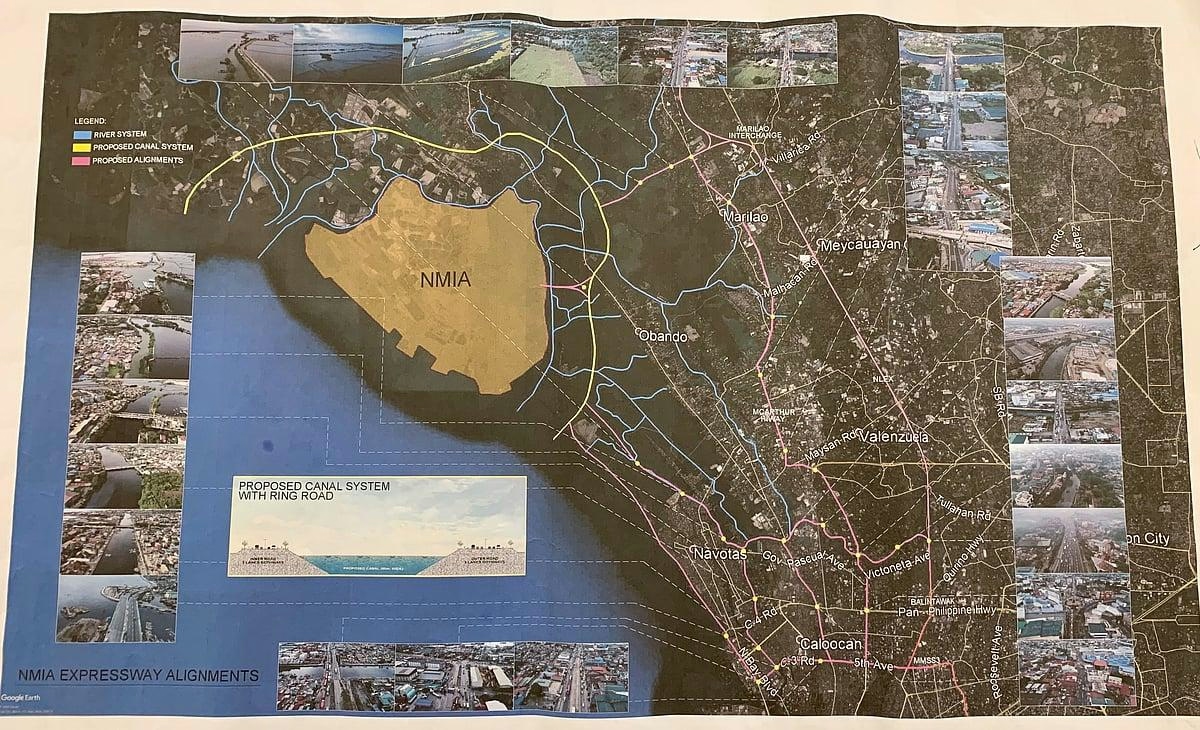
The New Manila International Airport, covering 2,500 hectares in Bulakan, Bulacan, is a flagship development for the Philippine aviation sector. Designed to initially accommodate 35 million passengers annually, the airport plans to expand capacity to 100 million passengers per year upon full completion. The first phase includes two of four planned parallel runways, enabling simultaneous aircraft operations and accommodating larger wide-body planes. The passenger terminal is intended to offer a high-capacity, technology-driven experience.
Once operational, the airport is expected to serve as a primary alternative to the congested Ninoy Aquino International Airport, addressing growing demand across Metro Manila, Central Luzon, and CALABARZON. The development is also anticipated to stimulate economic activity in the surrounding regions.
Market response to SMC’s progress has been largely positive, with the prospect of early runway completion bolstering investor confidence. However, the advancement of the project may prompt competitors such as AirAsia Philippines to reconsider their operations, potentially adjusting flight schedules or renegotiating fees with the airport authority. Industry observers caution that the introduction of new capacity could lead to short-term congestion or transitional disruptions as airlines and regulators adapt to the new infrastructure.
Despite these complexities, SMC maintains that the New Manila International Airport remains broadly on track. The company continues to work closely with regulators and stakeholders to address logistical and construction challenges, aiming to deliver a transformative aviation hub for the Philippines.

Etihad and Swissport Extend Global Partnership

Sepehran Airlines B737 Returns to Mashhad After Tyre and Engine Issues

Etihad Deploys Widebody Fleet to Meet Strong Demand

Korean Air Finalizes $36.2 Billion Deal with Boeing

Australia’s RFDS Queensland Section Orders Six King Air 260Cs

Korean Air Finalizes Order for 103 Boeing Jets and Engines

Embraer E195-E2 Features Distinctive Engine Placement Among Regional Jets

What Passengers Can Expect on Boeing’s New 777X Jet

How Ethiopian Airlines Became Africa’s Leading Carrier Amid Gulf Competition

Joby Aviation Extends Autonomous Flight Capabilities with Cross-Country Tour
