Imagem

Orquestre insights de IA em ações

Entre na lista de espera da AeroGenie hoje mesmo!

Tendências

Categories

stc and Kuwait Airways Sign Agreement to Advance Digital Transformation in Aviation
August 25, 2025By ePlane AI
stc and Kuwait Airways Sign Agreement to Advance Digital Transformation in Aviation
0
0
Kuwait Airways
Digital Transformation
Aviation Technology

stc and Kuwait Airways Sign Agreement to Advance Digital Transformation in Aviation

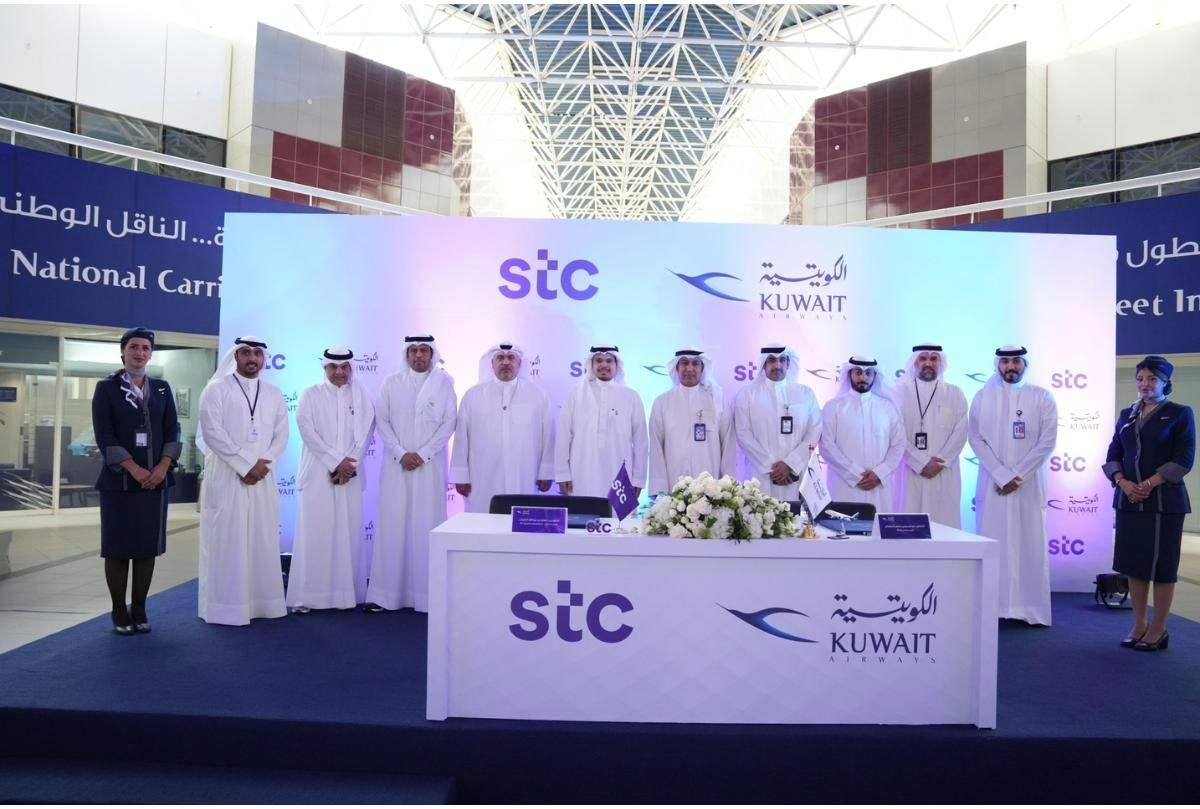
Kuwait Airways and Kuwait Telecommunications Company (stc) have formalized a joint cooperation protocol aimed at accelerating digital transformation within the aviation sector. This strategic agreement is designed to enhance collaboration by leveraging stc’s expertise as a leading enabler of digital innovation, with the goal of delivering integrated services that improve operational efficiency and elevate the customer experience.

Strengthening Public-Private Sector Collaboration

At the signing ceremony, Captain Abdulmohsen Salem Al-Fagaan, Chairman of Kuwait Airways, underscored the importance of the partnership in reinforcing the airline’s role as a bridge between Kuwait’s public and private sectors. He highlighted that the protocol expands cooperation into new areas, facilitating the exchange of expertise in technology, air transport, and communications. Al-Fagaan emphasized that the agreement serves the mutual interests of both parties and contributes to the broader development of Kuwait’s national economy.

He also praised stc’s pivotal role in advancing the country’s digital infrastructure and its commitment to delivering state-of-the-art telecommunications and technology solutions. Describing the agreement as a “fruitful and important” step, Al-Fagaan noted that it reflects a shared vision for achieving common objectives through successful partnerships and productive cross-sector relationships.

Driving Innovation and Overcoming Challenges

Eng. Muataz Abdullah Aldharrab, CEO of stc, echoed these views, describing the partnership as a significant milestone in stc’s ongoing mission to drive digital transformation across Kuwait. He stated that the cooperation embodies stc’s vision of fostering strong connections between key sectors and reaffirmed the company’s commitment to providing innovative solutions aligned with customer aspirations. Aldharrab emphasized the importance of collaboration between leading companies to achieve regional excellence and leadership, particularly through the exploration and implementation of cutting-edge technologies in aviation and telecommunications.

Despite the promising outlook, both organizations acknowledge the challenges inherent in advancing digital transformation within the aviation industry. These include navigating complex regulatory frameworks, integrating new technologies with existing systems, and ensuring a seamless experience for customers. Operational hurdles such as workforce training and data security also remain critical areas to address in order to fully realize the partnership’s potential.

Market analysts anticipate that this collaboration could stimulate increased investor interest in digital initiatives within the aviation sector. It may also prompt competitors to accelerate their own digital transformation efforts to maintain a competitive advantage. As the partnership develops, stc and Kuwait Airways remain focused on delivering tangible benefits that extend beyond their organizations to positively impact Kuwaiti society at large.

This agreement exemplifies stc’s strategic vision to deepen collaboration with key sectors in Kuwait, reinforcing its position as a catalyst for innovation and digital advancement throughout the country.

More news
Delta Ends Near-Free Upgrades to Increase Premium Revenue

Delta Ends Near-Free Upgrades to Increase Premium Revenue

Delta Ends Near-Free Upgrades to Boost Premium Revenue Changing Dynamics in Premium Air Travel Over recent years, demand for premium airline seating has steadily increased, with passengers showing a growing willingness to pay for additional space, comfort, and enhanced onboard amenities. This evolving consumer preference has prompted airlines to expand their premium offerings beyond traditional long-haul international routes to include domestic flights as well. From lie-flat business class cabins to upgraded economy experiences, premium products have become a vital revenue stream for major carriers, fundamentally altering how seat inventory is marketed and sold. Delta Air Lines is among the carriers capitalizing on this shift. In 2024, the Atlanta-based airline made it clear that it no longer views upgrades as complimentary rewards but as valuable revenue opportunities. At its 2024 Investor Day, Delta outlined a strategy focused on reducing free upgrades, increasing options for customers to purchase premium seats, and implementing dynamic pricing tailored to each passenger’s willingness to pay. The airline is also testing new fare structures aimed at converting more travelers into paying premium customers. From Complimentary Upgrades to Revenue Generation Historically, Delta routinely provided complimentary upgrades to frequent flyers, particularly on domestic routes. Medallion members often enjoyed automatic moves to first class at no extra cost, with upgrades allocated based on loyalty tier and seat availability. This system rewarded miles flown rather than money spent, allowing travelers to earn elite status through volume—even on discounted tickets—and still receive premium perks. For many business travelers and status seekers, these upgrades became a dependable benefit, especially on short- and medium-haul flights during off-peak times. This approach fostered loyalty among frequent flyers who chose Delta for the chance of a better seat, even when cheaper alternatives were available. However, the model presented long-term challenges. A significant portion of premium cabin seats frequently went unsold, filled instead by passengers who had not paid for the product. This practice diminished the potential value of premium seating and constrained the airline’s ability to maximize revenue from one of its most sought-after offerings. Recognizing these inefficiencies, Delta’s leadership began to reconsider the upgrade system. Viewing it as outdated and financially unsustainable, the airline decided to implement strategic changes to better align premium seating with revenue goals. Premium Seating as a Core Business Focus At the 2024 Investor Day, Delta Air Lines President Glen Hauenstein emphasized that the era of routinely handing out premium seats was over. He described premium cabins as the airline’s “biggest loss leader” in previous years, acknowledging that “we didn’t sell them, we gave them away.” This candid assessment underscored the need to reposition premium seats as high-value products with consistent revenue potential. Hauenstein explained that Delta previously charged significantly higher fares for first class but often undermined this pricing by distributing upgrades freely. The airline’s new approach aims to treat premium seating as a strategic asset, focusing on monetization rather than complimentary distribution. By reducing free upgrades and offering more opportunities for passengers to purchase premium seats, Delta seeks to enhance profitability while meeting growing customer demand for premium travel experiences.
Qatar Airways and Industry Leaders Unveil New Aircraft and Innovations at Farnborough Airshow 2026

Qatar Airways and Industry Leaders Unveil New Aircraft and Innovations at Farnborough Airshow 2026

Qatar Airways and Industry Leaders Unveil New Aircraft and Innovations at Farnborough Airshow 2026 Qatar Airways is set to make a significant return to the Farnborough International Airshow 2026, joining prominent industry players such as Etihad Airways, DHL Air UK, Airbus, Embraer, and Bombardier in presenting the latest advancements in aviation technology, fleet expansion, and innovation. Recognized as one of the world’s foremost aviation events, the airshow provides a global platform for airlines, manufacturers, and technology providers to showcase next-generation aircraft and outline strategic growth initiatives. Industry Context and Strategic Developments This year’s Farnborough Airshow arrives at a critical juncture for the aviation sector. Airlines are emphasizing the deployment of fuel-efficient fleets, enhanced passenger experiences, and smarter aviation solutions amid persistent challenges. Elevated jet fuel prices and ongoing geopolitical tensions, concerns highlighted by Cathay Pacific CEO Ronald Lam, continue to influence carrier strategies worldwide. In response, airlines are not only investing heavily in innovation but are also recalibrating their route networks to maintain competitiveness. Qatar Airways exemplifies this approach by resuming flights to Philadelphia and expanding services to Dubai, part of its broader plan to restore its global network to over 160 destinations. These strategic moves are prompting competitors to consider similar adjustments and expansions in their own operations. Qatar Airways’ Showcase and Industry Highlights At Farnborough 2026, Qatar Airways will feature two flagship aircraft: a Boeing 777-300ER adorned with FIFA World Cup 2026 branding and equipped with Starlink Wi-Fi, alongside the Qatar Executive Gulfstream G700. These aircraft will provide attendees with an up-close experience of the airline’s latest innovations in passenger comfort, onboard connectivity, and luxury travel. Qatar Airways’ participation underscores its ongoing commitment to operational excellence and technological advancement, reinforcing its position as a leading global carrier. Other notable participants include DHL Air UK, which will present a Boeing 777-200LR Freighter emphasizing advanced cargo capabilities. Etihad Airways is expected to announce an order for approximately ten Boeing 787 Dreamliners, signaling continued fleet modernization. Airbus will be a major exhibitor, featuring a flying demonstration of the A350-1000 and exhibits focused on commercial aviation, sustainability, and defense. Embraer will showcase the C-390 Millennium in flight and the E195-E2 in static display, while Bombardier will conduct a flying demonstration of its Global 8000 business jet. Additional displays include GE Aerospace’s Boeing 747-400 test aircraft and Saab 340B, BETA Technologies’ CX300 electric aircraft and MV250 in both flying and static displays, Vertical Aerospace’s VA-1X eVTOL aircraft in flight, and General Atomics AeroTec Systems’ static display of the Do228 NXT. As Farnborough 2026 attracts global attention from airlines, investors, suppliers, and aviation enthusiasts, the event is set to influence the future trajectory of commercial and private aviation. Despite prevailing industry challenges, the airshow highlights how leading carriers and manufacturers are harnessing innovation and strategic agility to navigate a rapidly evolving landscape.
Kenya Airways Considers Boeing 777 Freighters and E2 Jets

Kenya Airways Considers Boeing 777 Freighters and E2 Jets

Kenya Airways Evaluates Boeing 777 Freighters and Embraer E2 Jets Amid Fleet Renewal Kenya Airways (KQ), based at Nairobi’s Jomo Kenyatta International Airport, is actively considering the acquisition of two or more Boeing 777-200 Freighters to strengthen its cargo operations. Alongside this, the airline is exploring further additions to its Boeing 737 fleet and evaluating Embraer’s E2 jets as part of a broader strategy to modernize and optimize its aircraft lineup. Cargo Expansion and Competitive Challenges Acting Group Managing Director and CEO George Kamal revealed that Kenya Airways is engaged in discussions with both Boeing and Embraer, with the final number and specific variants of the 777 freighters contingent on market availability. The airline is likely to pursue pre-owned or leased aircraft to meet its objective of maintaining a daily cargo capacity between 180 and 200 tons. This initiative follows the airline’s recent decision to replace its Boeing 747-400(BCF) capacity agreement with Terra Avia by securing capacity on Boeing 767 and 777 freighters. However, Kenya Airways has dismissed the possibility of acquiring Boeing 767 freighters due to the high costs associated with introducing a new aircraft type, including expenses related to training, tooling, and maintenance. Currently, Kenya Airways operates a narrowbody cargo fleet comprising two company-owned Boeing 737-300(SF) aircraft and two leased Boeing 737-800(SF) freighters. The consideration of new widebody freighters comes amid intensifying competition in the cargo sector, particularly from Middle Eastern carriers such as Emirates and the Saudia Group, both of which have recently placed significant orders for Boeing 777 freighters. This heightened competition is expected to influence market dynamics, potentially prompting rival airlines to adjust pricing strategies, enhance service offerings, or pursue strategic partnerships to protect their market share. Such developments could impact Kenya Airways’ plans for cargo expansion. Introducing widebody freighters will require meticulous operational planning to ensure seamless integration with existing infrastructure and processes. The airline must carefully balance the advantages of increased cargo capacity against the complexities of fleet integration and the volatility of market demand. Passenger Fleet Renewal and Operational Considerations On the passenger side, Kenya Airways is assessing the Embraer E2 as a potential replacement for its current fleet of E190 aircraft. Of the eleven E190s in the fleet, four have been sold, two are undergoing maintenance, and five remain in active service, according to data from ch-aviation and ADS-B tracking. The E2 is being evaluated primarily to address payload and baggage restrictions on regional routes departing from Nairobi, which are affected by the airport’s challenging hot-and-high operating conditions. Kamal emphasized that while no final decision has been made, the E2 is under positive consideration, highlighting Kenya Airways’ unique position as the only African carrier operating an Embraer maintenance center. Additional fleet developments include the planned return of a Boeing 777-300ER, currently leased to Turkish Airlines, to Kenya Airways’ network on July 17. This aircraft will be deployed on the Nairobi to London Heathrow route. Furthermore, two leased Boeing 737-800NGs are expected to join the fleet in 2026, with one arriving from Aerolíneas Argentinas in November of that year. Plans to lease six Boeing 737-8 aircraft have been deferred to 2027 due to ongoing parts and engine shortages, compounded by liquidity constraints. At present, Kenya Airways’ fleet consists of nine Boeing 737-800s, nine Boeing 787-8s (three of which remain grounded due to engine supply chain delays), eleven E190s, and four Boeing 737 freighters, according to ADS-B data. As the airline navigates a complex environment shaped by evolving market conditions, competitive pressures, and operational challenges, its forthcoming decisions on fleet composition will be critical to sustaining growth and efficiency.
Horizon Aircraft Selects BETA Systems for Cavorite X7 VTOL Jet

Horizon Aircraft Selects BETA Systems for Cavorite X7 VTOL Jet

Horizon Aircraft Selects BETA Technologies for Flight Control Systems in Cavorite X7 VTOL Jet Horizon Aircraft Ltd. (NASDAQ: HOVR) has announced a strategic partnership with BETA Technologies, Inc. (NYSE: BETA) to supply advanced flight control computers and software for its flagship hybrid-electric vertical take-off and landing (VTOL) aircraft, the Cavorite X7. This collaboration will integrate BETA’s fly-by-wire (FBW) flight control hardware and bespoke software into the Cavorite X7 as Horizon advances through development, testing, and certification phases. Advanced Flight Control Technology for VTOL Applications BETA’s FBW platform is specifically engineered for modern VTOL aircraft, incorporating safety-critical software, system redundancy, and a flexible architecture designed to ensure reliable and secure operations. The flight control computer (FCC) supports certification pathways under FAA Part 21.17(b) for powered-lift, as well as Part 23 and Part 25 standards. It is also designed to meet evolving international regulatory requirements, including those from Transport Canada and the European Union Aviation Safety Agency (EASA). Kyle Clark, Founder and CEO of BETA Technologies, highlighted the company’s commitment to advancing aviation technology: “Horizon Aircraft has a strong team capable of designing and flying the X7, and they chose our flight control computers because we built them to meet the most rigorous standards in the industry. They’re compact, purpose-built for powered-lift, and designed with the certification discipline that DAL-A software and hardware development demands.” Flight control systems are among the most safety-critical components in VTOL aircraft, directly influencing handling, performance, and regulatory approval. Tom Brassington, Chief Technology Officer at Horizon Aircraft, emphasized the thorough selection process: “Flight controls are at the heart of our aircraft, so the process of selecting a flight controls partner was done methodically. We were attracted to BETA because of their sophisticated VTOL-specific FBW platform, a shared engineering philosophy, and the ability to support the rigorous long-term program requirements of aircraft certification.” Certification and Operational Advantages BETA’s FCCs, developed entirely in-house, deliver the capability, speed, and reliability essential for modern powered-lift aircraft. The compact system utilizes advanced electronics to provide high-performance flight control within a lightweight form factor, meeting stringent environmental and lightning protection standards necessary for eVTOL operations in both U.S. and international airspace. Horizon will employ the same FCC hardware as BETA’s own fleet, enabling both companies to benefit from economies of scale, reduced component costs, and enhanced manufacturing efficiency. As a merchant supplier of safety-critical components—including motors, batteries, and flight controllers—BETA possesses the in-house expertise to develop hardware and software to Development Assurance Level A (DAL-A), the highest level of rigor recognized by the FAA and international regulators. Challenges and Competitive Landscape Despite the promising partnership, Horizon Aircraft faces potential challenges as ongoing reviews of the Cavorite X7’s flight-test plan may affect the timeline for its inaugural flight. This uncertainty could raise concerns among investors regarding possible delays. Meanwhile, competitors such as Volocopter and Eve are making significant strides in their respective eVTOL programs, intensifying competition and potentially accelerating development efforts across the sector. Nonetheless, Horizon’s collaboration with BETA Technologies represents a significant advancement in the development of the Cavorite X7, underscoring the company’s dedication to safety, performance, and regulatory compliance within the rapidly evolving eVTOL industry.
Malaysia Plans New Aviation Rules to Support Aerospace Growth, Says Loke

Malaysia Plans New Aviation Rules to Support Aerospace Growth, Says Loke

Malaysia to Introduce New Aviation Regulations to Propel Aerospace Industry Regulatory Framework to Support Low-Altitude Economy Malaysia is set to implement a new regulatory framework for the low-altitude economy by the end of this year, a move designed to accelerate the country’s ambitions of becoming a leading aerospace hub in the region. Transport Minister Anthony Loke announced the initiative during the groundbreaking ceremony for the Subang MRO Logistics Complex at Subang Aerotech Park. He revealed that the Civil Aviation Authority of Malaysia (CAAM) has been tasked with developing the framework following discussions at the recent Low Altitude Economy Forum. Loke emphasized that the forthcoming regulations will complement the Malaysia Aerospace Industry Blueprint 2030, facilitating the growth of emerging aviation technologies and industries. He underscored the significant potential within Malaysia’s aerospace sector, particularly in maintenance, repair, and overhaul (MRO) services, which continue to experience strong demand across the Asia-Pacific region. “There is no need to put a limit or cap on our target. The potential of Malaysia’s aerospace industry, especially in the MRO segment, is huge,” Loke stated, noting that the country must now fully leverage its strategic advantages. Expanding Aerospace Industry and Economic Impact Currently, Malaysia’s aerospace industry generates approximately RM32.5 billion in annual revenue and supports over 35,000 highly skilled jobs. The Asia-Pacific MRO market is projected to surpass US$60 billion by 2030, with Malaysia already ranked third in the region and fourth globally for business aviation MRO activities. Despite these achievements, Loke highlighted the necessity for ongoing investment in infrastructure, talent development, and technology to sustain and enhance the country’s competitive position. The new regulatory framework is expected to stimulate increased business for key industry players such as ExecuJet and Collins Aerospace, as demand for maintenance services grows. However, the sector faces challenges including the need for substantial investment in workforce training and infrastructure. Additionally, regional competitors are likely to respond by upgrading their own aviation facilities, intensifying competition within the industry. Loke also pointed to the rising importance of aviation to Malaysia’s broader economy, noting that the value of the country’s air trade reached RM644.08 billion in the first five months of 2026, surpassing sea freight, which stood at RM618.02 billion during the same period. International Collaboration and Sustainability Focus Sustainability remains a critical consideration as Malaysia seeks to align its aerospace growth with global decarbonization goals. Balancing industry expansion with environmental commitments presents ongoing challenges that will require careful management. On the international front, Loke expressed gratitude to the Japanese Embassy and Japanese corporations for their continued confidence in Malaysia’s aviation and logistics sectors. He highlighted the expanding collaboration with Japan’s Mitsui Fudosan Group, which now extends beyond the Subang MRO Logistics Complex to include the transformation of the Lalaport development into a transport-oriented city hub. “We have been working very closely with Japan, and I sincerely hope we can further strengthen this cooperation through projects like these to promote greater investment and growth in the aerospace sector,” Loke remarked. The Subang MRO Logistics Complex, a joint venture between Malaysia Airports and Mitsui Fudosan Group, is anticipated to enhance Malaysia’s aerospace ecosystem by improving logistics infrastructure, facilitating technology transfer, and expanding regional MRO capacity.
Commercial Aircraft on Display at Farnborough 2026

Commercial Aircraft on Display at Farnborough 2026

Commercial Aircraft Take Center Stage at Farnborough 2026 As the aerospace industry prepares for the Farnborough International Airshow later this month, attention is firmly focused on the commercial aircraft that will headline one of the sector’s most significant trade events. The exhibition not only highlights the latest advancements in aircraft technology but also reflects the intensifying competition among manufacturers striving to secure market share in a rapidly evolving global aviation landscape. Key Aircraft on Display Airbus will present its flagship widebody, the A350-1000, featuring daily flying demonstrations from July 20 to 24. As Airbus’ largest twin-engine airliner, the A350-1000 has attracted strong demand, with recent orders from carriers such as Qantas for its Project Sunrise initiative, alongside several Gulf and Asian airlines. Its prominent presence at Farnborough underscores Airbus’ ongoing rivalry with Boeing, particularly in the widebody segment, as both companies seek to capitalize on the aerostructures market, which is projected to reach $142.7 billion by 2035 with a compound annual growth rate of 6.6%. Embraer will showcase the E195-E2, the largest model in its E2 family, on static display. This next-generation regional jet has gained recognition as a cost-effective solution for routes that do not require larger narrowbodies like the Airbus A320neo or Boeing 737 MAX. With a growing customer base across Europe, North America, and Asia, the E195-E2 continues to strengthen Embraer’s position in the regional aviation market. Representing the cargo sector, DHL Air UK will feature its Boeing 777-200LR Freighter. Derived from Boeing’s ultra-long-range passenger variant, the 777F is a critical asset in global express logistics, capable of transporting high-density and oversized freight on intercontinental routes. DHL Air UK currently operates a fleet of seven 777 freighters, with an additional aircraft on order, as it modernizes its long-haul cargo operations. Qatar Airways will display its Boeing 777-300ER, a cornerstone of its long-haul fleet. With 57 aircraft in service, the 777-300ER supports the airline’s high-capacity international routes and premium service offerings, highlighting the continued importance of widebody aircraft for global carriers. Although not a commercial airliner, the Gulfstream G700 operated by Qatar Executive will also be on static display. As one of the newest and longest-range business jets, the G700 features up to five living areas and ultra-long-range capability. Qatar Executive, the global launch operator, currently operates nine of these jets. GE Aerospace will bring its Boeing 747-400 Flying Testbed, a well-known platform in aviation research. This modified aircraft serves as an airborne engine testing facility, enabling real-world evaluation of emerging engine technologies. Industry Context and Market Dynamics Farnborough 2026 unfolds amid heightened competition, with manufacturers such as Gulfstream unveiling mock-ups of the G400 and G300 business jets, targeting increased interest particularly within the European market. These introductions are expected to prompt swift responses from competitors, who may accelerate the launch of new models or enhancements to existing fleets to maintain their market positions. As the commercial aviation sector anticipates robust growth and innovation, Farnborough promises to be a pivotal event showcasing the future trajectory of the industry.
MTU Highlights CFM Partnership in Launch of Fort Worth Hub

MTU Highlights CFM Partnership in Launch of Fort Worth Hub

MTU Expands Fort Worth Facility to Strengthen CFM Partnership MTU Aero Engines, the German specialist in engine maintenance, repair, and overhaul (MRO), has officially inaugurated its expanded facility in Fort Worth, Texas, marking a pivotal development in its collaboration with CFM International. The launch was commemorated by the induction of the site’s first CFM Leap-1B engine, which is destined for GOL, a long-standing Brazilian airline customer. Strategic Shift Towards CFM Aftermarket Services Traditionally known for its close partnership with Pratt & Whitney—holding up to an 18% stake in the Geared Turbofan (GTF) program and managing critical components such as the low-pressure turbine and high-pressure compressor—MTU has recently redirected its focus toward the CFM aftermarket. This strategic realignment reflects the company’s intent to diversify beyond its established strengths and adapt to shifting market dynamics, particularly as more than two-thirds of its revenues now derive from MRO activities. The $120 million investment in the 43,000 square meter (463,000 square feet) Fort Worth hub underscores MTU’s ambition to expand its presence in North America. This facility now serves as the company’s flagship site in the region and is distinguished as the only MTU location worldwide to receive CFM’s “Premier” status, the highest level of approval granted by the engine manufacturer. This designation authorizes MTU to perform a comprehensive range of maintenance services—including complete overhauls and in-house repairs—on both Leap and CFM56 engines. MTU expects to induct its first Leap-1A engine, used on the Airbus A320neo family, at the Fort Worth site in the near future, although customer details remain undisclosed. The company projects that the global market for Leap engines will eventually triple the size of the CFM56 market, with annual shop visits anticipated to peak at approximately 8,000 by 2045. Looking further ahead, MTU plans to expand its authorizations at Fort Worth to include the GE Aerospace GEnx engine by 2029, thereby broadening its service portfolio. Challenges and Market Position Despite these advancements, MTU faces several challenges in leveraging its partnership with CFM. Competition from other CFM International partners and the necessity to balance workload value with GE Aerospace remain significant concerns. Moreover, MTU’s historical focus on high-end, durable engines may not fully align with the rapidly evolving requirements of collaborative combat aircraft and other next-generation platforms. These factors have generated some skepticism within the aviation community regarding MTU’s capacity to compete effectively in the CFM aftermarket. Concurrently, competitors such as CFM International and GE Aerospace are expected to intensify their aftermarket strategies in response. Nevertheless, MTU’s MRO segment continues to experience rapid growth. Currently, shop visits are divided roughly two-thirds in favor of V2500 and GTF engines, with the remaining one-third comprising CFM and GE engines. However, the value of work is more evenly distributed due to the complexity of repairs on GE engines, such as the GEnx turbine center frame. Operating across Germany, China, Serbia, Canada, and Poland, MTU positions itself as the world’s second-largest engine aftermarket service provider by shop visits, handling over 1,400 annually and holding more than 30 manufacturer authorizations. “As one of the world’s leading engine MRO providers, we are systematically expanding our global footprint,” said CEO Johannes Bussmann. “Fort Worth will be a cornerstone of our strategy to support next-generation engine programs at scale.”
IBS Group Launches Naviq Technology to Advance AI in Travel Industry

IBS Group Launches Naviq Technology to Advance AI in Travel Industry

IBS Group Launches Naviq Technology to Advance AI in Travel Industry IBS Group has introduced Naviq Technology, a new company dedicated to artificial intelligence-driven travel technology, with the goal of accelerating digital transformation throughout the global travel sector. This initiative positions IBS Group at the forefront of AI innovation, utilizing advanced automation and data analytics to support airlines, airports, hotels, and tourism companies in achieving enhanced operational efficiency and accelerated growth. Navigating AI-Driven Transformation in Travel Operating as an independent entity within the IBS Group ecosystem, Naviq Technology combines decades of travel industry expertise from IBS Software with state-of-the-art AI capabilities. The company is focused on addressing the complex operational challenges faced by travel businesses, including rising costs, shifting customer expectations, workforce constraints, and the pressing need for digital innovation. Naviq aims to deliver intelligent, industry-specific solutions tailored to these demands. The launch of Naviq coincides with a notable surge in AI adoption across the travel industry. Airlines, airports, cruise operators, and hospitality providers are increasingly investing in artificial intelligence to streamline operations, improve decision-making, and offer more personalized customer experiences. Recent trends indicate a growing use of AI in hotel sourcing, underscoring a receptive market for advanced solutions such as those Naviq proposes. Strategic Focus and Market Positioning Naviq’s strategy emphasizes large-scale AI integration, transformation of customer experiences, and data-driven operational management. The company seeks to assist travel organizations in embedding AI across diverse business functions, ranging from enhanced operational planning to personalized traveler engagement. By concentrating on measurable business outcomes, Naviq aims to unlock new commercial opportunities and foster more connected customer interactions. A distinctive feature of Naviq is its specialized delivery model, designed to expedite implementation and shorten the time required for clients to realize value from their technology investments. For existing IBS Software customers, Naviq will act as a preferred partner in AI-enabled transformation, guiding organizations through the transition to more intelligent and efficient operations. Despite these advantages, Naviq faces challenges in differentiating its offerings from existing AI solutions and ensuring seamless integration with clients’ current systems. Additionally, initial skepticism from corporate travel managers accustomed to traditional processes may slow adoption. Overcoming such resistance will necessitate clear demonstrations of efficiency improvements and compliance benefits facilitated by AI. Competitors within the travel technology sector are expected to respond by enhancing their own AI capabilities or pursuing strategic partnerships and acquisitions to maintain competitiveness. Naviq’s future success will depend on its ability to deliver tangible business value and adapt to the evolving needs of global travel companies. Naviq Technology plans to collaborate closely with leading stakeholders across the travel industry—including airlines, airports, cruise lines, and hospitality providers—to harness artificial intelligence as a catalyst for innovation and growth in an increasingly digital landscape.
Rise in AI and SpaceX Fortunes Fuels Private Jet Demand

Rise in AI and SpaceX Fortunes Fuels Private Jet Demand

Surge in AI and SpaceX Wealth Drives Private Jet Market Boom The rapid accumulation of wealth from artificial intelligence startups and SpaceX has ignited an unprecedented surge in demand for private jets, significantly impacting the luxury travel and real estate sectors. Amanda Applegate, an aviation attorney at Soar Aviation Law in Cleveland, reports a 25% increase in business activity during the first months of 2026. This growth is largely attributed to a wave of liquidity events in the technology sector, most notably SpaceX’s landmark initial public offering (IPO) valued at $85.7 billion. The IPO has generated substantial wealth for the company’s founder, employees, and early investors, fueling a rush among tech investors to acquire private aircraft. Expanding Influence of AI and Tech Wealth The influence of SpaceX’s success extends beyond the company itself. AI firms such as Anthropic and OpenAI are widely anticipated to pursue large IPOs, which would further enlarge the pool of affluent buyers entering the private aviation market. Venture capitalists, board members, early employees, and bankers involved in these offerings are increasingly channeling their newfound fortunes into private jet ownership. This trend positions private aviation as one of the earliest beneficiaries of the ongoing AI-driven economic expansion. Luxury travel providers are adapting to this shift by focusing their marketing efforts on technology founders and executives, anticipating a fresh wave of billionaires. Companies like BlackJet have expanded their jet card programs to accommodate the preferences of high-net-worth individuals, while Flexjet, a leader in fractional jet ownership and membership plans, has observed a demographic shift toward younger, self-made clients. D.J. Hanlon, Flexjet’s executive vice president of sales, notes that the influx of first-generation wealth from tech IPOs is reshaping the customer base. Data from aviation intelligence firm Jetnet corroborates this trend, revealing an 11.8% increase in global flights through shared-ownership programs and a 13.4% rise in flights by private jet owners during the first five months of 2026 compared to the same period in 2025. In North America, the largest market for private aviation, this growth reflects both increased flight frequency among existing owners and a surge of new buyers, many of whom initially engage with fractional ownership or membership models before progressing to full aircraft ownership. Broader Impacts on Luxury Markets and Real Estate This pattern of wealth-driven expansion in private aviation echoes previous surges, such as the 24% increase in business jet deliveries during the dot-com boom. Today, the excitement surrounding SpaceX—now valued at approximately $2 trillion—and the anticipation of major AI IPOs are driving a comparable upswing in demand. The private space industry is also influencing adjacent luxury markets. Companies like SpaceX and Blue Origin have triggered a “hotel land grab” for oceanfront properties in Florida, as investors anticipate growing demand for upscale accommodations linked to space launches and tourism. This phenomenon has sparked a wave of commercial real estate investment tied to the burgeoning private space sector. Looking ahead, SpaceX’s potential expansion into new markets, including prototype AI devices and wireless services, could further alter market dynamics and provoke competitive responses across various industries. As dissatisfaction with commercial air travel intensifies and technology-driven wealth continues to accelerate, private aviation and related luxury sectors appear poised for sustained growth.
AJet to Add Five A321neos to Fleet

AJet to Add Five A321neos to Fleet

AJet to Expand Fleet with Five Airbus A321neos AJet is poised to enhance and modernise its fleet through a new lease agreement with BOC Aviation, acquiring five Airbus A321neo aircraft. These next-generation jets, powered by Pratt & Whitney GTF engines, are slated for delivery in 2028. The addition is intended to support the Turkish low-cost carrier’s expansion across Europe, North Africa, and the Middle East, reinforcing its growth strategy in these key regions. Strategic Partnership and Fleet Renewal This agreement marks the commencement of a partnership between AJet and BOC Aviation, aligning with the airline’s broader fleet renewal objectives. AJet’s Chief Executive, Kerem Sarp, emphasised the significance of the A321neos in the company’s growth plans, highlighting their role in expanding the route network while simultaneously improving operational efficiency and passenger experience. The integration of these aircraft is expected to advance both the airline’s sustainability goals and its competitive positioning. Operational Considerations and Industry Context As AJet prepares to incorporate the A321neos, it will need to address operational challenges such as comprehensive crew training and maintaining rigorous maintenance standards. Effective management of these factors will be critical to realising the anticipated gains in efficiency and environmental performance. The fleet upgrade is anticipated to be well received by the market, particularly by passengers who stand to benefit from enhanced comfort and reliability. This move reflects a wider industry trend, with airlines increasingly investing in modern, fuel-efficient aircraft to support new route development and replace ageing fleets. Competitors like AirAsia are similarly prioritising fleet renewal, while Azerbaijan Airlines continues its own modernisation efforts. BOC Aviation has noted that the introduction of the A321neos will complement AJet’s existing fleet and underpin its long-term growth as it expands its footprint in strategic regional markets. The partnership is viewed as a strategic initiative for both companies, positioning AJet to compete more effectively in an evolving and competitive aviation environment.
line









