
Orquestre insights de IA em ações

Tendências
Categories
Student Pilot Causes Fuel Starvation Due to Improper Fuel Management
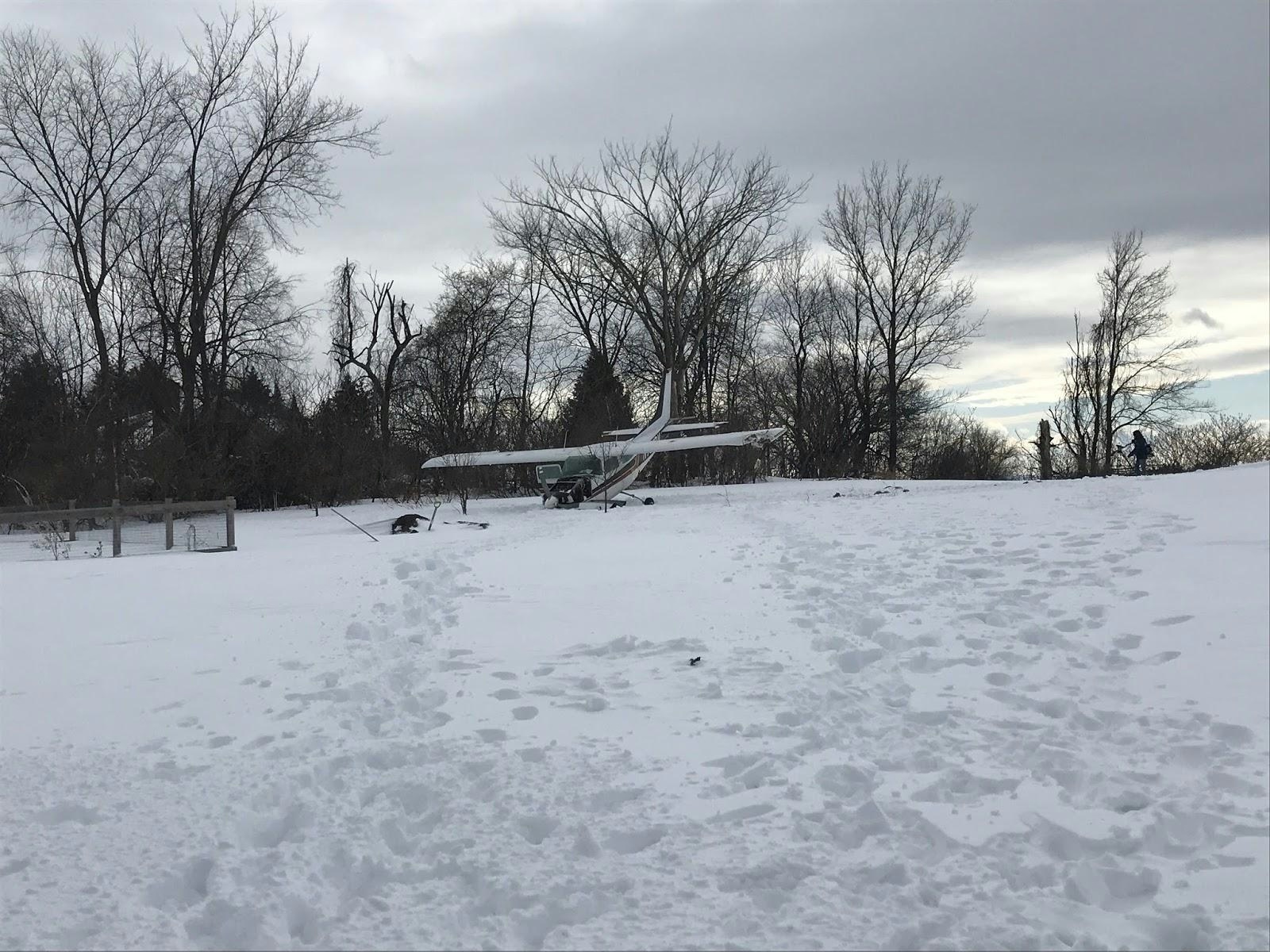
Student Pilot’s Fuel Mismanagement Results in Forced Landing Near Wayside, Texas
A solo cross-country flight undertaken by a student pilot ended abruptly in a forced landing after the Piper PA-28-140 experienced a total loss of engine power attributed to fuel starvation. The incident occurred near Wayside, Texas, when the pilot, unable to restore engine power despite attempting to switch fuel tanks, was compelled to land the aircraft in an open field. During the emergency landing, the plane’s left wing struck a metal fence post, sustaining significant damage.
Investigation Reveals Improper Fuel Management
Pre-flight records and the pilot’s own account confirmed that the aircraft departed with a full fuel load of 50 gallons, evenly distributed between the left and right wing tanks. The student pilot reported switching fuel tanks every 30 minutes during the approximately 2.4-hour flight. However, post-accident examination revealed a critical discrepancy: the right fuel tank was completely empty while the left tank remained full. This finding indicated a failure to properly manage the fuel system, leading to fuel starvation despite the presence of usable fuel onboard.
An engine test conducted after the accident found no mechanical faults, effectively ruling out engine failure as a cause. Investigators determined that the loss of power was directly linked to the student pilot’s mismanagement of the fuel system. Notably, the pilot had not obtained the required instructor endorsement for the solo cross-country flight, raising further concerns about training and oversight.
Industry Response and Broader Safety Implications
The National Transportation Safety Board (NTSB) identified the probable cause of the accident as improper fuel management by the student pilot. This incident has intensified scrutiny of pilot training programs and fuel management protocols within the aviation community. Industry experts emphasize the critical importance of comprehensive instruction and vigilant supervision for student pilots to prevent similar occurrences.
In the wake of this event, some operators have temporarily grounded comparable aircraft models to review and enhance safety procedures. Competitors in the aviation sector are also reinforcing their fuel management systems and safety measures. This heightened focus on fuel system reliability coincides with broader industry concerns, exemplified by recent actions such as Air India’s grounding of a Boeing 787 following a pilot’s report of a potential defect in the engine fuel control switch—a component under investigation in connection with a previous crash.
The NTSB’s February 2024 accident report serves as a valuable educational resource, aimed at helping pilots and operators learn from past incidents and strengthen best practices in flight safety.

Etihad Airways Suspends Airbus A380 Flights on Key Route

Aditya Birla Group Seeks Approval for Aircraft Leasing in GIFT City

Qatar Airways Highlights Innovation and Connectivity at Arabian Travel Market 2026

Hong Kong's Five-Year Plan Includes Andrew Fan's Aircraft Parts Processing Hub Proposal

ACIA Aero Leasing Delivers ATR72-600 to Air Nostrum

RTX Appoints Jill Albertelli as Head of Pratt & Whitney

TAT Technologies Joins Beyond Aero Hydrogen Aircraft Program

AURAK Study Highlights Barriers to Air Taxi Adoption in Emerging Economies

Xiamen Air Selects Altitude for 787 Maintenance at Heathrow

Etihad and Swissport Extend Global Partnership
