
Orquestre insights de IA em ações

Tendências
Categories
The aerospace industry is betting on hybrid air taxis
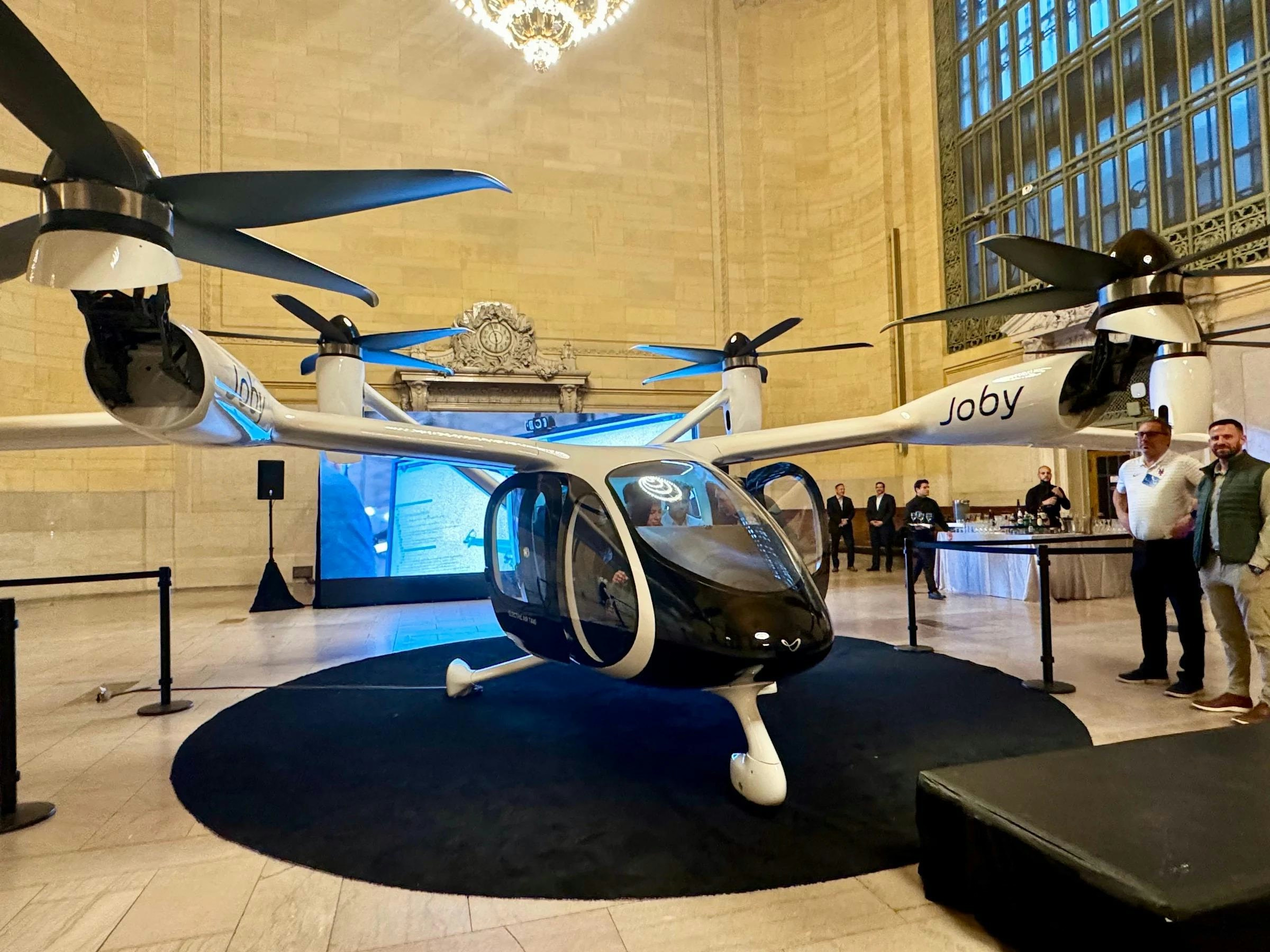
The Aerospace Industry’s Commitment to Hybrid Air Taxis
The concept of quiet, electric air taxis capable of vertical takeoff and landing, navigating above congested urban streets, has captured the imagination of both industry leaders and investors. Consulting firm McKinsey forecasts that within five years, fleets of these flying taxis could rival the size of traditional airlines. However, the path to realizing this vision is proving more intricate and prolonged than initially anticipated.
Regulatory and Financial Challenges
Electric aircraft manufacturers are currently engaged in a competitive race to obtain certification from the Federal Aviation Administration (FAA), a critical prerequisite for commencing commercial operations. This regulatory hurdle comes amid tightening financial conditions across the sector, intensifying the pressure to meet stringent technical and safety standards within limited timeframes.
Despite these obstacles, enthusiasm within the market remains robust. Companies such as Archer Aviation and Joby Aviation have experienced significant stock price increases, driven by high-profile deals and successful public demonstrations. Archer’s recent public flights and Joby’s strategic acquisition of Blade Air Mobility’s passenger business underscore a growing confidence and tactical positioning among key players. Archer’s stock performance, in particular, reflects strong investor belief in the transformative potential of urban air mobility.
Industry Risks and Future Prospects
Nonetheless, the industry faces substantial challenges. The International Air Transport Association (IATA) has issued warnings that ongoing supply chain disruptions could impose costs exceeding $11 billion on the airline industry in 2025, a threat that also looms over the nascent hybrid air taxi market. Delays in certification processes, production constraints, and the necessity for comprehensive infrastructure development may further impede progress.
Despite these risks, the momentum within the aerospace sector remains evident. Strategic partnerships, acquisitions, and sustained investment indicate that while timelines may be adjusted, the aspiration of electric air taxis operating above city traffic is steadily advancing toward realization.

Etihad Airways Suspends Airbus A380 Flights on Key Route

Aditya Birla Group Seeks Approval for Aircraft Leasing in GIFT City

Qatar Airways Highlights Innovation and Connectivity at Arabian Travel Market 2026

Hong Kong's Five-Year Plan Includes Andrew Fan's Aircraft Parts Processing Hub Proposal

ACIA Aero Leasing Delivers ATR72-600 to Air Nostrum

RTX Appoints Jill Albertelli as Head of Pratt & Whitney

TAT Technologies Joins Beyond Aero Hydrogen Aircraft Program

AURAK Study Highlights Barriers to Air Taxi Adoption in Emerging Economies

Xiamen Air Selects Altitude for 787 Maintenance at Heathrow

Etihad and Swissport Extend Global Partnership
