
Orquestre insights de IA em ações

Tendências
Categories
The Changing Landscape of Aviation Aftermarket Services
The Changing Landscape of Aviation Aftermarket Services
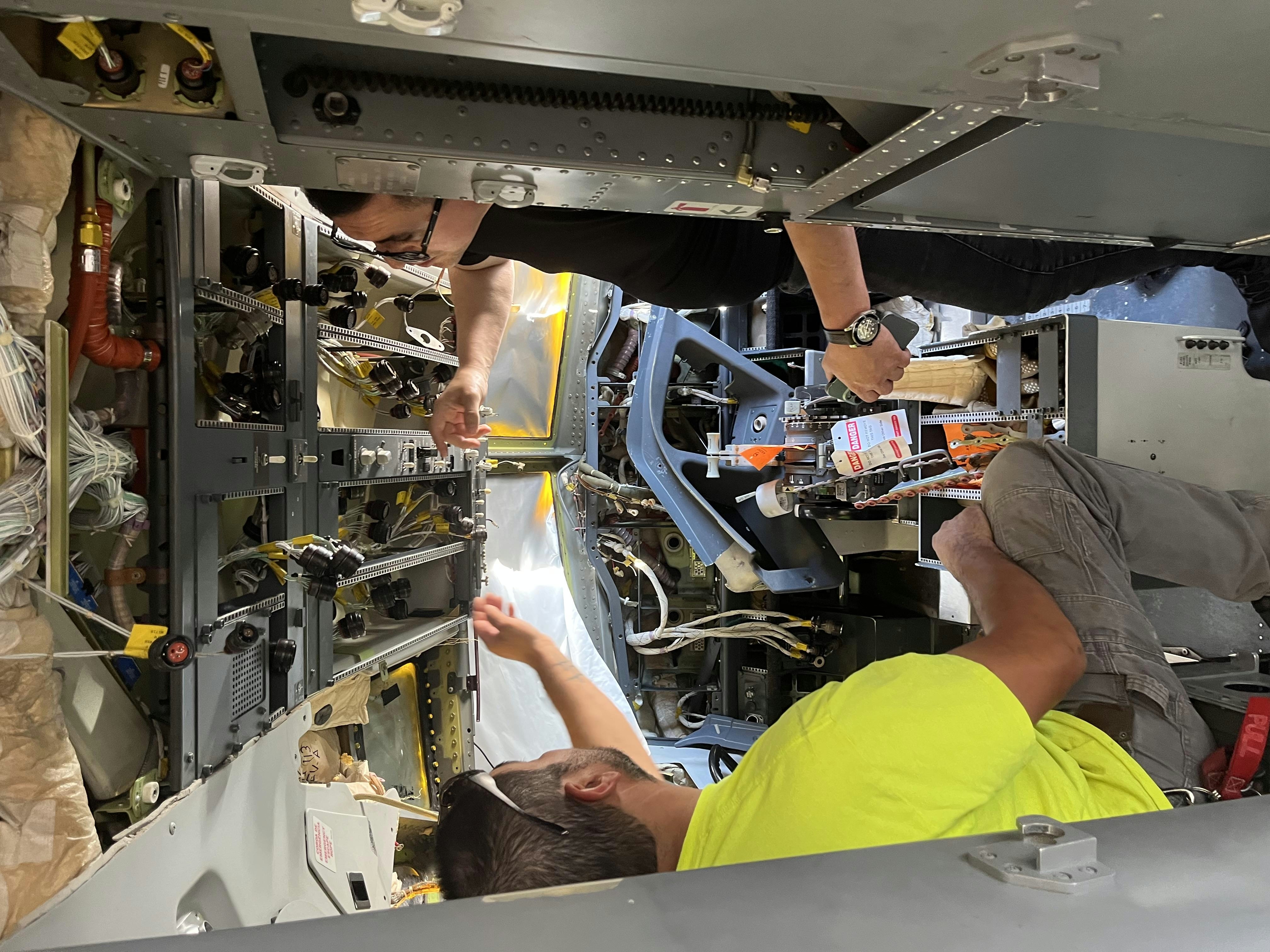
Aircraft operators are navigating a transformed and increasingly challenging aftermarket environment, where inventory management, data accessibility, and trusted supplier relationships have become paramount. The aviation industry continues to grapple with persistent supply chain pressures that are reshaping the sector’s operational dynamics. Rick Nagel, chief executive of Acorn Capital Management, highlights that these challenges are unlikely to abate in the near future, suggesting a prolonged period of adjustment for aviation aftermarket services.
Persistent Supply Chain Challenges and Workforce Shortages
Although parts availability has seen some improvement since the height of the post-pandemic disruptions, the supply chain has yet to return to a state of normalcy. Current difficulties—including supply delays, labor shortages, and constrained deliveries of new aircraft—are increasingly viewed as the new baseline for the industry. Nagel underscores the interconnected nature of these pressures, noting that shortages of skilled labor, dwindling supply sources, and a backlog in new aircraft deliveries are compelling airlines to extend the operational life of older fleets.
“The workforce challenge is a significant issue, from manufacturing all the way down to maintenance, repair, and overhaul (MRO),” Nagel explains. In the United States alone, aerospace and defense employment remains approximately 100,000 workers below required levels, with ongoing struggles to attract young talent into STEM fields and technical trades. This labor deficit has a direct impact on aftermarket operations, as the loss of experienced personnel since the pandemic has created a substantial knowledge gap. Nagel points out that replacing one seasoned employee often requires two new hires, due to the loss of institutional knowledge and expertise.
Operational Pressures and Market Scarcity
At the operational level, these structural challenges manifest acutely. Components subject to high utilization—such as landing gear, auxiliary power units (APUs), and life-limited parts—face relentless demand. Even routine maintenance activities can be disrupted when critical parts are unavailable. “Almost any unavailable component becomes critical if it prevents an aircraft from operating the next day,” Nagel remarks. In this environment, the ability to secure supply is a decisive competitive advantage.
The scarcity of parts is further exacerbated by a reduced flow of material into the used serviceable material (USM) market. Airlines are retaining aircraft that would traditionally have been retired, due to delays in new aircraft deliveries. This trend has led to fewer aircraft teardowns and a diminished supply of used parts. “Aircraft teardowns are at a low rate because airlines desperately need the planes they’ve got,” Nagel observes. Consequently, the aftermarket is experiencing a constrained supply landscape.
Industry Responses and Future Outlook
In response to these challenges, the aviation aftermarket is investing in advanced maintenance solutions, including predictive maintenance technologies and expanded capabilities to support next-generation engines. Industry players are pursuing strategic expansions and collaborations aimed at securing material supplies and enhancing operational efficiency. Despite these efforts, many maintenance professionals express concern over the deteriorating supply environment, citing dissatisfaction with current pricing structures and lead times.
As the aviation aftermarket continues to evolve, operators must increasingly rely on effective inventory management, dependable partnerships, and technological innovation. The sector’s capacity to adapt to these shifting conditions will be critical in meeting the demands of a changing global fleet.

Etihad Airways Suspends Airbus A380 Flights on Key Route

Aditya Birla Group Seeks Approval for Aircraft Leasing in GIFT City

Qatar Airways Highlights Innovation and Connectivity at Arabian Travel Market 2026

Hong Kong's Five-Year Plan Includes Andrew Fan's Aircraft Parts Processing Hub Proposal

ACIA Aero Leasing Delivers ATR72-600 to Air Nostrum

RTX Appoints Jill Albertelli as Head of Pratt & Whitney

TAT Technologies Joins Beyond Aero Hydrogen Aircraft Program

AURAK Study Highlights Barriers to Air Taxi Adoption in Emerging Economies

Xiamen Air Selects Altitude for 787 Maintenance at Heathrow

Etihad and Swissport Extend Global Partnership
