
Orquestre insights de IA em ações

Tendências
Categories
The Rise of X-BAT

The Rise of X-BAT
Shield AI has introduced the X-BAT, a stealthy, jet-powered autonomous fighter capable of vertical takeoff and landing (VTOL), representing a notable advancement in unmanned combat aviation. This new platform builds upon the company’s experience with the combat-proven V-BAT drone and its proprietary Hivemind autonomy software. Shield AI aims to disrupt the rapidly evolving market for Collaborative Combat Aircraft (CCA) and Unmanned Combat Air Vehicles (UCAVs) with this innovative design.
Design and Capabilities
The X-BAT distinguishes itself through its runway independence and operational versatility, able to launch and recover from a variety of locations on both land and sea. Its design features a distinctive ‘cranked kite’ planform, measuring 26 feet in length with a 39-foot wingspan, and is powered by a single afterburning jet engine. The aircraft boasts an impressive maximum range of 2,000 nautical miles and a service ceiling of 50,000 feet. Its modular construction and open mission system architecture are intended to facilitate future upgrades and the integration of emerging technologies, ensuring adaptability in a rapidly changing combat environment.
Strategic Vision and Market Challenges
Armor Harris, Shield AI’s Senior Vice President and General Manager of Aircraft, brings extensive expertise to the project, having previously held senior roles at SpaceX, including work on the Falcon 9’s vertical landing capability. Harris highlighted the strategic importance of the X-BAT in addressing the challenges posed by peer adversaries such as China, stating, “We’ve been approaching the biggest problem facing the United States today—how to counter peer adversaries like China, who can outspend and out-produce us in military technology. America’s advantage is innovation, and X-BAT is designed to fundamentally change the equation.”
Despite its promising capabilities, the X-BAT faces a competitive and crowded market. Established defense contractors and emerging players alike are intensifying efforts to dominate the advanced unmanned combat aircraft sector. Shield AI must contend with rivals likely to respond through increased research and development, strategic partnerships, or acquisitions aimed at preserving their market positions.
Investor sentiment toward the X-BAT reflects cautious optimism. While the platform’s innovative features and operational flexibility have garnered attention, concerns remain regarding the substantial capital investment required and the challenges associated with scaling production. Additionally, broader economic factors, including pressures on the Western New York warehouse market, may indirectly affect the industrial real estate sector that supports advanced aerospace manufacturing and operations.
Shield AI is positioning the X-BAT as a transformative asset for modern air combat, leveraging its VTOL capabilities to offer unprecedented deployment options. The future success of the X-BAT will depend not only on its technical strengths but also on Shield AI’s ability to navigate a highly competitive and capital-intensive defense technology landscape.
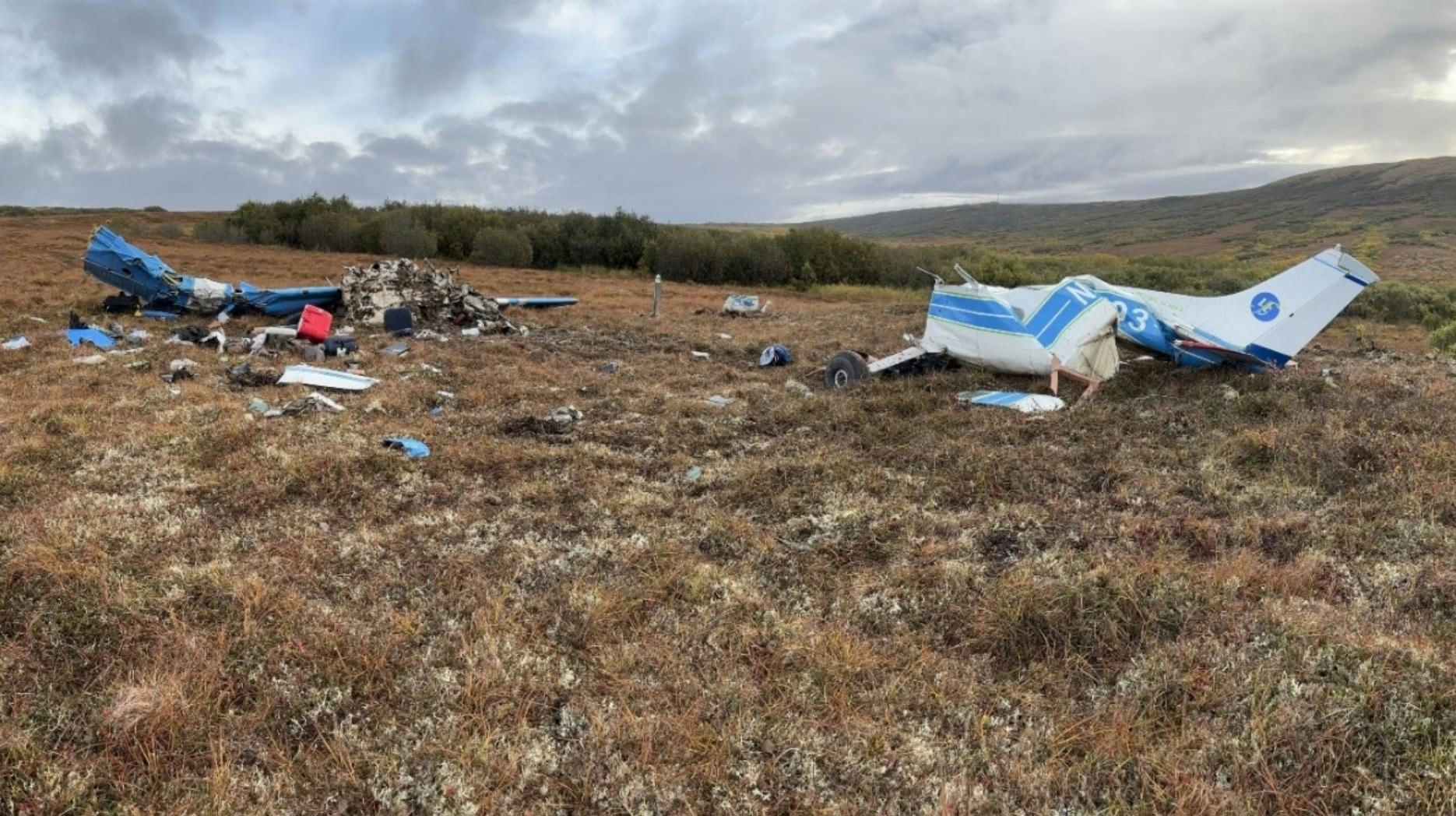
Eight Aboard Twin-Engine Cessna Crash in Remote Alaska
American Airlines Plans to Receive New Aircraft Deliveries in 2026
Delta Flight Returns to Atlanta Airport Due to Engine Trouble

Samoa Airways Recovers Damaged DHC-6-300 Aircraft
Man Ingested by Frontier Airlines Engine Marks Denver’s Sixth Airfield Security Breach in Three Years

The Advantages and Disadvantages of Owning Versus Leasing a Private Jet
Former Spirit Employees Express Concerns Over AI Partnership With Google
China Certifies Pilotless Air Taxi for Export; Sri Lanka First Buyer

US Pilot Hourly Pay Ranges from $90 for Regional to $465 for Widebody Flights

NASA Chooses University Teams to Support Aviation Research
