
Orquestre insights de IA em ações

Tendências
Categories
Training Flight Accident Linked to Instructor’s Failure to Use Carburetor Heat
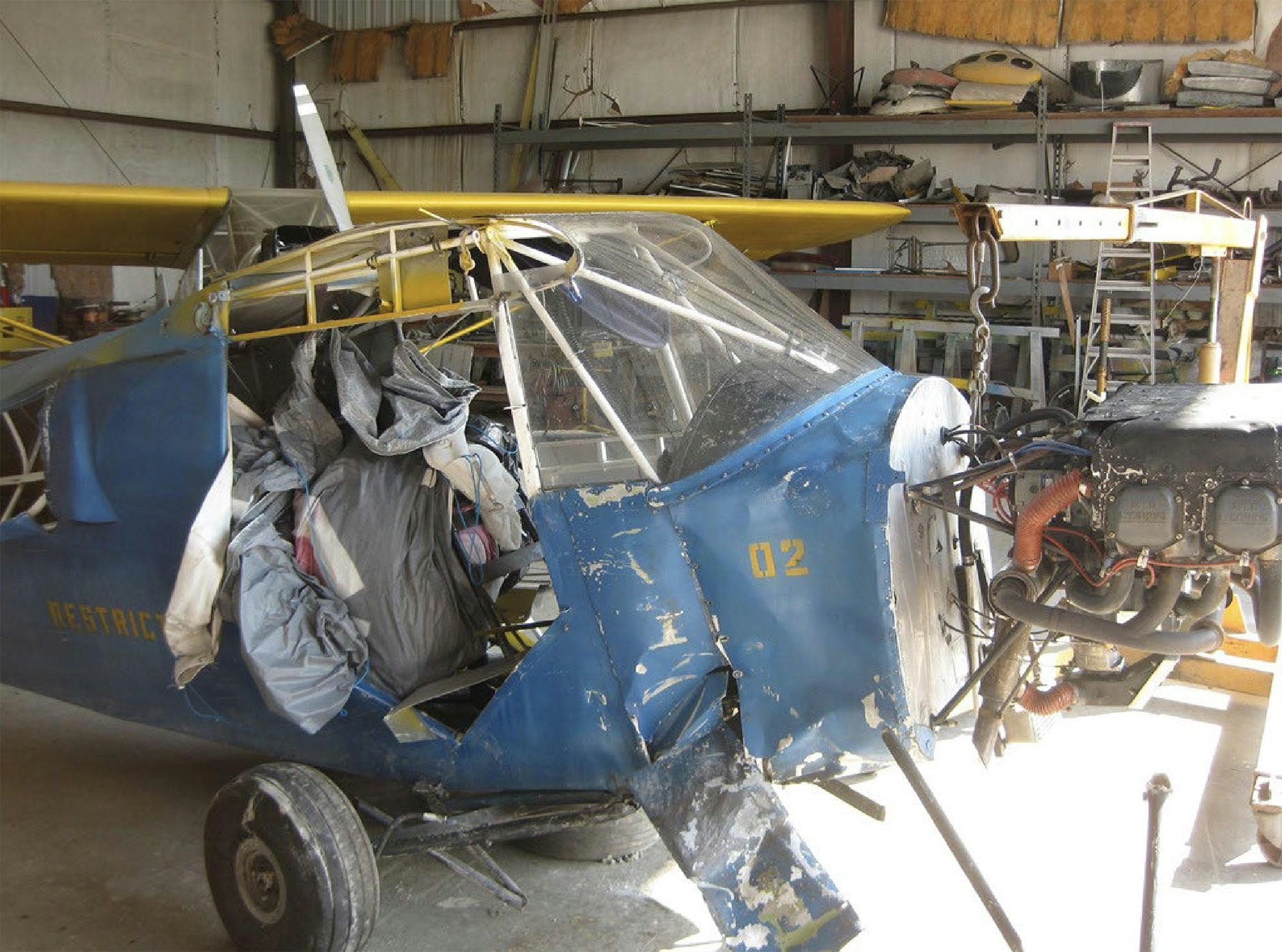
Training Flight Accident Linked to Instructor’s Failure to Use Carburetor Heat
A recent multi-engine training flight ended in a serious accident after the flight instructor failed to apply carburetor heat, raising significant concerns about pilot training protocols and emergency procedures.
Incident Overview
The accident involved a flight instructor and a commercial-rated pilot conducting their first multi-engine training session together in a Tecnam P2006T aircraft. The instructor, who had accumulated 115 hours in this aircraft exclusively as an instructor, and the pilot, with only two hours of experience on the make and model, commenced their session at Centennial Airport (KAPA) in Englewood, Colorado. They completed five full-stop, taxi-back landings before departing southwest toward the North Perry practice area, climbing to an altitude of 10,800 feet.
During the training, the pair practiced directional control and simulated engine-out emergencies. As part of the exercise, the left engine was intentionally shut down and feathered. After maneuvering, they attempted to restart the engine using the checklist. The initial restart attempt was unsuccessful, but following a brief pause, the engine restarted, and normal flight procedures resumed.
Emergency and Crash Sequence
While returning to Centennial Airport, the instructor noticed the aircraft required increased right rudder input. Both pilots observed a decline in the left engine’s coolant temperature and RPM. The instructor assumed control and diverted toward Perry Park Airport (CO93) in Larkspur, Colorado, approximately four nautical miles away. After executing a 180-degree turn, the left engine was secured and feathered; however, the aircraft became increasingly difficult to control and began losing altitude rapidly.
Recognizing they could not reach Perry Park Airport, the instructor attempted an emergency landing on Interstate 25. To avoid southbound traffic, he pitched up and banked left, causing the airplane to climb over vehicles before crashing into a marshy area east of the highway. The aircraft came to rest inverted and sustained substantial damage. Both the instructor and the pilot suffered serious injuries.
Investigation and Industry Implications
The pilot undergoing instruction expressed uncertainty about whether the left propeller was fully feathered during the emergency. Witness videos confirmed that the left propeller was not rotating as the aircraft descended over Interstate 25, while the right propeller continued to turn. The left wing struck a road sign before the airplane veered left and climbed over traffic. The final moments of the crash were not captured on video.
This accident has intensified scrutiny of pilot training protocols, particularly concerning emergency procedures and the correct use of carburetor heat. Industry experts warn that such incidents could lead to increased insurance premiums for training flights and compel aviation companies to reevaluate their safety measures. In response, competitors are expected to enhance their training programs and enforce stricter compliance with safety regulations to uphold public trust and operational standards.
The investigation remains ongoing as authorities and industry stakeholders assess potential improvements to multi-engine training and emergency response procedures.

Etihad Airways Suspends Airbus A380 Flights on Key Route

Aditya Birla Group Seeks Approval for Aircraft Leasing in GIFT City

Qatar Airways Highlights Innovation and Connectivity at Arabian Travel Market 2026

Hong Kong's Five-Year Plan Includes Andrew Fan's Aircraft Parts Processing Hub Proposal

ACIA Aero Leasing Delivers ATR72-600 to Air Nostrum

RTX Appoints Jill Albertelli as Head of Pratt & Whitney

TAT Technologies Joins Beyond Aero Hydrogen Aircraft Program

AURAK Study Highlights Barriers to Air Taxi Adoption in Emerging Economies

Xiamen Air Selects Altitude for 787 Maintenance at Heathrow

Etihad and Swissport Extend Global Partnership
