
Orquestre insights de IA em ações

Tendências
Categories
Undisclosed Middle East Buyer Signs $1 Billion Deal for Two Saab GlobalEye Aircraft
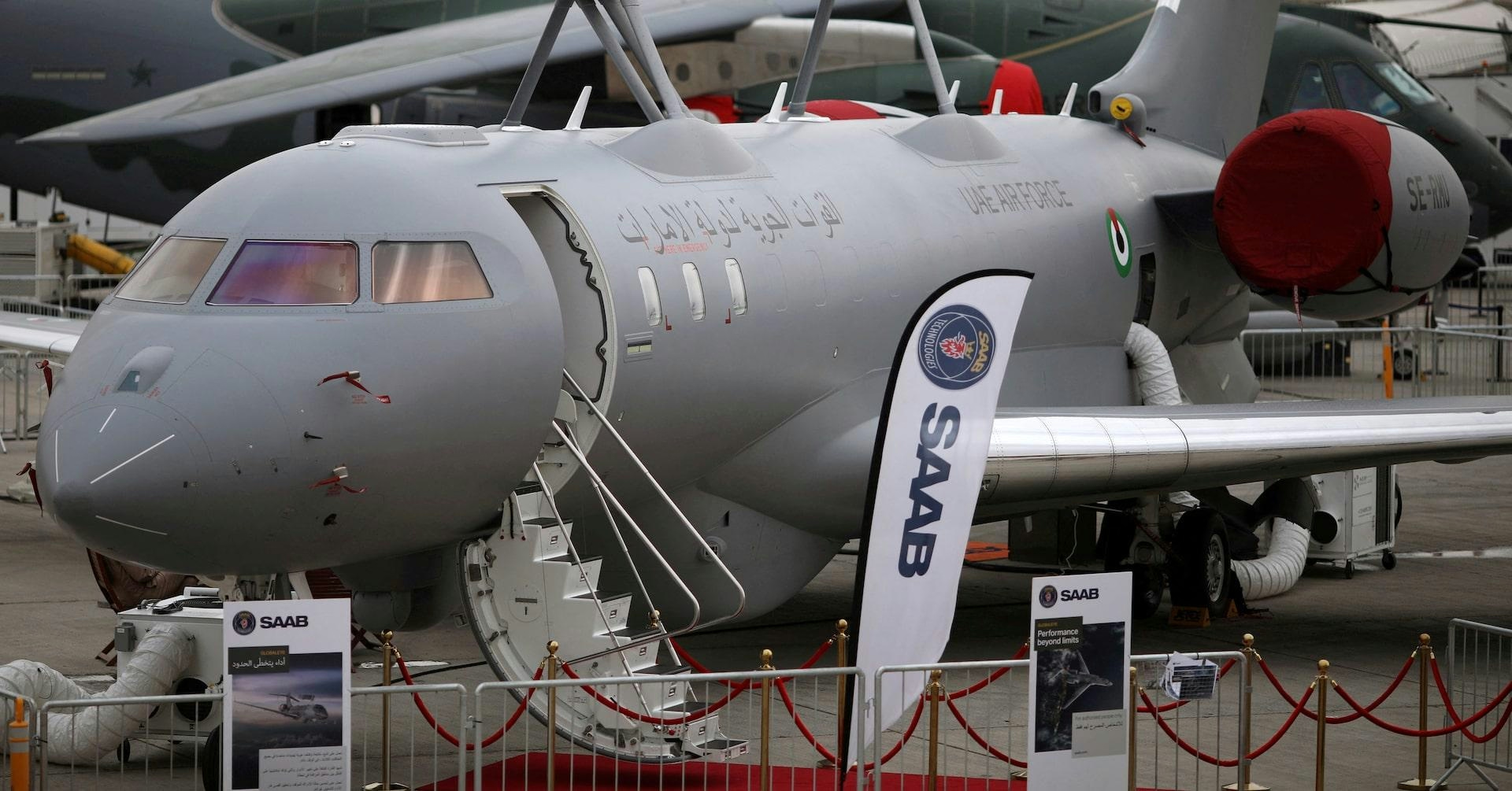
Undisclosed Middle Eastern Buyer Secures $1 Billion Contract for Saab GlobalEye Aircraft
Saab has finalized a $1 billion agreement to supply two GlobalEye airborne early warning and control (AEW&C) aircraft to an undisclosed Middle Eastern nation, with deliveries slated for 2030. The Swedish defense manufacturer announced the contract on July 27, valuing it at approximately SKr10.1 billion. Saab refrained from disclosing the identity of the purchaser, citing sensitivities related to industry confidentiality and national security.
Strategic Significance and Regional Context
Saab’s CEO, Micael Johansson, emphasized that the order highlights the company’s dedication to delivering mission-proven, multi-domain AEW&C capabilities. He noted the increasing international interest in the GlobalEye system as a testament to its operational effectiveness and reliability in contemporary air defense environments.
The GlobalEye platform, based on the Bombardier Global 6000 business jet, has previously been delivered to the United Arab Emirates, the system’s launch customer, which currently operates five aircraft. While Saab has not confirmed the buyer’s identity, speculation points to potential customers in the region such as Kuwait, Qatar, or Saudi Arabia. Saab has supplied the Royal Saudi Air Force (RSAF) with Erieye radar-equipped Saab 2000 aircraft but has not confirmed Riyadh as a GlobalEye customer. According to aviation analytics firm Cirium, the RSAF operates two Saab 2000s alongside an aging fleet of five Boeing E-3A aircraft in the AEW&C role. Other Gulf Cooperation Council members, including Kuwait, Qatar, Bahrain, and Oman, currently lack AEW&C capabilities within their air forces.
Production Expansion and Market Impact
This contract aligns with Saab’s broader strategy to increase GlobalEye production capacity, targeting an output of six aircraft annually by 2030. The company plans to achieve this growth through strategic partnerships, although it acknowledges potential challenges posed by supply chain constraints that may affect production rates.
The market responded positively to the announcement, with Saab’s shares rising by approximately 2%. The deal is viewed as reinforcing Saab’s competitive position within the European airborne surveillance sector, where it contends with NATO-compatible alternatives.
Beyond the Middle East, Saab maintains additional GlobalEye orders from Sweden (three aircraft) and France (two aircraft). Canada has also indicated plans to acquire an unspecified number of GlobalEye systems following its designation of Saab as a preferred supplier in May. Furthermore, NATO recently disclosed intentions to procure up to ten heavily modified Global 6500 aircraft, involving member states such as Belgium, Canada, Denmark, Germany, Latvia, Lithuania, Luxembourg, the Netherlands, Norway, Romania, and Sweden. Saab is currently engaged in formal negotiations with the NATO Support and Procurement Agency to secure this contract.
With this latest agreement, Saab continues to expand its presence in the global AEW&C market, capitalizing on proven technology and rising demand for advanced air surveillance capabilities.

Etihad and Swissport Extend Global Partnership
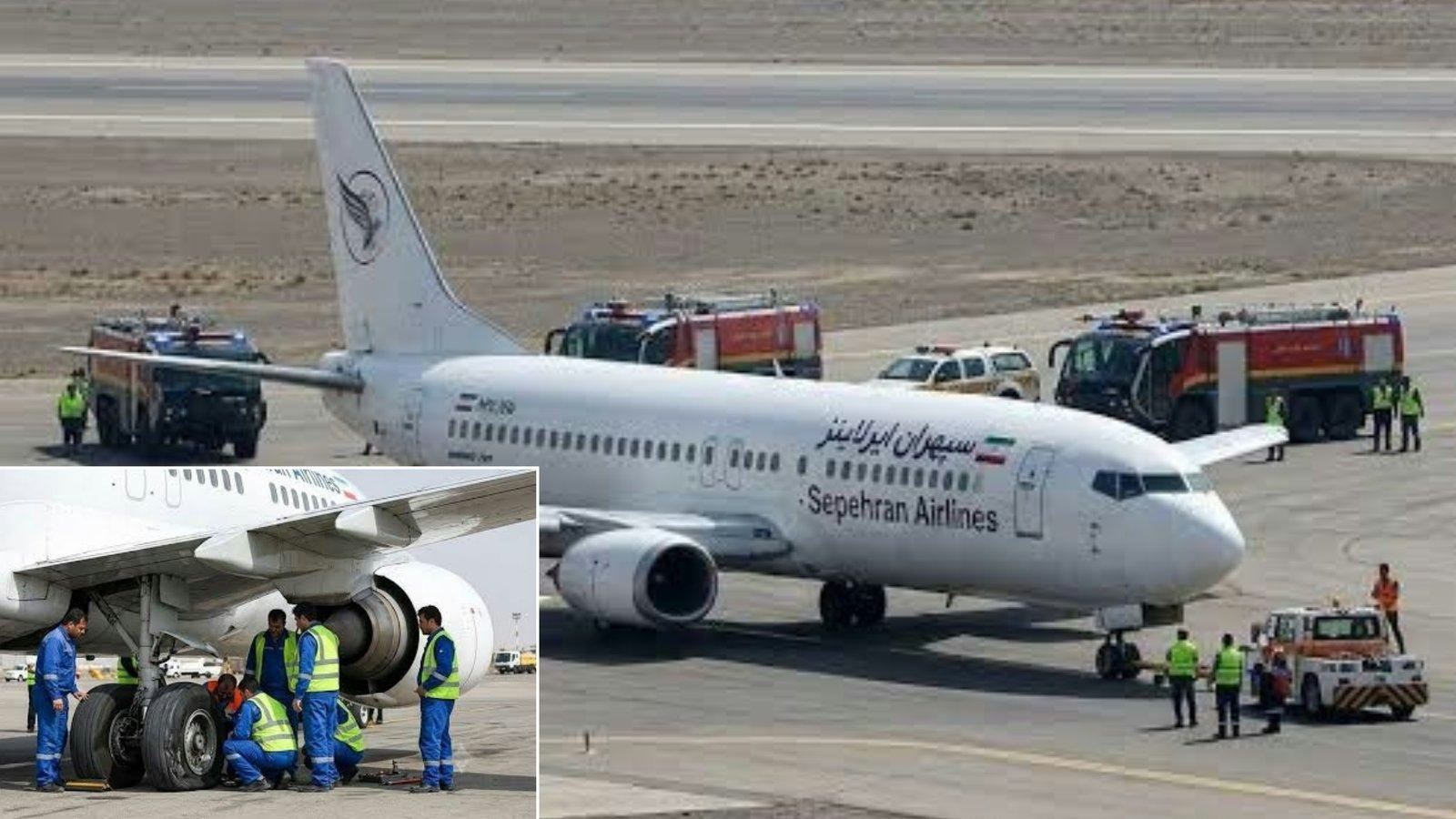
Sepehran Airlines B737 Returns to Mashhad After Tyre and Engine Issues

Etihad Deploys Widebody Fleet to Meet Strong Demand
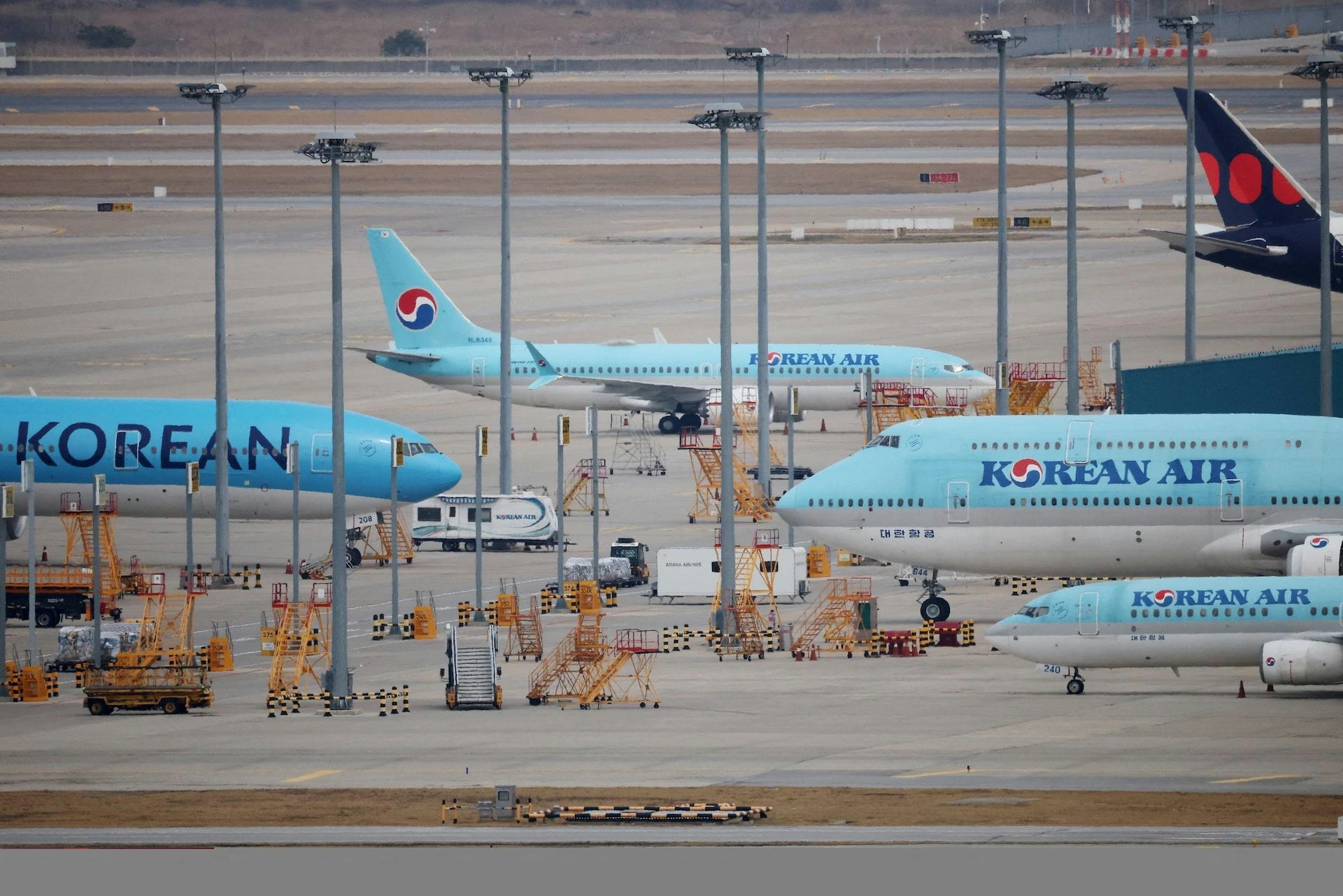
Korean Air Finalizes $36.2 Billion Deal with Boeing

Australia’s RFDS Queensland Section Orders Six King Air 260Cs

Korean Air Finalizes Order for 103 Boeing Jets and Engines
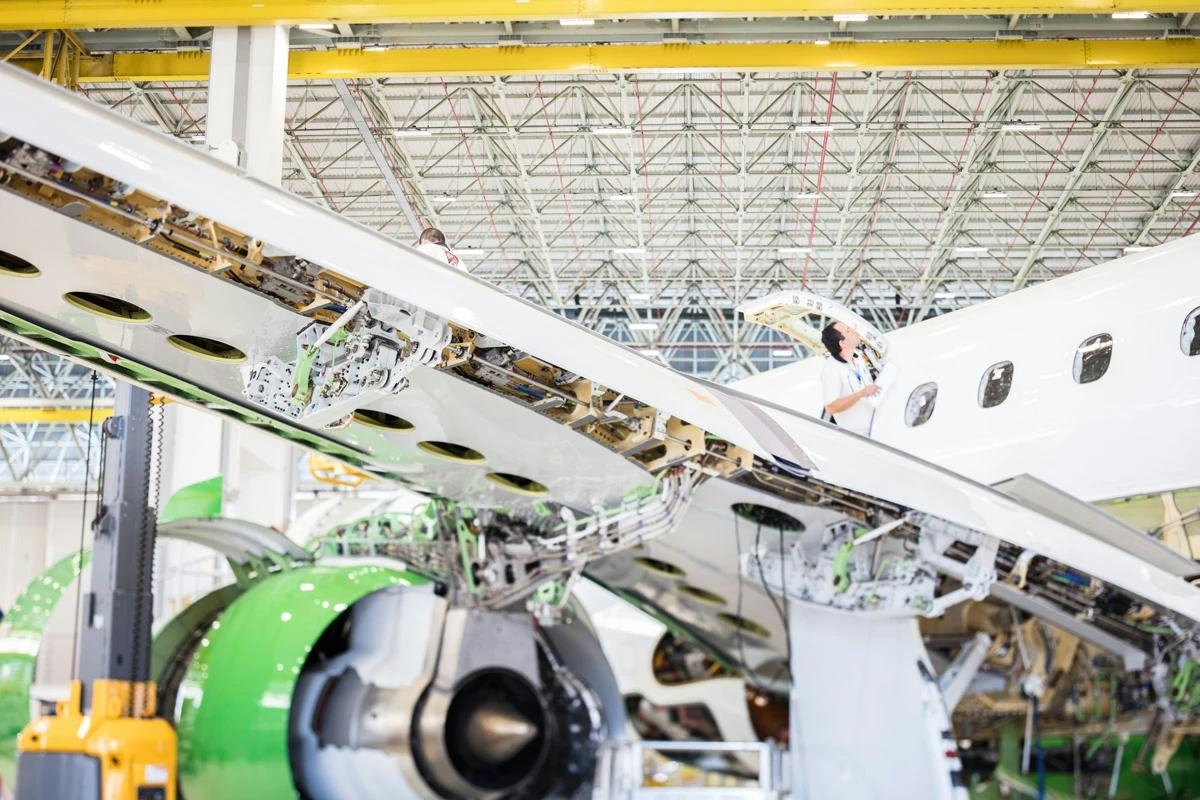
Embraer E195-E2 Features Distinctive Engine Placement Among Regional Jets

What Passengers Can Expect on Boeing’s New 777X Jet

How Ethiopian Airlines Became Africa’s Leading Carrier Amid Gulf Competition

Joby Aviation Extends Autonomous Flight Capabilities with Cross-Country Tour
