
Orquestre insights de IA em ações

Tendências
Categories
United Airlines Declines to Purchase Former Emirates 777X Aircraft
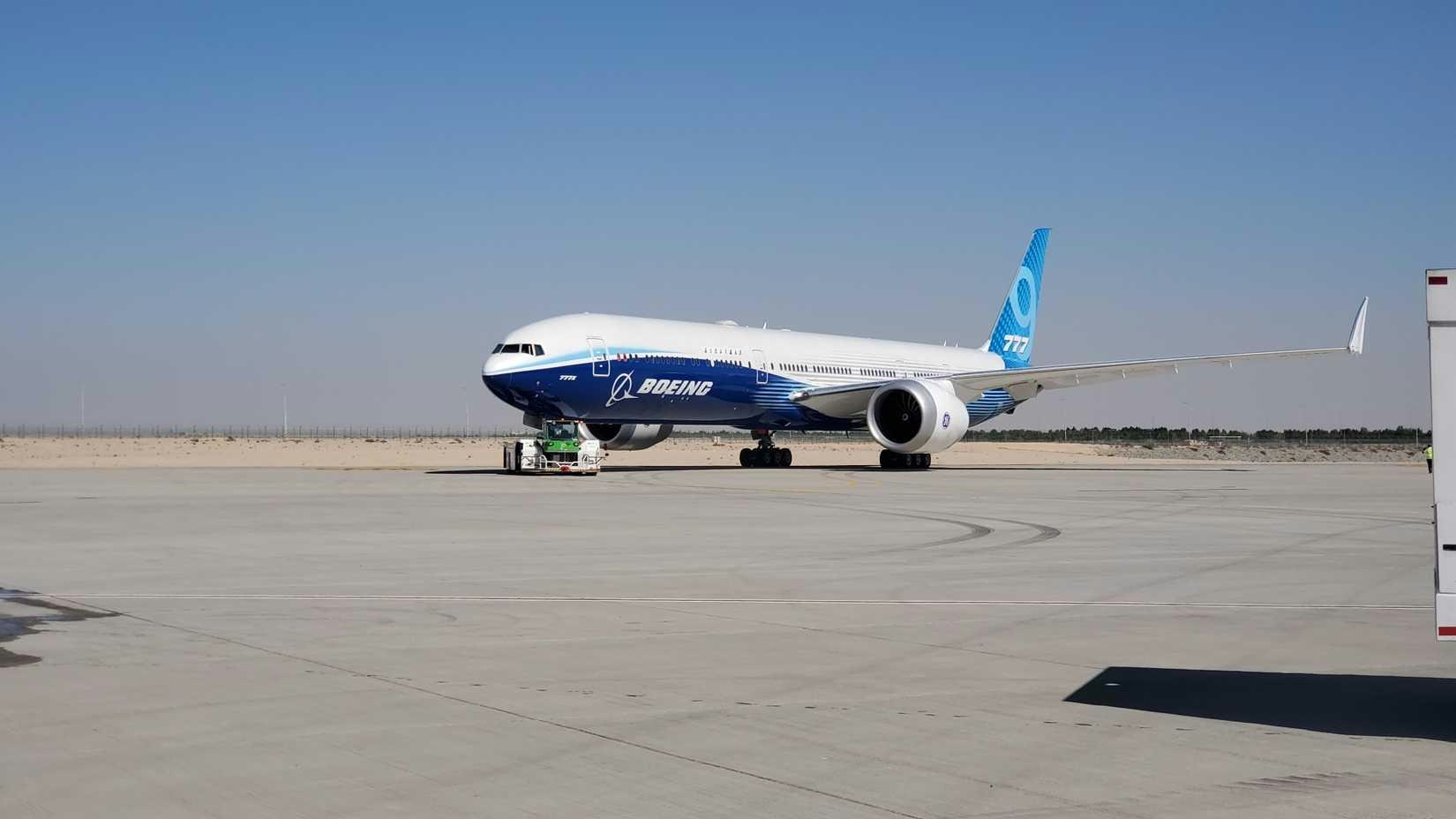
United Airlines Declines Acquisition of Former Emirates 777X Aircraft
Chicago-based United Airlines has formally dismissed speculation regarding the potential acquisition of Boeing’s early-build 777X aircraft, specifically the 777-9 models originally ordered by Emirates. Industry rumors had suggested that United might consider purchasing up to 20 of these widebody jets, which Emirates rejected due to concerns over their age and the extensive upgrades required prior to delivery. Emirates’ chairman, Sir Tim Clark, notably described the early frames as “a can of baked beans,” highlighting that these aircraft—manufactured between 2019 and 2021—would effectively be halfway through their operational lifespan upon entering service.
United’s Position on the Early-Build 777X Jets
United has confirmed it has no intention of taking possession of these delayed 777X aircraft, which have been held in storage and would necessitate significant modifications, including software updates, before they could enter commercial service. A spokesperson for the airline emphasized that United remains committed to its existing Boeing 787 Dreamliner fleet alongside a longstanding order for the Airbus A350. Both aircraft types are central to the airline’s ongoing fleet renewal strategy, reflecting a preference for modern, efficient aircraft rather than older, heavily modified airframes.
The notion that United might acquire the orphaned 777X jets emerged following Emirates’ decision to forgo the early builds. For Emirates, the prospect of introducing aircraft that had already spent several years in storage was deemed an unwise investment, particularly given the airline’s focus on maximizing the operational lifespan of its fleet.
Implications for United’s Fleet Strategy and the 777X Program
United’s rejection of the early-build 777X frames effectively ends any immediate plans for the airline to become the first U.S. operator of the type. Nevertheless, the carrier has not ruled out future interest in the 777X family once the program achieves full certification and enters regular commercial service. The airline has explicitly stated, however, that it will not purchase these specific early-build aircraft due to the challenges posed by their prolonged storage and the extensive rework required.
Currently, United operates the Boeing 777-300ER and 777-200ER as key components of its widebody fleet. Yet, the airline’s fleet replacement program is increasingly focused on the Boeing 787, which offers next-generation efficiency and operational flexibility. This strategy has enabled United to launch new long-haul routes to destinations such as Adelaide and Sapporo. The airline’s commitment to the Dreamliner and the forthcoming Airbus A350 underscores its broader objective to modernize its fleet with the latest technology rather than acquiring older aircraft requiring substantial refurbishment.
The future of the early-build 777X aircraft remains uncertain. With both Emirates and United declining to take these jets, it remains possible that another airline could express interest, provided the necessary modifications and certification are completed. For now, United has made clear its decision to forgo these particular aircraft, choosing instead to concentrate on its current fleet modernization initiatives.

Etihad and Swissport Extend Global Partnership

Sepehran Airlines B737 Returns to Mashhad After Tyre and Engine Issues

Etihad Deploys Widebody Fleet to Meet Strong Demand

Korean Air Finalizes $36.2 Billion Deal with Boeing

Australia’s RFDS Queensland Section Orders Six King Air 260Cs

Korean Air Finalizes Order for 103 Boeing Jets and Engines

Embraer E195-E2 Features Distinctive Engine Placement Among Regional Jets

What Passengers Can Expect on Boeing’s New 777X Jet

How Ethiopian Airlines Became Africa’s Leading Carrier Amid Gulf Competition

Joby Aviation Extends Autonomous Flight Capabilities with Cross-Country Tour
