
Orquestre insights de IA em ações

Tendências
Categories
US Air Force Invests $143 Million to Maintain Aging C-5 Galaxy Fleet
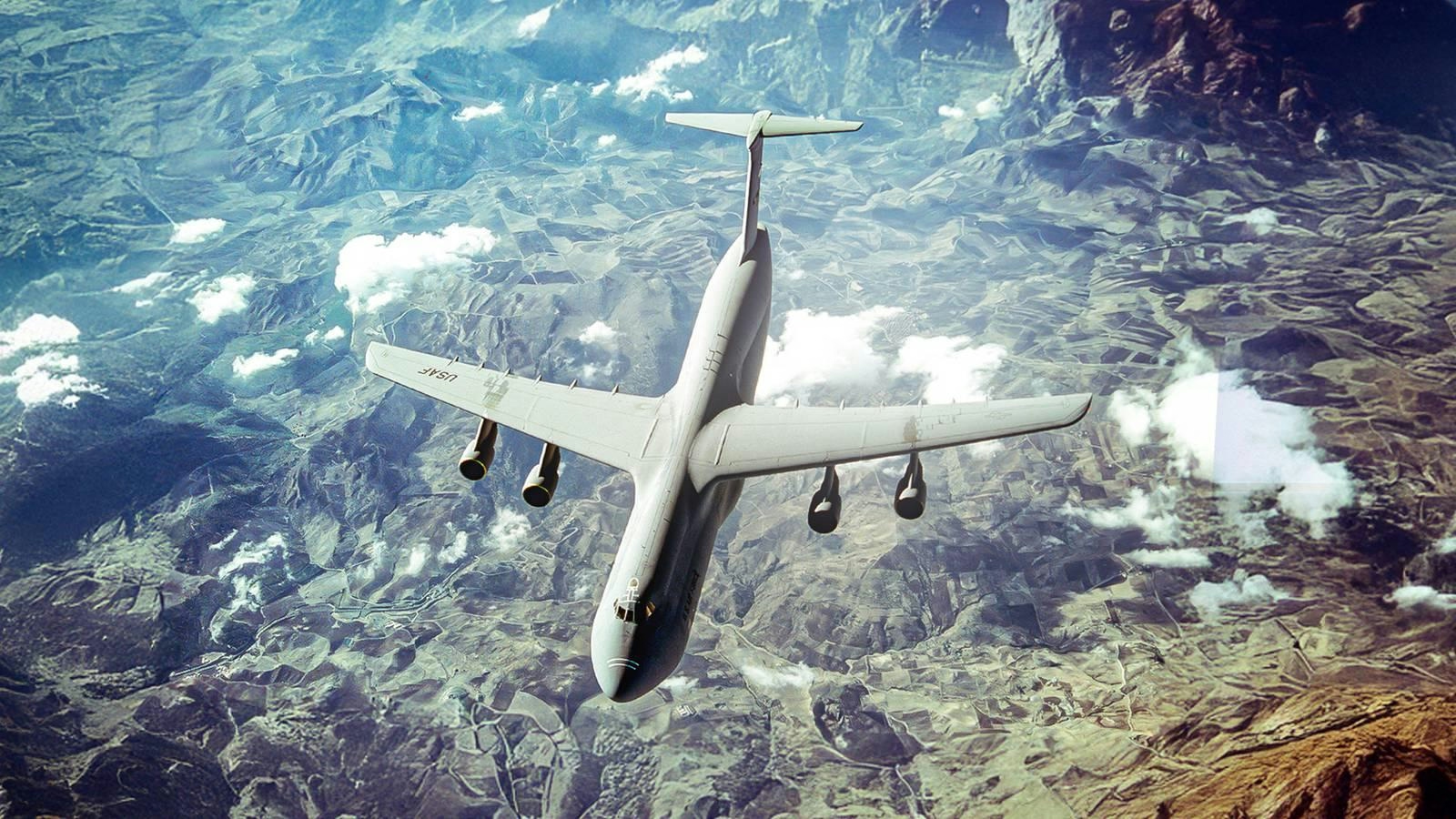
US Air Force Commits $143 Million to Sustain Aging C-5 Galaxy Fleet
The Lockheed C-5 Galaxy, the largest aircraft in the United States Air Force’s inventory, continues to serve as a vital component of the military’s strategic airlift capability more than five decades after its introduction. Surpassing even the presidential Boeing VC-25 in size, the C-5 has been a cornerstone of the USAF’s heavy logistics operations since 1970. In a recent move to ensure its longevity, the Air Force has allocated $143 million toward maintaining and modernizing the aging fleet.
Historical Significance and Upgrades
The C-5 Galaxy was selected in 1965 following a competitive evaluation involving Boeing, Douglas, and Lockheed. Lockheed’s design was favored for its cost-effectiveness and ability to meet the Air Force’s demanding requirements for transporting outsized cargo over intercontinental distances. Powered by General Electric engines, the aircraft boasts a payload capacity of up to 127.4 tons, a length exceeding 247 feet, and a wingspan approaching 223 feet, making it the largest aircraft ever operated by the US military.
Between 1969 and 1973, Lockheed delivered 81 C-5A models, followed by 50 enhanced C-5B variants in the late 1980s. Two C-5As were further modified into the C-5C configuration, featuring enlarged cargo holds. In the early 2000s, the Air Force initiated a comprehensive upgrade program to convert the fleet to the C-5M Super Galaxy standard. This modernization introduced new General Electric F138 engines and advanced avionics, significantly improving performance and reliability. Today, the C-5 fleet remains indispensable for transporting military equipment and humanitarian aid across the globe.
Recent Contract and Technological Integration
In July 2026, the Air Force awarded Lockheed Martin a $142.9 million contract focused on software sustainment services for the C-5. This contract aims to provide critical software updates and maintain the digital systems essential to the aircraft’s safety and operational effectiveness. The investment forms part of a broader strategy to keep the C-5 operationally relevant through at least 2050.
Maintaining such an aging fleet presents considerable challenges. The Air Force must carefully balance modernization efforts with the constraints of operating aircraft designed over half a century ago. To enhance fleet management, the Air Force has adopted Salesforce’s Missionforce software, an advanced system intended to streamline operations and improve efficiency. However, integrating this modern digital tool with legacy systems is expected to require significant effort.
Strategic Context and Future Outlook
The Air Force’s commitment to sustaining and upgrading the C-5 Galaxy aligns with wider industry trends emphasizing advanced fleet management and digital transformation. Alongside the C-5 program, investments are being made in aerospace program support services and preparations for the introduction of the new VC-25B Air Force One. These initiatives reflect a comprehensive approach to maintaining and enhancing critical airlift and support capabilities.
As the C-5 Galaxy nears its sixth decade of service, the recent financial commitment underscores the aircraft’s enduring strategic value and the Air Force’s dedication to preserving this essential asset well into the future.

Etihad and Swissport Extend Global Partnership

Sepehran Airlines B737 Returns to Mashhad After Tyre and Engine Issues

Etihad Deploys Widebody Fleet to Meet Strong Demand

Korean Air Finalizes $36.2 Billion Deal with Boeing

Australia’s RFDS Queensland Section Orders Six King Air 260Cs

Korean Air Finalizes Order for 103 Boeing Jets and Engines

Embraer E195-E2 Features Distinctive Engine Placement Among Regional Jets

What Passengers Can Expect on Boeing’s New 777X Jet

How Ethiopian Airlines Became Africa’s Leading Carrier Amid Gulf Competition

Joby Aviation Extends Autonomous Flight Capabilities with Cross-Country Tour
