
Orquestre insights de IA em ações

Tendências
Categories
Walmart Expands Drone Delivery to Five Additional Cities
Walmart Expands Drone Delivery to Five Additional Cities
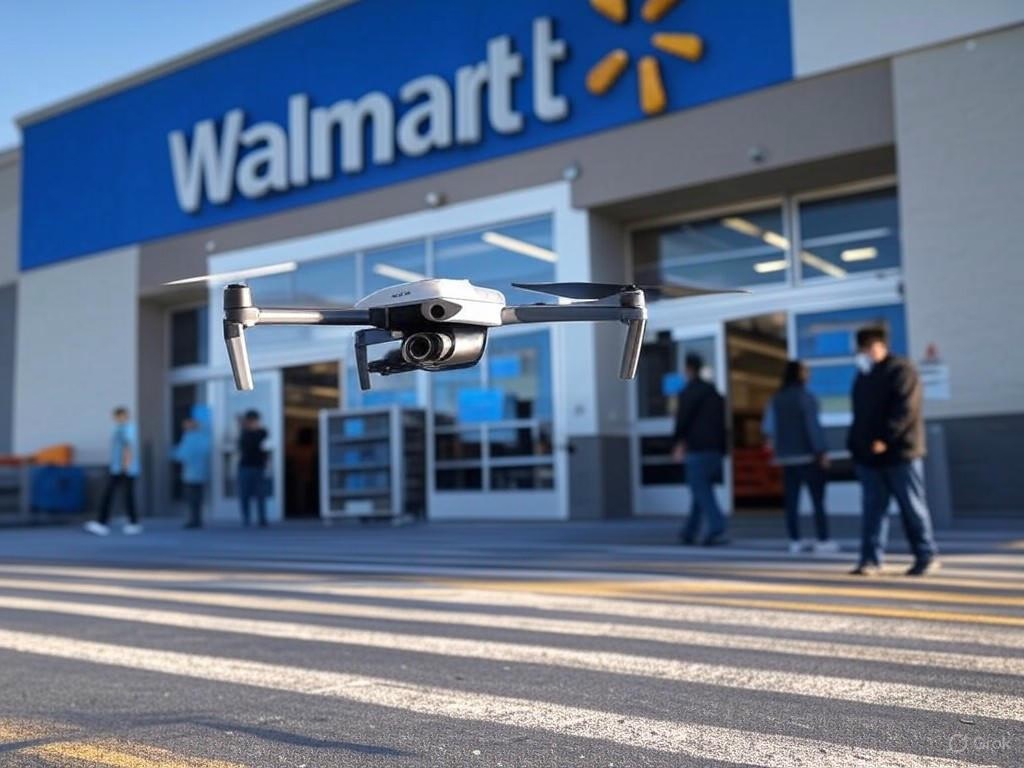
Walmart is broadening its drone delivery service to include five new U.S. cities: Atlanta, Charlotte, Houston, Orlando, and Tampa. This expansion will extend the service to 100 stores, building upon the existing operations in Northwest Arkansas and the Dallas-Fort Worth area. The move represents a significant advancement in Walmart’s strategy to enhance convenience and speed for its customers through innovative delivery solutions.
Partnership with Wing and Operational Details
The expansion is facilitated through Walmart’s collaboration with Wing, a subsidiary of Alphabet, Google’s parent company, which specializes in drone delivery technology. Wing operates under Federal Aviation Administration (FAA) regulations, flying drones Beyond Visual Line of Sight (BVLOS) with a delivery radius of up to six miles from each participating store. This partnership aims to provide a faster, more efficient, and environmentally sustainable delivery service, ensuring that customers receive their orders promptly and safely.
Adam Woodworth, CEO of Wing, emphasized the scale of the operation, noting that drone delivery has become a routine part of shopping for many residents in the Dallas-Fort Worth metroplex over the past year. He expressed enthusiasm about extending this rapid delivery experience to millions more consumers across additional U.S. cities.
Customers in the newly added locations can register on Wing’s website to receive notifications when drone delivery becomes available in their area. Residents of Dallas-Fort Worth can verify their current eligibility through a dedicated portal.
Challenges and Industry Implications
While the expansion underscores Walmart’s commitment to innovation, it also introduces several challenges. Compliance with evolving FAA regulations and local laws remains a critical concern for the safe and legal operation of drone deliveries. Public acceptance, particularly in residential neighborhoods, will be essential for the widespread adoption of this technology. Furthermore, technical obstacles such as adverse weather conditions, airspace management, and the integration of drone logistics with existing store operations must be effectively managed to maintain reliable service.
This development is expected to intensify competition within the retail sector, prompting rivals like Amazon and UPS to accelerate their own drone delivery initiatives. As more companies invest in drone technology, operational efficiency and the resolution of logistical complexities will be vital for Walmart and Wing to successfully scale their program.
Walmart’s partnership with Wing positions the retailer at the forefront of drone delivery innovation. However, the ultimate success of this initiative will depend on navigating regulatory, technological, and market challenges while fulfilling customer expectations for speed, safety, and reliability.

Etihad Airways Suspends Airbus A380 Flights on Key Route

Aditya Birla Group Seeks Approval for Aircraft Leasing in GIFT City

Qatar Airways Highlights Innovation and Connectivity at Arabian Travel Market 2026

Hong Kong's Five-Year Plan Includes Andrew Fan's Aircraft Parts Processing Hub Proposal

ACIA Aero Leasing Delivers ATR72-600 to Air Nostrum

RTX Appoints Jill Albertelli as Head of Pratt & Whitney

TAT Technologies Joins Beyond Aero Hydrogen Aircraft Program

AURAK Study Highlights Barriers to Air Taxi Adoption in Emerging Economies

Xiamen Air Selects Altitude for 787 Maintenance at Heathrow

Etihad and Swissport Extend Global Partnership
