Imagem

Orquestre insights de IA em ações

Entre na lista de espera da AeroGenie hoje mesmo!

Tendências

Categories

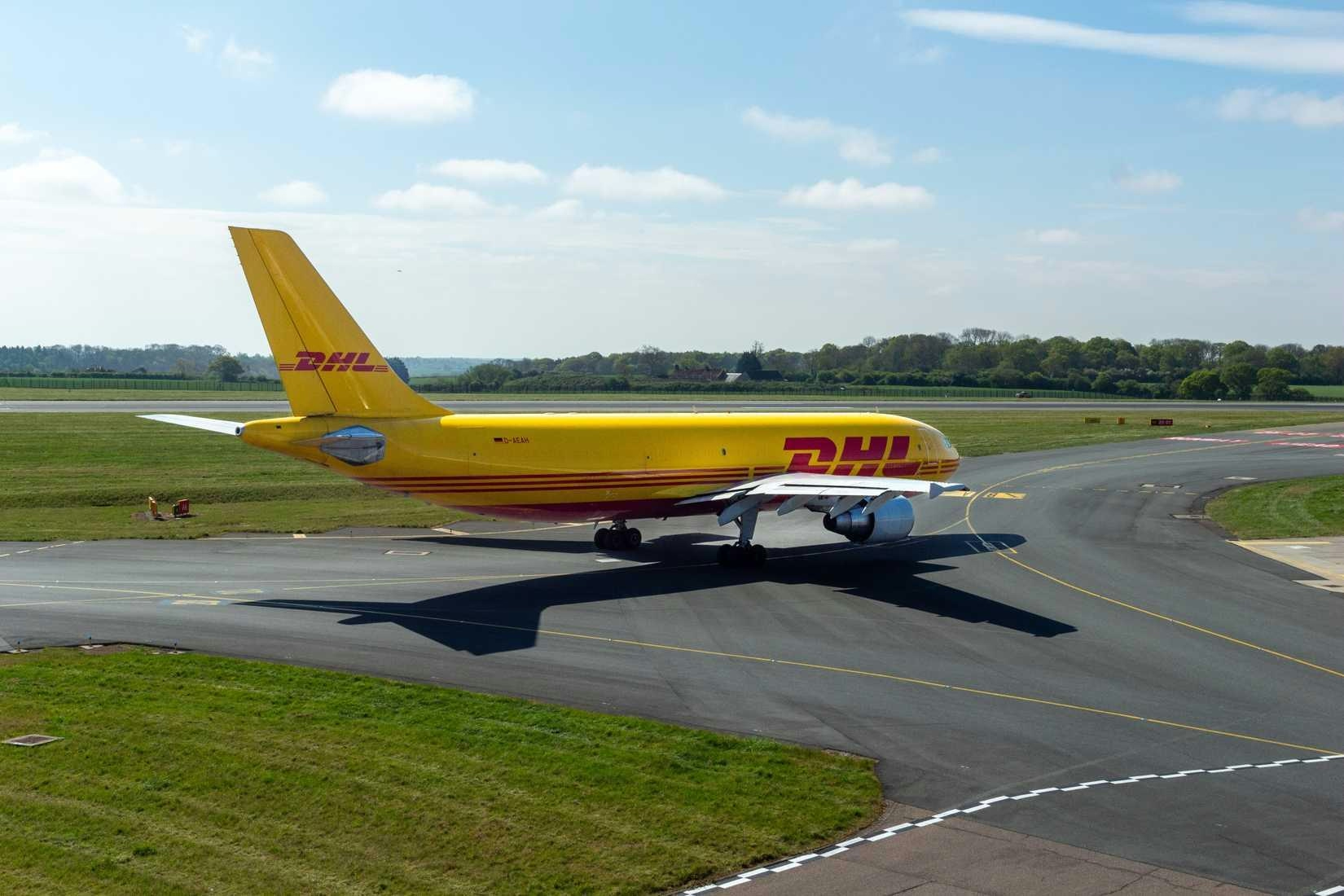
Why the Airbus A300 Remains in Service Longer Than the A310
January 16, 2026By ePlane AI
Why the Airbus A300 Remains in Service Longer Than the A310
0
0
Airbus A300
Airbus A310
Widebody Jetliners

Why the Airbus A300 Remains in Service Longer Than the A310

Historical Context and Development

The Airbus A300, which entered service with Air France in 1974, represented a significant milestone for the emerging European aerospace manufacturer. As the world’s first twin-engine widebody jetliner, the A300 challenged prevailing norms by offering airlines a lighter and more economical alternative to the tri-engine aircraft that dominated commercial aviation at the time. Its innovative design incorporated pioneering composite materials, quickly garnering attention and orders that helped establish Airbus as a formidable competitor in the global aviation market.

Nearly a decade later, Airbus introduced the A310 with Swissair in 1983. This aircraft featured a shorter fuselage but boasted greater range and an even more advanced application of composite materials. The A310 also emphasized cockpit and parts commonality, reflecting Airbus’s strategic focus on simplifying crew training and fleet maintenance. Despite these technological advancements, the A310 did not achieve the same level of popularity or operational longevity as the A300.

Production, Popularity, and Operational Factors

The A300 enjoyed a notably long production run of 36 years, from its prototype in 1971 until 2007, with a total of 561 units delivered. In contrast, the A310 was produced for only 20 years, between 1978 and 1998, with 255 aircraft delivered. While the A310 eliminated the need for a flight engineer—a role that has since become obsolete in modern cockpits—the A300’s larger capacity and established reliability maintained its appeal among airlines.

A critical factor contributing to the A300’s extended service life is its robust design and operational versatility. Its efficiency and higher service ceiling have made it adaptable to a wide range of roles, including both passenger transport and cargo operations. Airlines have found the A300 particularly resilient amid supply chain disruptions and shifting market dynamics, enabling it to remain relevant as fleets evolved over time.

Conversely, the A310, despite its technical improvements, encountered operational challenges that affected its long-term viability. Incidents such as a runway incursion in Delhi, attributed to poor visibility, highlighted some of the difficulties faced by operators of the type. While such events were not unique to the A310, they underscored operational hurdles that may have influenced airlines’ decisions to retire the model earlier.

Market Impact and Legacy

The A300’s adaptability to diverse operational requirements, combined with its larger order volume and extended production period, has ensured its continued presence in airline fleets worldwide. Although the A310 played a significant role during Airbus’s formative years, it ultimately experienced less demand and a shorter operational lifespan. The enduring popularity of the A300 stands in contrast to later Airbus models such as the A380 and A330-800, which struggled to replicate its commercial success.

In essence, the Airbus A300’s durable design, operational flexibility, and resilience to industry challenges have enabled it to outlast the more modern A310, securing its status as a mainstay in the history of commercial aviation.

Comments

  • A

    anna cassidy

    I was told there is No Herpes Cure except treatment to control it. I totally lost hope all i could think was loosing my life because it was so embarrassing to have this virus. A few weeks ago I read about a possible natural cure which was 100 percent guaranteed. And I ordered the treatment from Dr Uma. And I also told him about my sister's cancer, After some weeks we got 100% cured. Now I'm so excited to share this testimony to every article for others living with HERPES, CANCER, PENIS ENLARGEMENT, HPV,HIV, etc. there is possible natural treatment to eliminate this virus. Email him for more info! Dr.umaherbalcenter@gmail.com or message him on WhatsApp +2347035619585.

  • N

    NELS KATE

    I have been suffering from Herpes for the past 1 years and 8 months, and ever since then i have been taking series of treatment but there was no improvement until i came across testimonies of Dr. UMA on how he has been curing different people from different diseases all over the world, then i contacted him as well. After our conversation he sent me the medicine which i  took according .to his instructions. When i was done taking the herbal medicine i went for a medical checkup and to my greatest surprise i was cured from Herpes. My heart is so filled with joy. If you are suffering from Herpes or any other disease you can contact Dr. UMA today on this Email address: dr.umaherbalcenter@gmail.com or whatsapp +2347035619585.

  • M

    magriet dennis

    Get rid of all kinds of Herpes and virus infections, Diabetes, Hepatitis A B C, Menopause and HIV with Natural Roots and Herbs, i was once infected with HERPES and after using Dr UMA Herbal Medicine for couple of weeks i couldn't trace it anymore, i even went for checkup and my test came out Negative. Get your cure today from this wonderful herbalist, Dr. UMA. You can also reach doctor UMA on WhatsApp +2347035619585 or Email dr.umaherbalcenter@gmail.com.

  • S

    SUSAN JOEL

    Herpes is a serious and recurring disease which can't be cured through drugs or injections by the American doctors but the best way to deal with herpes is by taking natural herbal medicine for it, and is only few American doctors that know about this herbal medicine, from Dr Uma.. I have read about Dr Uma the great herbalist doctor from African who can cure Herpes with his herbal medicine. for the people suffering from the following diseases Hiv, Herpes, Cancer, Herpatitis B, Diabetes, Hpv, Infections ETC should contact him for his herbal medicine because i am a living testimony and i was cured of HERPES. Although, i sent him what he requested and he sent me his medicine which i took for three weeks and when i went for test i was tested Herpes Negative. you can reach him through his email address:Dr.umaherbalcenter@gmail.com or Whatsapp +2347035619585 Thanks Dr Uma.

  • C

    Conner Kersey

    Gratitude doesn't begin to cover what I feel toward THECYBERGOATTECHIE GROUP. When a misplaced transfer left my crypto stranded in the wrong wallet for weeks, hope had all but evaporated. Then I found thecybergoat @ techie .com experts with a track record of untangling digital disasters. From our first interaction, their professionalism was undeniable. They mapped out the recovery process in plain terms, never sugarcoating the hurdles but radiating confidence. Within days, they pulled off the impossible: my funds were restored. If you're staring down the void of lost crypto tokens, trust me, they're the ones who can drag them back into the light.

  • C

    CRYPTOCURRENCY RECOVERY EXPERT IN 2026>>BRUNOE QUICK HACK

    I’m sharing my experience to help others who may be going through the same situation. I lost 260,870 in cryptocurrency to an investment scammer and thought it was gone for good. After exhausting several options, I eventually got assistance from Brunoe Quick Hack, and to my relief, the stolen funds were successfully recovered. The process restored not only my assets but also my confidence after the scam. This experience will always remain a part of my story, not as a symbol of failure, but as proof that even in the face of significant loss, determination and careful action can sometimes lead to unexpected recovery.CONTACT>>> BrunoeQuickHack-(@)-Gmail.Com WhatsApp +17057- (842635)

  • C

    chery

    I am amazed by Dr Aba herbal remedy. I Have had herpes for over 6 years with frequent outbreaks. Sometimes average 2-3 times per month. Before one breakout could end, the next would begin. Nothing has helped me. I came online in search for a possible way to see how I can fight this virus so I found Dr Aba here online after seeing a lot of testimonies of how he cured herpes and other diseases with natural herbs so I decided to give it a try, I only took his remedy for two weeks and I was completely cured. I recommend Dr Aba remedy to anyone suffering from herpes that wants to be completely cured too. email: dr.abaherbalhome@gamil.com and for quick response Message him on his whatsapp number +2348107155060

More news
Arcadis Named Owner’s Representative for Lufthansa Technik’s New Clark Maintenance Facility

Arcadis Named Owner’s Representative for Lufthansa Technik’s New Clark Maintenance Facility

Arcadis Appointed Owner’s Representative for Lufthansa Technik’s New Clark MRO Facility Arcadis, a global leader in sustainable design, engineering, and consultancy, has been appointed as the Owner’s Representative for Lufthansa Technik Philippines’ (LTP) new Maintenance, Repair, and Overhaul (MRO) facility at Clark International Airport. The partnership was formalized through a contract signing on August 11, 2026. Project Scope and Strategic Importance Arcadis Philippines will assume full responsibility for project and construction management, including cost oversight, for the expansive 157,000-square-meter facility. This development forms a critical part of LTP’s long-term strategy to expand its aircraft maintenance capacity within the Asia-Pacific region, complementing its existing operations in Manila. As Owner’s Representative, Arcadis will provide senior oversight, governance, and coordination among stakeholders from the construction phase through to operational readiness. The company’s role encompasses proactive risk management, cost and schedule control, stakeholder engagement, and operational readiness planning. A key challenge will be the integration of specialist aircraft docking systems and the management of their complex interfaces within a compressed delivery timeline. Market Context and Industry Implications The new Clark MRO facility is poised to enhance Lufthansa Technik Philippines’ maintenance capabilities and solidify its competitive position in the Asia-Pacific aviation market. This expansion occurs amid ongoing regional disruptions, such as those experienced by DAE Engineering due to conflicts and airspace closures, which have increased demand for heavy maintenance checks, particularly for Boeing 787 aircraft. The fleet of these aircraft is expected to double over the next decade, intensifying the need for expanded MRO capacity. In response to evolving market dynamics, competitor MRO providers are also upgrading their regional capabilities, especially in servicing next-generation aircraft like the Airbus A350. Lufthansa Technik has proactively invested in advanced manufacturing technologies, including 3D printing for cabin spares in partnership with Materialise, positioning itself at the forefront of innovation within the MRO sector. Leadership Perspectives Darneil Perez, Country Director of Arcadis Philippines, expressed enthusiasm about the collaboration, stating, “We are delighted to support Lufthansa Technik Philippines in delivering its new Clark MRO facility, a project that reflects a shared commitment to growth, innovation, and excellence. As Delivery Partner, Arcadis will provide the leadership and governance needed to deliver this complex development with confidence and certainty.” Holger Beck, President and CEO of Lufthansa Technik Philippines, emphasized the strategic significance of the project: “The development of our new facility in Clark is a significant step in our long-term growth and commitment to strengthening our capabilities in the Asia-Pacific region. With Arcadis supporting us, we look forward to delivering a world-class MRO facility that meets the highest standards of safety, quality, and operational excellence.” Arcadis’ appointment highlights its established expertise in project and construction delivery, leveraging global best practices and international experience. This collaboration further reinforces Arcadis’ reputation as a trusted partner for complex aviation infrastructure developments in the Philippines.
Textron Aviation Receives Australian CASA Part 145 Certification

Textron Aviation Receives Australian CASA Part 145 Certification

Textron Aviation Secures CASA Part 145 Certification for Australian Maintenance Network Textron Aviation has obtained Civil Aviation Safety Authority (CASA) Part 145 certification for its Australian maintenance organisation, a development that significantly enhances its factory-direct service and support capabilities throughout the Asia-Pacific region. This certification covers the company’s service centres located in Melbourne, Perth, and the Gold Coast, establishing one of the most extensive original equipment manufacturer (OEM)-owned support networks in Australia. Strengthening Maintenance Capabilities Across Australia The CASA Part 145 certification confirms that Textron Aviation’s Australian operations comply with the country’s stringent aviation safety standards. The approval reflects the presence of robust systems, qualified personnel, and rigorous oversight within the organisation. It assures customers that all maintenance activities are conducted under a CASA-approved framework, ensuring consistent quality, regulatory compliance, and technical proficiency across all three company-owned service centres. With over 1,400 Cessna, Beechcraft, and Hawker aircraft currently operating in Australia, this certification significantly enhances Textron Aviation’s capacity to support a substantial fleet. The strategic positioning of its service centres allows the company to provide factory-direct support nationwide, including CASA-approved maintenance, aircraft modifications, overhaul services, and aircraft-on-ground assistance. This localised support is expected to reduce maintenance turnaround times and minimise aircraft downtime, enabling operators to maintain safe and efficient operations while benefiting from direct access to the manufacturer’s technical expertise, parts, and global support resources. Operational Challenges and Market Implications Despite these advantages, the expansion presents operational challenges for Textron Aviation. Maintaining compliance with Australia’s rigorous aviation standards across three geographically dispersed centres demands continuous investment in personnel training, process management, and quality assurance. Ensuring consistent technical expertise and operational excellence at each location will be essential as the company scales its maintenance operations. The market response to the certification is expected to be favourable, with increased customer confidence in Textron Aviation’s maintenance services likely to drive higher demand. This strengthened support network may also prompt competitors to enhance their own maintenance offerings or expand their presence in the region, potentially intensifying competition within the OEM-owned support market. Textron Aviation’s attainment of CASA Part 145 certification marks a pivotal step in expanding its service footprint in Australia, positioning the company to better serve local operators while addressing the operational and competitive challenges associated with a growing maintenance network.
Twelve Notable Fighter Jets Across Generations

Twelve Notable Fighter Jets Across Generations

Twelve Notable Fighter Jets Across Generations Fighter jets have played a pivotal role in shaping modern warfare since their introduction during the closing months of World War II. Over time, five distinct generations of these aircraft have emerged, each characterized by significant advancements in engine technology, design, and speed. Looking ahead, a sixth generation is anticipated, with the F-47 expected to set new performance benchmarks upon its arrival in the mid-2030s. Evolution and Challenges in Fighter Jet Development Each generation of fighter jets has brought dramatic improvements, yet the journey of innovation has been fraught with challenges. The production of advanced fighter aircraft often encounters delays, quality control issues, and the looming threat of obsolescence. For instance, the United States Air Force has recently faced persistent engine problems, prompting efforts to identify new suppliers and technologies to sustain operational readiness. These difficulties not only affect project timelines and budgets but also have broader implications for the global defense market, where nations vie to deploy the most advanced and reliable aircraft. The competitive nature of the fighter jet industry is vividly illustrated in international confrontations. Recent encounters, such as Chinese J-16 jets engaging French Rafale fighters over Egypt, highlight the ongoing rivalry among manufacturers and countries. These engagements demonstrate how technological innovation and manufacturing dependability can influence both military effectiveness and export success. In addition to the five main generations, a so-called 4.5th generation has emerged, bridging the gap between fourth and fifth generations. These aircraft offer enhancements over their predecessors, including improved avionics and limited stealth capabilities, though they do not fully match the sensor fusion and stealth features of fifth-generation jets. Each generation, along with its notable aircraft, has contributed unique innovations that have pushed the boundaries of air combat and established new standards for future designs. Notable Fighter Jets Through the Generations The evolution of fighter jets can be traced through twelve particularly influential aircraft, each representing a significant leap in their respective eras. The first generation introduced jet propulsion to combat with aircraft like the Messerschmitt Me 262. The second generation saw the introduction of swept wings and radar-guided weaponry, exemplified by the F-86 Sabre. The third generation brought multi-role versatility and advanced avionics, as demonstrated by the F-4 Phantom II. Fourth-generation jets, such as the F-16 Fighting Falcon, emphasized agility and fly-by-wire controls. The 4.5th generation includes aircraft like the Eurofighter Typhoon and Dassault Rafale, which integrated improved avionics and limited stealth features. Fifth-generation fighters, including the F-22 Raptor and F-35 Lightning II, set new standards with stealth technology, sensor fusion, and networked warfare capabilities. Looking forward, the anticipated sixth generation, represented by the F-47, promises revolutionary advancements such as advanced artificial intelligence integration and adaptive engines. As the pursuit of air superiority continues, each generation of fighter jets not only reflects technological progress but also embodies the complex realities of manufacturing, market competition, and strategic imperatives. The ongoing evolution of these aircraft underscores the relentless drive to innovate amid the challenges of maintaining dominance in the skies.
Kenya Airways Terminates Terra Avia Agreement, Considers Leasing B777F

Kenya Airways Terminates Terra Avia Agreement, Considers Leasing B777F

Kenya Airways Terminates Terra Avia Agreement and Pursues Boeing 777F Lease Kenya Airways has officially ended its capacity agreement with Terra Avia, attributing the decision to escalating fuel costs. The airline is now engaged in discussions to lease a Boeing 777F freighter as part of a strategic initiative to expand its cargo operations. Acting CEO George Kamal confirmed to ch-aviation that negotiations for a long-term lease of the B777F are underway, though he refrained from providing further specifics regarding potential lessors or aircraft variants, emphasizing that talks remain in the preliminary stages. Strategic Shift in Cargo Fleet Composition This development follows Kenya Airways Cargo’s announcement in June 2026, which outlined plans to replace its Boeing 747-400(BCF) capacity—specifically the ER-BYK (msn 25152)—with more fuel-efficient widebody freighters such as the Boeing 767 or 777. The airline aims to sustain a daily cargo capacity ranging between 180 and 200 tons while controlling operational expenses. Kamal highlighted during a half-year briefing on August 26, 2026, that the high fuel consumption of the 747 freighter rendered it economically unviable, describing the aircraft as “not the right one for us” due to its elevated operating costs. Kenya Airways’ pursuit of a B777F lease coincides with its ambition to significantly increase its share of Kenya’s air cargo market from approximately 11% to over 40%. This expansion strategy is poised to alter the competitive dynamics within the region, potentially prompting rival carriers to reassess their capacity and market approaches. Currently, the airline’s cargo fleet comprises two company-owned Boeing 737-300(SF) aircraft and two leased Boeing 737-800(SF) freighters, according to ch-aviation data. Industry analysts observe that Kenya Airways’ cargo growth plans, particularly the prospective addition of a B777F, align with global trends favoring widebody freighters for enhanced cargo capacity. However, this strategy also exposes the airline to ongoing fuel price volatility, which continues to pressure profit margins. Operational and Financial Developments Kamal also addressed operational challenges linked to global supply chain disruptions. Two Boeing 787-8 aircraft remain grounded pending replacement engines, while two of the airline’s nine Boeing 737-800s are currently out of service. To facilitate the return of these aircraft within the next six months, Kenya Airways has secured a shareholder loan and is collaborating closely with original equipment manufacturers, including General Electric. Notably, one Boeing 787-8 has already resumed service following a major maintenance check, and a Boeing 767-300ER has recommenced flights to London Heathrow. On the financial front, Kenya Airways is preparing to attract a strategic investor, contingent upon the completion of a balance sheet restructuring. Shareholders have approved additional capital injections, and KPMG has prepared an investment memorandum to support this process. The airline is in the process of appointing a transaction adviser to identify and engage potential investors. Chairman Kiprono Kittony reported expressions of interest from parties in the United States, China, South Africa, and Singapore, underscoring that the capital-raising exercise will be conducted transparently in light of the airline’s listing on the Nairobi Securities Exchange. “We are confident that we shall achieve both a capital-raise partner and a strategic partner from the aviation industry,” Kittony stated in an interview with Citizen TV.
Inside Kenya Airways’ AI Playbook

Inside Kenya Airways’ AI Playbook

Inside Kenya Airways’ AI Playbook For Kenya Airways, operating within some of the narrowest profit margins in global aviation, the adoption of artificial intelligence (AI) is driven not by technological enthusiasm but by financial necessity. Fred Kitunga, Head of Digital Transformation, highlighted at the AWS Summit in Johannesburg that the airline’s net profit per passenger in Africa is less than $2.50, a stark contrast to the $15 to $20 net profit seen by airlines in other regions. This significant disparity compels Kenya Airways to accelerate its AI initiatives as a strategic imperative to generate and enhance value across its operations. The airline’s leadership has issued a clear directive: maintain operational continuity and restore profitability by leveraging AI as a critical enabler. This involves a meticulous examination of every customer interaction to maximize lifetime value and ancillary revenue, all within a structured, data-driven framework. A Pragmatic, Problem-Driven Approach Kenya Airways’ AI strategy is distinguished by its pragmatic methodology. Rather than adopting technology for its own sake, the airline, in partnership with AWS, begins by identifying specific business challenges and then selects the most appropriate AI solutions. Kitunga explained, “We do not begin with a preconceived answer. We first identify the need and then apply the appropriate AI tool for use cases.” This disciplined approach has already yielded tangible benefits in three primary areas. First, employee productivity has improved significantly, with over 1,000 staff members utilizing Amazon Q to streamline daily tasks. Processes that previously required days or weeks are now completed within hours, enhancing organizational efficiency. Second, customer service has been transformed through a centralized system that consolidates passenger data, enabling proactive identification and resolution of disruptions often before complaints arise. This not only elevates customer satisfaction but also mitigates the escalation of issues. Third, AI is revolutionizing maintenance operations by automating the traditionally manual and document-intensive processes, thereby reducing delays and improving aircraft availability. Confronting Operational and Market Challenges Despite these advancements, Kenya Airways continues to grapple with formidable challenges. Rising fuel costs, ongoing aircraft maintenance delays, and a shortage of spare parts have exacerbated financial losses and limited operational capacity. These persistent issues underscore the urgency of the airline’s AI-driven transformation, as conventional cost-cutting measures have proven insufficient. The airline’s announcement to introduce free in-flight Wi-Fi by 2026 has elicited mixed reactions in the market. This move comes amid intensifying competition, including rivals leveraging ambitious in-flight internet projects such as those spearheaded by Elon Musk. The competitive environment remains volatile, and Kenya Airways’ financial difficulties, coupled with its ongoing search for new investors, highlight the precarious nature of its current position. Investing in People and Culture for Sustainable AI Integration Kenya Airways recognizes that successful AI adoption extends beyond technology deployment. The airline has made substantial investments in staff training and fostering a cultural shift to ensure employees perceive AI as a collaborative tool rather than a disruptive force. Kitunga emphasized the importance of this transition, noting that the goal is to move from traditional business practices toward a more automated, data-driven future. As Kenya Airways confronts industry headwinds and escalating competition, its AI strategy is fundamentally about survival. The airline is harnessing every available technological and human resource to sustain operations and ultimately restore profitability.
SIAEC Acquires 30% Stake in Arport AME Fujian

SIAEC Acquires 30% Stake in Arport AME Fujian

SIAEC Expands into China with 30% Stake Acquisition in Arport AME Fujian SIA Engineering Company Limited (SIAEC) has completed the acquisition of a 30% equity stake in Arport Aircraft Maintenance & Engineering (Fujian), known as Arport AME, marking a strategic expansion into China’s aircraft maintenance, repair, and overhaul (MRO) industry. The transaction was finalized on August 26, 2026, following the satisfaction of all regulatory and contractual requirements. Formation of a Strategic Joint Venture This acquisition follows an earlier announcement on March 17, 2026, when SIAEC, through its wholly owned subsidiary SIAEC Global Private Limited, entered into agreements with Arport AME, Xiamen Iport Group, and Arport AME’s direct shareholders. The deal establishes a new MRO joint venture based in Fujian, positioning SIAEC to leverage the region’s increasing demand for aviation maintenance services. Post-transaction, Arport AME will be classified as an associated company of SIAEC. The remaining shares are held by Arport (Xiamen) International Airport Co., Ltd., which owns 38.5%, and Arport (Fuzhou) International Airport Co., Ltd., holding 31.5%. SIAEC has indicated that the acquisition is not expected to materially affect the group’s consolidated net tangible assets per share or earnings per share for the financial year ending March 31, 2027. Furthermore, the company confirmed that none of its directors or controlling shareholders have any direct or indirect interest in the transaction beyond their existing shareholdings in SIAEC. The joint venture aims to combine SIAEC’s engineering expertise with the extensive regional airport network of the IPORT Group. This collaboration is intended to enhance support for airline customers in Fujian and strengthen the partners’ capacity to meet the growing demand for regional aviation maintenance services. Market Implications and Challenges Ahead The market has responded positively to SIAEC’s strategic move, reflecting confidence in the company’s expansion plans within China. However, the venture faces several challenges, including navigating the complexities of regulatory compliance in China’s aviation sector, integrating operations with local partners, and competing against established MRO providers in Fujian. Industry analysts suggest that SIAEC’s entry into the market may prompt existing competitors to intensify efforts to retain market share and consider strategic adjustments. Despite these hurdles, the partnership is expected to solidify SIAEC’s presence in China’s aviation maintenance market and support its long-term growth objectives in the region.
Plane Shortages Fuel Growth in Aircraft Maintenance and Repair

Plane Shortages Fuel Growth in Aircraft Maintenance and Repair

Plane Shortages Fuel Growth in Aircraft Maintenance and Repair The global aviation industry is experiencing a significant surge in demand for maintenance, repair, and overhaul (MRO) services, driven primarily by persistent aircraft shortages, aging fleets, and ongoing supply chain disruptions. As airlines contend with rising passenger volumes, delays in new aircraft deliveries have compelled carriers to extend the operational lifespans of older jets. This dynamic has intensified the need for comprehensive maintenance and repair work, reshaping the sector’s economic landscape. Supply Chain Constraints and Labor Shortages The aviation sector faces considerable challenges stemming from supply chain bottlenecks. Delays in aircraft production, shortages of critical components such as engines and structural parts, and limited availability of spare parts have collectively prolonged maintenance downtimes and strained airline operations. The International Air Transport Association (IATA) estimates that these disruptions could cost airlines at least USD 11 billion in 2025. Compounding these issues is a shortage of skilled labor, particularly certified aviation maintenance engineers and avionics specialists, which restricts the industry’s capacity to meet the escalating demand for MRO services. Market Dynamics and Industry Adaptation In response to these pressures, airlines are increasingly extending leases on existing aircraft and relying on lessors to provide temporary capacity. This trend has driven up demand and lease rates for in-service jets, reflecting the scarcity of newer, more fuel-efficient models. Meanwhile, MRO providers are adopting advanced technologies, including innovative materials, production methods, flight data analytics, and sophisticated maintenance techniques, to manage costs and handle the growing workload more effectively. MRO Market Outlook and Key Statistics The global aircraft MRO market is projected to reach USD 114.3 billion in 2025, with forecasts indicating growth to approximately USD 171.4 billion by 2035, representing a compound annual growth rate (CAGR) of 4.18% from 2026 to 2035. The industry currently faces a backlog of over 18,000 aircraft orders, with an effective shortage of around 3,170 aircraft due to delivery shortfalls estimated at approximately 5,600 units. The average age of the global commercial fleet has reached a record 15.2 years, underscoring the extended use of older aircraft. Aircraft deliveries are expected to total roughly 1,515 units in 2025, up from about 1,265 in 2024, yet this remains insufficient to meet demand. The backlog represents nearly 60% of the active fleet, highlighting the scale of the supply-demand imbalance. Drivers of the MRO Super-Cycle The current expansion in MRO activity is propelled by four interrelated factors. First, production delays caused by bottlenecks in manufacturing, component shortages, and engine supply issues—affecting major players such as Airbus and Pratt & Whitney—have slowed the introduction of new aircraft. Second, the aging of existing fleets, exacerbated by delayed replacements, has increased the frequency and complexity of inspections, overhauls, and repairs. Third, airlines are maximizing utilization of their current fleets to meet passenger demand, accelerating wear and maintenance requirements. Finally, persistent supply chain disruptions in materials and parts availability have extended maintenance cycles and elevated costs. As the aviation industry navigates these challenges, enhanced coordination among manufacturers, suppliers, and service providers will be critical to alleviating bottlenecks and sustaining growth. The shortage of new aircraft has paradoxically increased the economic value of existing fleets, propelling the MRO sector into a robust growth phase.
AMAC Aerospace Sees Increased Demand for Bombardier Jets

AMAC Aerospace Sees Increased Demand for Bombardier Jets

AMAC Aerospace Experiences Rising Demand for Bombardier Jet Maintenance Surge in Maintenance Activity at Basel Facility AMAC Aerospace’s Basel facility is witnessing a significant increase in demand for maintenance services on Bombardier business jets, particularly among operators of Challenger and Global models. The company has recently completed a range of scheduled inspections, including a 36-month check and a 12-month inspection with an aircraft registry change on Challenger 604 aircraft, as well as a 12-month inspection on a Challenger 605. This surge in activity is especially pronounced for Bombardier Global jets, with recent projects encompassing a 30-month inspection on a Global 6000, combined 15-month and 2,250-flight-hour checks on a Global 6000 XRS, and multiple flight-hour inspections on other Global 6000 and Global 5000 aircraft. In addition to routine maintenance, AMAC Aerospace has addressed various defect rectifications, such as engine repairs on a Global Express XRS, bleed-air controller replacements on a Global 5000, and flap-actuator changes on a Challenger 604. The facility has also undertaken tail-cone repairs and tyre replacements on a Global 7500. This diverse portfolio of completed projects highlights AMAC’s expertise in managing maintenance requirements driven by both calendar intervals and aircraft utilization, reinforcing Basel’s role as a critical maintenance hub for Bombardier operators. Operational Challenges Amid Growing Demand The rising volume of Bombardier maintenance projects presents operational challenges for AMAC Aerospace, necessitating meticulous coordination to ensure timely service delivery while maintaining high standards of quality. As more clients explore alternative maintenance, repair, and overhaul (MRO) providers, AMAC is focused on balancing its expanding workload without compromising service excellence. The positive market response to AMAC’s capabilities is reflected in the increasing number of new clients seeking Bombardier support, a trend that may prompt competitors to enhance their maintenance offerings or intensify efforts to attract Bombardier operators. Alexis Ott, Director of Sales and Key Account Management at AMAC Aerospace, remarked on the company’s particularly busy summer programme of Bombardier projects. He noted a significant rise in new clients pursuing alternative MRO solutions, underscoring AMAC’s dedication to adapting to the evolving needs of Bombardier operators. As demand continues to grow, AMAC Aerospace’s Basel facility remains at the forefront of Bombardier business jet maintenance, navigating the opportunities and challenges of a dynamic market environment.
Air Peace Denies Fire Alert on Wet-Leased Aircraft

Air Peace Denies Fire Alert on Wet-Leased Aircraft

Air Peace Denies Fire Alert on Wet-Leased Aircraft, Affirms Passenger Safety Air Peace has officially refuted reports of a fire incident involving one of its wet-leased aircraft at Murtala Muhammed Airport in Lagos. The airline clarified that a fire alarm triggered in the cockpit after landing was a false alert. In a statement released on Sunday, Air Peace confirmed that all passengers were safely evacuated without injury and that no fire was detected at any point during the incident. Incident Details and Response The event occurred after the aircraft had completed its scheduled flight and was parked at the terminal. As passengers were preparing to disembark, the cockpit fire alarm sounded, prompting the flight crew to implement precautionary safety measures. The airline’s Maintenance and Engineering team promptly initiated a thorough investigation to determine the cause of the warning. Air Peace praised the swift and coordinated response of its crew, ground personnel, and airport emergency services, while also expressing gratitude to passengers for their cooperation during the evacuation process. A wet lease arrangement, under which the aircraft was operating, involves leasing an aircraft along with its crew, maintenance, and insurance, with operations conducted under the leasing agreement. This incident comes amid heightened scrutiny of Air Peace following a series of operational and safety-related events over the past year. These include a runway excursion in Port Harcourt in July 2025, a ground-handling collision at Lagos airport in December 2025, a suspected bird strike forcing a return to Abuja in March 2026, and a weather-related flight diversion in August. Operational Challenges and Industry Implications The recurrence of such incidents has raised concerns regarding operational risks and passenger confidence. Aviation industry observers note that even false safety alerts can attract regulatory attention and potentially damage the airline’s reputation. Competitors may also leverage these events to emphasize their own safety records and operational reliability. Compounding Air Peace’s challenges are previous claims by the airline of $42 million in revenue losses attributed to poor aircraft handling. Analysts suggest that, when considered alongside recent operational disruptions, these issues may be perceived as indicative of a broader pattern of negligence. This perception increases pressure on Air Peace to demonstrate stringent safety protocols and effective risk management. Despite these difficulties, Air Peace continues to expand its operations. Data from aviation analytics provider OAG indicates that the airline recorded the largest increase in scheduled airline seats among African carriers in July 2026, adding approximately 121,000 seats compared to the previous year—a 50.6 percent increase. Air Peace has reiterated its commitment to passenger safety and confirmed that its Maintenance and Engineering team remains actively engaged in investigating the cause of the false fire alarm.
EuroAtlantic’s New CEO Details Dual-Fleet Strategy

EuroAtlantic’s New CEO Details Dual-Fleet Strategy

EuroAtlantic’s New CEO Outlines Dual-Fleet Strategy Amid Industry Challenges Lisbon-based euroAtlantic Airways, though not widely recognized by the general public, has been a significant player in Europe’s charter and ACMI (Aircraft, Crew, Maintenance, and Insurance) market for over three decades. Since its founding in 1993 by Portuguese entrepreneur Tomaz Metello, the airline has specialized in providing aircraft and operational support to carriers requiring additional capacity, often on short notice. EuroAtlantic has distinguished itself by focusing on long-haul widebody leasing, a niche segment that few ACMI providers pursue. Alongside its leasing operations, the airline maintains a modest scheduled service connecting Lisbon to São Tomé and Príncipe, a Portuguese-speaking island nation off the West African coast. Strategic Shift and Leadership Change A pivotal moment for euroAtlantic occurred in 2024 when Njord Partners acquired a majority stake in the airline, eventually assuming full control and initiating a new strategic direction. Central to this transformation is the introduction of the airline’s first Airbus aircraft, an A330-200, slated to join the fleet in late 2025. This development marks a departure from euroAtlantic’s traditional Boeing-only operations and signals the launch of a deliberate dual-fleet strategy aimed at broadening its market appeal and operational flexibility. The company’s evolution is now under the stewardship of Pauls Calitis, who was appointed CEO in May 2026. Calitis brings extensive industry experience, having previously served as Chief Operating Officer and interim CEO at airBaltic. There, he played a key role in expanding the airline’s ACMI business, notably by providing A220 aircraft to various European carriers, including members of the Lufthansa Group. Speaking at the 82nd International Air Transport Association (IATA) Annual General Meeting in June 2026, Calitis underscored euroAtlantic’s distinctive position within the aviation sector. He described the airline as “an important part of the industry, even if it is maybe both a bit out of sight and undervalued.” He also emphasized the significance of the scheduled flights to São Tomé and Príncipe, operated under both the euroAtlantic brand and its subsidiary, STP Airlines. Calitis noted that these services, while small in scale, remain an important component of the business, with tickets distributed through standard channels including online travel agencies. Navigating a Challenging Market Environment EuroAtlantic’s dual-fleet strategy emerges amid a period of considerable uncertainty for European airlines. The region’s carriers are contending with soaring fuel costs, which have substantially eroded collective operating profits in the second quarter of the year. This difficult environment has prompted strategic recalibrations across the industry. For instance, Lufthansa is exploring new market opportunities potentially involving partnerships with EasyJet, while Allegiant Air is reducing its off-peak schedule following its merger with Sun Country. Additionally, operational disruptions caused by geopolitical instability in the Middle East have adversely affected airlines such as Pegasus Airlines, further complicating the sector’s outlook. In this context, euroAtlantic’s decision to diversify its fleet and expand its ACMI offerings presents both opportunities and risks. The success of this approach will hinge on the airline’s capacity to adapt to volatile market conditions while preserving the flexibility and reliability that have underpinned its reputation for more than 30 years. As Calitis and his leadership team steer euroAtlantic through these headwinds, their ability to balance innovation with operational stability will be critical to the airline’s future trajectory.
line









