Imagem

Desbloqueie 3x a receita em oportunidades de cotação com IA!

Participe de uma demonstração ao vivo de 30 minutos do Quoting Automation.

Tendências

Categories

Why the Airbus A380 Remains the World's Most Recognizable Airliner
April 18, 2026By ePlane AI
Why the Airbus A380 Remains the World's Most Recognizable Airliner
0
0
Airbus A380
Double Deck Aircraft
Widebody Airliners

Why the Airbus A380 Remains the World's Most Recognizable Airliner

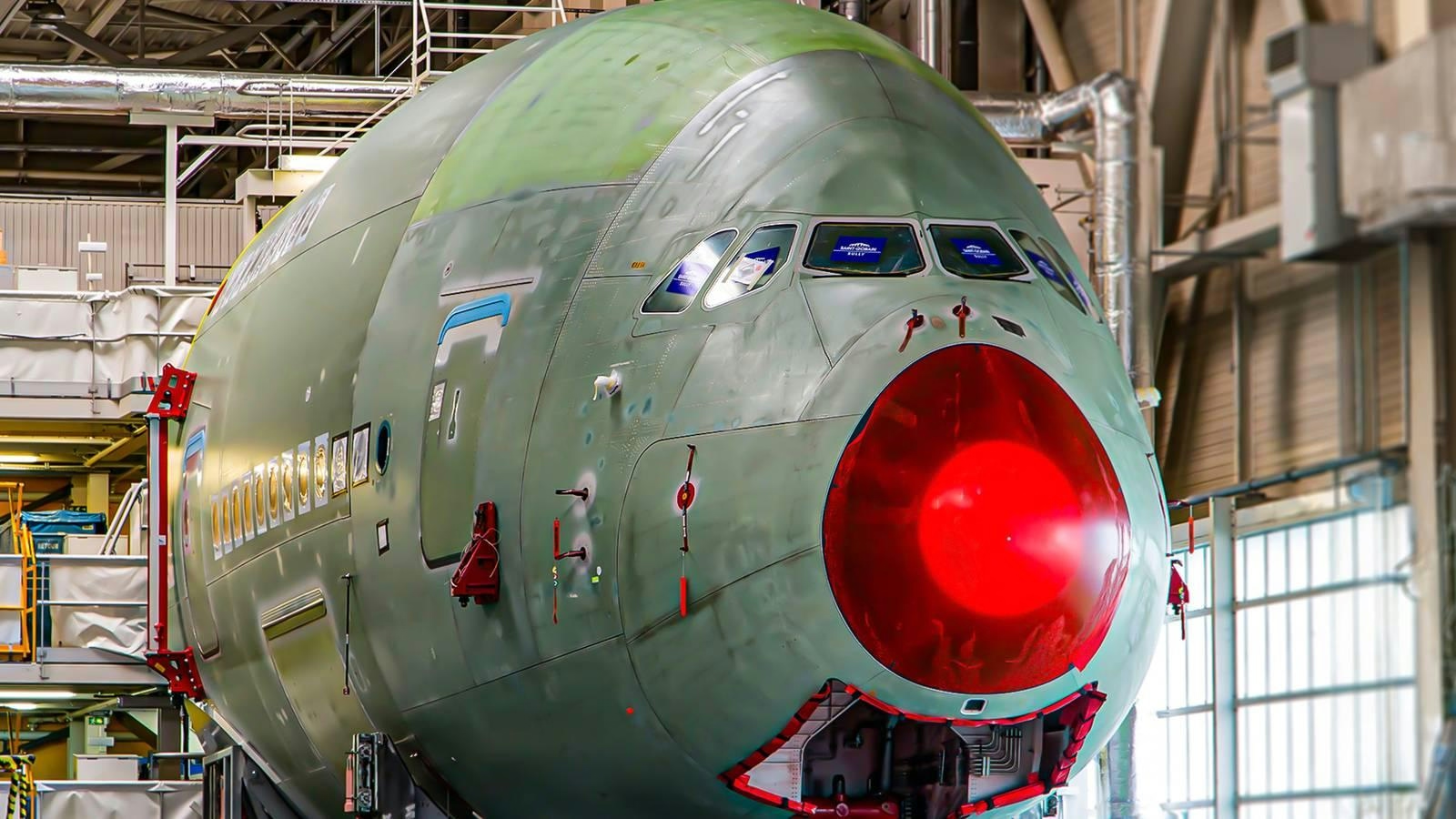
The Airbus A380, despite having ceased production several years ago, continues to hold its place as the world’s most instantly recognizable airliner. In an industry where many widebody jets often appear similar to the general public, the A380’s distinctive design and imposing presence set it apart. Its enormous size, full-length double-deck configuration, and unique silhouette have established a visual identity unmatched by any other commercial aircraft.

Design and Distinctiveness

Introduced in the early 2000s to address increasing congestion at major hub airports, the A380 was conceived with a singular, ambitious objective: to transport unprecedented numbers of passengers on a single flight. This goal influenced every element of its design. Unlike the Boeing 747, which features an upper deck limited to the front section of the fuselage, the A380’s second deck extends along the entire length of the aircraft. This design choice results in a taller, fuller, and more commanding profile—one that is immediately recognizable even to casual observers.

As the largest passenger airliner in the world and the only commercial jet with a full-length upper deck, the A380 is virtually impossible to mistake for any other aircraft. In typical multi-class configurations, it accommodates well over 500 passengers, with some all-economy layouts capable of seating more than 800. Its immense double-decked structure places it in a category of its own, distinguishing it even from the iconic Boeing 747.

Passenger Experience and Market Challenges

Beyond its striking appearance, the A380 quickly earned a reputation for delivering a quieter, more spacious, and distinctive onboard experience compared to most other jets. Airlines such as Emirates elevated the aircraft to flagship status for premium travel, and passengers came to associate the superjumbo with a unique style of flying—one that contrasted sharply with the more conventional twin-engine widebodies that followed.

However, the A380 has faced considerable challenges. While its size and capacity enable airlines to maximize passenger numbers on long-haul routes, these benefits come with high operational costs and the requirement for specialized airport infrastructure. The market’s response has been mixed: some carriers have retired their A380 fleets due to economic pressures, whereas others continue to operate them, leveraging their unique appeal and capacity. Meanwhile, competitors have concentrated on developing more fuel-efficient widebody aircraft to rival the A380’s range and seating, further influencing the evolution of long-haul aviation.

Continued Relevance

Despite production having ended, the A380 remains relevant in ways few anticipated. Its return to service following the pandemic, the absence of a direct one-for-one replacement, and its ongoing deployment on flagship routes have ensured it remains prominent in the public consciousness. The A380’s status as commercial aviation’s most recognizable aircraft endures, a testament to a design and presence that no other airliner has been able to replicate.

More news
Air Astana flight makes emergency landing in Aktobe after engine failure

Air Astana flight makes emergency landing in Aktobe after engine failure

Air Astana Flight Makes Emergency Landing in Aktobe Following Engine Failure An Air Astana Airbus A321, operating flight KZR921 from Astana to Frankfurt, was compelled to execute an emergency landing in Aktobe on May 8, 2026, after experiencing an engine failure shortly after departure from Astana Airport. The aircraft, registered as EI-KGJ, was carrying 93 passengers—including four children and one infant—and nine crew members at the time of the incident. Upon detecting the malfunction, the flight crew promptly issued a PAN-PAN urgency signal and diverted the flight to Aktobe Airport. Safe Landing and Immediate Response The aircraft touched down safely at Aktobe Airport at 11:34 a.m. local time. According to the Ministry of Transport, the crew followed established Quick Reference Handbook (QRH) procedures meticulously, enabling the plane to taxi to the parking stand under its own power. Emergency rescue teams and airport ground services were deployed as a precautionary measure. Fortunately, no injuries were reported, and the aircraft sustained no damage. Preliminary assessments attribute the incident to a technical malfunction within the aircraft’s powerplant. Context and Industry Implications This event occurs amid ongoing challenges related to engine reliability, particularly concerning Pratt & Whitney GTF engines, which have affected Air Astana’s Airbus A320neo fleet in recent months. These maintenance issues have intensified scrutiny over operational safety standards and may result in insurance claims. The incident also presents an opportunity for competing airlines to highlight their own fleet reliability, especially if they remain unaffected by similar engine concerns. The Ministry of Transport has classified the event as a serious incident under Kazakhstan’s aviation accident investigation regulations. The Department for the Investigation of Transport Accidents and Incidents will conduct a formal inquiry, with representatives expected to visit the site to collect evidence and initiate investigative procedures. Broader Aviation Safety Concerns The emergency landing underscores the critical importance of decisive and well-trained crew responses during in-flight emergencies. It also draws attention to broader industry challenges regarding technical reliability. This incident follows a recent emergency landing by a Swiss International Air Lines flight in Almaty, prompted by a medical emergency involving a crew member, further highlighting the complexities airlines face in maintaining passenger safety amid unforeseen circumstances.
Russia Aims to Double Superjet Service Life Amid Sanctions

Russia Aims to Double Superjet Service Life Amid Sanctions

Russia Aims to Double Superjet Service Life Amid Sanctions Extending the Yakovlev SJ-100’s Operational Lifespan In response to the mounting pressures of Western sanctions, Russia is undertaking efforts to significantly extend the operational lifespan of its regional jet, the Sukhoi Superjet 100, now rebranded as the Yakovlev SJ-100. The Ministry of Industry and Trade has set an ambitious target to increase the aircraft’s service life to between 25,000 and 40,000 flight hours, or 15,000 to 20,000 flight cycles. This extension would enable the Superjet to remain in active service for up to 20 years, nearly doubling its current operational duration. Originally introduced into serial production in 2011, the Superjet was designed with a much longer lifespan in mind—70,000 flight hours, 54,000 cycles, and 25 years of service. However, the imposition of sanctions in 2022 has severely disrupted the supply chain, particularly halting production of the Franco-Russian SaM146 engines and severing ties with key Western partners such as Safran. Consequently, the aircraft’s current service life has been curtailed to approximately 15,000 to 25,000 flight hours, or 10,000 to 15,000 cycles, representing roughly a quarter of its intended durability. Notably, about 20% of the existing fleet has already surpassed the 15,000-hour threshold. Operational Challenges and Fleet Status As of November 2025, out of 219 Superjets produced, only 159 remain in operation. Rossiya Airlines, part of the Aeroflot Group, is the largest operator with 78 aircraft, followed by Red Wings with 22, Azimuth with 19, and Yamal with 15. Despite the operational difficulties, Yakovlev reports a dispatch reliability rate of approximately 97%, underscoring the aircraft’s continued viability amid challenging conditions. The drive to extend the Superjet’s service life is part of a broader struggle to maintain and develop Russia’s civil aviation sector under the constraints of international sanctions. The Russian transport minister has emphasized the importance of platform standardization, the adoption of new technologies, and the implementation of energy-efficient solutions to preserve the competitiveness of domestic aircraft both domestically and internationally. However, the sanctions environment complicates these objectives. Recent incidents, including Deutsche Bank’s self-reporting of potential EU sanctions violations involving Russian clients and an investigation into Danish supplier FLSmidth over possible breaches related to Russian contracts, highlight the persistent obstacles confronting Russian industry. Economic Impact and Domestic Aviation Strategy Sanctions have also had a pronounced impact on the operational costs of the Superjet. Severstal Aviation, which operates four SSJs, reported to Vedomosti that the aircraft are now 1.5 to 2 times more expensive to operate per flight hour compared to comparable Western models, with costs having increased by 20 to 30 percent since sanctions were imposed. The restricted access to imported components has compelled Russia to consider reactivating older aircraft such as the Tu-204, Il-96, and Boeing 747-400, as well as restoring hundreds of Antonov An-2 biplanes as interim solutions. Simultaneously, Russia is accelerating efforts to boost production of domestically manufactured, import-substituted aircraft, including the SSJ, Tu-214, MC-21, and Il-114. These programs, however, have encountered delays and reductions. Extending the Superjet’s service life is viewed as a critical measure to sustain the country’s regional aviation network amid ongoing international isolation and supply chain disruptions.
India Seeks to Complement Global Aircraft Leasing Hubs, Says Rammohan Naidu

India Seeks to Complement Global Aircraft Leasing Hubs, Says Rammohan Naidu

India Seeks to Complement Global Aircraft Leasing Hubs, Says Rammohan Naidu India intends to position itself as a complementary player rather than a competitor to established global aircraft leasing hubs, Civil Aviation Minister Rammohan Naidu declared on Thursday. Highlighting the country’s expanding aviation market and the regional boom in air travel, Naidu underscored India’s potential to emerge as a significant leader within the broader South Asian aviation landscape. Growth Prospects and Industry Challenges Naidu emphasized that India’s aviation sector continues to experience robust growth, supported by strong demand fundamentals despite challenges such as rising prices for sustainable aviation fuel. He clarified that the government’s strategy is to collaborate with existing global leasing centers, fostering a synergistic relationship rather than engaging in direct competition. Nevertheless, India’s aspirations to become a major aircraft leasing hub face notable obstacles. Industry experts, including incoming IndiGo chief Willie Walsh, have highlighted the limited availability of widebody aircraft in the country, which could constrain the sector’s expansion. In response, Naidu affirmed that the government is actively working to create a more favorable environment for leasing companies and to attract increased investment into the aviation leasing market. Global Market Dynamics and India’s Position The global aircraft leasing industry is undergoing significant consolidation, exemplified by SMBC Aviation Capital’s recent $7.4 billion acquisition of Air Lease, a move that has reinforced its position among the world’s leading leasing firms. Such developments illustrate the competitive and dynamic nature of the sector, reinforcing the need for India to carve out a complementary role rather than attempting to rival entrenched hubs directly. Despite these challenges, confidence in India’s aviation market remains strong. The country’s large and rapidly growing passenger base, combined with rising interest from international lessors, positions India as a promising partner within the global aircraft leasing ecosystem. Concluding his remarks, Naidu expressed optimism that with sustained policy support and enhanced collaboration between government and industry stakeholders, India can strengthen its role in the international aviation arena, delivering benefits to domestic carriers and the wider region alike.
Alberta Commits $1 Million to Aviation and Aerospace Council for Defence Sector

Alberta Commits $1 Million to Aviation and Aerospace Council for Defence Sector

Alberta Commits $1 Million to Aviation and Aerospace Council to Strengthen Defence Sector Alberta’s government has pledged over $1 million in funding to the Alberta Aviation, Aerospace, and Defence Council, aiming to bolster the province’s defence industry amid intensifying global competition and shifting economic conditions. This investment is intended to enhance Alberta’s capacity to compete both domestically and internationally by supporting innovation, job creation, and market expansion within the sector. The LIFT Initiative: Supporting Small and Medium Enterprises Central to this funding is the launch of the Leading Industry Forward Together (LIFT) Initiative, which seeks to provide 40 small- and medium-sized enterprises (SMEs) with targeted training, certification, and increased market visibility. The initiative was officially introduced at the Alberta Aviation, Aerospace, and Defence Summit in Edmonton. The LIFT Initiative is financed through a $550,000 grant from the Ministry of Jobs, Economy, Trade, and Immigration, complemented by $500,000 from the Ministry of Technology and Innovation via Alberta Innovates. Joseph Schow, Minister of Jobs, Economy, Trade, and Immigration, emphasized the government’s commitment to fostering defence and dual-use industry development as a means to drive innovation and economic diversification. He highlighted Alberta’s robust industrial capabilities, skilled workforce, and innovation potential as critical assets for advancing Canada’s defence and security objectives. Kendra Kincade, chair of the Alberta Aviation, Aerospace & Defence Council, underscored the significance of this investment in addressing longstanding structural and geographical challenges that have constrained the sector’s growth. She noted that the LIFT Initiative will empower Alberta companies with defence-relevant technologies to overcome market entry barriers, enhance their skill sets, and unify the provincial industry voice to attract high-skilled talent and promote regional prosperity. Strategic Investments Amid Global Industry Challenges This funding commitment arrives at a time when the global defence industry is under increased scrutiny and faces fierce competition. The challenges confronting major international players, such as BAE Systems—which recently encountered a £120 million lawsuit during its production expansion—illustrate the complex environment Alberta companies must navigate to secure contracts and advance technologically. Geopolitical tensions and economic uncertainties further complicate the sector’s outlook, potentially affecting profitability and demand. In addition to the LIFT Initiative, Alberta is allocating $200,000 to Community Futures Entre-Corp to develop a sustainable operational model for the Foremost Unmanned Aircraft Systems Test Range. Despite being one of Canada’s two dedicated beyond visual line of sight flight-testing sites, the Foremost range has been inactive since 2025. Nate Glubish, Minister of Technology and Innovation, affirmed Alberta’s readiness to be a significant player in the defence and aerospace sectors, citing the province’s talent, technology, and industrial base. Sean Blewett, general manager of Community Futures Entre-Corp, highlighted the renewed emphasis on domestic drone capabilities as an opportunity to reimagine the test range’s future role. As Alberta advances these initiatives, the province seeks to establish itself as a competitive force within the global defence and aerospace markets, navigating the challenges posed by international rivals and a rapidly evolving industry landscape.
Recent Trends and Capacity Outlook in Engine Maintenance

Recent Trends and Capacity Outlook in Engine Maintenance

Recent Trends and Capacity Outlook in Engine Maintenance Engine maintenance has transformed from a routine operational expense into a critical constraint shaping airline and lessor strategies. The limited availability of maintenance, repair, and overhaul (MRO) capacity, coupled with extended turnaround times and intense competition for service slots, now directly impacts fleet utilization, network planning, and asset valuation. In response, the industry is increasingly adopting controlled, data-driven maintenance models. Operators are securing capacity well in advance, while service providers are expanding their capabilities to meet growing demand. Maintenance execution is becoming more dependent on parts availability, with supply chain resilience and workforce shortages emerging as significant challenges. Securing Capacity Through Long-Term Agreements The industry is witnessing a clear shift toward long-term contracts as the preferred mechanism for guaranteeing engine MRO capacity. Notable examples include Delta TechOps’ eight-year exclusive agreement with IndiGo for CFM56-5B engine maintenance, alongside a long-term collaboration with LATAM Airlines Brasil for Airbus A320 component repairs. Lufthansa Technik has strengthened its position with a major contract covering over 40 CFM56 overhaul events for China’s Juneyao Group and expanded its LEAP engine capabilities through a licensed repair facility agreement with Woodward. Similarly, AFI KLM E&M renewed its GE90 engine support contract with Philippine Airlines and extended its APS5000 auxiliary power unit agreement with Air Canada for 15 years, reflecting the growing trend toward multi-decade partnerships. HAECO extended its cooperation with Atlas Air through 2030 to support Boeing 747 freighter operations, while ITP Aero enhanced its GTF component repair services to reinforce its role in next-generation engine maintenance. While these long-term deals provide operational certainty, they also reduce short-term flexibility, making early planning and capacity alignment essential for both operators and service providers. Access to maintenance is increasingly determined by prior commitments rather than immediate availability, underscoring the strategic importance of securing capacity well in advance. Market Dynamics and Structural Challenges Engine maintenance now constitutes the largest segment of the global MRO market, valued annually between $50 billion and $58 billion. The sector faces heightened operational sensitivity due to overlapping demand cycles. Engines such as the LEAP and Pratt & Whitney GTF are entering their first major shop visit wave, with thousands of units transitioning into maintenance-intensive phases. The LEAP fleet alone comprises over 3,700 aircraft operated by more than 150 carriers. As these engines age, the addressable MRO market is projected to exceed $150 billion by 2040, supported by a backlog of more than 10,000 engines awaiting service. At the same time, legacy engine platforms remain in operation longer than initially expected, driven by ongoing delivery delays from Airbus and Boeing, which further intensifies demand for maintenance services. Recent data presents a nuanced outlook. RTX reports a 15% reduction in grounded jets, attributed to increased maintenance capacity and accelerated production of critical engine components. The business jet maintenance market is forecast to reach $10.4 billion by 2032, indicating strong demand. However, elevated fuel prices and airline capacity reductions could temper the post-pandemic maintenance surge, posing risks to sustained growth. Despite these headwinds, GE Aerospace maintains an optimistic stance, targeting the upper range of its 2026 profit forecast and highlighting the resilience of current-generation engines. In this complex environment, the ability to secure and manage engine maintenance capacity has become a defining factor in airline and lessor competitiveness. Strategic planning and long-term partnerships are now central to navigating the ongoing constraints within the industry.
AI 171 Crash Investigation Nears Completion, Report Expected Within a Month: Aviation Minister

AI 171 Crash Investigation Nears Completion, Report Expected Within a Month: Aviation Minister

AI 171 Crash Investigation Nears Completion, Report Expected Within a Month: Aviation Minister The investigation into the AI 171 crash is approaching its conclusion, with the final report anticipated within the next month, Aviation Minister Rammohan Naidu announced on Friday. He underscored the investigation’s commitment to “utmost seriousness, fairness, and transparency,” while acknowledging the complexity and international sensitivity that have extended the inquiry. Complexities and International Collaboration Nearly a year after the incident, the investigation remains ongoing due to the intricate technical analyses required and the involvement of foreign nationals aboard the flight. The AI 171 crash, which involved passengers from multiple countries, has attracted the attention of various international aviation authorities. Consequently, the forthcoming report is expected to undergo rigorous scrutiny by several nations and regulatory bodies. Minister Naidu recognized the extended timeline but emphasized that thoroughness must not be compromised for expediency. He stated that authorities are working diligently to complete the probe as swiftly as possible, while ensuring that due process is meticulously followed. The Aircraft Accident Investigation Bureau is leading the inquiry independently, supported by the government’s provision of all necessary resources to guarantee a comprehensive and credible investigation. Implications for the Aviation Industry Determining the precise cause of the accident remains a formidable challenge, necessitating collaboration among international experts and detailed technical evaluation. The investigation’s outcome is expected to have significant implications for the aviation sector. Industry observers suggest that the findings could trigger increased scrutiny of similar aircraft models and potentially result in higher insurance premiums for operators. In response to the incident, some competitors have already intensified safety protocols and initiated public relations efforts to sustain customer confidence. Reiterating the investigation’s advanced stage, Naidu affirmed that the government anticipates the process will conclude within approximately one month. The aviation community is closely monitoring the probe’s progress, as its conclusions may influence future safety regulations and operational standards. “We have provided investigators with all the resources they require,” the minister affirmed. “Our priority is a thorough and credible inquiry that stands up to international examination.” As the final report nears completion, stakeholders across the global aviation industry await its findings, which are poised to shape regulatory frameworks and industry practices in the coming months.
Akasa Air Establishes Entity for Aircraft Financing and Leasing in GIFT City

Akasa Air Establishes Entity for Aircraft Financing and Leasing in GIFT City

Akasa Air Establishes Aircraft Financing and Leasing Entity in GIFT City Akasa Air has announced the formation of a new entity, Akasa Air Leasing IFSC Private Limited (AALI), at Gujarat International Finance Tec-City (GIFT City) in Gandhinagar. This strategic move is designed to enhance the airline’s aircraft financing and leasing operations as it approaches its fourth year of service. The establishment of AALI is intended to serve as a cornerstone in advancing Akasa Air’s financing strategy, providing the carrier with increased flexibility, cost efficiency, and improved access to global capital markets. Strategic Implications and Industry Context AALI is expected to finance the majority of Akasa Air’s aircraft over time, while also bolstering the airline’s onshore leasing capabilities. Currently, Akasa Air operates a fleet of 38 Boeing 737 MAX aircraft and has placed orders for an additional 226 planes, underscoring its ambitious growth plans. The decision to base this entity in GIFT City aligns Akasa Air with other prominent Indian carriers such as Air India and IndiGo, both of which have established similar leasing operations within the financial hub. GIFT City has emerged as a preferred destination for aviation leasing due to its regulatory and tax incentives aimed at attracting global capital. However, Akasa Air’s expansion into aircraft financing and leasing occurs amid a challenging aviation sector landscape. The complexities of the aviation finance market have been exacerbated by recent geopolitical instability in the Middle East, which has disrupted Akasa’s plans for expansion into Gulf markets. These uncertainties have generated some investor skepticism regarding the long-term viability of the airline’s new financial model. Competitive Pressures and Market Dynamics The competitive environment is intensifying, with rival airlines, including international carriers such as JetBlue, securing substantial financing deals that set a high benchmark for competitive financing terms. Additionally, the broader aviation industry has witnessed significant transactions, notably the $7.4 billion acquisition of Air Lease by SMBC Aviation Capital and its partners. Such developments highlight the scale of competition Akasa Air faces as it seeks to expand its fleet and financing capabilities. Despite these challenges, the creation of AALI represents a pivotal step in Akasa Air’s long-term growth strategy. By leveraging the advantages offered by GIFT City, the airline aims to secure more efficient and flexible aircraft financing solutions in an evolving and competitive market.
Archer Advances Toward Air Taxi Operations in Abu Dhabi with UAE Certification

Archer Advances Toward Air Taxi Operations in Abu Dhabi with UAE Certification

Archer Advances Toward Air Taxi Operations in Abu Dhabi with UAE Certification Archer Aviation has taken a significant step toward launching electric air taxi services in Abu Dhabi, following progress in the United Arab Emirates’ aircraft certification process. The company’s Midnight electric vertical take-off and landing (eVTOL) aircraft has entered the Restricted Type Certification (RTC) program with the UAE’s General Civil Aviation Authority (GCAA). This development permits limited operations under controlled conditions while the full certification process continues. Regulatory Progress and Industry Context Adam Goldstein, Archer’s founder and CEO, emphasized the UAE’s forward-thinking stance on advanced aviation technologies. He described the GCAA as a “strong, collaborative partner” and noted that advancing the Midnight aircraft into the RTC program represents a crucial milestone toward introducing electric air taxis in the region. The RTC pathway allows aviation authorities to authorize aircraft for specific or limited operations, facilitating Archer’s plans to initiate air taxi services in Abu Dhabi ahead of full certification. This approach is particularly relevant as global regulators, including the US Federal Aviation Administration (FAA), work to establish comprehensive rules for eVTOL aircraft—a process marked by complexity and extended timelines. Archer is concurrently engaged in detailed certification and testing campaigns with the FAA, aiming to secure formal validation recognized by US authorities. Competitive and Strategic Challenges Archer’s progress unfolds amid a competitive and legally contentious environment. The company is currently involved in legal disputes with rival Joby Aviation, which has accused Archer of trade secret theft and misrepresentation. Meanwhile, Joby faces its own challenges, including an investigation by the US International Trade Commission over alleged import violations. These developments add layers of complexity to the competition for leadership in the emerging air taxi market. Despite these challenges, Archer’s advancement in the UAE benefits from the region’s expanding aviation infrastructure. Abu Dhabi’s growing network, supported by Etihad Airways, is reinforcing the city’s role as a global transit hub connecting Africa, Asia, and the Middle East. This strategic positioning is expected to facilitate the integration of air taxi services into the broader transportation ecosystem. As regulatory frameworks and competitive dynamics continue to evolve, Archer’s collaboration with the GCAA and ongoing certification efforts with the FAA represent key milestones in the company’s pursuit of electric air taxi operations in the UAE.
TIM Aerospace

TIM Aerospace

TIM Aerospace: Shaping the Future of MRO in the Middle East The global aviation maintenance sector is undergoing significant growth, driven by expanding airline fleets and extended aircraft service lifespans. This trend has intensified the demand for high-quality maintenance, repair, and overhaul (MRO) services worldwide. Within this evolving landscape, TIM Aerospace is establishing itself as a prominent independent player in the Middle East’s MRO market. Situated in Dubai South, a rapidly developing aviation hub, the company is constructing one of the region’s largest independent maintenance facilities. According to CEO Haluk Acar, TIM Aerospace’s ambitions extend beyond the scale of its operations. He emphasizes that the company was founded with a clear mission to create a disciplined, independent MRO platform rooted in operational precision, regulatory compliance, and sustainable growth. “Our location at Dubai World Central places us within one of the region’s most strategically important aviation hubs. However, infrastructure alone does not define a successful maintenance organisation,” Acar states. “From the outset, our focus has been on designing a controlled, measurable, and accountable maintenance ecosystem—one that prioritises predictability, safety culture, sustainability, and transparency.” Operational Excellence and Technological Integration TIM Aerospace’s new purpose-built facility at Dubai South covers approximately 18,000 square metres and features a distinctive single-span hangar design. By eliminating internal columns, the hangar provides an unobstructed space that enhances aircraft movement safety and streamlines workflow efficiency. The facility is capable of accommodating up to four Boeing 777-300s, five Boeing 777-200s, or as many as twelve narrow-body aircraft, depending on operational requirements. This versatility allows the company to manage multiple heavy maintenance projects simultaneously while maintaining rigorous safety and workflow standards. However, Acar stresses that the physical size of the facility is only one aspect of its world-class status. Equally important is the integration of advanced technology. TIM Aerospace is pioneering a fully paperless maintenance environment supported by sophisticated digital MRO systems. Maintenance task cards, compliance documentation, and work packages are all managed digitally, incorporating secure digital stamp authorisations to ensure regulatory traceability and provide real-time transparency for both customers and authorities. In addition, the company is implementing an RFID-based tool control system throughout the hangar. This innovation enhances traceability, reduces the risk of human error, and strengthens foreign object debris (FOD) prevention protocols. “The discipline, traceability, and technology embedded within our new hangar truly distinguish it and reflect our broader philosophy on operational excellence in the MRO industry,” Acar explains. Navigating Industry Challenges and Competition Despite benefiting from Dubai’s supportive regulatory and industrial environment, TIM Aerospace operates within a complex and challenging global context. Geopolitical tensions, particularly those related to the Iran-U.S. conflict, have disrupted supply chains and complicated the procurement of raw materials essential to aerospace manufacturing. Concurrently, the competitive landscape is evolving. Regional rivals such as Unimech Aerospace and Manufacturing Ltd have recently enhanced their technical capabilities and investment profiles, even amid financial pressures. At the same time, major industry players like Safran are responding to increased defense spending and market demand by planning substantial expansions in missile production capacity by 2030. In this dynamic environment, TIM Aerospace’s commitment to operational discipline, technological innovation, and sustainable development positions it as a resilient and forward-looking force within the Middle East’s MRO sector.
Government Considers Fractional Aircraft Ownership and Classifying Aircraft as Infrastructure, Says Civil Aviation Minister

Government Considers Fractional Aircraft Ownership and Classifying Aircraft as Infrastructure, Says Civil Aviation Minister

Government Explores Fractional Aircraft Ownership and Infrastructure Classification for Aviation Sector The Indian government is actively formulating policies to introduce fractional ownership in aviation and is considering the classification of aircraft as infrastructure assets, Civil Aviation Minister Ram Mohan Naidu announced on Friday. These initiatives are designed to strengthen India’s aviation financing and leasing framework, aiming to elevate the country’s position within the global aviation market. Policy Developments and Strategic Collaboration Addressing the India Aircraft Leasing and Financing Summit 2.0 held at GIFT City in Gandhinagar, Minister Naidu highlighted the ongoing cooperation between the Ministry of Civil Aviation and the Ministry of Finance to develop progressive aviation financing policies. He stated, “We are continuously engaging with the Ministry of Finance… We are trying to create a policy so that fractional ownership also becomes a reality in our country.” Both the introduction of fractional ownership and the potential reclassification of aircraft as infrastructure remain works in progress, reflecting the government’s commitment to fostering innovation in the sector. Recognizing aircraft as infrastructure could significantly impact the industry by attracting new investments and facilitating easier access to financing. Market analysts suggest that this reclassification may stimulate greater interest in fractional aircraft ownership, particularly within the business aviation segment. This trend aligns with international developments, where companies such as China’s Sino Jet have expanded their charter fleets with additions like the Gulfstream G700, and European operators like HansJet have increased their PC-12 fractional ownership offerings to capture larger market shares. Challenges and the Role of GIFT City Experts caution that achieving these ambitions will require a holistic approach that addresses not only financing but also the enhancement of production, maintenance, and repair capabilities to meet growing demand. The government’s policy framework is expected to incorporate these considerations to ensure the sector’s long-term viability. Minister Naidu also emphasized the strategic vision for GIFT City, clarifying that India does not intend to compete directly with established global leasing hubs but aims to complement them. “GIFT City is not merely a competitive option for India-related leasing, but it is the natural home. What we are building at GIFT City is a home for India’s aviation financing needs,” he remarked. He further noted that GIFT City offers distinct advantages over global centers such as Dublin, Singapore, and Dubai, positioning it as a specialized hub for aviation financing. Gujarat Chief Minister Bhupendra Patel, speaking at the summit, highlighted GIFT City’s emergence as a global fintech hub. Reflecting on the previous year’s summit, Patel expressed confidence that the ongoing discussions would provide renewed momentum toward building a developed India by 2047. He conveyed optimism that the summit’s dialogues would translate into tangible outcomes and visible benefits for the aviation sector in the near future.
line










