
Orquestre insights de IA em ações

Tendências
Categories
How a Turbine Blade Changed My Perspective on Air Travel
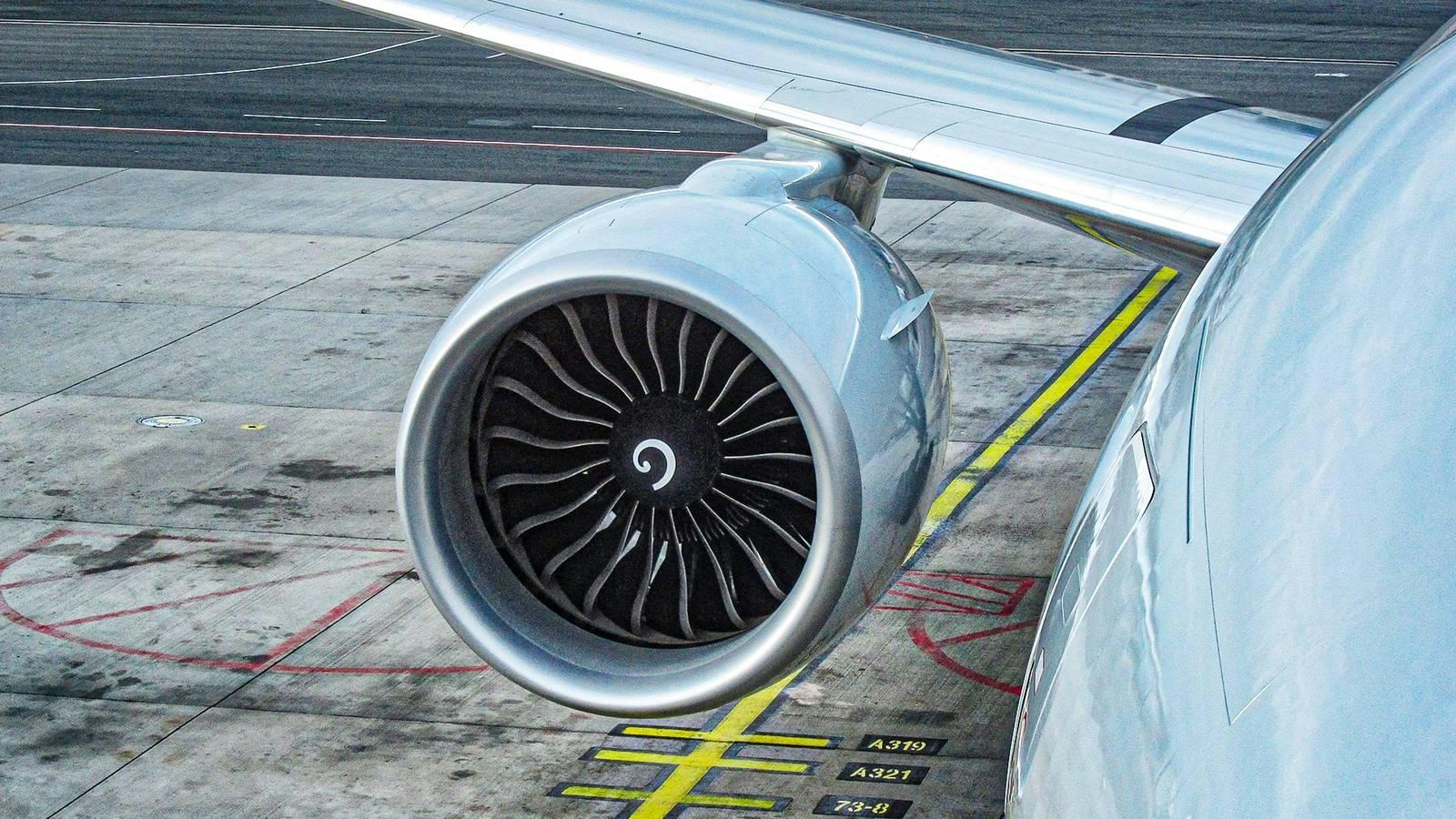
How a Turbine Blade Changed My Perspective on Air Travel
There are lessons learned during a delayed flight that one would never intentionally seek out. On a Tuesday in May, stranded at Houston airport, I found myself fixated on turbine blades as my departure time slowly crept forward on the gate screen, indifferent to my plans. The official explanation for the delay was vague: “a maintenance item.” The gate agent’s neutral demeanor offered no further insight, only that a “component” was under review and updates would follow. With time to spare, I opened my laptop and began to read.
The Hidden Heart of Air Travel
Turbine blades represent some of the most advanced engineering feats in commercial aviation, yet they rarely enter the consciousness of travelers. Located deep within the hottest section of a jet engine, these blades rotate at speeds exceeding 10,000 revolutions per minute, enduring temperatures that surpass the melting point of their own metal. Their survival depends on cutting-edge alloys, ceramic coatings, and complex internal cooling channels. Each blade contains over a hundred microscopic air passages, machined with tolerances finer than a human hair.
As I sat at the gate, it struck me that despite having flown hundreds of times, I had never once considered the significance of turbine blades. Yet, they are fundamental to modern air travel. The efficiency of a jet engine—measured by the thrust produced per unit of fuel—relies heavily on how hot the engine can operate, which in turn depends on the heat resistance of its turbine blades. Advances in blade technology have enabled engines to run hotter and more efficiently, resulting in cheaper, longer, and more frequent flights. Nearly every improvement in aviation fuel economy over the past five decades can be traced, at least in part, to innovations in turbine blade design.
Why Turbine Blades Are in the Spotlight
The reason I found so much to read that afternoon is that turbine blades are currently at the center of a significant industry challenge. The CFM International LEAP engine, which powers the Airbus A320neo and Boeing 737 MAX—the world’s most common commercial jets—has encountered serious issues related to high-pressure turbine blade casting defects. These blades are produced using single-crystal casting, a highly precise process in which the entire blade is grown as a single metal crystal to maximize heat resistance and durability. When casting quality declines, blades deteriorate more rapidly, necessitate earlier inspections, and force engines out of service prematurely.
This problem extends beyond a mere technical setback. Reporting from RivCut in May 2026 revealed that CFM International has faced turbine blade supply constraints since 2022. The consequences are being felt industry-wide: the U.S. Department of Transportation reported in February 2026 that flight delays and baggage mishandling have increased, partly due to these maintenance challenges. Airlines have responded by adjusting policies, encouraging carry-on luggage for short trips and emphasizing their baggage handling performance to reassure passengers.
Meanwhile, competitors are accelerating efforts to develop new technologies and operational strategies aimed at enhancing efficiency and customer satisfaction. At the same time, rising costs of offshore wind turbine components in Europe are exerting additional pressure on related supply chains, subtly influencing market dynamics and operational expenses within aviation and beyond.
A New Perspective
As I waited for my flight, it became clear that the reliability of something as small and overlooked as a turbine blade profoundly shapes the entire air travel experience. The next time I board a plane, my thoughts will extend beyond my seat or schedule to the extraordinary engineering quietly spinning beneath the wing.

Etihad Airways Suspends Airbus A380 Flights on Key Route

Aditya Birla Group Seeks Approval for Aircraft Leasing in GIFT City

Qatar Airways Highlights Innovation and Connectivity at Arabian Travel Market 2026

Hong Kong's Five-Year Plan Includes Andrew Fan's Aircraft Parts Processing Hub Proposal

ACIA Aero Leasing Delivers ATR72-600 to Air Nostrum

RTX Appoints Jill Albertelli as Head of Pratt & Whitney

TAT Technologies Joins Beyond Aero Hydrogen Aircraft Program

AURAK Study Highlights Barriers to Air Taxi Adoption in Emerging Economies

Xiamen Air Selects Altitude for 787 Maintenance at Heathrow

Etihad and Swissport Extend Global Partnership
