
Orquestre insights de IA em ações

Tendências
Categories
Why Turkish Airlines Operates the 492-Seat Boeing 777 on Short Flights
Why Turkish Airlines Operates the 492-Seat Boeing 777 on Short Flights
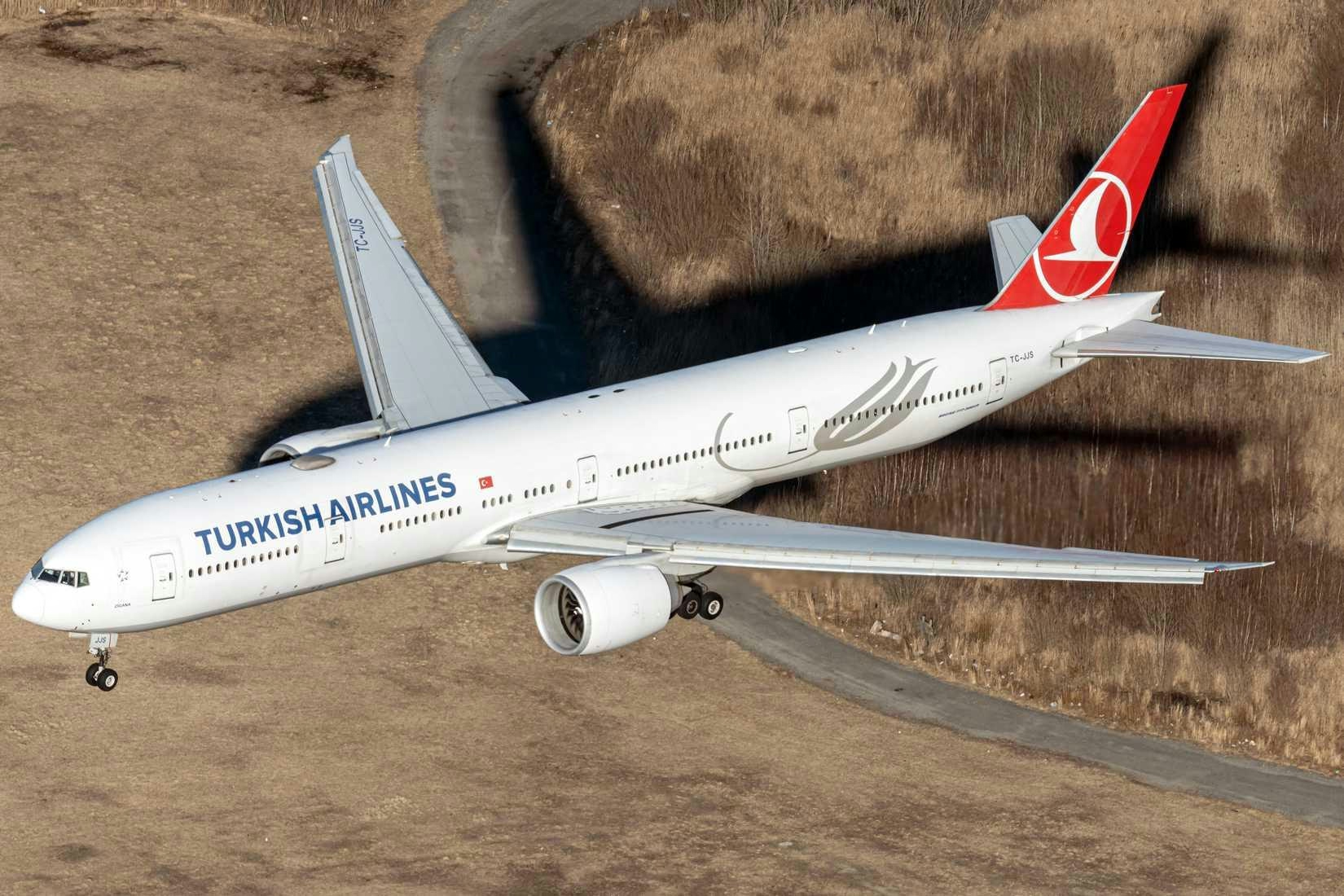
Turkish Airlines operates one of the world’s most distinctive Boeing 777 aircraft, notable not only for its all-white livery but also for its extraordinary seating configuration accommodating 492 passengers. Registered as TC-LKF, this Boeing 777-300ER stands apart from the airline’s fleet of more than 40 other 777s, which typically seat between 349 and 400 passengers. TC-LKF offers just 14 business class seats alongside a remarkable 478 economy seats, making it one of the highest-capacity 777s in commercial service. Its capacity even surpasses that of some Airbus A380s operated by carriers such as British Airways and Qantas.
An Unconventional Journey
Unlike Turkish Airlines’ standard 777s, which were delivered directly from Boeing with conventional long-haul layouts, TC-LKF has a complex operational history. Originally delivered to Emirates in 2007, the aircraft featured a traditional long-haul configuration. It was later transferred to Russian charter carrier Royal Flight, where it underwent a reconfiguration to maximize passenger density, tailored to serve high-volume, seasonal charter markets. Following periods of inactivity and disruptions within the Russian aviation sector, the aircraft eventually entered Turkish Airlines’ fleet, inheriting its unique high-density cabin layout.
Strategic Deployment and Market Dynamics
The deployment of such a large, densely configured aircraft on short-haul routes is highly unusual and presents a mixture of strategic opportunities and operational challenges. TC-LKF provides Turkish Airlines with a distinctive means to address peak demand without introducing a new aircraft type like the Airbus A380. However, operating a widebody aircraft with nearly 500 seats on short sectors can be inefficient. The elevated operating costs associated with large aircraft on brief flights may offset the advantages of increased capacity, particularly when passenger load factors fluctuate.
This approach has attracted scrutiny from both passengers and industry analysts, who have questioned the rationale behind deploying such a large aircraft on short distances. Concerns have been raised regarding passenger comfort, boarding logistics, and overall operational efficiency. Competitors have responded diversely; some have matched capacity on key routes, while others have focused on smaller, more efficient aircraft to maintain flexibility and control costs. These competitive dynamics are further complicated by broader industry trends, including capacity reductions linked to Middle East conflicts and ongoing consolidation among major European carriers.
Operational Risks and Recent Incidents
Operating a single aircraft with a markedly different configuration introduces additional complexity in areas such as maintenance, crew training, and scheduling. Recent incidents have underscored these operational risks. Notably, a Turkish Airlines 777 recently clipped a radar mast after landing at Antalya Airport, highlighting the challenges of managing large aircraft in busy or spatially constrained environments. Such events can influence market perceptions and may lead to heightened regulatory scrutiny.
Navigating a Shifting Landscape
As Turkish Airlines continues to utilize TC-LKF’s unique capacity, it faces the challenge of balancing the benefits of high-density operations against the realities of fluctuating market demand, competitive pressures, and operational risks. In a region characterized by shifting capacity requirements and evolving airline alliances, the airline’s use of this unconventional 777 exemplifies both the opportunities and complexities inherent in contemporary fleet strategy.

Etihad Airways Suspends Airbus A380 Flights on Key Route

Aditya Birla Group Seeks Approval for Aircraft Leasing in GIFT City

Qatar Airways Highlights Innovation and Connectivity at Arabian Travel Market 2026

Hong Kong's Five-Year Plan Includes Andrew Fan's Aircraft Parts Processing Hub Proposal

ACIA Aero Leasing Delivers ATR72-600 to Air Nostrum

RTX Appoints Jill Albertelli as Head of Pratt & Whitney

TAT Technologies Joins Beyond Aero Hydrogen Aircraft Program

AURAK Study Highlights Barriers to Air Taxi Adoption in Emerging Economies

Xiamen Air Selects Altitude for 787 Maintenance at Heathrow

Etihad and Swissport Extend Global Partnership
