
Orquestre insights de IA em ações

Tendências
Categories
Wizz Air Uses AI to Reduce Fuel Consumption and Improve Customer Service
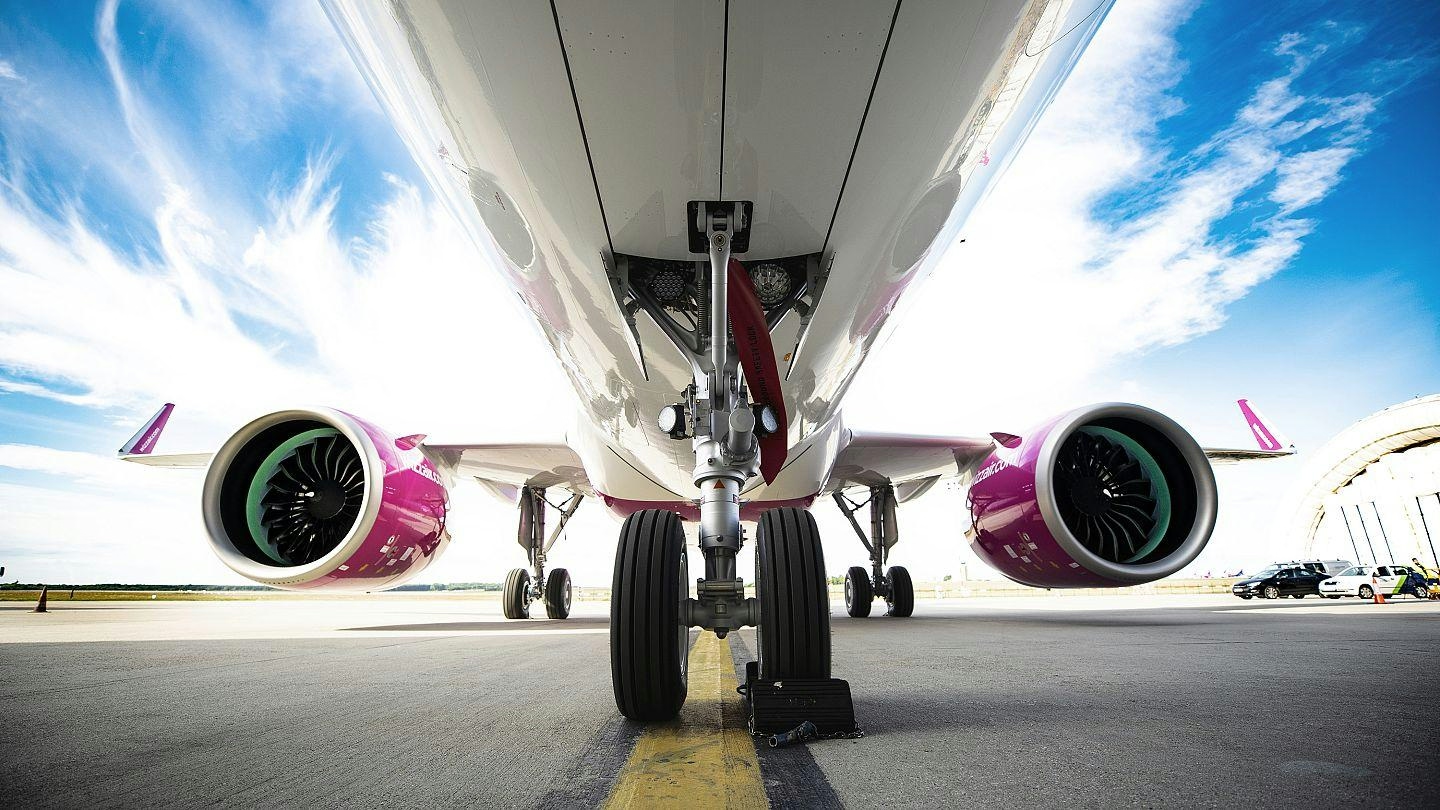
Wizz Air Employs Artificial Intelligence to Enhance Efficiency and Customer Experience
Wizz Air, the Hungary-based low-cost airline listed on the London Stock Exchange, is increasingly relying on artificial intelligence (AI) to reduce fuel consumption and improve customer service. This strategic move highlights the aviation sector’s growing dependence on data-driven automation to enhance operational efficiency and manage costs effectively. By utilizing AI to monitor weather conditions and determine optimal flight speeds and altitudes, Wizz Air achieves an average fuel saving of approximately 4 kilograms per flight.
Michael Delehant, Chief Commercial and Operations Officer at Wizz Air, described the integration of AI into daily operations as a pivotal advancement. He noted that managing the airline’s continuous and complex flight movements around the clock is feasible only through AI-driven systems. Serving tens of millions of passengers annually from nine UK airports—including Gatwick, Luton, Birmingham, and Edinburgh—Wizz Air has positioned itself as one of Europe’s most ambitious budget carriers. The airline’s adoption of AI-based flight optimization forms a core component of its broader environmental and efficiency initiatives. Coupled with a modern Airbus fleet and stringent efficiency targets, Wizz Air claims to maintain one of the lowest carbon footprints per passenger kilometre among European airlines.
The AI technology continuously analyzes real-time data on weather, wind, and flight routes, enabling pilots to make incremental in-flight adjustments that collectively yield substantial fuel savings across thousands of flights each year. Delehant emphasized that these marginal improvements accumulate significantly over time, benefiting both the airline’s financial performance and environmental impact. Despite these advances, Wizz Air confronts industry-wide challenges such as escalating fuel prices—a factor that recently led Alaska Air to revise its profit forecasts downward—and the potential for operational disruptions. As AI adoption becomes increasingly widespread among major carriers, budget airlines like Wizz Air, which operate on narrow profit margins, view efficiency gains as essential to maintaining competitiveness. It is anticipated that other low-cost carriers will soon invest in similar technologies, potentially intensifying competition within the sector.
AI-Driven Customer Service Enhancements
In addition to operational improvements, Wizz Air is deploying AI to tackle longstanding customer service challenges. The airline recently received a low ranking in short-haul economy satisfaction from the consumer group Which?, scoring 51 percent—just above Ryanair. In response, Wizz Air has expanded its English-speaking call centre teams and introduced an AI-powered chatbot named Amelia. This system can process thousands of passenger inquiries within hours, a task that previously required days or even weeks by human agents.
Delehant stressed that the purpose of automation is to augment rather than replace human customer service roles. He acknowledged widespread concerns about AI displacing jobs but reassured that the technology is intended to enhance human capabilities, making staff “more bionic” rather than obsolete.
Carrying over 60 million passengers in 2024, Wizz Air continues to pursue rapid expansion across Europe and the Middle East. The integration of AI into its core systems is viewed as critical to sustaining low fares while managing the logistical complexities of thousands of short-haul flights. Although some investors remain cautious about the short-term financial impact of fleet upgrades and technology investments, analysts suggest that these initiatives will ultimately strengthen Wizz Air’s competitive position and accelerate its recovery in the coming years.

Etihad Airways Suspends Airbus A380 Flights on Key Route

Aditya Birla Group Seeks Approval for Aircraft Leasing in GIFT City

Qatar Airways Highlights Innovation and Connectivity at Arabian Travel Market 2026

Hong Kong's Five-Year Plan Includes Andrew Fan's Aircraft Parts Processing Hub Proposal

ACIA Aero Leasing Delivers ATR72-600 to Air Nostrum

RTX Appoints Jill Albertelli as Head of Pratt & Whitney

TAT Technologies Joins Beyond Aero Hydrogen Aircraft Program

AURAK Study Highlights Barriers to Air Taxi Adoption in Emerging Economies

Xiamen Air Selects Altitude for 787 Maintenance at Heathrow

Etihad and Swissport Extend Global Partnership
