
Orquestre insights de IA em ações

Tendências
Categories
Zipline to Launch Nationwide Drone Delivery Service in Rwanda
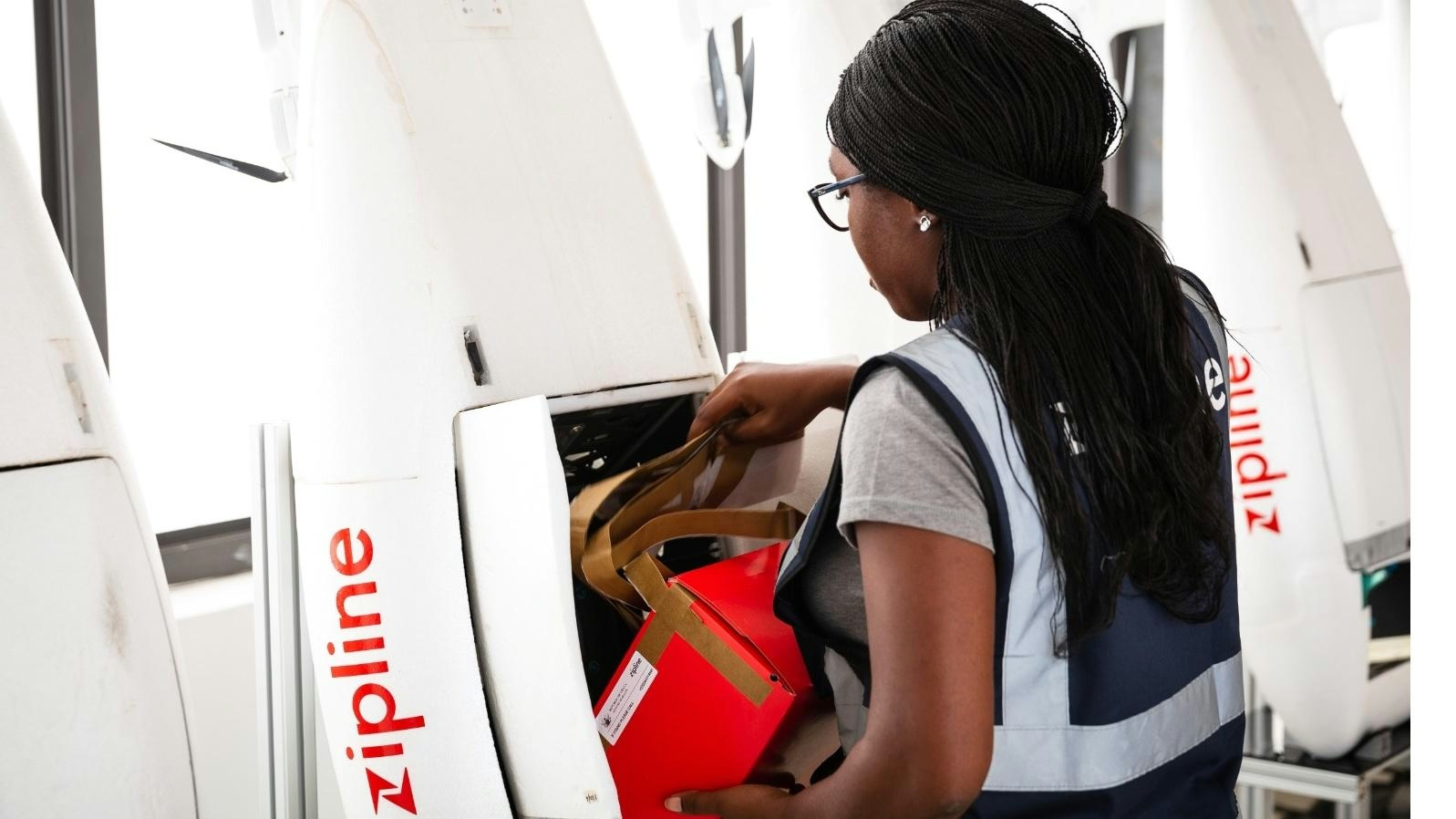
Zipline to Launch Nationwide Drone Delivery Service in Rwanda
The Government of Rwanda has formalized an expansion agreement with Zipline, positioning the country to become the first in the world to achieve full nationwide autonomous logistics coverage. This development follows Zipline’s recent $150 million pay-for-performance contract awarded by the US Department of State and a substantial $600 million funding round, reflecting robust investor confidence in drone delivery technology.
Expansion of Drone Delivery Infrastructure and Services
Rwanda, which pioneered Zipline’s autonomous delivery service in 2016, will now integrate Zipline’s urban delivery system, known as Platform 2 (P2), tailored for densely populated urban areas such as Kigali. The capital city alone accounts for approximately 40 percent of the nation’s healthcare demand. P2, already operational in the United States where it facilitates the delivery of over 100,000 retail and food items, will be customized to address Rwanda’s specific logistical challenges.
To support this expansion, a new long-range distribution center will be established in Karongi District, complementing existing hubs in Muhanga and Kayonza. Situated near the border with the Democratic Republic of Congo, the Karongi facility will extend Zipline’s operational reach to districts beyond the Nyungwe Forest. This expansion is expected to serve around 200 health posts and 60 health facilities, benefiting more than 2.9 million people.
The US government will provide initial infrastructure funding to facilitate the scale-up, while the Rwandan government has committed to financing ongoing operational expenses. Additionally, Zipline plans to open a new AI and robotics testing center in Rwanda. This facility will focus on enhancing aircraft performance, developing advanced safety systems, and advancing next-generation logistics software to support the expanded network.
Challenges and Industry Implications
Despite the ambitious scope of the project, Zipline faces several potential challenges. Regulatory complexities, competition from established logistics providers, and the integration of new technologies could affect the rollout timeline and operational efficiency. The increasing interest in drone delivery technology is expected to intensify competition, with major corporations such as Walmart and Alphabet’s Wing accelerating their own drone delivery initiatives and enhancing service capabilities in response.
Zipline’s expansion in Rwanda, alongside its growing presence in the United States, underscores a significant shift within the logistics industry toward autonomous delivery solutions. While the company’s strong financial backing and government partnerships provide a solid foundation, the evolving regulatory environment and competitive pressures will be critical factors to monitor as Rwanda emerges as a global test case for nationwide drone logistics.

Etihad Airways Suspends Airbus A380 Flights on Key Route

Aditya Birla Group Seeks Approval for Aircraft Leasing in GIFT City

Qatar Airways Highlights Innovation and Connectivity at Arabian Travel Market 2026

Hong Kong's Five-Year Plan Includes Andrew Fan's Aircraft Parts Processing Hub Proposal

ACIA Aero Leasing Delivers ATR72-600 to Air Nostrum

RTX Appoints Jill Albertelli as Head of Pratt & Whitney

TAT Technologies Joins Beyond Aero Hydrogen Aircraft Program

AURAK Study Highlights Barriers to Air Taxi Adoption in Emerging Economies

Xiamen Air Selects Altitude for 787 Maintenance at Heathrow

Etihad and Swissport Extend Global Partnership
