
Превращайте аналитические выводы ИИ в реальные действия

В тренде
Categories
38 Years After TACA Flight 110’s Emergency Landing at Michoud
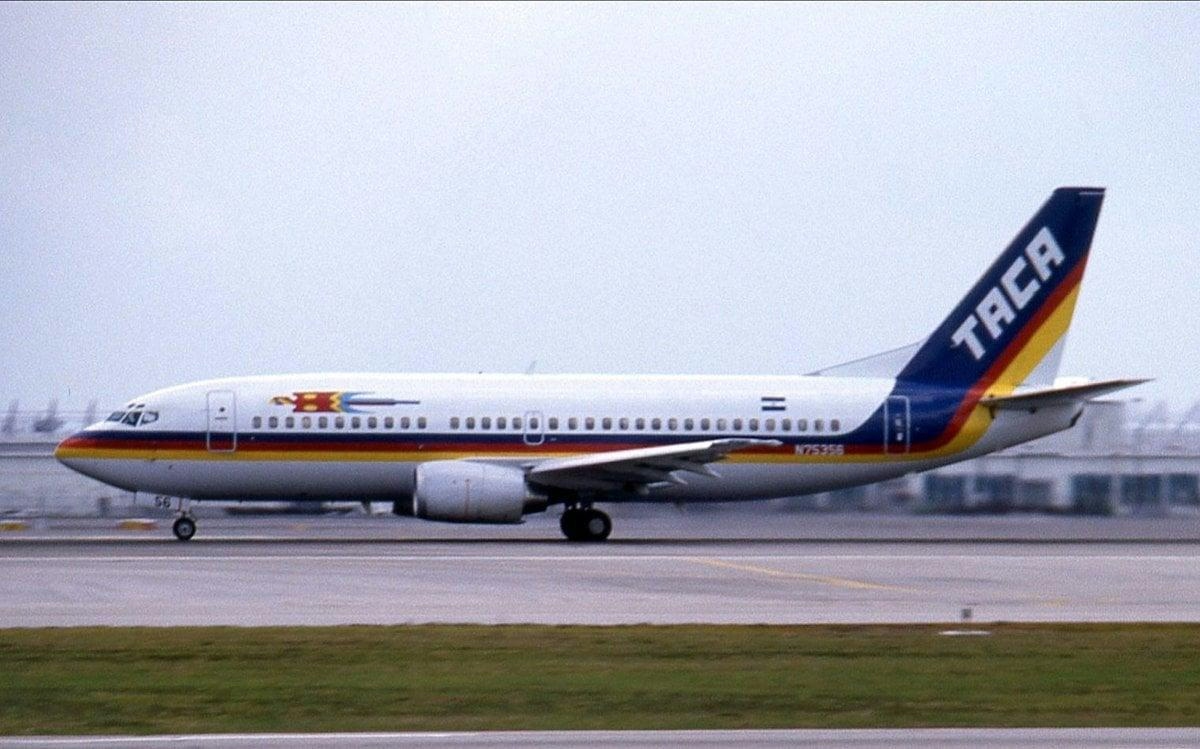
38 Years After TACA Flight 110’s Emergency Landing at Michoud
A Remarkable Feat of Aviation Skill
This weekend marks the 38th anniversary of one of aviation’s most extraordinary emergency landings. On May 24, 1988, TACA Flight 110, a Boeing 737-300 traveling from Belize to New Orleans, encountered a severe storm east of the city that caused both engines to fail. Captain Carlos Dardano, confronted with a powerless descent, successfully executed an emergency landing on a narrow strip of land near Michoud in New Orleans East—an area not designed for aircraft landings and far from any official runway.
Despite the New Orleans region being served by three airports, the location where the plane touched down was wholly unexpected. Reflecting on the incident, Captain Dardano recently revisited the site and recounted the harrowing moments when hail and heavy rain overwhelmed the aircraft’s relatively new engines. “We hit a lot of turbulence, and the engines quit on us... both at the same time,” he told Fox 8. After briefly restarting the engines only for them to fail again, air traffic controllers suggested Interstate 10 as a potential landing site. Dardano rejected this option, concerned about the risk to both passengers and motorists. Instead, he aimed for the Intracoastal Waterway until his co-pilot spotted a narrow strip of land alongside a levee. “We saw some cables over there we had to jump a little bit and I said I got it baby I got it, and then the rest is history,” Dardano recalled. The crew’s quick thinking, combined with the 737’s gliding capabilities, ensured the safety of all 45 people on board.
Legacy and Renewed Focus on Flight Safety
The successful landing, immortalized by Times-Picayune photographer Ted Jackson, concluded without any fatalities, underscoring the crew’s exceptional skill and composure under pressure. After evacuating the passengers, Captain Dardano observed as the aircraft was repaired and flown out two weeks later, an event that drew crowds from across the city.
The TACA Flight 110 incident remains a benchmark in emergency aviation response. In recent years, however, a series of high-profile airline emergencies have brought renewed public attention to flight safety. Southwest Airlines Flight 2665 made headlines after a cracked windshield forced an emergency landing in Oklahoma. American Airlines Flight 5318 diverted to Kansas City due to smoke in the cabin, while United Airlines Flight 1551 landed in Washington D.C. following a passenger’s attempt to open a door mid-flight. Additionally, Delta Flight DL478 was rerouted to Portland when a passenger gave birth onboard.
These incidents highlight the unpredictable challenges faced by flight crews and have intensified scrutiny of airline safety protocols. As passengers and investors respond to such events, the legacy of TACA Flight 110 serves as a powerful reminder of the vital importance of rigorous training, preparedness, and decisive action in ensuring safety in the skies.

Etihad Airways Suspends Airbus A380 Flights on Key Route

Aditya Birla Group Seeks Approval for Aircraft Leasing in GIFT City

Qatar Airways Highlights Innovation and Connectivity at Arabian Travel Market 2026

Hong Kong's Five-Year Plan Includes Andrew Fan's Aircraft Parts Processing Hub Proposal

ACIA Aero Leasing Delivers ATR72-600 to Air Nostrum

RTX Appoints Jill Albertelli as Head of Pratt & Whitney

TAT Technologies Joins Beyond Aero Hydrogen Aircraft Program

AURAK Study Highlights Barriers to Air Taxi Adoption in Emerging Economies

Xiamen Air Selects Altitude for 787 Maintenance at Heathrow

Etihad and Swissport Extend Global Partnership
