Изображение

AeroGenie — Ваш интеллектуальный второй пилот.

Спрашивайте что угодно. Анализируйте все. Действуйте незамедлительно.

В тренде

Categories

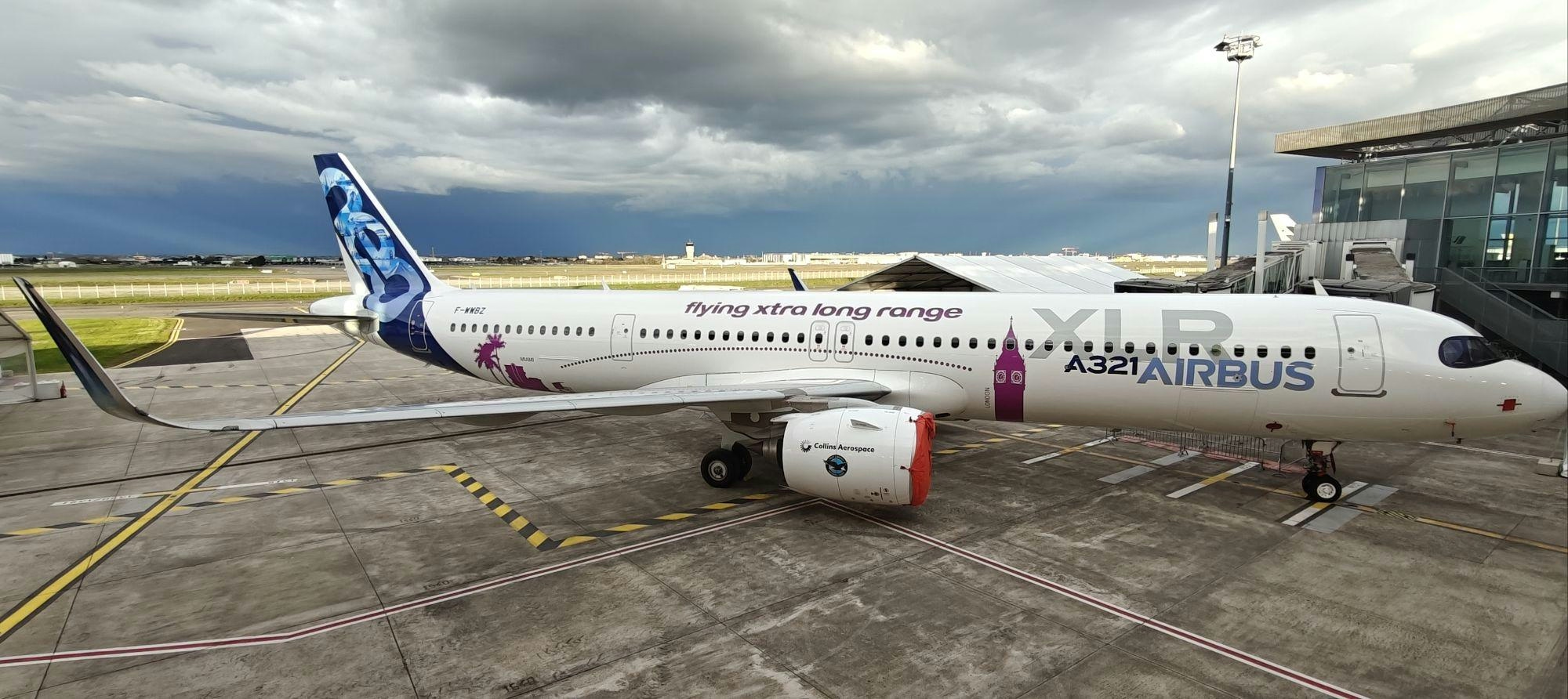
Aegean Airlines Cancels A321XLR Order, Postpones India Launch
March 14, 2026By ePlane AI
Aegean Airlines Cancels A321XLR Order, Postpones India Launch
0
0
Aegean Airlines
Airbus A321XLR
India Route Launch

Aegean Airlines Cancels A321XLR Order and Postpones India Expansion

Aegean Airlines, Greece’s national carrier, has officially cancelled its order for two Airbus A321XLR aircraft, a decision that has led to the postponement of its planned launch of flights to India. Executive Chairman Eftichios Vassilakis disclosed the development during a recent earnings call, attributing the cancellation to significant delivery delays and ongoing geopolitical uncertainties in the Middle East. These factors have contributed to an 8 to 10 percent decline in bookings, prompting the airline to reassess its expansion timeline.

Impact of Delivery Delays on Long-Haul Ambitions

The A321XLRs were initially intended to facilitate Aegean’s entry into long-haul markets, specifically targeting new routes from Athens to Mumbai and New Delhi. Although the airline’s current A321LR fleet theoretically possesses the range to serve the Indian subcontinent, the XLR variant was chosen to ensure a more reliable and timely launch. However, certification challenges—particularly concerning the aircraft’s seating configuration—have delayed deliveries by seven to eight months. Originally scheduled to arrive in December 2025 and January 2026, the aircraft are now expected only by late summer or autumn, missing the critical summer travel season.

Vassilakis explained, “With those aircraft, there has been a problem in terms of some certification issues in the seats. The deadline to receive them was pushed back by around 7 to 8 months. This would have made them redundant for us because they were meant to accelerate our entry in longer distance markets like India mainly.” Consequently, Aegean exercised its contractual right to cancel the order, citing the “extreme delay” as the primary reason.

Fleet Strategy Adjustments Amid Market Challenges

Following the cancellation, Aegean is revising its fleet acquisition plans. The airline had intended to develop a long-range sub-fleet of six A321neos, comprising four LR variants and two XLRs. With the XLRs no longer part of the strategy, Aegean will instead procure two additional standard A321neos to maintain its overall fleet target of 60 aircraft. The carrier is also considering converting existing A321neo orders to the LR variant to preserve a six-aircraft long-range sub-fleet, now exclusively composed of A321LRs.

This strategic pivot occurs amid a challenging environment marked by regional instability and a downturn in bookings. The postponement of the India route launch has drawn close attention from market analysts and competitors, who are monitoring how Aegean will adapt its operational and fleet strategies in response to these setbacks.

Despite these obstacles, Aegean remains focused on its long-term growth objectives. The airline has already taken delivery of 21 A320neos and 17 A321neos, according to Planespotters.net, and continues to explore opportunities to enhance its network and service offerings as market conditions evolve.

More news
Joramco Renews MRO Agreement with IndiGo to Support Airline’s Growth in Asia

Joramco Renews MRO Agreement with IndiGo to Support Airline’s Growth in Asia

Joramco Renews MRO Agreement with IndiGo to Support Airline’s Growth in Asia Joramco, a prominent maintenance, repair, and overhaul (MRO) provider headquartered in Amman, Jordan, has extended its strategic partnership with IndiGo, India’s largest and fastest-growing airline. Announced at the MRO South Asia Summit 2026, the renewed agreement highlights the commitment of both companies to support IndiGo’s expanding fleet and enhance operational efficiency within the rapidly developing South Asian aviation market. Strengthening a Strategic Partnership The renewed contract ensures that Joramco will continue delivering essential MRO services for IndiGo’s Airbus A320neo fleet, encompassing C-checks, lease return work, and aircraft painting. As IndiGo accelerates its growth amid intense competition in South Asia, maintaining rigorous operational standards remains critical. Joramco’s state-of-the-art facility at Queen Alia International Airport, equipped with six hangars and the capacity to service up to 22 aircraft simultaneously, positions the company as a vital regional hub for comprehensive maintenance operations. With over six decades of experience servicing a broad spectrum of aircraft from manufacturers such as Airbus, Boeing, and Embraer, Joramco has established itself as a trusted partner for airlines worldwide. Its strategic location in Jordan offers proximity to key aviation centers, enabling it to serve carriers across Europe, South Asia, Africa, and the Commonwealth of Independent States (CIS). Navigating Industry Challenges and Competition This renewed partnership arrives amid a surge in demand for MRO services in South Asia, driven by IndiGo’s rapid fleet expansion and the region’s burgeoning air travel market. However, the industry faces challenges, including increasing engine turnaround times that are prompting a reevaluation of MRO strategies across the Asia-Pacific. These delays have the potential to affect operational efficiency for both MRO providers and airlines, necessitating adaptive and innovative solutions. Market competition is intensifying, with other MRO providers such as Asia Digital Engineering actively expanding their presence in the region. Competitors are likely to pursue similar growth strategies to maintain market share and support airlines like IndiGo. This heightened competition is expected to foster further innovation and efficiency in MRO services, ultimately benefiting airlines and passengers alike. Supporting Growth in a Dynamic Market As South Asia solidifies its position as one of the fastest-growing regions for air travel globally, partnerships like that between Joramco and IndiGo are essential to sustaining reliable, high-quality maintenance services. Such collaborations ensure aircraft safety, minimize downtime, and enable airlines to consistently deliver superior service to passengers. By renewing its agreement with IndiGo, Joramco reaffirms its role as a leading MRO provider in the region, well-positioned to meet the evolving demands of modern fleets and support the continued expansion of Asia’s aviation sector.
Airlines Advised to Carry Minimum Fuel on Flights from Pakistan Amid Supply Chain Issues

Airlines Advised to Carry Minimum Fuel on Flights from Pakistan Amid Supply Chain Issues

Airlines Advised to Limit Fuel Uplift Amid Pakistan’s Jet Fuel Shortages The Pakistan Airports Authority (PAA) has issued a directive urging airlines operating from Pakistan to carry only the minimum required fuel on departures, citing significant supply chain disruptions linked to the ongoing conflict in the Middle East. In a recent Notice to Airmen (Notam), the PAA highlighted severe shortages of jet fuel A-1 within the country, attributing these constraints to regional instability and its impact on fuel availability. Airlines have been instructed to maximize refueling at foreign airports, as domestic jet fuel supplies remain uncertain. This advisory, effective until March 31, forms part of a series of precautionary measures designed to sustain flight operations amid volatile conditions. The regional conflict has not only disrupted fuel supplies but also caused a sharp escalation in jet fuel prices. Just days before the advisory, Pakistan raised the price of jet fuel by Rs154 per litre—an 82% increase—bringing the cost to a record Rs342.37 per litre. This unprecedented surge followed the US-Israeli attack on Iran and Tehran’s subsequent closure of the Strait of Hormuz, a vital global oil shipping route. Operational Challenges and Industry Response These developments have compounded challenges for airlines, which now face soaring operating costs alongside the need to potentially reroute flights to avoid conflict zones. Industry experts warn that the combination of supply chain disruptions, escalating fuel prices, and possible war risk surcharges could compel airlines—particularly smaller carriers with limited financial resilience—to reduce or suspend services if the situation persists. Several competitors have already begun adjusting flight routes and fuel management strategies in response to the evolving market conditions. The long-term impact on Pakistan’s aviation sector remains uncertain, with growing concerns over the sustainability of operations should these disruptions continue. Airlines are closely monitoring the situation, striving to balance operational safety with cost containment as they navigate the ongoing crisis. In a related development, the PAA announced temporary closures affecting commercial flight operations at Islamabad and Lahore airports on March 16. According to a separate Notam, six sectors of the Lahore Flight Information Region will be closed, and no commercial aircraft will be permitted to land or take off from Islamabad International Airport between 8:30 a.m. and 10:30 a.m. on that day. Captains have been instructed to ensure additional fuel reserves, as flights already airborne during the restricted period may be required to enter holding patterns before landing. As the regional situation continues to evolve, airlines and airport authorities remain on high alert, adapting swiftly to changing conditions to maintain safe and reliable operations.
Air Seychelles to Resume Widebody Flights After Eight-Year Hiatus

Air Seychelles to Resume Widebody Flights After Eight-Year Hiatus

Air Seychelles to Resume Widebody Flights After Eight-Year Hiatus Air Seychelles is poised to re-enter the long-haul market after an eight-year absence, announcing the launch of non-stop flights between Seychelles and Paris Charles de Gaulle. Scheduled to commence on March 20, this service will operate for a one-month period using a Boeing 787-9 aircraft leased from former equity partner Etihad Airways. This marks the airline’s return to widebody operations since suspending them in 2018 amid a significant corporate restructuring. Return to Long-Haul Operations and Fleet Details Currently, Air Seychelles maintains a fleet tailored to short and medium-haul routes, with the Airbus A320neo as its largest aircraft. The new Paris service will initially operate three times weekly, with the possibility of increasing to four flights per week depending on demand and operational considerations. The leased Boeing 787-9 is configured with 290 seats, comprising 28 business class and 262 economy seats. Given the short-term nature of the lease, the aircraft is unlikely to be reconfigured to match Air Seychelles’ usual product offering. CEO Sandy Benoiton emphasized the importance of resuming direct flights to Paris, describing it as a significant milestone for both the airline and Seychelles’ international connectivity. He noted that France has long been a vital market for the country, and the new service will provide a convenient and comfortable travel option for visitors and Seychellois travelers alike, while supporting the ongoing growth of the tourism sector. Strategic Timing Amid Regional Disruptions and Industry Challenges The timing of the Paris route launch is particularly noteworthy in light of recent disruptions in Gulf airspace caused by regional conflicts, which have led to the suspension or limitation of operations at major Gulf airports. Traditionally, travelers between Seychelles and Europe have relied on Gulf carriers such as Qatar Airways, Etihad Airways, and Emirates for connections. The introduction of a direct Paris service offers a reliable alternative for passengers seeking to avoid these disrupted hubs. Nevertheless, Air Seychelles’ return to widebody operations occurs within a challenging global aviation environment. The International Air Transport Association (IATA) has highlighted ongoing supply chain issues affecting widebody aircraft manufacturing, which could influence the availability and leasing costs of such aircraft. The competitive landscape is also evolving, with airlines like Air Astana and Starlux Airlines pursuing strategic fleet expansions. Additionally, regional market dynamics continue to shift, with some markets such as Brazil remaining underdeveloped, according to industry leaders including the CEO of Azul. These factors may impact Air Seychelles’ market performance and shape competitive responses. While the Paris route primarily targets traffic between Seychelles and Western Europe, the airline has indicated plans to offer “extensive onward connections” from Paris, though specific details have yet to be disclosed. On the Seychelles side, onward connections remain limited. As Air Seychelles embarks on this temporary Paris service, it will serve as a test of both market demand and the airline’s capacity to adapt within a rapidly changing industry landscape.
Air Lease Corp Shares Rise on Strong Earnings and Fleet Growth

Air Lease Corp Shares Rise on Strong Earnings and Fleet Growth

Air Lease Corp Shares Rise on Strong Earnings and Fleet Growth Air Lease Corp (ISIN: US00912X3026) has distinguished itself within the aviation sector by delivering a remarkable 40.5% return over the past year, significantly outperforming the Transportation Equipment and Leasing industry’s 24.6% gain. This robust performance is driven by strong demand for aircraft leasing, upward revisions in earnings forecasts, and renewed confidence from institutional investors. The company is effectively leveraging persistent backlogs at aircraft manufacturers and a supply-constrained market environment to strengthen its position. Earnings Momentum and Upward Revisions Consensus forecasts for the first quarter of 2026 anticipate a 17.2% year-over-year increase in earnings, with full-year 2026 earnings expected to rise by 14.1%. These projections have been revised upward in the past 60 days, with first-quarter earnings estimates increasing by 8.6% and full-year guidance by 2.8%. Air Lease has consistently exceeded expectations, surpassing Zacks Consensus Earnings estimates in three of the last four quarters, with an average surprise of 14.6%. This consistent outperformance highlights the company’s operational discipline and its ability to navigate a volatile market environment effectively. Fleet Expansion and Market Position Air Lease’s diversified and globally deployed fleet, combined with long-term partnerships with major airlines, positions the company to capitalize on structural tailwinds in the aircraft leasing industry. Its order book includes aircraft from both Airbus and Boeing, establishing Air Lease as a key player in transatlantic and European supply chains. For investors in Europe and the DACH region, the company offers exposure to commercial aviation growth without direct currency or regulatory risks. The company’s market position has been further bolstered by rising lease rates and extended lease terms, trends driven by a global undersupply of available aircraft following production delays during the pandemic. These factors have attracted fresh institutional investment, reflecting confidence in Air Lease’s near-term earnings potential and long-term growth prospects. Competitive Landscape and Industry Challenges Despite its strong performance, Air Lease faces intensifying competition. Rivals such as AerCap are also expanding their fleets to meet growing demand, while industry-wide reliability issues underscore the need for additional aircraft. Some market participants remain cautious, balancing Air Lease’s positive earnings momentum against the evolving competitive environment. Competitors are adopting strategic fleet adjustments to maintain their market positions. For instance, Frontier Airlines has reduced its fleet through lease terminations and order deferrals, while Brazil’s GOL is exploring fleet diversification and new aircraft types. These developments could heighten competition, particularly in key growth markets. Outlook Air Lease’s current momentum is supported by both favorable structural industry trends and effective tactical execution. As the aircraft leasing market enters a sustained growth phase, the company’s consistent earnings beats, upward revisions in estimates, and expanding fleet provide a strong foundation for continued outperformance. Nonetheless, investors should remain attentive to competitive pressures and shifting market dynamics as the sector adapts to ongoing supply constraints and evolving airline strategies.
Which Airport Handles the Most Boeing 777-300ER Flights?

Which Airport Handles the Most Boeing 777-300ER Flights?

Which Airport Handles the Most Boeing 777-300ER Flights? The Boeing 777-300ER has been a pivotal aircraft in global long-haul aviation since its commercial introduction by Air France in 2004. With over 830 units delivered, the aircraft has maintained a significant presence in airline fleets worldwide. Although Boeing ceased production of the 777-300ER in late 2024, more than 800 remain in active service as of mid-2023, according to ch-aviation. As the aviation sector prepares for the arrival of the next-generation Boeing 777X, the 777-300ER continues to serve as a critical link between major international hubs. Dubai International Airport: The Global Leader in 777-300ER Traffic Dubai International Airport (DXB) stands out as the foremost airport handling Boeing 777-300ER flights. Aviation analytics firm Cirium projects that Dubai will record nearly 50,000 departures of the 777-300ER in 2026, a figure more than twice that of any other airport worldwide. This dominance is largely attributable to Emirates, the largest operator of the 777-300ER, which currently fields 119 aircraft of this type, with 90 actively flying. Following Dubai, Hamad International Airport (DOH) in Doha ranks second with just under 20,000 departures, primarily supported by Qatar Airways. Paris Charles de Gaulle Airport (CDG) holds third place with nearly 15,000 departures, reflecting its role as a major European hub for long-haul widebody operations, including those by Air France, Emirates, Cathay Pacific, and Korean Air. The top ten airports by projected 777-300ER departures in 2026 are led by Dubai International, followed by Hamad International, Charles de Gaulle, Heathrow, Taiwan Taoyuan, Hong Kong International, Suvarnabhumi, Singapore Changi, Istanbul Airport, and John F. Kennedy International. Rio de Janeiro Galeão: An Emerging Strategic Hub While Dubai dominates in overall 777-300ER departures, Rio de Janeiro Galeão International Airport (GIG) has recently gained prominence as a strategic hub for this aircraft type. Emirates operates a daily service linking Dubai, Rio de Janeiro, and Buenos Aires, highlighting GIG’s increasing importance in long-haul connectivity. This route is particularly notable amid growing e-commerce cargo volumes, positioning Galeão as a vital gateway for both passenger and freight traffic in the region. Evolving Patterns and Future Prospects The operational landscape for the 777-300ER is undergoing change. Air France-KLM is reportedly considering the replacement of its 777-300ER fleet, a development that could significantly impact demand at key European airports. Additionally, Emirates’ recent decision to suspend service to Algeria due to diplomatic tensions may lead to shifts in flight routes and airport utilization for the aircraft. Despite these evolving dynamics, the Boeing 777-300ER remains a mainstay at many of the world’s busiest airports, continuing to facilitate intercontinental travel and global commerce as the aviation industry transitions toward the next generation of widebody aircraft.
General MRO Aerospace Obtains CAAC Certification for Maintenance Services in China

General MRO Aerospace Obtains CAAC Certification for Maintenance Services in China

General MRO Aerospace Obtains CAAC Certification for Maintenance Services in China General MRO Aerospace, a U.S.-based provider specializing in aviation maintenance, repair, and overhaul (MRO) services, has secured certification from the Civil Aviation Administration of China (CAAC) to conduct component maintenance on Chinese-registered aircraft. This approval, granted on March 13, 2026, represents a pivotal development in the company’s international expansion strategy and highlights its dedication to safety, quality, and adherence to regulatory standards. Strategic Expansion into the Asia-Pacific Market The CAAC certification authorizes General MRO Aerospace to offer its services to operators, lessors, and maintenance providers throughout the Asia-Pacific region, where demand for high-quality component repair is rapidly escalating. Industry forecasts indicate that by 2035, the Asia-Pacific market will account for approximately one-third of global engine maintenance demand, intensifying competition among MRO providers. This certification strategically positions General MRO Aerospace to better support customers in China and the broader region, addressing the needs of airlines and lessors navigating a highly competitive market for used aircraft and engine acquisitions. Rigorous Certification Process and Enhanced Capabilities To obtain CAAC approval, General MRO Aerospace underwent an extensive audit encompassing its facilities, quality management systems, technical procedures, and regulatory compliance frameworks. The company already operates under stringent quality standards, including FAA Part 145, EASA, CAA, and CAAT certifications. The addition of CAAC certification now enables General MRO Aerospace to provide repair and overhaul services for a broad spectrum of aircraft components in full compliance with Chinese aviation regulations, thereby expanding its operational capabilities. Market Context and Competitive Environment General MRO Aerospace’s entry into the Chinese market coincides with increasing challenges in sourcing feedstock for used aircraft and engines, a trend noted by industry participants such as AerSale. The rising demand for engine maintenance is driving MRO providers to enhance their service offerings and pursue strategic partnerships. Concurrently, competitors are engaging in consolidation efforts to strengthen their market positions, exemplified by West Star Aviation’s recent acquisition of DCJet Services aimed at bolstering its presence in the mid-Atlantic MRO sector and addressing extended engine turnaround times in the Asia-Pacific region. Leadership Commentary Jonathan Cornell, President of General MRO Aerospace, emphasized the significance of the certification, stating, “Achieving CAAC certification is an important step forward for General MRO Aerospace as we continue to expand our global footprint. This approval demonstrates the strength of our quality systems, our technical expertise, and our commitment to supporting airline and MRO partners worldwide. With increasing global demand for high-quality component repair services, this certification strengthens our ability to support customers operating in China and throughout the region. We look forward to building strong partnerships with Chinese airlines and aviation organizations.” Future Outlook With CAAC certification secured, General MRO Aerospace intends to leverage this milestone to broaden its customer base and deepen partnerships within the Chinese aviation sector. As competition intensifies and demand for engine maintenance continues to grow, the company aims to reinforce its global presence and enhance its capacity to serve clients worldwide.
San Antonio Chosen for Vertical Takeoff Air Taxi Test Program

San Antonio Chosen for Vertical Takeoff Air Taxi Test Program

San Antonio Selected for Electric Air Taxi Test Program San Antonio has been chosen to participate in a groundbreaking electric air taxi test program, marking a significant step toward the future of urban transportation. The Texas Department of Transportation (TxDOT) was recently selected by the Federal Aviation Administration (FAA) to join the electric Vertical Takeoff and Landing (eVTOL) initiative. This program aims to establish the necessary infrastructure for air taxis across Texas within the next decade, connecting major cities such as Austin, Dallas, Houston, and the San Antonio region. Sergio Roman, TxDOT’s director of emerging aviation technology, described the initiative as the "next domain of transportation." The program envisions a network of electric air taxis capable of transporting both passengers and cargo, potentially revolutionizing regional mobility. While the concept may appear futuristic, the rapid pace of development has surprised many local residents. Bill Brown, a San Antonio native, remarked on the swift progress, noting, “For a guy that grew up with pinball machines, this is happening really fast.” Phased Implementation and Timeline The rollout of the program will proceed in three distinct phases. The initial phase involves unmanned test flights designed to assess safety and performance metrics. Following this, the second phase will focus on transporting cargo, including critical items such as medical supplies, to demonstrate practical applications of the technology. The final phase anticipates the introduction of passenger flights, which are expected to commence within the next decade. Recent projections suggest that initial operations in Texas cities could begin as early as later this year, with commercial passenger flights potentially launching within two to three years. However, the program faces considerable challenges, including regulatory approvals, safety concerns, and technological limitations. FAA certification and comprehensive infrastructure planning are prerequisites before passenger services can be offered. Roman emphasized the importance of a cautious approach, stating, “Our whole goal is to make sure that as we innovate and try to be a leader in this space, we do this safely and efficiently, and that we make sure Texans are really going to benefit from this.” Public Response and Industry Outlook Public sentiment remains mixed, with some residents expressing hesitation about adopting the new technology. Brown voiced a common concern, saying, “I would have to see other people get in it before me and see the end result.” Market reactions have also been cautious, as both the public and investors await successful pilot operations to validate the safety and efficiency of electric air taxis. Meanwhile, competition in the advanced aviation sector is intensifying. Various companies are increasing investments and seeking partnerships with local governments to establish a presence in this emerging market. Port San Antonio is expected to play a pivotal role in the project by supporting technological development and facilitating coordination among the involved companies and agencies. TxDOT officials remain optimistic about the program’s potential to generate new employment opportunities, enhance regional connectivity, and position Texas as a leader in aviation innovation. As San Antonio prepares to embrace this new chapter in transportation, officials continue to prioritize safety and public benefit throughout the development process.
DARPA’s X-76 Aircraft Combines Folding Rotors and Jet Engines for Runway-Free Takeoff at Speeds up to 830 km/h

DARPA’s X-76 Aircraft Combines Folding Rotors and Jet Engines for Runway-Free Takeoff at Speeds up to 830 km/h

DARPA’s X-76 Aircraft: Merging Folding Rotors and Jet Engines for Runway-Free High-Speed Flight The Defense Advanced Research Projects Agency (DARPA) has revealed new information about its experimental X-76 aircraft, a project poised to revolutionize military aviation by integrating the vertical takeoff and landing (VTOL) capabilities of helicopters with the speed of jet aircraft. Developed under the SPRINT (Speed and Runway Independent Technologies) program, the X-76 is designed to operate without reliance on traditional runways while achieving speeds ranging from 740 to 830 km/h (400–450 knots). Addressing Operational Challenges with Hybrid Technology The X-76’s hybrid design seeks to resolve a persistent challenge faced by modern armed forces. Conventional fixed-wing jets provide rapid, long-range deployment but depend heavily on large, vulnerable runways that are prime targets in contemporary conflicts. Conversely, helicopters offer the flexibility to operate from virtually any location but are constrained by lower speeds, limited range, and reduced energy efficiency. By combining folding rotors for vertical lift with jet engines for high-speed horizontal flight, the X-76 aims to eliminate these trade-offs, enabling swift deployment and extraction of personnel and equipment in remote or hostile environments. Developed in collaboration with the United States Special Operations Command (USSOCOM), the X-76 must meet stringent requirements for both high cruising speeds and reliable hovering and vertical takeoff capabilities, even on unprepared or improvised surfaces. This capability promises to enhance operational flexibility and survivability by reducing dependence on fixed infrastructure vulnerable to precision missile strikes, drones, and long-range attacks. Development and Industry Implications Bell Textron, a leader in vertical lift and tiltrotor technologies, is spearheading the development, integration, and testing of the X-76 prototype after securing the competitive phase of the SPRINT program. The aircraft’s innovative design, which incorporates folding rotors alongside integrated jet propulsion, presents significant engineering challenges. Ensuring the aircraft achieves the demanding VTOL performance targets while maintaining system reliability and safety remains a central focus. The X-76’s unveiling has attracted considerable attention from defense contractors and military operators seeking advanced VTOL capabilities. The competitive landscape is intensifying, with companies such as Aurora Flight Sciences and Sikorsky advancing their own experimental VTOL aircraft projects. These parallel developments are expected to drive technological innovation and influence market dynamics as industry players race to produce runway-independent, high-speed platforms. If the X-76 project succeeds, it could fundamentally alter military deployment and maneuver strategies by offering unprecedented speed and operational flexibility without the constraints imposed by traditional airfields. The forthcoming years will be critical as the aircraft progresses from concept to flight testing, potentially establishing a new benchmark in military air mobility.
Joby Begins Nationwide Air Taxi Tour with Bay Area Flight

Joby Begins Nationwide Air Taxi Tour with Bay Area Flight

Joby Begins Nationwide Air Taxi Tour with Bay Area Flight A Milestone Demonstration in the San Francisco Bay Area On Thursday, residents of the San Francisco Bay Area witnessed a significant advancement in urban transportation as Joby Aviation’s electric vertical takeoff and landing (eVTOL) air taxi took flight over the bay, circling the iconic Golden Gate Bridge. This event marked the launch of Joby’s “Electric Skies Tour,” a nationwide initiative designed to showcase the potential of electric air taxis in celebration of the United States’ 250th anniversary. Although the company has yet to reveal the full itinerary, it confirmed that the tour will include demonstrations at various airports across the country. Joby’s flagship air taxi, which is currently piloted, is engineered to carry up to four passengers on short urban trips at speeds of approximately 200 miles per hour. The aircraft’s six propellers enable vertical takeoff and landing, similar to a helicopter, before swiveling forward to transition into efficient wing-borne flight. While the flight on Thursday utilized a preproduction prototype, designated N545JX, the company recently announced the commencement of flights with its first “FAA-conforming” air taxi—an aircraft model intended for future certification and commercial operation. The Bay Area flight originated from Oakland San Francisco Bay International Airport. Innovation Rooted in the Bay Area Headquartered in Santa Cruz, Joby Aviation has leveraged the Bay Area’s dynamic technology ecosystem to advance its development. Founder and CEO JoeBen Bevirt emphasized the region’s heavy traffic congestion and distinctive geography as ideal conditions for demonstrating the benefits of clean, quiet air taxi services. Bevirt stated, “By providing clean, quiet service with minimal infrastructure investment, we are making flight an everyday reality for the community.” During the demonstration, the aircraft flew across the bay, maneuvered near the Marin Headlands, and circled Alcatraz Island. Observers, including members of the media invited to view the flight from a local yacht club, noted the aircraft’s remarkably quiet operation, underscoring one of the key advantages of electric propulsion. Context and Challenges in the Emerging Urban Air Mobility Market Joby’s tour arrives amid growing real-world applications of electric aircraft. In 2025, Beta Technologies completed an extensive six-week journey covering 8,000 nautical miles across 25 states with its Alia electric aircraft, which included the first electric passenger flight into New York’s JFK Airport. Unlike Beta’s conventional takeoff and landing (CTOL) aircraft, Joby’s tour could become the most comprehensive demonstration to date of a VTOL model, which has largely remained confined to controlled testing environments. Despite these advancements, Joby faces considerable challenges. Rival company Archer Aviation has filed a countersuit alleging that Joby concealed business ties to China in order to secure U.S. government contracts, intensifying competition within the rapidly evolving urban air mobility sector. Joby’s ability to successfully launch its aerial ridesharing service remains uncertain, as does the broader market’s growth trajectory. The company must also contend with securing future capital, navigating evolving regulatory frameworks, and maintaining a competitive edge—all critical factors that will influence its path to commercial operations. As the Electric Skies Tour progresses, Joby aims to demonstrate not only the technical capabilities of its aircraft but also its broader vision for transforming urban transportation, even as it confronts the realities of a competitive and uncertain market environment.
STARLUX Airlines to Lease 8 Additional Airbus A321neos

STARLUX Airlines to Lease 8 Additional Airbus A321neos

STARLUX Airlines to Lease Eight Additional Airbus A321neos Taiwanese premium carrier STARLUX Airlines has announced plans to expand its narrowbody fleet by leasing eight additional Airbus A321neo aircraft. This decision, approved by the airline’s board and disclosed in a regulatory filing to the Taiwan Stock Exchange on March 10, 2026, reflects STARLUX’s ongoing strategy to enhance its presence in the competitive Asia-Pacific aviation market. Details of the Lease Agreement and Fleet Strategy According to the filing, STARLUX will lease the aircraft from BOC Aviation, with an estimated lease value of approximately $81.25 million per aircraft. The final transaction amount may be subject to adjustment based on the actual leasing terms. The airline clarified that the agreement is not a related-party transaction and is intended to support the expansion of its route network. The addition of these A321neos will reinforce STARLUX’s narrowbody operations, which currently form the backbone of its short- and medium-haul routes. The Airbus A321neo is widely recognized for its fuel efficiency and extended range, making it a preferred choice for regional services across Asia-Pacific and beyond. STARLUX operates an all-Airbus fleet, including the A321neo, A330neo, and A350 family, aligning with its strategy of deploying narrowbody aircraft for regional routes while utilizing widebody jets for long-haul expansion. Founded in 2018 and headquartered in Taiwan, STARLUX has positioned itself as a premium full-service carrier focused on delivering a high-quality passenger experience alongside rapid network growth. Since commencing operations in 2020, the airline has steadily expanded both its fleet and route network, targeting markets across Asia as well as long-haul destinations. The planned lease of eight additional A321neos is expected to increase capacity on high-demand routes, particularly within Northeast and Southeast Asia. Challenges and Market Implications Despite the growth prospects, STARLUX faces several challenges in executing this expansion. Securing favorable lease terms in a competitive market where demand for the Airbus A321neo remains strong will be critical. Integrating the new aircraft into existing operations will require meticulous planning to maintain service quality and operational efficiency. Furthermore, the airline must ensure that market demand justifies the increased capacity. The broader aviation market may also be affected by STARLUX’s fleet expansion. Heightened competition for A321neo aircraft could lead to increased prices or lease rates, as other carriers pursue similar growth strategies. For instance, Delta Air Lines recently exercised options for 34 Airbus A321neos, underscoring the robust industry demand for this aircraft type. Competitors may respond by accelerating their own fleet renewals or expansions to preserve market share. While STARLUX’s filing confirms the leasing plan, additional details such as delivery schedules and aircraft configurations have yet to be disclosed. Nevertheless, this move signals the airline’s commitment to strengthening its regional position and proactively adapting to evolving market dynamics.
line










