Изображение

AeroGenie — Ваш интеллектуальный второй пилот.

Спрашивайте что угодно. Анализируйте все. Действуйте незамедлительно.

В тренде

Categories

AerFin Expands Teardown Logistics Partnership with National Air Cargo
April 24, 2026By ePlane AI
AerFin Expands Teardown Logistics Partnership with National Air Cargo
0
0
AerFin
Aircraft Teardown
National Air Cargo

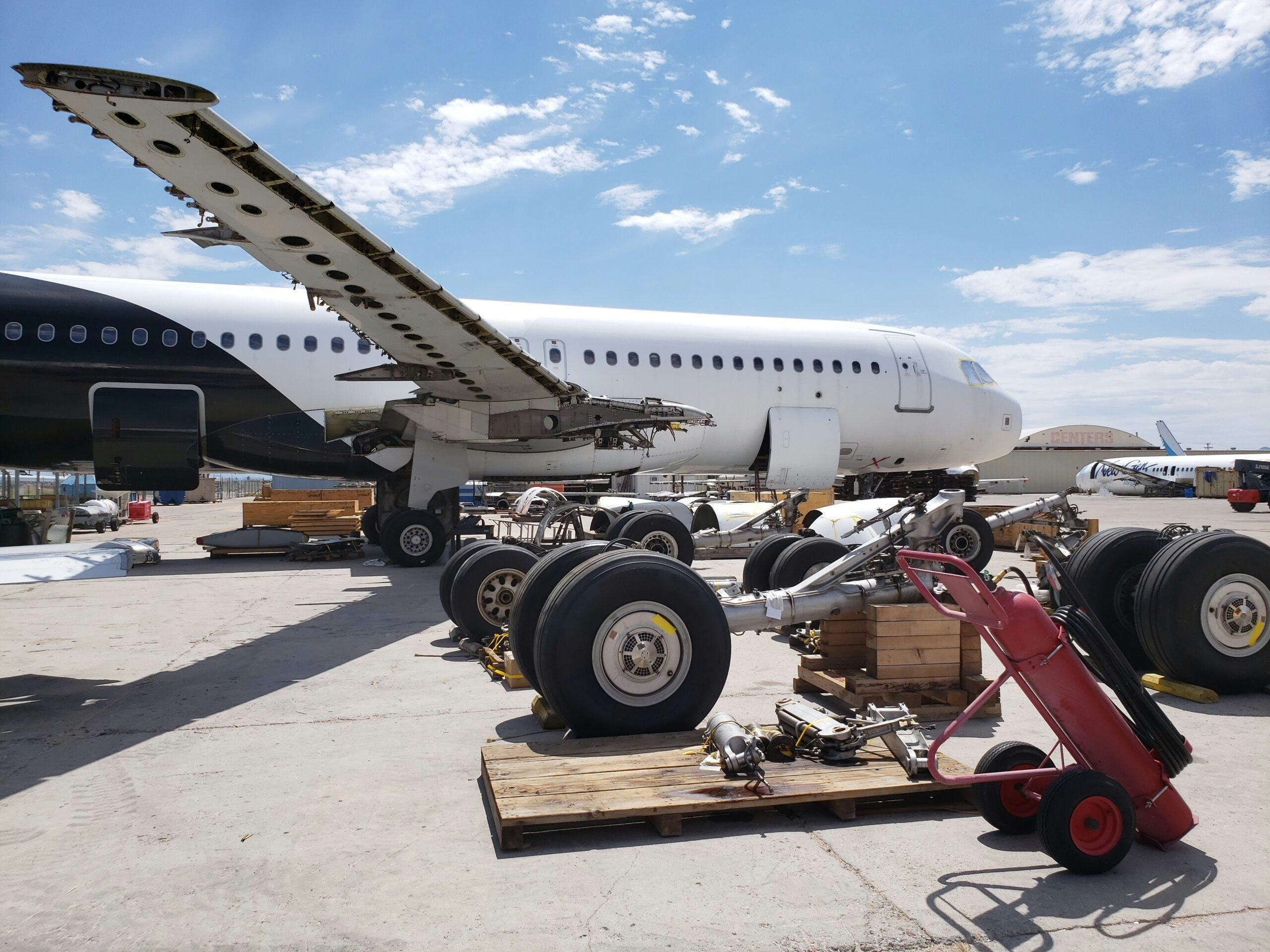
AerFin Strengthens Teardown Logistics Partnership with National Air Cargo

AerFin has announced an expansion of its partnership with National Air Cargo to enhance the logistics supporting its aircraft teardown operations. This new agreement aims to streamline the transfer of materials between AerFin’s facilities in Marana and Miami, ensuring that aircraft components are moved swiftly, securely, and with the necessary operational oversight to maximize value throughout the asset lifecycle.

Building on a Foundation of Collaboration

The expanded partnership builds upon National Airlines’ prior role in supporting AerFin’s materials purchasing, which established a solid operational foundation. This collaboration has naturally evolved into a broader logistics alliance, combining AerFin’s expertise in aircraft teardown with National Air Cargo’s extensive global logistics network. Together, they facilitate seamless transitions of assets through dismantling, transportation, and subsequent utilization, enhancing efficiency across the supply chain.

Navigating a Competitive Market Landscape

AerFin’s expansion occurs amid intensifying competition within the used serviceable material (USM) market, where an increasing number of players are vying to secure valuable partnerships and improve logistics capabilities. This heightened rivalry places AerFin’s strategic moves under close scrutiny from investors and stakeholders, particularly concerning its competitive positioning and cost management. Industry rivals may respond by accelerating their own alliance-building efforts or upgrading logistics operations to safeguard their market share.

Despite these challenges, AerFin remains committed to a flexible, multi-partner strategy, continuing collaboration with existing partners across various aspects of its program. This approach is designed to deliver optimal outcomes for customers while adapting to the evolving dynamics of the USM sector.

The deepening partnership with National Air Cargo underscores AerFin’s intent to maintain agility and resilience in the face of shifting industry pressures, reinforcing its position in a rapidly changing market environment.

More news
Inside Emirates’ Boeing 777X Cabin: Comparing It to the Airbus A380

Inside Emirates’ Boeing 777X Cabin: Comparing It to the Airbus A380

Inside Emirates’ Boeing 777X Cabin: Comparing It to the Airbus A380 Emirates has unveiled the first detailed renderings of its forthcoming Boeing 777X cabin, offering a glimpse into the airline’s vision for its next flagship aircraft. The new twin-engine widebody will introduce a mid-cabin social lounge accommodating up to eight passengers, featuring a self-serve snack bar. This design element echoes the popular onboard lounge of the Airbus A380, albeit tailored to fit the smaller 777X. Business class seating will adopt a more competitive 1-2-1 configuration, while the airline plans to roll out complimentary Starlink WiFi across its entire widebody fleet. With Airbus having ceased production of the A380, Emirates—currently the largest operator of the superjumbo with a fleet of 116 aircraft—has positioned the 777X as the successor to its iconic flagship. This transition raises a critical question: can the 777X match or even surpass the passenger experience that the A380 has long set as a benchmark? The 777X Program: Ambitions and Setbacks The Boeing 777X program, launched in 2013, was conceived to succeed the widely successful 777 family and to compete directly with Airbus’s A350 and A380 models. It promises increased passenger capacity alongside improved fuel efficiency. However, the program has encountered significant delays, with the anticipated entry into service now pushed back to around 2027. Emirates, as the largest customer, plans to integrate the aircraft into its fleet over a period extending from 2027 to 2038. At the 2025 Dubai Airshow, the airline notably expanded its order to 270 777X aircraft, more than doubling the commitments of any other carrier. Enhancing the Passenger Experience Emirates has demonstrated a strong commitment to innovation in passenger comfort and amenities. In response to advances in seating design, inflight entertainment, and connectivity, the airline abandoned its original 777X seat concepts, investing between €20 and €30 million to develop a more competitive product. The newly revealed business class layout suggests a significant upgrade, yet the challenge remains whether the 777X cabin can replicate the spaciousness and luxury that have become synonymous with the A380. Boeing has also prioritized cabin accessibility improvements, aiming to enhance the onboard experience for disabled passengers—a growing focus within the aviation industry. This development aligns with broader market trends, as competitors such as Lufthansa have reintroduced the A380 with upgraded business-class cabins, intensifying competition for premium travelers. Sustainability and Market Challenges Emirates is also advancing sustainability initiatives, including the launch of a cabin recycling program that may set new industry standards and encourage similar efforts among rival airlines. These measures reflect the increasing importance of environmental responsibility in aviation. At the same time, geopolitical tensions, particularly the ongoing conflict involving Iran, have disrupted traditional air routes and altered market dynamics. Airlines like Emirates are compelled to adapt their network strategies and product offerings in response to these shifting competitive pressures. Looking Forward Despite its substantial order of 270 aircraft, Emirates has yet to receive its first 777X. The airline is also exploring the possibility of a further stretched variant, tentatively dubbed the “777-10,” though this remains in the feasibility stage. As Emirates prepares to phase out the A380 and usher in the 777X era, it faces the dual challenge of preserving its reputation for luxury while responding to evolving technological, market, and environmental demands. Whether the 777X will ultimately replace the A380’s iconic passenger experience remains uncertain. Nonetheless, Emirates’ significant investments in cabin innovation, accessibility, and sustainability underscore its determination to establish new standards in long-haul air travel.
Leading Aviation Software Development Companies

Leading Aviation Software Development Companies

Leading Aviation Software Development Companies The aviation industry is increasingly embracing digital solutions to improve operational efficiency, safety, and customer experience. Software now plays a pivotal role in managing complex processes ranging from flight scheduling to maintenance tracking. As the sector evolves, aviation businesses are seeking software partners with a deep understanding of the industry’s stringent regulatory requirements and operational complexities. Challenges in Aviation Software Development Finding the right software provider has become more challenging amid a pronounced talent shortage, particularly in business aviation. The demand for professionals who combine aviation knowledge with technical expertise exceeds supply, intensifying competition among software firms. This scarcity can affect project delivery timelines and the overall quality of solutions. In addition to workforce constraints, broader market forces are shaping the aviation software landscape. Investor apprehension about artificial intelligence (AI) disrupting traditional software models has triggered a selloff in software stocks, despite strong earnings reported by companies such as IBM and ServiceNow. The industry is closely monitoring significant developments like SpaceX’s potential $60 billion acquisition of Cursor AI, which could introduce advanced AI coding tools into aerospace operations. Such innovations may redefine standards for AI-driven knowledge work and transform the development and deployment of aviation software. Leading Companies in Aviation Software Development Selecting the appropriate software partner is more critical than ever. The ideal provider delivers secure, scalable, and high-performance solutions while guiding clients through evolving technologies and workforce challenges. Several companies stand out for their specialized expertise and comprehensive offerings tailored to the aviation sector. JPLoft is recognized for its secure and scalable aviation software, including flight management systems, booking platforms, and real-time tracking solutions. Their end-to-end services and client-centric approach position them as a reliable partner for sustained growth. Sabre Corporation offers widely adopted platforms that support airline reservations, operations, and distribution. Their technology enhances efficiency in managing bookings, inventory, and customer engagement. Reckonsys specializes in user-friendly digital applications for aviation and logistics, focusing on streamlining booking processes and operational management. IBR Infotech develops robust software solutions for scheduling, tracking, and service management, helping aviation businesses optimize their workflows. Other notable companies include Leon Software, which provides flight scheduling and operations management tools; Ramco Systems, known for enterprise software in maintenance and operational control; and Amadeus IT Group, a global provider of aviation technology for reservations and customer management. Firms such as Bigscal Technologies, Concetto Labs, TELUS Digital, and Suffescom Solutions also contribute innovative mobile and web applications designed to enhance aviation services and customer experience. As the aviation industry confronts talent shortages and rapid technological advancements, partnering with experienced software developers is essential. These leading companies offer the expertise and innovation necessary to build secure, efficient, and future-ready digital solutions that support the sector’s dynamic needs.
Chinese Cargo Drone Reaches Market Ahead of U.S. Competitors

Chinese Cargo Drone Reaches Market Ahead of U.S. Competitors

Chinese Cargo Drone Reaches Market Ahead of U.S. Competitors Last month, a shipment of fresh spring tea traveled from the remote mountains of Guizhou to Shanghai in less than 24 hours. The initial leg of this journey was particularly notable: a pilotless electric aircraft transported 400 kilograms of cargo over 120 kilometers of rugged terrain in just 37 minutes. This operation required no runway, no crew, and produced zero emissions. The company behind this achievement, Shanghai-based AutoFlight, has quietly secured a significant milestone that no American competitor has yet matched. AutoFlight owns the world’s first fully certified 2-ton-class unmanned electric vertical takeoff and landing (eVTOL) aircraft, having obtained type, production, and airworthiness certificates from China’s aviation regulator. Its CarryAll drone is now authorized for commercial operations. For U.S. startups such as Joby Aviation and Archer Aviation—both valued in the billions and long regarded as leaders in the eVTOL sector—this successful tea delivery represents more than a technological novelty. It serves as a stark reminder of the competitive challenges they face. While these American companies remain entangled in the Federal Aviation Administration’s (FAA) complex certification process, their Chinese rival is already conducting commercial flights, employing a fundamentally different and potentially more viable business model. Rethinking the Air Taxi Narrative Joby and Archer have built their futures on the promise of electric air taxis: quiet, four-passenger aircraft designed to shuttle travelers between city centers and airports, reducing hour-long commutes to mere minutes. However, analysts are increasingly skeptical about the size and sustainability of this market. Helicopters already provide a comparable premium service, yet demand remains limited and niche. For eVTOL air taxis to gain traction, fares would need to undercut helicopter prices—a formidable challenge given the uncertainties surrounding maintenance costs and the infancy of the technology. As the initial excitement fades, air taxis risk becoming a solution searching for a problem. In contrast, AutoFlight has circumvented these demand uncertainties by focusing on cargo rather than passengers. Instead of competing on routes well served by ground transportation, the company targets regions where road infrastructure is unreliable or nonexistent. The Guizhou trial exemplified this strategy: mountain villages producing high-value, time-sensitive goods such as tea, fresh produce, and medical supplies can now access urban markets within hours rather than days. By flying directly over difficult terrain that would otherwise delay trucks, AutoFlight’s drone offers a practical infrastructure upgrade with a clear customer base, rather than a luxury gadget for affluent consumers. China’s Drone Dominance and Global Implications AutoFlight’s breakthrough is part of China’s broader ambition to dominate the drone industry. Recent tightening of drone regulations in China has raised international concerns regarding cybersecurity and data privacy, especially as countries like Israel increasingly rely on Chinese-made drones. Meanwhile, the global agricultural drone market is projected to reach $23.1 billion by 2032, driven by advances in precision farming and artificial intelligence—fields where Chinese manufacturers are expected to compete aggressively. China’s ambitions extend beyond light cargo drones. The recently tested Changying-8 cargo drone, capable of carrying a 7-tonne payload over a range of 1,850 miles, signals the country’s intent to lead in heavy unmanned aviation as well. This development could significantly reshape global logistics networks and compel U.S. competitors to reconsider their strategic approaches. A Shift in the Competitive Landscape The geographic conditions that make air mobility attractive—mountainous regions with poor road infrastructure—also favor rugged, point-to-point cargo drones over passenger air taxis. While Joby and Archer have explored international markets such as Kazakhstan and Serbia, local logistics operators in these regions may prioritize payload capacity and operational reliability over passenger comfort. As China’s certified cargo drones commence commercial operations, U.S. companies face increasing pressure to adapt or risk falling behind in a rapidly evolving and highly competitive market.
Airlines, Energy, Fashion, and Spice Companies Lead SAP’s New Business AI and Cloud Clients in Asia Pacific

Airlines, Energy, Fashion, and Spice Companies Lead SAP’s New Business AI and Cloud Clients in Asia Pacific

Airlines, Energy, Fashion, and Spice Companies Lead SAP’s New Business AI and Cloud Clients in Asia Pacific SAP has reported a significant surge in new customer acquisitions and system go-lives across the Asia Pacific region, reflecting strong demand for Business AI and cloud solutions across diverse sectors including airlines, energy, fashion, and spice production. This development follows SAP’s Q1 2026 earnings report and highlights the company’s expanding role as organizations in the region accelerate their digital transformation efforts. Verena Siow, Regional Business Suite Leader at SAP Asia Pacific, emphasized the widespread impact of technological change, stating, “No industry in Asia Pacific or around the world is immune to the profound changes we are experiencing. It’s encouraging to see businesses in diverse sectors—airlines, fashion, energy, and government—embracing SAP to make Business AI real. This innovation is helping organizations expand, empower, and excel to create real business value.” AI and Cloud Adoption Driving Industry Transformation Across Asia, companies experiencing rapid growth are making substantial investments in AI and cloud technologies to maintain competitive advantage. However, the integration of these advanced solutions often demands significant adjustments to existing business processes and IT infrastructure. Many organizations encounter challenges in converting their digital ambitions into concrete outcomes, particularly amid ongoing disruptions from AI adoption and geopolitical uncertainties. Nevertheless, industry reports indicate that companies with well-defined strategies and clear value propositions are achieving higher revenue growth. SAP’s recent customer milestones exemplify this trend. In China, SAP and Alibaba Group reached a key achievement as SAP Cloud ERP was deployed on Alibaba Cloud nearly three months ahead of schedule. This initiative aligns with SAP’s strategy to provide compliant, intelligent, and scalable digital solutions tailored to the Chinese market, thereby enabling local enterprises to expand their global footprint. In South Korea, Samsung Electro-Mechanics completed its RISE with SAP implementation, executed by Samsung SDS. The project has significantly enhanced IT efficiency and data processing capabilities, resulting in an overall improvement in work efficiency exceeding 25%. Indonesia’s national carrier, Garuda Indonesia, is utilizing a suite of SAP solutions—including SAP Cloud ERP Private, SAP Business Transformation Management, SAP Signavio, SAP Taulia, SAP Business Data Cloud, and OpenText—to support its ongoing transformation. The airline highlighted that becoming a more agile, data-driven organization is central to its strategy. By adopting SAP Cloud ERP, Garuda Indonesia aims to enable automation, real-time operational visibility, and stronger financial controls to boost efficiency and improve customer experience. Malaysia’s Baba Products, a prominent spice and curry powder manufacturer, has implemented SAP Cloud ERP Private alongside SAP Document Reporting & Compliance and SAP SuccessFactors. The company acknowledged SAP’s critical role in its digital transformation journey, noting improvements in operational efficiency and scalable growth. Baba Products is now transitioning to RISE with SAP to further enhance agility, cloud capabilities, and long-term sustainability. In India, Goldi Solar, a leading solar panel manufacturer, has selected SAP Cloud ERP Private, SAP Business AI, and WalkMe to support its rapid expansion within the renewable energy sector. Navigating Complexity Amid Accelerated Growth As adoption of AI and cloud technologies intensifies, companies in the airlines, energy, fashion, and spice industries are confronting both opportunities and challenges. Market dynamics, competitive pressures, and the imperative for strategic clarity are influencing outcomes across the region. SAP’s growing client base in Asia Pacific underscores that despite the complexities of integration and external disruptions, organizations with clear digital strategies are better positioned to realize measurable business value and sustain growth over the long term.
Airlines, Energy, Fashion, and Spice Firms Join SAP’s AI and Cloud Clients in Asia Pacific

Airlines, Energy, Fashion, and Spice Firms Join SAP’s AI and Cloud Clients in Asia Pacific

Airlines, Energy, Fashion, and Spice Firms Embrace SAP’s AI and Cloud Solutions in Asia Pacific A growing number of companies in the airlines, energy, fashion, and spice sectors across the Asia Pacific region are integrating SAP’s artificial intelligence (AI) and cloud technologies into their operations. This shift marks a significant transformation in how traditional industries are adopting advanced digital tools to enhance competitiveness. By leveraging AI and cloud platforms, these firms aim to improve operational efficiency, elevate customer engagement, and adapt swiftly to evolving market conditions. Integration Challenges and Market Dynamics The incorporation of AI and cloud solutions into established business models presents both promising opportunities and notable challenges. SAP’s platforms offer the potential for streamlined operations and the execution of dynamic, real-time marketing campaigns. However, companies must navigate complex issues such as data privacy, cybersecurity, and the imperative to upskill employees to effectively manage new digital systems. The competitive environment is intensifying as both established technology providers and emerging players accelerate their investments in AI capabilities. The influx of traditional industry participants adopting SAP’s solutions is expected to prompt competitors to pursue strategic partnerships and intensify their own digital transformation initiatives in order to safeguard and expand their market positions. Strategic Collaborations and Industry Adaptation Recent developments underscore the critical role of collaboration in this evolving landscape. AerFin, a prominent aircraft teardown specialist, has recently expanded its logistics partnership with National Air Cargo. This collaboration is designed to optimize the transfer of aircraft components between facilities by combining AerFin’s technical expertise with National Air Cargo’s extensive global logistics network. Such alliances are increasingly essential as companies seek to enhance supply chain efficiency and maximize asset value throughout product lifecycles. Beyond aviation, firms in the energy, fashion, and spice industries are utilizing SAP’s AI-driven analytics to anticipate market trends, optimize inventory management, and tailor customer experiences. These technological advancements enable rapid responses to shifting consumer preferences and regulatory demands. Nonetheless, companies must carefully manage data governance and geopolitical risks associated with cross-border technology deployment. Competitive Responses and Industry Outlook The adoption of AI and cloud technologies is driving a wave of innovation and adaptation across multiple sectors. Market responses include not only operational improvements but also intensified competition, as rivals strive to match or exceed the capabilities enabled by SAP’s platforms. This trend is mirrored in the broader technology ecosystem, where new alliances are forming and substantial investments in digital infrastructure are underway. Despite the transformative potential of AI and cloud solutions, companies must remain vigilant in addressing the complexities of implementation. Success will hinge on balancing technological progress with stringent data protection, regulatory compliance, and the agility to navigate evolving market and geopolitical challenges. As more airlines, energy, fashion, and spice companies join SAP’s AI and cloud ecosystem in the Asia Pacific, the region is entering a new phase of digital transformation characterized by collaboration, innovation, and an intensified pursuit of competitive advantage.
Europe Aviation Leasing Market Outlook Through 2034

Europe Aviation Leasing Market Outlook Through 2034

Europe Aviation Leasing Market Outlook Through 2034 The European aviation leasing market is set for steady expansion, with its valuation projected to rise from USD 81.65 billion in 2025 to USD 118.84 billion by 2034. This growth corresponds to a compound annual growth rate (CAGR) of 4.5% between 2026 and 2034, reflecting the sector’s increasing significance within the broader aviation industry. Market Overview Aviation leasing plays a crucial role in enabling airlines to operate aircraft without the substantial capital investment required for outright purchases. Through operational and finance leases, lessors provide both legacy carriers and low-cost operators with the flexibility to modernize their fleets and manage capacity efficiently. This adaptability is particularly important as European airlines contend with fluctuating demand, evolving regulatory frameworks, and the imperative for rapid fleet renewal. The strategic importance of leasing is underscored by the high proportion of leased aircraft within European fleets. Globally, leased aircraft constitute approximately 58 to 60 percent of the total fleet, with Europe—especially Ireland and the United Kingdom—serving as key hubs. Ireland-based lessors alone manage over 60 percent of the world’s leased aircraft, reinforcing the region’s central role in the global aviation leasing market. Growth Drivers A significant driver of market growth is the accelerated push for fleet modernization in response to stringent environmental regulations. The European Union’s Fit for 55 package and the ReFuelEU Aviation initiative mandate substantial reductions in carbon emissions, compelling airlines to retire older, less efficient aircraft in favor of next-generation models such as the Airbus A320neo and Boeing 737 MAX. These newer aircraft offer enhanced fuel efficiency and reduced noise emissions, which are critical for meeting both environmental targets and operational requirements at noise-restricted airports. Leasing arrangements are instrumental in allowing airlines to access these advanced aircraft without imposing excessive financial burdens on their balance sheets. According to the European Environment Agency, the aviation sector must significantly reduce its carbon intensity to align with the EU’s climate neutrality objectives by 2050. In this context, leasing serves as a vital mechanism for achieving environmental compliance while maintaining operational agility. Market Dynamics and Challenges The resilience of the European aviation leasing market is evident in recent performance indicators. For instance, the business aviation sector in Europe experienced a 4.9 percent year-over-year increase in March, signaling robust demand despite ongoing challenges. Nevertheless, the sector faces notable headwinds. Geopolitical instability continues to threaten market stability, while structural challenges in regions such as Africa influence the strategic decisions of European lessors. In response, companies like TrueNoord are expanding into underserved markets, particularly across Africa, by deploying regional aircraft to capitalize on emerging growth opportunities despite these structural obstacles. Such strategies demonstrate the adaptability of European lessors as they navigate both regional and global uncertainties. Outlook With air passenger numbers in the European Union surpassing pre-pandemic levels—reaching 1.1 billion in 2024 according to Eurostat—the demand for flexible fleet solutions is expected to remain strong. The European aviation leasing market is poised to continue its pivotal role in supporting fleet modernization, regulatory compliance, and market expansion. This trajectory is likely to persist even as the sector contends with geopolitical and structural challenges through 2034.
The Most Fuel-Efficient Widebody Aircraft in Commercial Service in 2026

The Most Fuel-Efficient Widebody Aircraft in Commercial Service in 2026

The Most Fuel-Efficient Widebody Aircraft in Commercial Service in 2026 Aircraft manufacturers continue to advance fuel efficiency through the integration of lightweight composite materials, refined aerodynamics, and next-generation high-bypass turbofan engines. Over the past twenty years, models such as the Boeing 787 Dreamliner and Airbus A350 have redefined long-haul efficiency, achieving up to 25% reductions in fuel consumption compared to earlier aircraft. Given that fuel remains one of the largest operational costs for airlines, these technological improvements are vital for enhancing both profitability and environmental sustainability. The competitive landscape for fuel efficiency in 2026 is influenced not only by technological progress but also by evolving market conditions and geopolitical tensions. Persistent friction between the United States and China poses challenges to Boeing’s delivery schedules and its long-term order pipeline in the Asia-Pacific region, a critical market for widebody aircraft. Meanwhile, American Airlines trails behind Delta and United in expanding its widebody fleet, potentially constraining its growth in lucrative long-haul markets. Conversely, GE Aerospace has reported a significant increase in engine deliveries, signaling strong demand for the latest fuel-efficient aircraft. North America alone is projected to receive over 4,500 commercial aircraft in the coming decade, with Boeing maintaining a dominant position in the widebody segment. Measuring Fuel Efficiency In aviation, fuel efficiency is commonly expressed as liters of fuel consumed per passenger per 100 kilometers, a metric comparable to miles per gallon in the automotive industry. These figures vary considerably depending on factors such as seating density, route length, and payload. The following assessment reflects typical multi-class cabin configurations on long-haul routes. Airbus A330-900neo: A Notable Contender The Airbus A330-900neo, or "New Engine Option," represents the second generation of the widely used A330 family. Introduced in 2014 as a direct competitor to the Boeing 787, the A330neo features Rolls-Royce Trent 7000 engines, an extended wingspan, and redesigned composite sharklets to improve aerodynamic performance. These enhancements enable the aircraft to reduce fuel consumption by approximately 14% per seat compared to its predecessor, according to Airbus. The Trent 7000 engines boast a bypass ratio of 10:1, the highest within the Trent engine family, contributing to both improved fuel efficiency and a quieter cabin environment. The A330neo is available in two variants: the A330-800neo and the more commercially successful A330-900neo, which has secured over 450 outstanding orders. Among the largest operators of the A330-900neo as of March 2026 are Delta Air Lines with 39 aircraft in service since 2019, TAP Air Portugal with 19 units as the launch customer since 2018, Condor with 18 aircraft since 2022, ITA Airways with 15 since 2023, and Cebu Pacific with 14 since 2021. Despite its technical strengths, the A330-900neo’s market appeal is somewhat constrained. Its economic advantages are most pronounced under specific operating conditions, and it faces intense competition from the Airbus A350 and Boeing 787. In high-density seating configurations, the aircraft can achieve fuel consumption as low as 2.1 liters per passenger per 100 kilometers, while typical three-class layouts see this figure rise to approximately 2.48 liters. As airlines confront rising fuel costs, shifting fleet strategies, and geopolitical uncertainties, the role of the most fuel-efficient widebody aircraft in 2026 will be critical in shaping the future of long-haul air travel.
Corrosion Caused Engine Failure in Naples Jet Crash, Final Report Finds

Corrosion Caused Engine Failure in Naples Jet Crash, Final Report Finds

Corrosion Caused Engine Failure in Naples Jet Crash, Final Report Finds Engine Failure Attributed to Severe Corrosion The National Transportation Safety Board (NTSB) has concluded that severe corrosion in both engines was the primary cause of the fatal crash involving a business jet attempting to land on Interstate 75 in Naples earlier this year. The final report, released Thursday, identifies extensive corrosion in the high-pressure compressors of the Bombardier Challenger 600’s GE CF34-3B engines as the critical factor leading to a catastrophic loss of thrust during the aircraft’s approach to Naples Municipal Airport on February 9, 2024. According to the report, the corrosion precipitated near-simultaneous, sub-idle rotating compressor stalls in both engines, resulting in an unrecoverable loss of thrust at low altitude. This sudden failure left the pilots with limited options, forcing an emergency landing attempt on a heavily trafficked section of I-75. Although the aircraft touched down, it veered off the roadway, collided with a wall, and erupted into flames. Both pilots perished in the crash, while the flight attendant and two passengers escaped before the fire consumed the plane. Investigation Details and Contributing Factors The flight had originated from Ohio State University Airport, carrying two passengers and a flight attendant. Flight data recorders documented three master warnings beginning at 3:09 p.m., less than two minutes before impact. The NTSB report highlights a prior “hung start” incident approximately one month earlier, which may have indicated internal corrosion. Despite this, no additional inspections were conducted following successful troubleshooting and engine restarts, consistent with GE Aerospace’s maintenance recommendations at the time. The report also criticizes GE Aerospace for insufficient guidance on detecting corrosion in critical engine components. The Challenger 600 had predominantly operated in marine environments such as Barbados and Fort Lauderdale, where prolonged exposure to salt air likely accelerated corrosion buildup. This environmental factor underscores the vulnerability of aircraft engines operating in coastal regions and the necessity for enhanced inspection protocols. Industry and Legal Implications The NTSB’s findings have intensified scrutiny of engine maintenance standards and regulatory oversight. Industry analysts anticipate potential regulatory reforms and foresee increased insurance costs for operators of similar aircraft. The identification of corroded variable geometry parts within the GE CF34 engine has also influenced market dynamics, contributing to a temporary decline in GE Aviation’s stock price. Competitors may leverage this development by emphasizing corrosion-resistant engine technologies and improved maintenance services. Furthermore, the investigation appears to bolster a class-action lawsuit filed by Hop-A-Jet and its subsidiaries against GE Aerospace and affiliated maintenance firms. The suit alleges defective engine design and failure to disclose the risks associated with internal corrosion. The Challenger 600 had completed 33 flights without incident in the 25 days preceding the accident. The NTSB’s conclusion that corrosion developed gradually highlights the ongoing risks faced by aircraft operating in corrosive environments and the critical need for more rigorous inspection and maintenance protocols.
Marina Council and Airport Commission Approve Joby Ground Lease

Marina Council and Airport Commission Approve Joby Ground Lease

Marina Council and Airport Commission Approve Joby Ground Lease The Marina City Council and Airport Commission have granted approval for a ground lease to Joby Aviation, enabling the company to proceed with the construction of a new deck designed to support its ongoing flight testing and certification activities. City officials have indicated that the installation process is expected to be completed within a month, after which Joby will be able to utilize the facility immediately. Legal and Regulatory Challenges This approval arrives amid a series of legal and regulatory challenges confronting Joby Aviation. Rival air taxi developer Archer Aviation has leveled accusations against Joby, alleging that the company misrepresented its business operations and partnerships in China, as well as improperly labeling imports on customs documentation. These claims have sparked ongoing legal disputes between the two firms. Furthermore, Joby is under investigation by the US International Trade Commission concerning potential violations related to the importation of aircraft components. The findings of this investigation could have significant repercussions for Joby’s ability to procure parts and sustain its competitive edge within the rapidly evolving electric vertical takeoff and landing (eVTOL) market. Strategic Partnerships and Future Prospects Despite these obstacles, Joby continues to pursue strategic alliances to bolster its business prospects. Notably, the company recently partnered with L3Harris to demonstrate an autonomous rotorcraft for the US Army, a collaboration that may enhance Joby’s prospects of securing valuable military contracts. Such partnerships could provide a degree of resilience against the pressures arising from legal disputes and regulatory scrutiny. As Joby prepares to expand its operations in Marina, the company’s trajectory will likely hinge on the resolution of its current legal and regulatory challenges, alongside its capacity to leverage emerging opportunities in both commercial and defense sectors.
The Design Rationale Behind Airbus’s A321XLR Cabin Architecture

The Design Rationale Behind Airbus’s A321XLR Cabin Architecture

The Design Rationale Behind Airbus’s A321XLR Cabin Architecture Airbus’s Airspace cabin concept, initially introduced in 2016 on the A330neo and A350 models, has now been extended to the A320neo family, including the newly launched A321XLR. Centered on four key pillars—comfort, services, ambience, and design—the Airspace cabin seeks to transform the passenger experience. It incorporates features such as increased personal space, larger overhead storage bins, modern lavatories, and customizable LED lighting to enhance the overall journey. Widebody Comfort in a Single-Aisle Aircraft The cabin architecture of the A321XLR was meticulously developed to bring the comfort typically associated with widebody aircraft to the single-aisle segment. This aircraft offers the widest single-aisle interior in its class, complemented by larger windows that allow more natural light into the cabin. The cabin altitude is maintained at 6,000 feet during cruise, a design choice aimed at reducing fatigue for both passengers and crew. Overhead bins have been expanded by 60 percent, significantly reducing the need for gate-checking luggage and facilitating faster boarding and disembarkation processes. These improvements contribute to quicker turnaround times for airlines, enhancing operational efficiency. Innovations Focused on Passenger Well-Being Passenger comfort and well-being are central to the A321XLR’s cabin design. The aircraft features customizable LED lighting systems that create a premium ambience while helping to alleviate the effects of jet lag. Standard amenities include in-seat wireless in-flight entertainment and seamless connectivity. The business class cabin, equipped with Thompson Aero Seating, offers lie-flat beds arranged in a 1-1 configuration, sliding doors for enhanced privacy, and suite-style amenities. Economy passengers benefit from wider seats than industry norms, measuring 18 inches in a 3-3 layout, alongside a walk-up snack bar designed to elevate the onboard experience. Business class seats provide a 22-inch width and 46-inch pitch, complete with massage functions, USB and USB-C ports, power outlets, and ample storage space. The latest 4K Ultra High Definition 18-inch touchscreens deliver state-of-the-art in-flight entertainment, underscoring Airbus’s commitment to premium passenger experience. Flexibility and Market Impact The A321XLR offers airlines a highly flexible cabin configuration, ranging from an all-economy layout to a two-class arrangement featuring 14 lie-flat business seats and 168 economy seats. This adaptability allows the aircraft to serve short-, medium-, and long-haul routes effectively. Coupled with lower operating costs and improved fuel efficiency, the A321XLR presents a low-risk option for airlines seeking to open new long-haul markets. Major carriers such as United Airlines and Air Canada have embraced the aircraft, investing in it to replace aging fleets like the Boeing 757 and to leverage its extended range and sustainability advantages. Competitive Landscape and Industry Response The innovations introduced with the A321XLR, particularly the Airspace XL overhead bins and premium cabin features, are setting new industry standards. Competitors, including Boeing, are anticipated to respond by developing comparable long-haul capabilities within their narrow-body aircraft offerings. Airbus’s emphasis on sustainability, demonstrated by a 50 percent reduction in noise levels and lower CO2 emissions, further consolidates its competitive position in the market. With the A321XLR, Airbus is advancing passenger comfort and operational flexibility while establishing new benchmarks for single-aisle aircraft. The Airspace cabin’s thoughtful design and advanced features are expected to influence the future of medium- and long-haul air travel, challenging competitors and elevating passenger expectations.
line










