
Превращайте аналитические выводы ИИ в реальные действия

В тренде
Categories
AI-Generated Level D Environments Unveiled at WATS 2026
AI-Generated Level D Environments Unveiled at WATS 2026
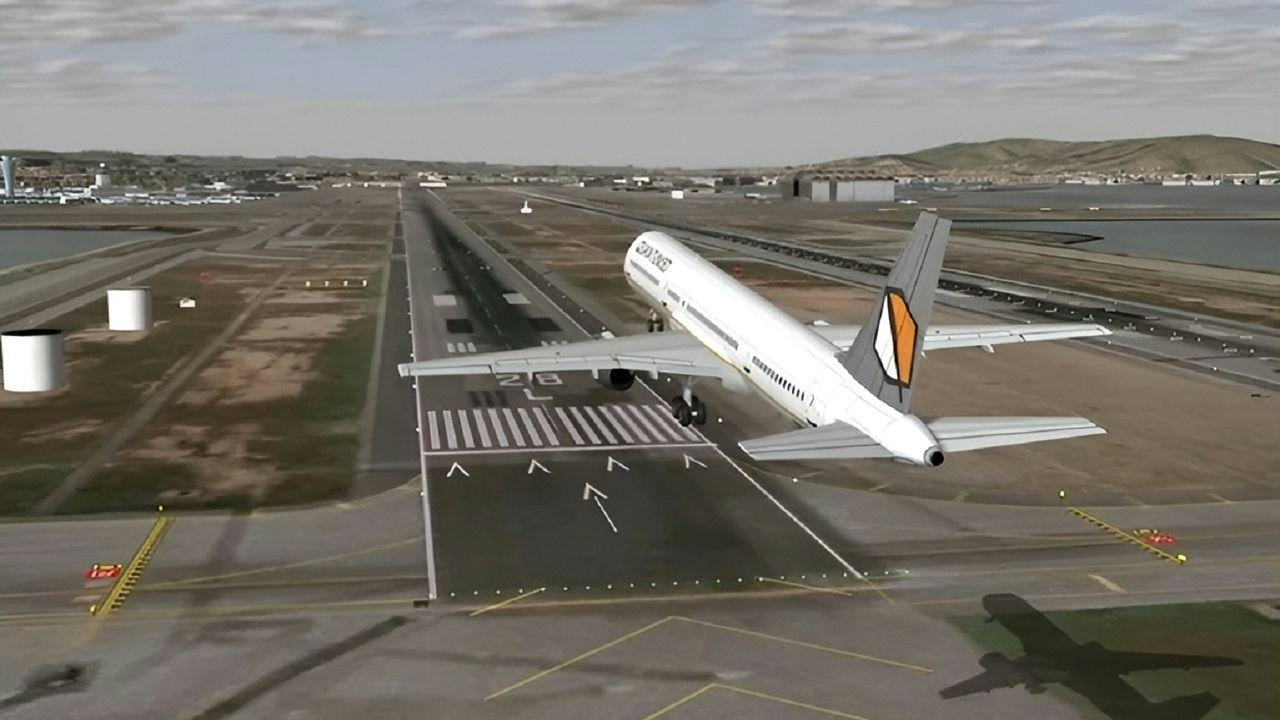
Quantum3D has introduced a groundbreaking live demonstration of AI-generated Level D simulation environments at the World Aviation Training Symposium (WATS) 2026 in Orlando. The event, held from May 5 to 7 at Booth 413, showcased a real-time simulated flight from John F. Kennedy International Airport to Manhattan. This simulation is powered by Quantum3D’s MANTIS S real-time image generator and developed in collaboration with Blackshark.ai and Olmos. The demonstration underscores the potential of AI-assisted content creation to accelerate the development of Level D-compliant Common Database (CDB) training environments, representing a significant advancement in flight training technology.
Advancing Flight Training with AI-Driven Simulations
The New York scenario presented at WATS features high-density urban rendering alongside authentic approach and departure environments from JFK, all formatted in CDB. These visuals are tailored to support both traditional commercial aviation and the emerging sector of electric vertical takeoff and landing (eVTOL) operations within complex urban airspace. Murat Kose of Quantum3D emphasized the industry’s demand for rapid, scalable, and high-quality simulation environments, stating, “We are bringing AI-driven 3D worlds to Level D simulation, enabling faster, more flexible pilot training without compromising standards.”
In addition to the New York demonstration, Quantum3D showcased MANTIS operating a variety of Level D-compliant airports in CDB format, drawing from an extensive global library of over 30,000 airfield models. This breadth of content highlights the company’s commitment to delivering comprehensive and versatile training solutions.
Industry Challenges and Market Response
Despite the promise of streamlined and enhanced pilot training, the introduction of AI-generated environments presents notable challenges. Industry stakeholders may encounter difficulties in integrating these new systems with existing infrastructure, potentially resulting in delays and increased costs. Market reactions have been mixed; while some investors express optimism about the potential for more immersive and efficient training simulations, others remain cautious due to the technical complexities and financial investments required for widespread adoption.
The unveiling at WATS 2026 is likely to prompt competitors within the simulation sector to accelerate their own AI-driven initiatives, intensifying the race to develop advanced training solutions. As the aviation training industry navigates these rapid technological advancements, the interplay between innovation, cost management, and system integration will remain a critical focus for all stakeholders involved.

Etihad Airways Suspends Airbus A380 Flights on Key Route

Aditya Birla Group Seeks Approval for Aircraft Leasing in GIFT City

Qatar Airways Highlights Innovation and Connectivity at Arabian Travel Market 2026

Hong Kong's Five-Year Plan Includes Andrew Fan's Aircraft Parts Processing Hub Proposal

ACIA Aero Leasing Delivers ATR72-600 to Air Nostrum

RTX Appoints Jill Albertelli as Head of Pratt & Whitney

TAT Technologies Joins Beyond Aero Hydrogen Aircraft Program

AURAK Study Highlights Barriers to Air Taxi Adoption in Emerging Economies

Xiamen Air Selects Altitude for 787 Maintenance at Heathrow

Etihad and Swissport Extend Global Partnership
