
Превращайте аналитические выводы ИИ в реальные действия

В тренде
Categories
Air Cargo Charters Aid U.S. Supply Chains Amid Tariff Fluctuations
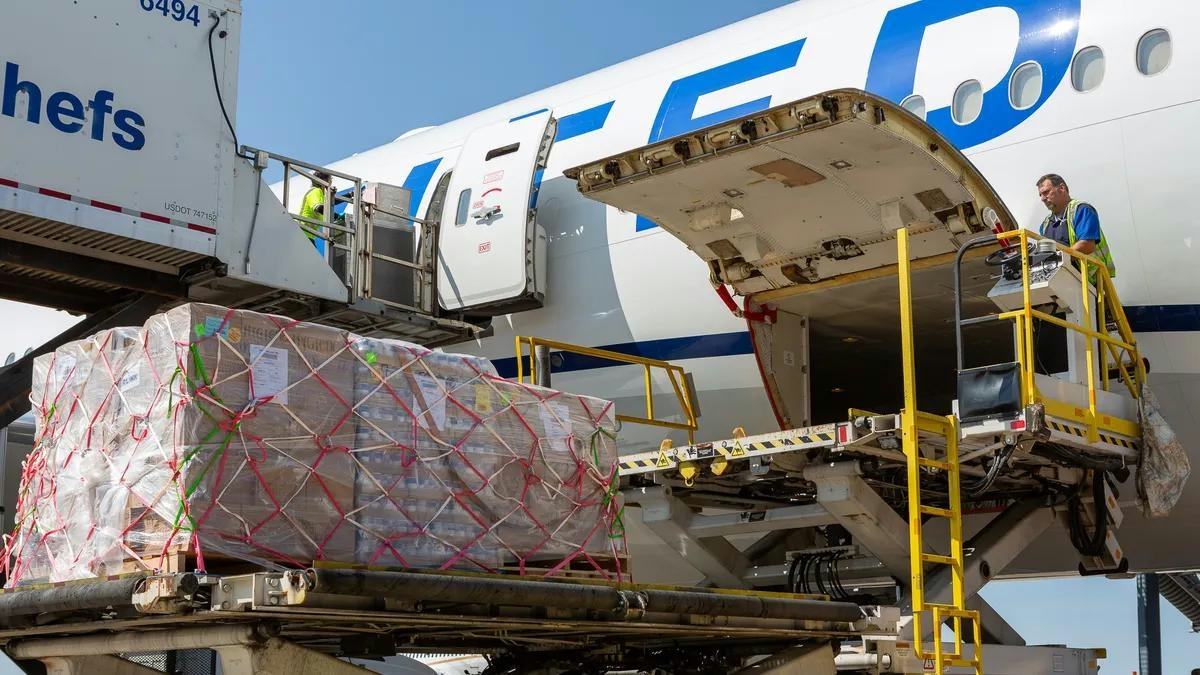
Air Cargo Charters Bolster U.S. Supply Chains Amid Tariff Volatility
Supply chain managers across the United States are contending with significant uncertainty as fluctuating tariffs on international goods disrupt established logistics frameworks. The ongoing trade tensions, particularly between the U.S. and China, have introduced complex challenges, with tariff deadlines frequently shifting and the broader economic outlook remaining unclear.
Impact of Tariff Fluctuations on Air Cargo Demand
Jack Burt, Senior Vice President of Cargo at Chapman Freeborn USA, highlights the transformative effect of tariff volatility on the air cargo sector. He explains that while high tariffs generally suppress international trade volumes, leading to a negative impact on air cargo demand, recent months have seen a notable increase in air freight activity. This surge is driven by supply chain managers accelerating shipments to avoid impending tariff deadlines. Data from Xeneta indicates a 5% rise in air freight volumes in July, underscoring the growing reliance on expedited air shipments amid tariff uncertainty.
The consequences of these tariff fluctuations extend beyond logistics. Rising shipping costs, often passed on to consumers, have placed considerable pressure on small businesses, which face an estimated $202 billion tariff burden. In response, companies are reassessing pricing strategies and supply chain operations to mitigate financial impacts and sustain competitiveness in a volatile market.
The Role of Air Cargo Charters in Supply Chain Resilience
The recent extension of the U.S.-China tariff truce, announced on August 12, has delayed the implementation of higher tariffs until November 10. While this postponement offers temporary relief, it prolongs a period of unprecedented uncertainty for supply chain decision-makers. With limited clarity on future tariff developments, companies must make rapid decisions regarding capital allocation and procurement, often under tight time constraints.
In this context, air cargo charters have become an essential tool for enhancing supply chain resilience. Burt emphasizes that the critical factor is the arrival date of shipments in the U.S., rather than the purchase date, making expedited delivery a strategic priority. This urgency explains the 5% increase in air cargo volumes observed in July. Air cargo charters, which provide premium express delivery services, are increasingly preferred over traditional road, ocean, or rail transport, which may lack the speed necessary to circumvent new tariffs or respond swiftly to market fluctuations.
Competitors are similarly adapting by shifting to air cargo charters to accelerate shipments and avoid delays caused by disruptions in ground transportation. Despite the heightened demand, Burt notes that there is currently sufficient capacity within the air charter market. He attributes this availability to a global decline in trade volumes, which has freed up aircraft and crews, enabling air charter brokers to meet the increased needs of supply chain managers during this volatile period.
As tariff uncertainty continues, air cargo charters remain a vital option for U.S. businesses seeking to navigate the complexities of global trade and maintain supply chain continuity.

Etihad Airways Suspends Airbus A380 Flights on Key Route

Aditya Birla Group Seeks Approval for Aircraft Leasing in GIFT City

Qatar Airways Highlights Innovation and Connectivity at Arabian Travel Market 2026

Hong Kong's Five-Year Plan Includes Andrew Fan's Aircraft Parts Processing Hub Proposal

ACIA Aero Leasing Delivers ATR72-600 to Air Nostrum

RTX Appoints Jill Albertelli as Head of Pratt & Whitney

TAT Technologies Joins Beyond Aero Hydrogen Aircraft Program

AURAK Study Highlights Barriers to Air Taxi Adoption in Emerging Economies

Xiamen Air Selects Altitude for 787 Maintenance at Heathrow

Etihad and Swissport Extend Global Partnership
