
Превращайте аналитические выводы ИИ в реальные действия

В тренде
Categories
Airbus Says US-China Trade Tensions Impact Aircraft Production
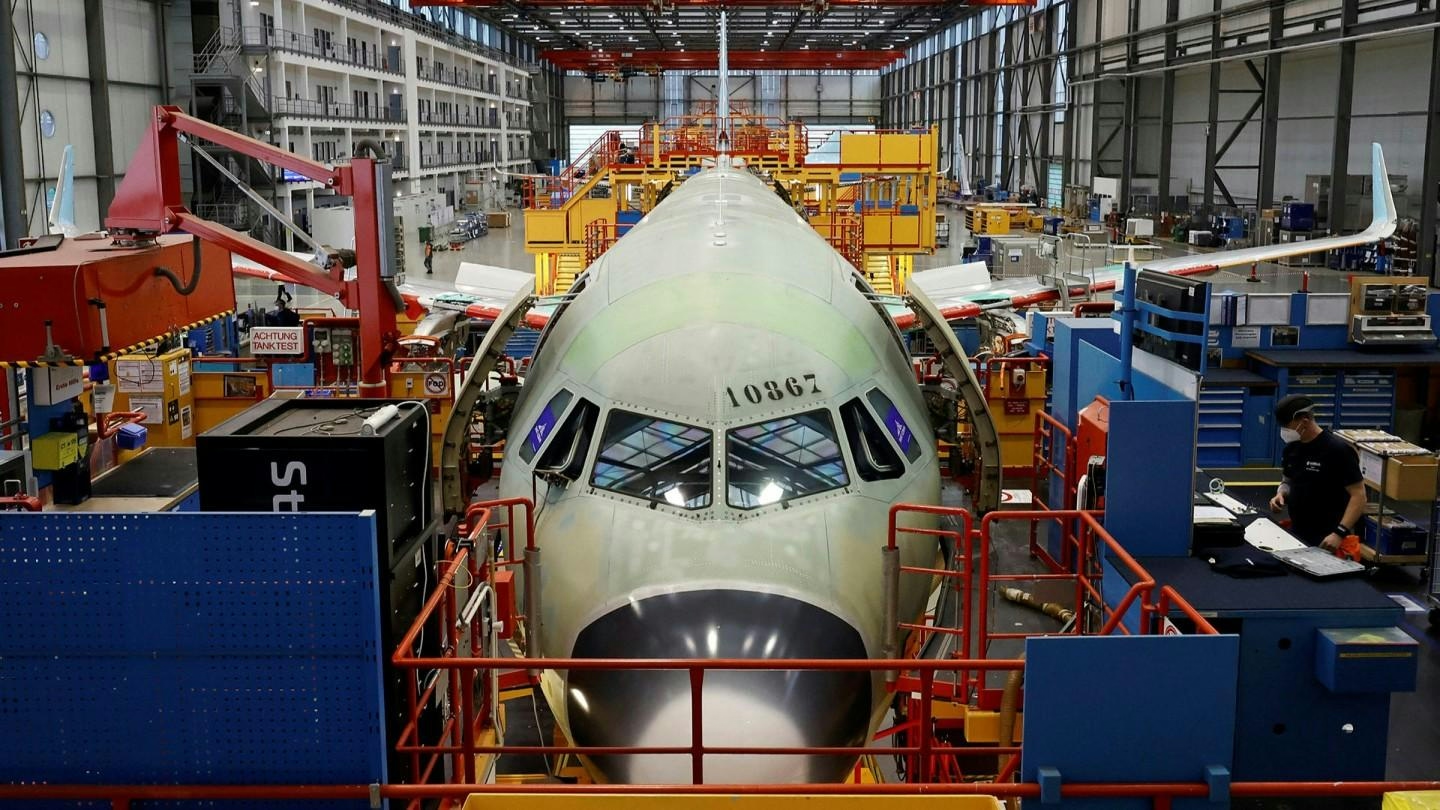
Airbus Highlights Impact of US-China Trade Tensions on Aircraft Production
Airbus has issued a stark warning regarding the escalating trade tensions between the United States and China, emphasizing the tangible and immediate damage these disputes are causing to its global operations and financial performance. Chief Executive Officer Guillaume Faury described the current geopolitical environment as an unprecedented crisis for the aerospace sector, stressing that the consequences are no longer hypothetical but are actively disrupting production.
Disruptions in Supply Chain and Production
The European aerospace giant operates a complex production network with key facilities in Toulouse, France, and Tianjin, China. This network has been significantly affected by U.S. protectionist measures and ongoing trade disputes. Faury informed employees that export restrictions, licensing controls, and protectionist policies have already interfered with the movement of essential components such as engines and avionics. These disruptions have caused logistical delays and financial strain across multiple Airbus programs.
Airbus’s final assembly lines in China are particularly vulnerable to interruptions in the cross-border flow of parts. Even a single delayed or blocked subcomponent can halt deliveries, increase costs, and necessitate costly rescheduling across various assembly sites. The company’s extensive supply chain, which depends on suppliers from both the U.S. and China, has been further strained by export freezes and regulatory challenges, undermining the steady supply of parts for jets assembled in China.
Faury acknowledged that these challenges have compelled Airbus to adjust its operations, including reducing delivery targets due to issues such as flawed fuselage panels. Despite these setbacks, the company has managed to uphold its financial objectives, partly through progress in cost-cutting initiatives. However, persistent delays in engine deliveries and quality-related problems—including software glitches and defective fuselage components—have complicated production schedules and required continuous operational adjustments.
Strategic Response and Financial Implications
The CEO emphasized the necessity for internal resilience, operational discipline, and supply-chain robustness to navigate the current environment. He called for solidarity and adaptability among Airbus teams, noting that geopolitical decisions are increasingly influencing factory-level outcomes. To mitigate future risks, Airbus is pursuing supplier diversification and greater flexibility in production planning, while also prioritizing self-reliance and organizational restructuring.
Trade frictions have directly impacted Airbus’s cash flow by delaying aircraft handovers, which in turn postpones payments. In 2025, Airbus delivered 793 aircraft, an increase from 766 the previous year, but many deliveries were backloaded due to engine supply constraints. These delayed deliveries have elevated inventory levels and working capital requirements, exerting pressure on free cash flow. Management has cautioned that further disruptions related to export controls could exacerbate financial challenges by necessitating additional production re-planning.
As Airbus prepares for its next narrowbody development cycle, the company remains cautious, balancing the need for investment with the imperative to maintain delivery reliability. While leadership remains confident in Airbus’s capacity to adapt, Faury underscored that sustained self-reliance, disciplined execution, and ongoing restructuring will be essential to safeguarding profit margins and financing future aircraft programs.

Etihad Airways Suspends Airbus A380 Flights on Key Route

Aditya Birla Group Seeks Approval for Aircraft Leasing in GIFT City

Qatar Airways Highlights Innovation and Connectivity at Arabian Travel Market 2026

Hong Kong's Five-Year Plan Includes Andrew Fan's Aircraft Parts Processing Hub Proposal

ACIA Aero Leasing Delivers ATR72-600 to Air Nostrum

RTX Appoints Jill Albertelli as Head of Pratt & Whitney

TAT Technologies Joins Beyond Aero Hydrogen Aircraft Program

AURAK Study Highlights Barriers to Air Taxi Adoption in Emerging Economies

Xiamen Air Selects Altitude for 787 Maintenance at Heathrow

Etihad and Swissport Extend Global Partnership
