
Превращайте аналитические выводы ИИ в реальные действия

В тренде
Categories
Airbus Tests Extended, Slimmer Wings for Next Narrowbody Aircraft
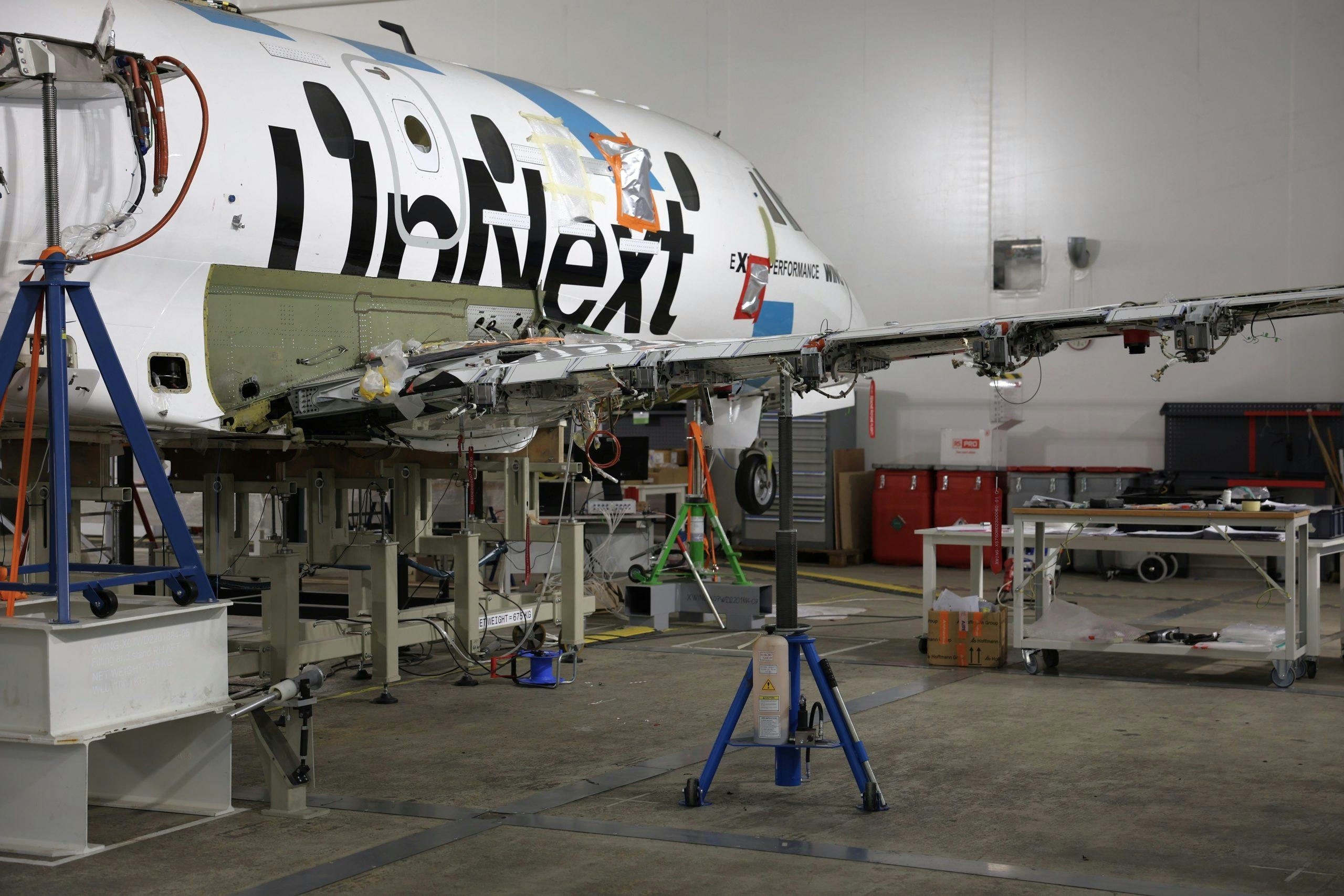
Airbus Advances Wing Technology for Next-Generation Narrowbody Aircraft
At the Farnborough Airshow in England, Airbus unveiled its latest initiative to enhance fuel efficiency and reduce carbon emissions by testing extended, slimmer wings on its A321neo narrowbody aircraft. This development is part of the company’s ambitious “Wing of Tomorrow” program, which aims to achieve a 20% to 25% reduction in fuel burn compared to current single-aisle models. Airbus plans to conduct a three-year flight-test campaign to validate the new wing design and its performance.
Innovative Wing Design and Testing
The redesigned wing features a longer, lighter, and more slender profile, incorporating foldable tips to maintain compatibility with existing airport infrastructure. This design approach is reminiscent of Boeing’s widebody 777X, which also employs folding wingtips to fit within standard gate dimensions. However, Airbus’s program represents the first time such technology will be flight-tested on a narrowbody aircraft—a critical market segment that dominates sales for both Airbus and Boeing.
The flight tests will involve outfitting an A321neo with full-scale wing extensions equipped with sensors to monitor aerodynamic performance, handling, and flight control characteristics. Airbus has already produced components for the initial wing extension device, with flight testing scheduled to commence shortly. The data collected will be instrumental in shaping the final design of Airbus’s next-generation single-aisle aircraft, with a decision on the new model anticipated by 2030.
Strategic Importance and Industry Context
Narrowbody aircraft, such as the A321neo and Boeing’s 737 MAX 10, are essential to global airline fleets due to their operational efficiency and versatility. Improvements in this category could provide Airbus with a significant competitive advantage as airlines increasingly prioritize lower operating costs and stricter environmental standards.
Sue Partridge, head of the Wing of Tomorrow program, highlighted the critical role of both engines and wings in achieving efficiency gains. She stated, “The biggest levers we have to improve the efficiency of our aircraft are the engines and the wings. By increasing the span of our wings, making them longer, lighter, and more slender, we can make a real step change in aircraft efficiency.” Richard MacPherson, technical lead for the project, described the initiative as “rewriting the rules of flight,” underscoring the transformative potential of the technology.
While Boeing’s 737 MAX 10 remains a formidable competitor, Airbus’s focus on advanced wing technology reflects the broader aerospace industry’s commitment to sustainability and innovation. Although market reactions and competitor responses have yet to be disclosed, Airbus’s latest move signals a significant advancement in the future of commercial aviation.

Etihad and Swissport Extend Global Partnership

Sepehran Airlines B737 Returns to Mashhad After Tyre and Engine Issues

Etihad Deploys Widebody Fleet to Meet Strong Demand

Korean Air Finalizes $36.2 Billion Deal with Boeing
Australia’s RFDS Queensland Section Orders Six King Air 260Cs
Korean Air Finalizes Order for 103 Boeing Jets and Engines
Embraer E195-E2 Features Distinctive Engine Placement Among Regional Jets
What Passengers Can Expect on Boeing’s New 777X Jet

How Ethiopian Airlines Became Africa’s Leading Carrier Amid Gulf Competition
Joby Aviation Extends Autonomous Flight Capabilities with Cross-Country Tour
