
Превращайте аналитические выводы ИИ в реальные действия

В тренде
Categories
Airbus to Begin Open Fan Engine Testing on A380
Airbus to Begin Open Fan Engine Testing on A380
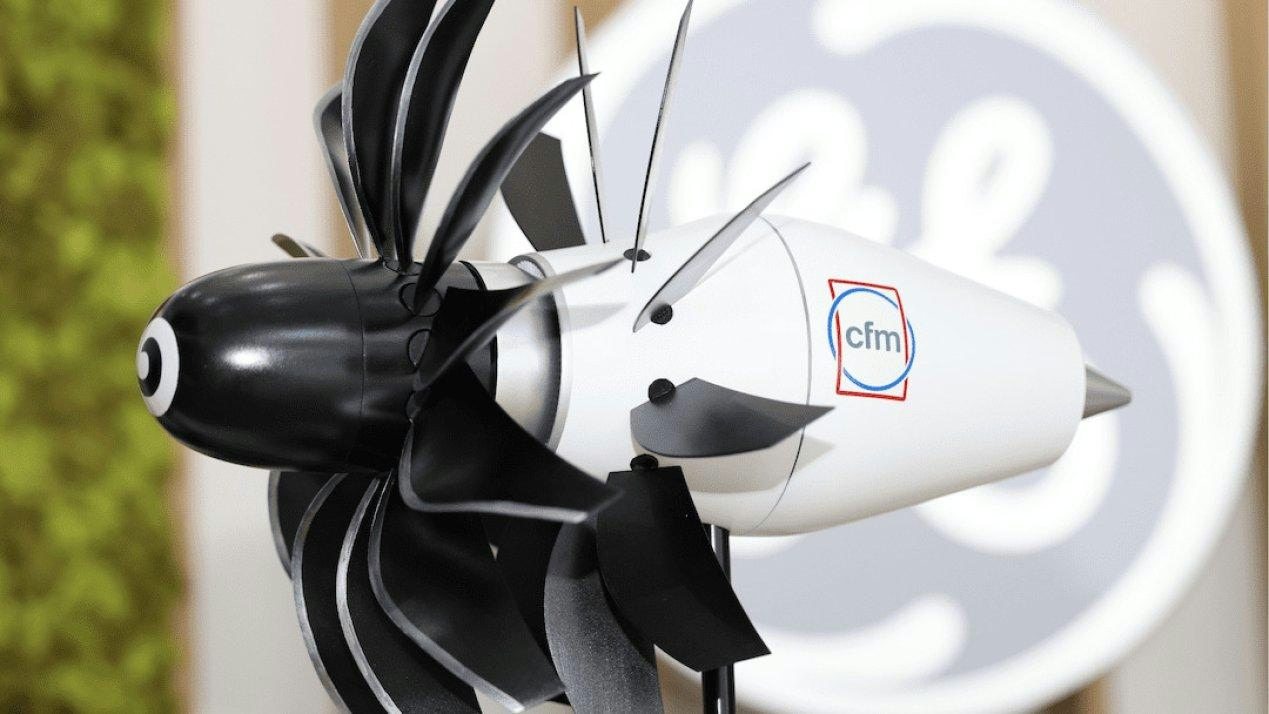
Airbus is preparing to repurpose the world’s largest passenger aircraft, the A380, as a flying testbed for pioneering propulsion technology. In collaboration with CFM International, the company will equip the first-ever A380 with an innovative open-fan engine design. This initiative aims to advance sustainable aviation by significantly improving fuel efficiency and reducing emissions.
The A380 as a Test Platform
The choice of the A380 for this project is strategic. Its four-engine configuration and spacious cabin provide both operational redundancy and ample space for sophisticated test instrumentation. Airbus highlights these attributes as essential for conducting rigorous engine trials without compromising safety. The aircraft’s size and design make it an ideal platform to evaluate next-generation propulsion systems under real flight conditions.
This effort forms part of the Revolutionary Innovation for Sustainable Engines (RISE) program, a joint venture between Airbus and CFM International. The open-fan demonstrator is funded through the European Open Fan for Environmental Low Impact of Aviation (OFELIA) project, which targets a 20% reduction in CO2 emissions compared to current narrowbody engines. Airbus anticipates the first test flights to take place by the end of the decade.
The SWITCH Engine Concept and Technological Innovations
Central to the program is the SWITCH (Sustainable Water Injecting Turbofan Comprising Hybrid-Electrics) engine concept. This novel design integrates hybrid-electric and heat-recovery turbofan technologies, aiming to reduce fuel consumption by up to 25%. The SWITCH project is part of the European Union’s Clean Aviation Joint Undertaking and is led by MTU Aero Engines AG, with key partners including Airbus, Collins Aerospace, GKN Aerospace, and Pratt & Whitney.
The SWITCH engine explores the use of hydrogen fuel cells alongside hybrid-electric propulsion systems, employing batteries or fuel cells to meet the energy demands of commercial aircraft. This approach seeks to optimize efficiency while minimizing fuel consumption. Currently, Airbus aircraft can operate safely with up to a 50% blend of sustainable aviation fuel (SAF), and some single-aisle models have achieved certification for 100% SAF use.
Challenges and Industry Context
Despite the promise of these technological advancements, Airbus and its partners face considerable challenges. Ensuring the durability and reliability of the open-fan engine remains a top priority, with CFM International emphasizing the importance of robust design within the RISE program. Market skepticism also persists, as airlines weigh the benefits of adopting new engine technologies against established alternatives, particularly given the A380’s limited commercial success over the past two decades.
In response to evolving market dynamics, competitors are accelerating their own propulsion developments. Pratt & Whitney, for instance, is addressing supply chain challenges, prompting Airbus to diversify its engine sourcing by engaging both Pratt & Whitney and CFM. As the aviation industry moves toward more efficient and sustainable propulsion systems, rival manufacturers are expected to intensify their technological efforts to maintain competitiveness.
While many airlines continue to retire A380s in favor of more efficient twin-engine long-haul aircraft, Airbus’s open-fan engine testing represents a significant step toward cleaner, more sustainable aviation. The results of these tests could have far-reaching implications for the future of aircraft propulsion and the design of next-generation commercial jets.

Etihad and Swissport Extend Global Partnership

Sepehran Airlines B737 Returns to Mashhad After Tyre and Engine Issues

Etihad Deploys Widebody Fleet to Meet Strong Demand

Korean Air Finalizes $36.2 Billion Deal with Boeing

Australia’s RFDS Queensland Section Orders Six King Air 260Cs

Korean Air Finalizes Order for 103 Boeing Jets and Engines

Embraer E195-E2 Features Distinctive Engine Placement Among Regional Jets

What Passengers Can Expect on Boeing’s New 777X Jet

How Ethiopian Airlines Became Africa’s Leading Carrier Amid Gulf Competition

Joby Aviation Extends Autonomous Flight Capabilities with Cross-Country Tour
