
Превращайте аналитические выводы ИИ в реальные действия

В тренде
Categories
Aircraft Landing Gear Fluid Market Projected to Reach $1.9 Billion by 2035 Amid Asia-Pacific Fleet Growth
Aircraft Landing Gear Fluid Market Projected to Reach $1.9 Billion by 2035 Amid Asia-Pacific Fleet Growth
The global aircraft landing gear fluid market is anticipated to experience significant expansion, with its value expected to increase from $1.2 billion in 2025 to $1.9 billion by 2035. This growth, representing a compound annual growth rate (CAGR) of 4 to 6 percent over the 2026-2035 period, is primarily driven by the rapid development of commercial aircraft fleets, particularly within the Asia-Pacific region. The region’s expanding fleet size and strengthening aftermarket infrastructure are key factors propelling this upward trajectory.
Regional Dynamics and Market Drivers
Asia-Pacific’s share of global demand for landing gear fluids is projected to rise from 30 percent in 2026 to nearly 40 percent by 2035. This increase is largely attributed to substantial fleet growth in countries such as China and India. The regional surge is also stimulating related markets, including Multi-Power Systems, which are forecasted to grow at a CAGR of 6 to 8 percent through 2035. The adoption of next-generation aircraft models, such as the Boeing 787 and Airbus A350, further supports market expansion. These advanced aircraft require specialized fluids capable of withstanding extreme pressure and temperature conditions due to their sophisticated electric and hydraulic systems.
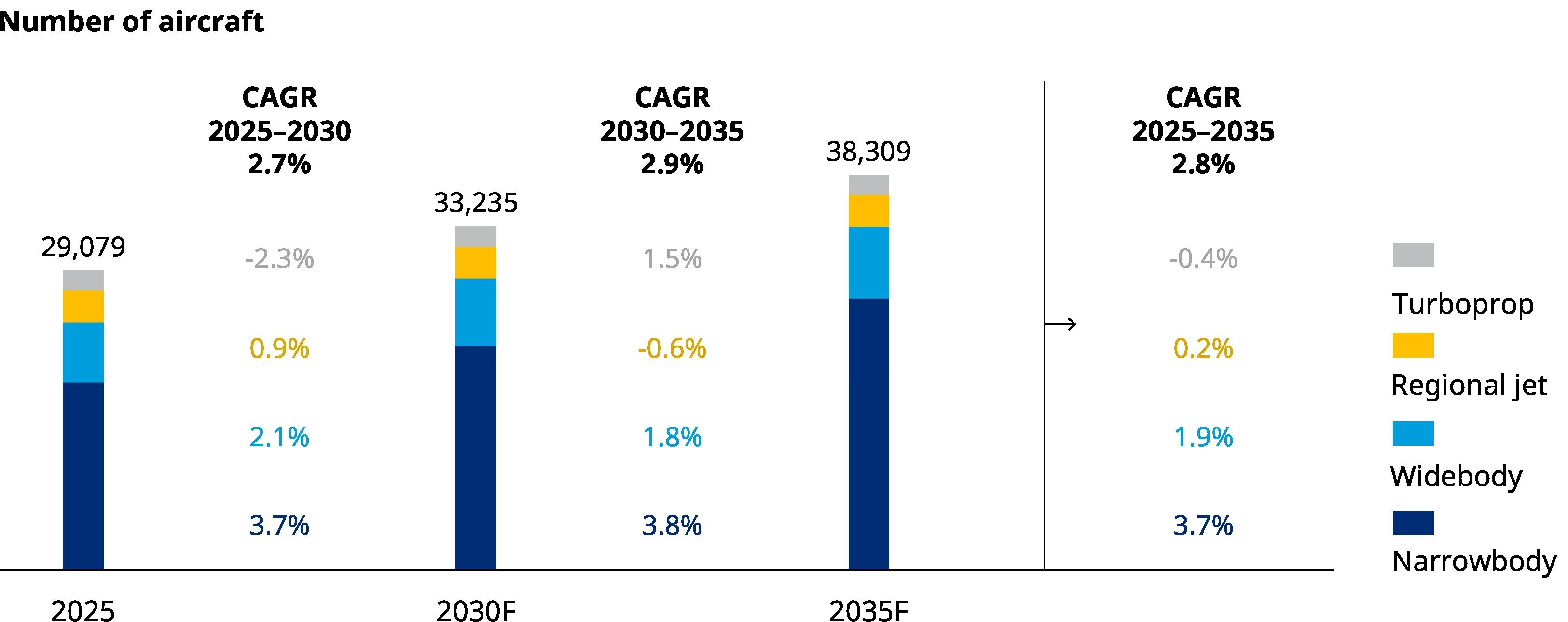
The commercial aviation sector remains the dominant consumer, accounting for approximately 55 percent of total demand. The global commercial fleet, currently exceeding 28,000 aircraft, is expected to grow at an annual rate of 3 to 4 percent. Maintenance, repair, and overhaul (MRO) activities are a critical driver of fluid demand, with replacement cycles becoming more frequent as airlines increasingly implement condition-based monitoring and predictive maintenance technologies. In Europe, the engine aftermarket is projected to grow at a CAGR of 4.1 percent from 2026 to 2035, reflecting heightened demand for MRO services amid recovery from disruptions such as the General Electric GTF engine groundings.
Military modernization programs in the United States, China, and Europe are also contributing to increased demand, particularly for fluids that comply with stringent military specifications (MIL-PRF-83282, MIL-PRF-87257) and offer enhanced fire resistance. The military segment accounts for roughly 25 percent of market demand, while general aviation and regional segments make up the remainder, experiencing steady but comparatively slower growth.
Market Trends and Supply Landscape
The market is undergoing a shift toward higher-value synthetic and fire-resistant fluid formulations, indicative of a broader premiumization trend. Global consumption is expected to rise from an estimated 45,000 metric tons in 2025 to over 60,000 metric tons by 2035.
On the supply side, the market remains moderately concentrated, with major players such as ExxonMobil, Shell, and Eastman Chemical holding significant market shares. Stringent certification requirements imposed by organizations including SAE, NATO, EASA, and FAA continue to influence the competitive landscape, favoring established suppliers with proven qualification portfolios. Certification cycles, typically ranging from 12 to 24 months, act as barriers to new entrants, thereby supporting pricing discipline and encouraging long-term supply agreements.
Despite the positive outlook, the market faces challenges. The ongoing recovery from engine groundings has disrupted maintenance schedules for several airlines, creating short-term uncertainties. Additionally, the evolving business aviation sector, where companies like Wheels Up are striving for profitability amid mixed financial results, may introduce further market pressures.
Overall, the aircraft landing gear fluid market is positioned for steady growth through 2035, underpinned by fleet expansion, increasing MRO intensity, and a transition toward advanced synthetic fluids, with the Asia-Pacific region emerging as a pivotal growth engine.

Etihad and Swissport Extend Global Partnership

Sepehran Airlines B737 Returns to Mashhad After Tyre and Engine Issues

Etihad Deploys Widebody Fleet to Meet Strong Demand

Korean Air Finalizes $36.2 Billion Deal with Boeing

Australia’s RFDS Queensland Section Orders Six King Air 260Cs

Korean Air Finalizes Order for 103 Boeing Jets and Engines

Embraer E195-E2 Features Distinctive Engine Placement Among Regional Jets

What Passengers Can Expect on Boeing’s New 777X Jet

How Ethiopian Airlines Became Africa’s Leading Carrier Amid Gulf Competition

Joby Aviation Extends Autonomous Flight Capabilities with Cross-Country Tour
