
Превращайте аналитические выводы ИИ в реальные действия

В тренде
Categories
Aircraft Leasing Compared to Royalties, Posing Risks for Ukrainian Airlines

Aircraft Leasing Taxed as Royalties: Emerging Risks for Ukrainian Airlines
Ukraine has established nearly one hundred international agreements aimed at preventing double taxation. Despite this extensive network, Ukrainian businesses operating internationally continue to encounter fiscal challenges and heightened regulatory scrutiny. This issue has become particularly pronounced for Ukrainian airlines, which, following the closure of Ukrainian airspace, have been compelled to relocate their operations abroad. These carriers lease aircraft from foreign lessors and pay taxes in the lessors’ jurisdictions. However, beginning in 2024, Ukrainian authorities intend to impose domestic taxes on these transactions by reclassifying lease payments as royalties.
Legal and Taxation Challenges
The Bureau of Economic Security has initiated several criminal investigations into alleged tax evasion, contending that airlines should be liable for royalties rather than merely leasing taxes on these payments. Tetiana Shevtsova, managing partner at the audit firm Capital Plus and a member of the Public Council under the Ministry of Finance, identifies the core issue as the correct application and interpretation of tax legislation, particularly concerning the classification of income derived from leasing operations.
Shevtsova highlights that international conventions provide clear frameworks to avoid double taxation, contingent upon adherence to both international and national legal requirements. “If the convention on the avoidance of double taxation is properly applied and the necessary documentation is in place, taxes paid in the source country are typically credited against taxes owed in the country of residence,” she explained. The challenge lies not in the agreements themselves but in their inconsistent enforcement in practice.
Historically, Ukraine’s Tax Code, specifically sub-paragraph 141.4.1, has regulated the taxation of lease payments to non-residents. When a double taxation agreement existed with the lessor’s country and the non-resident had no permanent establishment in Ukraine, lease payments for movable property such as aircraft were exempt from Ukrainian taxation. However, as Ukraine aligns its tax system with European standards, it is introducing new regulations on transfer pricing, constructive dividends, and controlled foreign companies. The country’s accession to the Multilateral Instrument (MLI) further complicates the tax environment.
Broader Industry Implications
These regulatory changes coincide with broader challenges facing Ukrainian airlines amid geopolitical instability. Industry leaders, including the CEO of a major French aviation group, have noted the uncertainty this instability injects into leasing arrangements. Globally, airlines are adjusting to fluctuations in business aviation activity and market volatility. For instance, China Airlines recently scaled back its orders for Airbus A350-900s and A321neos, reflecting a more cautious approach to fleet expansion. Meanwhile, competitors such as Atlas Air Worldwide are pursuing strategic acquisitions, including agreements to purchase up to 40 Airbus A350 freighters, signaling a reassessment of leasing strategies across the sector.
For Ukrainian carriers, the reclassification of lease payments as royalties not only increases their tax liabilities but also complicates compliance amid an already volatile market. As government oversight intensifies, airlines must navigate evolving tax regulations, international agreements, and a rapidly shifting competitive landscape—factors that collectively pose significant risks to their operations and future growth.

Florida’s Aerospace Sector Expands Beyond Launches with Aeras Aviation Growth in Hialeah
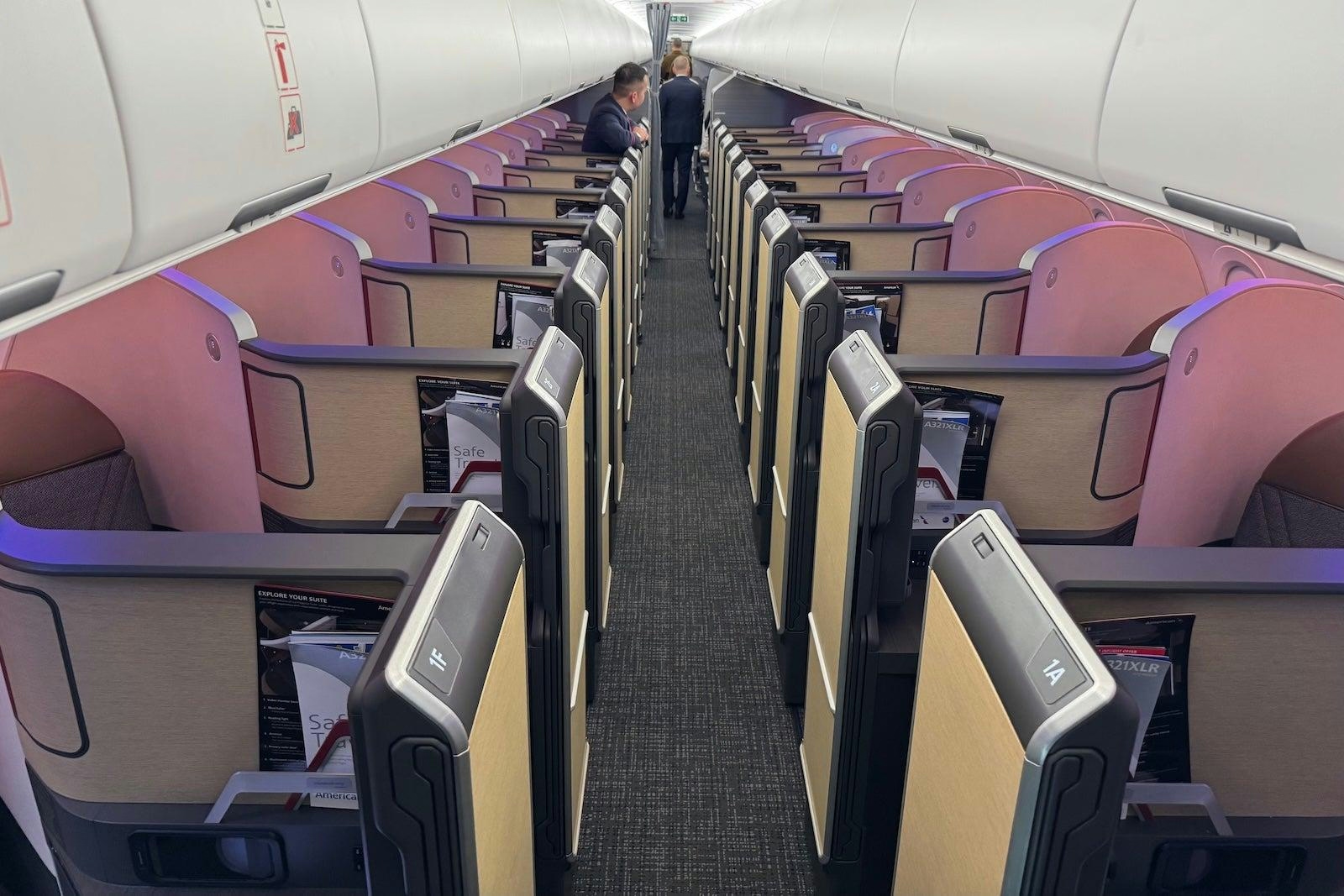
American Airlines to Launch A321XLR Flights to Amsterdam, Nice, Porto, and Vienna in 2027

Wing to Test Nvidia AI in Delivery Drones
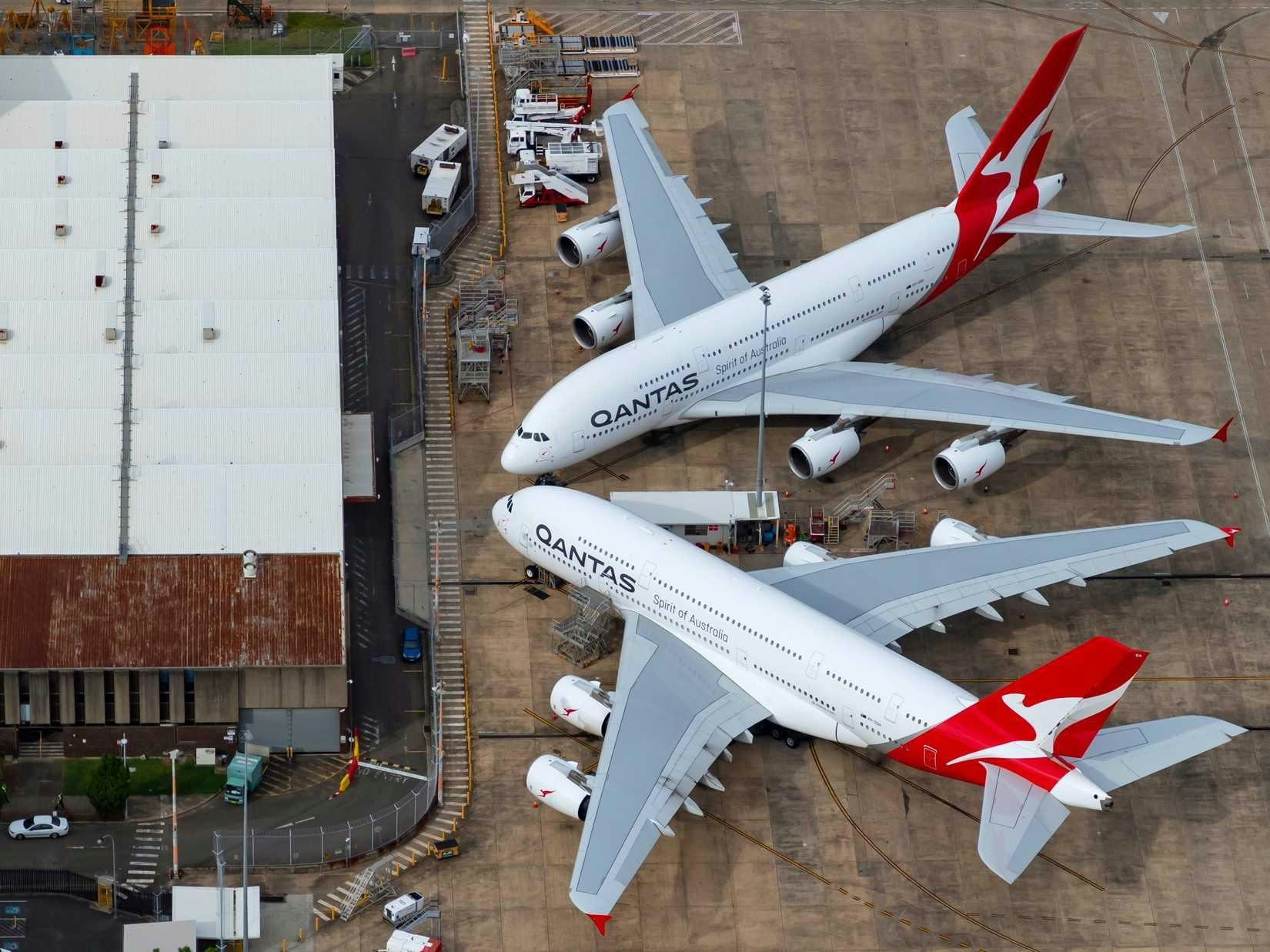
Qantas Advances A380 Retirement, Plans to Expand A350 and 787 Fleet
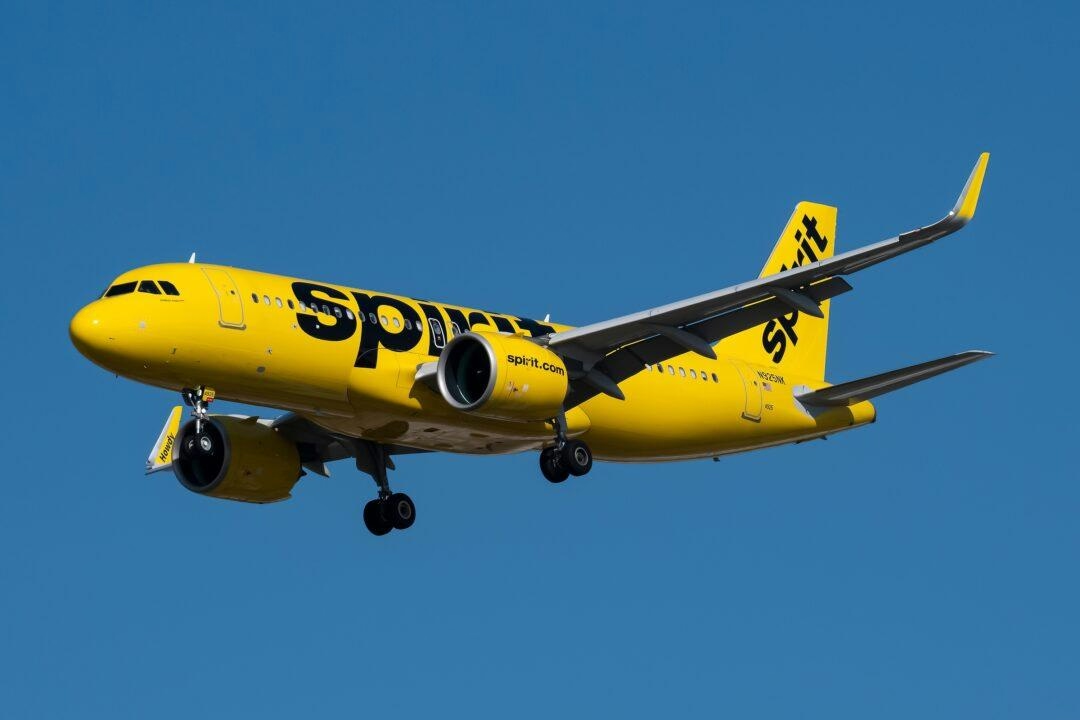
Three Months After Spirit Airlines Bankruptcy: What Happened to the Engines?
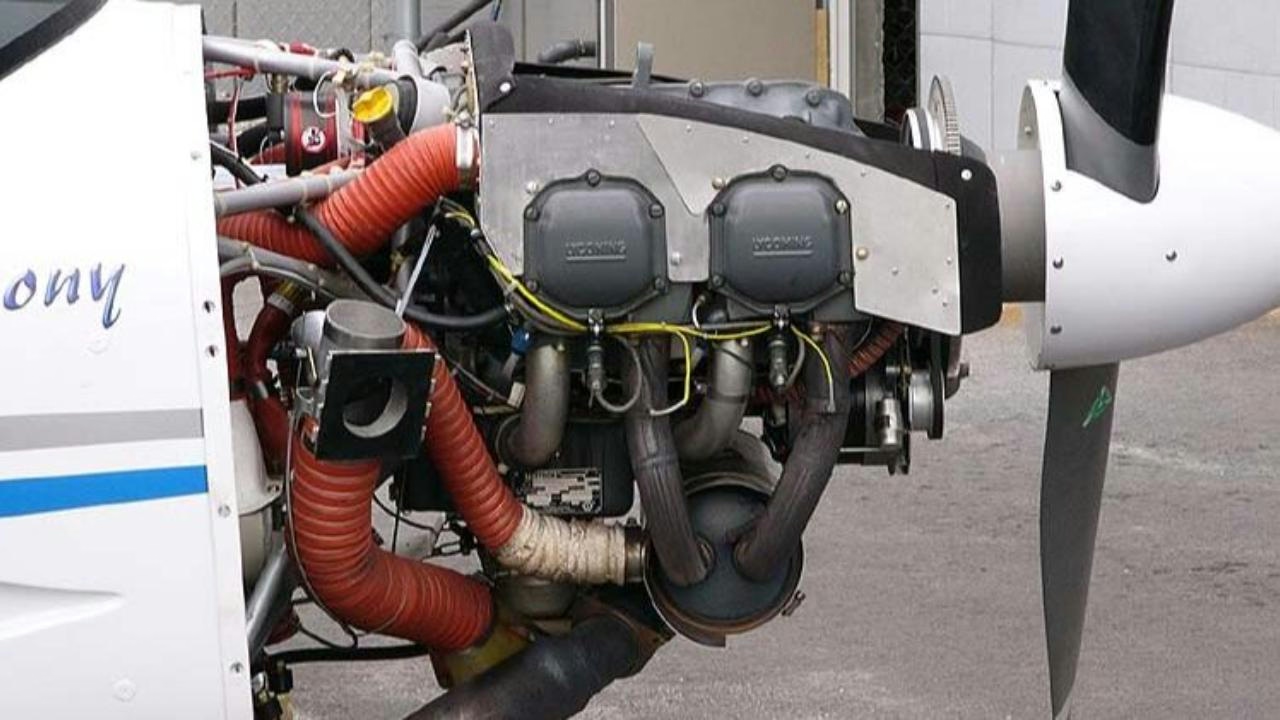
Instructional Flight Cut Short by Carburetor Icing
Ornge Adopts Ramco Platform for Paperless Maintenance
Google Paid $10 Million for Spirit Airlines Data, Raising Concerns for CIOs
Clark Develops Solutions for Future Tech Supply Chains
Texas Firm Post Oak Group to Lead FlyOnE Funding Round
