Изображение

Превращайте аналитические выводы ИИ в реальные действия

Присоединяйтесь к списку ожидания AeroGenie уже сегодня!

В тренде

Categories

Aircraft Sensors Drive Advances in Japan’s Aviation Technology
May 5, 2026By ePlane AI
Aircraft Sensors Drive Advances in Japan’s Aviation Technology
0
0
Aircraft Sensors
Japanese Aviation Technology
Predictive Maintenance

Aircraft Sensors Drive Advances in Japan’s Aviation Technology

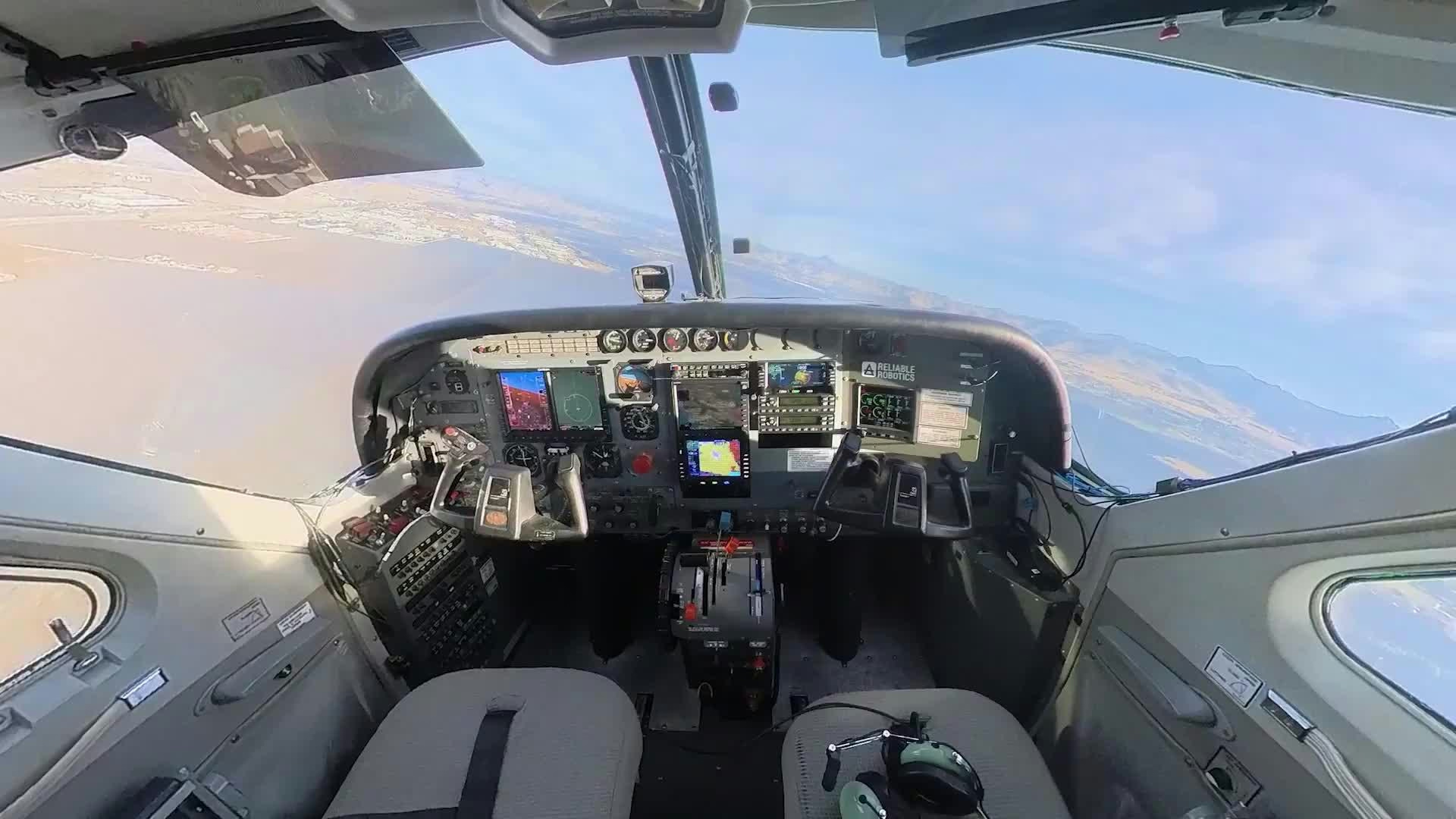
Aircraft sensors play a critical role in modern aviation by continuously monitoring essential parameters such as pressure, temperature, speed, altitude, position, and vibration. These technologies underpin flight safety, operational efficiency, and performance optimization. In Japan, the aircraft sensors market is bolstered by the country’s strong aerospace engineering sector and a pronounced focus on technological innovation.

As aviation systems evolve to become more sophisticated and data-centric, the demand for high-precision sensors is intensifying. Aircraft manufacturers and maintenance providers are increasingly incorporating advanced sensor technologies to enhance safety protocols, enable predictive maintenance, and streamline operational workflows. The Japanese aircraft sensors market was valued at approximately USD 318 million in 2025 and is projected to reach around USD 452.6 million by 2034, representing a compound annual growth rate (CAGR) of 4.0% from 2026 to 2034. This expansion is driven by advancements in avionics, growing air travel demand, and the imperative for reliable monitoring systems.

Innovation and Market Development

Japanese manufacturers are prioritizing the development of smart, miniaturized sensors that combine compactness with high accuracy and reliability. The miniaturization of sensors is particularly important for reducing aircraft weight, thereby improving fuel efficiency and overall performance. Furthermore, these sensors are increasingly integrated within sophisticated digital avionics systems, enabling real-time data processing and analysis. This integration supports automated flight operations and enhances both safety and system responsiveness.

The continuous flow of sensor data also facilitates predictive maintenance strategies, allowing operators to identify potential issues before they escalate, thereby minimizing downtime and improving maintenance efficiency. However, as noted in SITA’s 2025 Air Transport IT Insights report, the growing complexity of sensor-driven systems presents challenges, especially in achieving seamless data coordination across diverse platforms and stakeholders. Addressing these integration challenges is becoming a key focus for industry participants.

Industry Trends and Market Dynamics

The growth of air travel in Japan is a significant driver behind the increasing demand for advanced aircraft systems and high-performance sensors. Concurrently, the expansion of the aerospace manufacturing sector is fostering investment in next-generation sensor technologies. Stringent safety regulations and compliance requirements further reinforce the need for reliable, high-quality sensor solutions.

In response to these trends, there has been a notable increase in investment in physical artificial intelligence and robotics within the sector. This shift is partly influenced by Japan’s cultural acceptance of automation and the ongoing challenges posed by labor shortages, which together encourage the adoption of automated and sensor-driven technologies.

Market Segmentation and Competitive Landscape

The Japanese aircraft sensors market is segmented by sensor type, application, aircraft type, end user, and region. Sensor categories include pressure, temperature, position and displacement, speed sensors, among others. Applications span engine systems, flight control, environmental control, navigation, and additional areas. The market serves commercial, military, and general aviation sectors, with end users comprising original equipment manufacturers (OEMs) and aftermarket providers. Geographically, the market covers key regions such as Kanto, Kansai/Kinki, Chubu, Kyushu–Okinawa, Tohoku, Chugoku, Hokkaido, and Shikoku, reflecting the diverse operational needs across Japan’s aviation landscape.

Competition within the market involves aerospace component manufacturers, electronics firms, and technology providers, with a strong emphasis on precision, reliability, innovation, and adherence to regulatory standards. On the global stage, competitive dynamics are intensifying. For instance, in the United States, Joby Aviation is currently under investigation by the US International Trade Commission following a complaint by rival Archer Aviation concerning potential import violations. Such developments underscore the increasingly competitive and regulated environment in which Japanese firms operate.

As Japan continues to advance its aviation technology, the integration of cutting-edge sensor systems, alongside efforts to overcome data coordination and workforce challenges, will remain central to sustaining the industry’s growth and enhancing its global competitiveness.

More news
Airbus and Brave1 Collaborate to Enhance Ukrainian Defense Innovation

Airbus and Brave1 Collaborate to Enhance Ukrainian Defense Innovation

Airbus and Brave1 Collaborate to Enhance Ukrainian Defense Innovation A Landmark Partnership in Defense Technology Airbus Defence and Space has formalized a significant Memorandum of Understanding (MoU) with Brave1, Ukraine’s government-led defense technology coordinator. This agreement represents Brave1’s inaugural industrial strategic partnership with a Western company. Serving as a central innovation platform, Brave1 integrates the efforts of Ukraine’s ministries, military, and private technology sector to accelerate the development and deployment of advanced battlefield technologies. The partnership will see Airbus and Brave1 establish joint task forces dedicated to a broad spectrum of technological initiatives. These range from early-stage scientific research to the modernization of active military equipment. Airbus Defence and Space’s technologies will be incorporated into Brave1’s “Test in Ukraine” framework, facilitating rigorous live frontline co-testing and joint evaluation. Operational performance data collected during these tests will be systematically fed back into the development cycle, ensuring that emerging solutions effectively address Ukraine’s immediate security requirements. Challenges and Strategic Implications This collaboration unfolds amid considerable challenges. Both Airbus and Brave1 face the imperative to scale production rapidly to satisfy the increasing demand for sophisticated defense technologies. Equally important is the seamless integration of new innovations into Ukraine’s existing defense infrastructure. The partnership must also navigate a complex web of international regulations and export controls, which will be critical to its ongoing progress. Industry analysts suggest that this alliance may stimulate heightened interest from other defense companies, either seeking collaboration with Brave1 or aiming to compete within Ukraine’s rapidly evolving defense sector. In response, rival firms, particularly those based in Russia, might accelerate their own technological advancements. Concurrently, lobbying efforts concerning international policies on drone and defense technology exports are expected to intensify. Commitment to European Defense Collaboration As part of the agreement, Airbus will play a prominent role at the forthcoming “Defence Tech Valley” summit in Lviv, scheduled for September 16-17, 2026. Recognized as one of Europe’s largest defense technology gatherings, the event highlights Airbus’s dedication to supporting Ukraine as a vital European partner. This strategic collaboration is designed to expedite the delivery of cutting-edge defense solutions to the Ukrainian frontlines, while carefully managing the complexities of international defense innovation and competition.
Dutch Policymakers and Researchers Visit Central Coast

Dutch Policymakers and Researchers Visit Central Coast

Dutch Delegation Explores Advanced Air Mobility and Economic Innovation on California’s Central Coast Policymakers, industry leaders, and researchers from the Netherlands and California convened on the Central Coast and other regions across California from June 18 to 19 as part of the California x Netherlands 2026 Exchange. This collaborative initiative aims to foster international partnerships by focusing on advanced air mobility, workforce development, and sustainable transportation, while sharing best practices in aviation innovation and economic growth. Strengthening International Collaboration in Aviation and Workforce Development The Dutch delegation’s visit to Santa Cruz and Monterey was hosted by Monterey Bay Drone, Aviation and Robotics Technology (DART), a nonprofit organization dedicated to connecting industry, academia, and federal partners to cultivate a skilled workforce for the emerging “low-altitude economy.” This sector encompasses aircraft maintenance, drone technology, manufacturing, and electric vertical takeoff and landing (eVTOL) air taxis, including those under development by companies such as Joby Aviation. Josh Metz, executive director of DART, emphasized the significance of the exchange, noting that the Netherlands has established a global reputation for innovation in transportation, infrastructure, and sustainability. He highlighted that the visit provided an opportunity to learn from international leaders while showcasing the Central Coast’s advancements. Metz also underscored DART’s role in fostering partnerships that create workforce opportunities and position the region as a leader in advanced air mobility and aviation innovation. DART’s engagement is closely linked to local aviation workforce initiatives, including the MsUAS Pathways Project at Hartnell College, UC Santa Cruz’s CITRIS Aviation program, and the Monterey Bay Tech Hub, a coalition promoting technological innovation across multiple sectors. Itinerary and Strategic Agreements The delegation’s itinerary commenced in Sacramento with policy discussions and statewide aviation strategy sessions, followed by visits to aviation conferences and research facilities such as NASA Ames Research Center in the Bay Area. On the Central Coast, participants observed live demonstrations before concluding their tour in Southern California at UCLA and other aviation industry sites. A notable development during the visit was the signing of a Letter of Intent on Smart Air Mobility Cooperation between DART, Den Helder Airport in the Netherlands, and the Coast to Coast Foundation at NASA Ames. This agreement lays the groundwork for a future Memorandum of Understanding, anticipated to be formalized in April 2027 during the Drive Forward Mission to the Netherlands. The framework aims to facilitate collaboration on advanced air mobility, workforce development, infrastructure planning, technology demonstrations, and international knowledge exchange. Economic Context and Emerging Challenges The delegation’s visit coincides with a period of dynamic change in regional economic policies and market conditions. Local leaders are exploring ways to integrate emerging technologies such as artificial intelligence to stimulate economic growth, reflecting trends observed in regions like Scranton/Wilkes-Barre, where over 44,000 jobs are considered AI-exposed. At the same time, potential interest rate increases signaled by recent Federal Reserve projections could impact market behavior and investment strategies. These factors are prompting policymakers and industry stakeholders on the Central Coast to adapt their approaches to maintain competitiveness amid an evolving technological and economic landscape.
Partners Group’s Expansion into Branded Residences and Aviation Leasing: Implications for Its Risk Profile

Partners Group’s Expansion into Branded Residences and Aviation Leasing: Implications for Its Risk Profile

Partners Group’s Strategic Expansion into Branded Residences and Aviation Leasing Partners Group has announced a substantial expansion of its private markets portfolio, committing approximately US$220 million to the development of a 70-story Breitling-branded luxury condominium tower in Miami’s Brickell district. This initiative forms part of the firm’s new B Residences strategy, marking a significant foray into branded residential real estate. Concurrently, Partners Group is investing US$250 million as the sole lead investor in an Avenue Capital aviation leasing continuation vehicle. These strategic moves reflect the firm’s intent to diversify its exposure across lifestyle properties and contracted cash flow assets, broadening its private markets offering. The aviation leasing investment introduces a stream of contracted cash flows, aligning with Partners Group’s broader shift toward recurring, cash flow-oriented assets. This approach is consistent with the firm’s Total Return Strategy (TRS) in private equity, which emphasizes lower leverage and income generation to support management fees and potentially smooth earnings volatility. Despite this diversification, the near-term performance drivers for Partners Group remain largely unchanged, with steady fundraising, high-quality exits, and disciplined cost control continuing to be critical factors. Challenges and Market Dynamics The expansion into branded residences presents notable challenges, particularly as the market becomes increasingly saturated in regions such as Thailand, where global hotel and lifestyle brands are intensifying competition. This saturation risks exerting downward pressure on pricing and profitability, complicating Partners Group’s efforts to secure premium returns. In response, competitors may increase marketing efforts, diversify into complementary sectors, or pursue consolidation strategies to protect market share, thereby heightening competitive pressures. Moreover, concerns surrounding asset quality and liquidity in private equity markets have added complexity to such expansion efforts. Partners Group has recently faced scrutiny after capping investor redemptions in certain funds, underscoring the ongoing risks associated with liquidity management in the current environment. These factors may influence market perceptions of the firm’s new ventures and contribute to execution risk. Looking forward, Partners Group projects revenues of CHF 3.5 billion and earnings of CHF 1.7 billion by 2029, suggesting a 74% upside to its current share price. However, some analysts remain cautious, forecasting revenues closer to CHF 2.9 billion and earnings of CHF 1.5 billion by the same year, citing uncertainties related to fundraising and performance fees. The ultimate success of the firm’s expansion into branded residences and aviation leasing will depend on its ability to navigate competitive pressures, manage liquidity effectively, and execute its diversified strategy with precision. Partners Group’s latest initiatives broaden its private markets exposure and introduce more recurring cash flows, yet investors should remain vigilant regarding intensified competition, liquidity challenges, and the potential for fee compression. As the firm deepens its involvement in branded real estate and aviation leasing, balancing opportunity with risk will be essential to its future trajectory.
Airbus Delays New Aircraft Program Beyond 2031 Amid Production and Engine Issues

Airbus Delays New Aircraft Program Beyond 2031 Amid Production and Engine Issues

Airbus Postpones Next-Generation Aircraft Program Beyond 2031 Amid Production and Engine Challenges Airbus has announced a significant delay in the launch of its next all-new commercial aircraft program, pushing the timeline beyond 2031. The world’s largest aircraft manufacturer is contending with persistent production backlogs, ongoing supply chain disruptions, and substantial difficulties in developing advanced engine technologies. This strategic decision signals a shift from rapid innovation toward prioritizing the delivery of thousands of jets already on order, with considerable implications for airlines’ fleet renewal strategies and the broader pace of innovation within the aviation industry. Implications for Airlines and Passengers The postponement of Airbus’s next-generation aircraft program carries wide-ranging consequences for both airlines and travelers. With new models unlikely to enter service before the next decade, carriers will need to extend the operational life of existing aircraft families such as the A320neo and A350. For passengers, this translates into a more gradual evolution of the flying experience, characterized by incremental improvements in cabin comfort and fuel efficiency rather than transformative advances in technology or onboard amenities. Underlying Causes of the Delay Several interrelated factors have contributed to Airbus’s decision to delay its new aircraft program. The company is currently managing record order backlogs, with thousands of planes awaiting delivery. This unprecedented demand is compounded by ongoing instability within the supply chain, including labor shortages and challenges among secondary-tier suppliers, which continue to disrupt production schedules. A critical bottleneck lies in the development of next-generation propulsion systems. Technologies such as open-fan engines and advanced sustainable aviation fuels, which are essential for future aircraft performance and environmental goals, remain immature and are not yet ready for commercial deployment at scale. Further complicating Airbus’s position are setbacks within its existing product lines. Efforts to introduce a larger variant of the A220 have faltered amid weak interest from leasing companies and intense competition from Brazilian manufacturer Embraer. The A220 program remains unprofitable and has recently experienced order cancellations, placing additional strain on Airbus’s growth prospects. Moreover, Airbus has informed customers of delays affecting deliveries of its popular A320neo series, particularly the A321neo model. Jets originally scheduled for delivery in 2027 and 2028 are now facing postponements. CEO Guillaume Faury has publicly acknowledged the challenges involved in ramping up production to meet ambitious growth targets, highlighting the complexity of the current manufacturing environment. Industry and Environmental Considerations While the delays may appear detrimental, they offer a measure of stability for airlines with substantial Airbus orders, enabling more predictable fleet planning and reducing the risk of premature investment in unproven aircraft technologies. Passengers will continue to benefit from steady enhancements in cabin comfort, quieter engines, and improved onboard connectivity as existing models remain in service for longer periods. For competitors such as Boeing, Airbus’s emphasis on execution over innovation provides additional time to refine their own strategies for next-generation aircraft development. However, the postponement of new, more fuel-efficient aircraft could impede the aviation sector’s progress toward achieving net-zero carbon emissions by 2050. As manufacturers struggle to deliver breakthrough technologies on schedule, the industry’s environmental objectives face increased uncertainty. Outlook The aviation industry is entering a phase marked by slower innovation, with incremental upgrades taking precedence over radical technological change. Airbus’s delivery-first approach reflects the realities of a post-pandemic manufacturing landscape, where stability and reliability are prioritized even as the sector’s long-term transformation is deferred.
Toyota Partners with Joby to Develop Electric Air Taxis

Toyota Partners with Joby to Develop Electric Air Taxis

Toyota Partners with Joby Aviation to Develop Electric Air Taxis Toyota Motor Corporation has announced a strategic joint venture with Joby Aviation aimed at manufacturing electric air taxis, marking the company’s formal entry into the burgeoning field of urban air mobility. The collaboration will focus on the development of electric vertical takeoff and landing (eVTOL) aircraft designed for commercial use, expanding Toyota’s technological footprint beyond its traditional automotive sector. Strategic Diversification and Market Position This initiative reflects Toyota’s broader strategy to diversify its operations and pursue long-term growth opportunities outside conventional vehicle manufacturing. Listed on the Tokyo Stock Exchange under the ticker TSE:7203, Toyota’s stock currently trades at ¥2,724.5. The share price has experienced mixed performance, with a 13.9% increase over the past year and a 61.2% rise over five years, yet it has declined by 19.8% year to date. The partnership with Joby Aviation positions Toyota to gain early exposure to the nascent but rapidly evolving eVTOL market, which is expected to play a significant role in the future of urban transportation. Challenges and Market Dynamics Industry analysts highlight several challenges facing the air taxi sector, including the complexity of regulatory approvals, the advancement of requisite technologies, and intensifying competition as multiple firms race to commercialize urban air mobility solutions. Toyota’s announcement has reportedly prompted some competitors to accelerate their own eVTOL development efforts and seek government endorsements to maintain a competitive advantage. Investor response to the joint venture has been cautiously optimistic, viewing the move as a forward-looking diversification of Toyota’s business portfolio. However, the stock currently trades approximately 34% below the consensus analyst target price of ¥3,657.6, and some valuation models indicate it is about 36.5% above its estimated fair value. Recent trading momentum has been subdued, with shares declining 6.2% over the past month, possibly reflecting investor uncertainty as the air taxi project progresses. As Toyota ventures into air mobility, the company confronts both significant opportunities and considerable risks. The success of this joint venture will depend on overcoming regulatory and technological barriers while establishing a competitive presence in a rapidly changing market. For investors, the partnership with Joby Aviation represents a bold step toward the future of transportation, with the potential to significantly influence Toyota’s growth trajectory in the years ahead.
Avelo Airlines Plans Boeing 737 Expansion Amid Falling Lease Rates

Avelo Airlines Plans Boeing 737 Expansion Amid Falling Lease Rates

Avelo Airlines Plans Boeing 737 Expansion Amid Falling Lease Rates Avelo Airlines is poised to significantly expand its Boeing 737 fleet in response to declining lease rates for the widely used narrowbody aircraft. This development signals a potential transformation in the ultra-low-cost carrier (ULCC) segment of the US aviation market, as more affordable leasing terms enable budget airlines to pursue growth strategies that capitalize on rising leisure travel demand. Lease Rate Decline and Strategic Implications The global leasing market for narrowbody jets such as the Boeing 737 has softened, resulting in improved availability and more favorable financing conditions. For cost-sensitive carriers like Avelo, these changes are pivotal. Reduced lease expenses lower the barriers to fleet expansion, allowing airlines to increase capacity and introduce new routes without substantial upfront capital outlays. This flexibility is particularly advantageous for ULCCs, which operate on narrow profit margins and depend heavily on maximizing aircraft utilization. The Boeing 737 remains a cornerstone of domestic US air travel, and the current leasing environment directly influences decisions regarding route development and flight frequency. By expanding its 737 fleet, Avelo aims to enhance its network reach and service offerings, particularly at secondary airports that are often overlooked by major carriers. Benefits for Travelers and Regional Airports Avelo’s growth strategy centers on serving underutilized airports, thereby avoiding congested hubs such as New York JFK and Los Angeles LAX. This approach is expected to benefit several groups, including leisure travelers seeking affordable, nonstop flights and residents of smaller cities who rely on direct connections. Increased service at regional airports could stimulate local economies by attracting more passenger traffic and improving accessibility. The expansion is likely to generate new point-to-point routes, especially linking leisure destinations in Florida, California, and the US Southwest with smaller urban centers. This model reduces total travel time and offers a cost-effective alternative to itineraries involving multiple stops through major hubs. Competitive Landscape and Operational Considerations Despite the promising outlook, Avelo faces considerable competition from other ULCCs such as Breeze Airways, which operates in overlapping markets including airports like Tweed New Haven. As Avelo scales its Boeing 737 operations, it will encounter pressure to maintain competitive pricing and high service standards to retain and grow its customer base. Moreover, integrating a larger Boeing 737 fleet alongside its existing Embraer E2 aircraft presents operational challenges. Efficient management will be essential to ensure consistency in service quality and to optimize fleet utilization across different aircraft types. Impact on Passengers For consumers, the anticipated expansion translates into more travel options, increased flight frequencies, and potentially lower fares. Avelo’s growth could introduce new nonstop domestic routes and enhance service on popular leisure corridors, offering greater flexibility for weekend trips and short getaways. Promotional pricing, particularly during off-peak periods, may become more prevalent as competition intensifies. Routes connecting smaller Northeastern airports to Florida, as well as West Coast links to desert destinations, are expected to see notable growth. While travelers stand to benefit from increased choice and affordability, the airline will need to carefully balance rapid expansion with operational reliability to sustain customer satisfaction.
Jeppesen ForeFlight Introduces AI Strategy and Engine for Aviation

Jeppesen ForeFlight Introduces AI Strategy and Engine for Aviation

Jeppesen ForeFlight Launches Airflow™: A New AI Engine Tailored for Aviation AUSTIN, Texas, July 1, 2026 — Jeppesen ForeFlight has introduced Airflow™, an artificial intelligence engine specifically designed for the aviation industry. This launch represents a pivotal advancement in the company’s commitment to embedding responsible AI across all facets of aviation. Developed over several years and grounded in extensive industry expertise, Airflow™ is intended to optimize a wide range of operations, from crew and fleet planning to day-of-flight management and flight deck solutions. A Flexible, Aviation-Centric AI Platform Airflow™ forms the core AI engine for Jeppesen ForeFlight, integrating commercial data, proprietary customer information, and deep domain knowledge in safety, certification, and contextual reasoning. Its open, model-agnostic architecture provides customers with the flexibility to incorporate their own AI agents, utilize third-party solutions, or deploy Jeppesen ForeFlight’s native agents. This modular approach enables organizations to adopt AI technologies at a pace that suits their operational needs, with customizable levels of human oversight and reduced costs compared to previous technology transitions. The company has already previewed its initial product for the General Aviation market: the ForeFlight AI Connector. This MCP server connects ForeFlight Mobile to a customer’s existing OpenAI ChatGPT environment, allowing users to query AI for flight planning, refueling options, and to develop AI-driven workflows using their own data. Jeppesen ForeFlight plans to extend compatibility to other AI platforms, including Google’s Gemini and Anthropic’s Claude, thereby offering users the freedom to select their preferred AI experience. Later in the year, Airflow™ will expand its offerings to serve the Commercial and Business aviation sectors, with military-specific capabilities anticipated to follow. Addressing Industry Challenges with Aviation Intelligence Brad Surak, CEO of Jeppesen ForeFlight, emphasized the critical need for domain-specific AI in aviation. “General AI is confident, but often wrong. In our industry, these mistakes can lead to costly or even catastrophic outcomes,” he stated. Surak underscored that artificial intelligence alone is insufficient; what is required is “aviation intelligence” — the assurance that accurate data, contextual understanding, and rigorous reasoning are consistently applied and cross-checked against industry safety and governance standards. Airflow™ is positioned as a differentiated AI solution that customers can deploy according to their own timelines and operational requirements. Despite its potential, Jeppesen ForeFlight faces significant challenges in implementing its AI strategy. The company must navigate competition from other aviation technology providers, maintain stringent data quality and security standards, and overcome market skepticism regarding AI reliability. Industry reports have highlighted increasing concerns about AI transparency and user control, issues that may affect adoption rates and invite regulatory scrutiny. Market response to Airflow™ is expected to be marked by strong interest from users seeking advanced AI capabilities, while competitors may accelerate enhancements to their own AI offerings. Jeppesen ForeFlight’s extensive presence across crew, fleet, operations, and flight deck performance gives it a competitive advantage over generic AI platforms and single-point solutions. Airflow™ distinguishes itself through its ability to reason within the specific context of aviation, delivering trusted workflows that reflect operational realities and prioritize safety and governance. As the aviation sector continues to evolve, Jeppesen ForeFlight’s AI initiative aims to establish a new benchmark for intelligent and responsible technology in the skies.
EU Extends Zero-Tariff Agreement on U.S. Aircraft Parts Amid Airbus-Boeing Trade Talks

EU Extends Zero-Tariff Agreement on U.S. Aircraft Parts Amid Airbus-Boeing Trade Talks

EU Extends Zero-Tariff Agreement on U.S. Aircraft Parts Amid Airbus-Boeing Trade Talks The European Union has announced an extension of its suspension of tariffs on U.S. aircraft and aviation components, preserving a zero-duty framework for transatlantic aerospace trade as negotiations over the longstanding Airbus-Boeing dispute proceed. This extension allows aircraft, engines, and critical aviation parts to move freely between Europe and the United States, maintaining stability in one of the world’s most interconnected manufacturing sectors. Covering approximately $4 billion worth of U.S.-origin aviation goods—including commercial aircraft, jet engines, avionics, and essential spare parts—the tariff suspension was initially introduced in 2021 as a temporary measure aimed at de-escalating trade tensions. By continuing this arrangement, the EU seeks to support the smooth functioning of aerospace supply chains while talks toward a comprehensive resolution remain ongoing. Background: A Complex Trade Dispute The tariff suspension arises from a protracted dispute over alleged state subsidies provided to Airbus and Boeing, which previously resulted in reciprocal tariffs on billions of dollars’ worth of goods on both sides of the Atlantic. Both the United States Trade Representative (USTR) and the European Commission have recognized the economic risks posed by prolonged tariff escalation, particularly for industries dependent on cross-border production and just-in-time supply chains. Aircraft manufacturing is a highly globalized industry, with components designed, produced, and assembled across multiple countries. The extension of the zero-tariff agreement effectively maintains a cooling-off period, allowing negotiators to pursue a long-term settlement without disrupting industrial operations or global supply chains. Market Implications and Industry Response The EU’s decision is expected to benefit airlines, manufacturers, leasing companies, and maintenance providers throughout Europe and North America. By keeping aviation supply chains free from tariffs, the move supports safety, efficiency, and cost control—factors emphasized by both the European Commission’s Directorate-General for Trade and U.S. aviation regulators. Nonetheless, the extension introduces new market dynamics. With U.S. parts remaining more accessible, European aircraft manufacturers may face heightened competition. In response, both Airbus and Boeing could adjust their supply chain strategies to leverage the tariff-free environment, potentially reshaping sourcing and production decisions. Industry stakeholders have largely welcomed the extension, underscoring the importance of regulatory predictability as the aviation sector continues to recover from recent supply chain disruptions and rising operational costs. Safeguards and Future Negotiations The EU’s commitment to the zero-tariff arrangement includes built-in safeguards, allowing tariff preferences to be suspended if the United States breaches the agreement’s terms. This provision is designed to protect European interests and may influence the trajectory of future negotiations, ensuring that both parties remain motivated to reach a durable resolution. As discussions between Brussels and Washington continue, the extension of the zero-tariff agreement highlights the critical role of cooperation in maintaining industrial continuity and securing global supply chains within the transatlantic aerospace sector.
The Piston Aircraft Market: Past Trends, Current Status, and Future Outlook

The Piston Aircraft Market: Past Trends, Current Status, and Future Outlook

The Piston Aircraft Market: Past Trends, Current Status, and Future Outlook A Historical Perspective on Certified Piston Aircraft The golden era of certified piston aircraft spanned from the late 1950s through the mid-1980s, a period marked by significant innovation and diversity in general aviation. During this time, manufacturers such as Cessna, Piper, Beechcraft, Mooney, Grumman, Bellanca, Commander, and Socata produced a wide array of models that became staples in the aviation community. Cessna’s lineup included the 210 Centurion, 177 Cardinal, and a range of piston twins like the 310, 337 Skymaster, and 421 Golden Eagle. Piper contributed with its Comanche, Cherokee Six, Saratoga, Seneca, and Navajo models, while Beechcraft offered the Bonanza, Baron, Duke, and Queen Air. Other notable aircraft included Mooney’s M20 series, Grumman’s AA-5 Tiger, Bellanca’s Viking, Commander’s 112 and 114, and Socata’s Trinidad. This vibrant market began to contract as product liability concerns intensified. Although the General Aviation Revitalization Act of 1994 provided some legal relief to manufacturers, the industry had already experienced significant upheaval. Cessna withdrew from most of its complex single-engine aircraft and all piston twins, Piper reduced its offerings primarily to training aircraft and the M-series, and Beechcraft narrowed its focus to the Bonanza and Baron models. This consolidation culminated in November 2025 when Textron announced the cessation of Bonanza and Baron production once existing order backlogs were fulfilled. Market Dynamics and Manufacturing Challenges The reduction in piston aircraft production was not driven by a decline in pilot interest or market demand. Rather, it reflected the challenges legacy manufacturers faced in maintaining profitable production levels amid rising liability risks and outdated supply chain infrastructures. The industry’s traditional manufacturing frameworks were ill-suited to the evolving market conditions, which demanded either high-volume output or a shift toward newer, more economically viable models. The end of the Bonanza’s production run is particularly noteworthy. First flown in December 1945, the Bonanza has been produced continuously for nearly 80 years, with over 18,000 units delivered. In 2024, only five Bonanzas were delivered, underscoring the economic impracticality of maintaining production for such legacy models. After Textron sold its original Plant II, where Bonanza and Baron aircraft were manufactured, production moved to a larger facility optimized for high-volume manufacturing. Producing a limited number of these aircraft annually in such a setting proved unsustainable. Instead of investing in a smaller-scale production line tailored to these models, Textron redirected its focus toward newer, premium aircraft such as the Denali. Current Market Outlook and Future Prospects The piston aircraft market today faces a complex landscape shaped by both challenges and emerging opportunities. Maintaining production efficiency amid fluctuating demand remains a critical concern, especially as electric and hybrid aircraft begin to enter the market and vie for attention. The recent acquisition of Continental Aerospace Technologies by Arcline Investment Management signals renewed confidence in the sector’s growth potential. This move has prompted competitors to enhance their product offerings and expand their market presence in response to Continental’s strengthened position. Market sentiment remains cautiously optimistic. While brokers report tightening demand, the overall market continues to demonstrate resilience, supported by incentives like bonus depreciation and a robust global aviation sector. Looking forward, advancements in manufacturing technologies and the ongoing expansion of aviation worldwide suggest a promising future for piston aircraft. Although the era of mass-produced legacy models is drawing to a close, innovation and adaptation are ensuring that piston-powered aircraft will continue to play a vital role in general aviation.
Toyota’s 51% Stake in Joby Echoes Its Prius Strategy

Toyota’s 51% Stake in Joby Echoes Its Prius Strategy

Toyota’s Majority Stake in Joby Aviation Reflects Its Prius Strategy Toyota has taken a decisive step in the emerging urban air mobility sector by announcing a new manufacturing joint venture with Joby Aviation, the electric air taxi company it initially partnered with six years ago. This development follows Joby’s recent public flight demonstrations over Manhattan, which underscored the persistent challenge of gaining consumer trust in flying taxis. Beyond the immediate excitement surrounding electric vertical takeoff and landing (eVTOL) aircraft, Toyota’s strategy reveals a calculated approach reminiscent of its pioneering work with the Prius hybrid vehicle. Operational Control and Manufacturing Expertise Unlike a passive investment or a supplier role, Toyota has secured a 51% ownership stake in the new manufacturing entity with Joby, granting it operational control over the production process of Joby’s eVTOL aircraft. This majority position enables Toyota to apply its renowned manufacturing expertise to a novel and complex product, blending Joby’s cutting-edge technology with Toyota’s proven ability to scale production efficiently. The partnership aims to establish a foundation for commercial-scale manufacturing of air taxis, leveraging Toyota’s strengths in quality control, process optimization, and consistent output. This approach aligns with Toyota’s historical modus operandi. The company is not positioning itself as an aircraft designer or seeking to compete directly with aerospace giants such as Boeing or Airbus. Instead, it is exporting its core competency: refining complex technologies and manufacturing them at scale with high reliability. Whether producing hybrid cars or electric aircraft, Toyota’s focus remains steadfast on quality, process discipline, and scalable production systems. Strategic Significance and Financial Commitment The decision to hold a majority stake is particularly significant. Toyota could have chosen a more passive role or remained a supplier, but by maintaining operational control, it ensures oversight of the critical factors that have underpinned its success in the automotive industry. This mirrors the strategy Toyota employed with the Prius. While hybrid technology existed prior to the Prius, Toyota’s achievement lay in refining the technology, reducing costs, and manufacturing hybrids at a scale unmatched by competitors. The joint venture is supported by a substantial financial commitment. Toyota anticipates finalizing a second $250 million investment in Joby by the end of the year, contingent upon approval of a manufacturing supply agreement. This infusion of capital, combined with Toyota’s manufacturing capabilities, is intended to accelerate Joby’s progress toward commercial production. Despite ongoing legal challenges from competitors such as Archer Aviation, Toyota remains resolute in advancing the air mobility sector through this partnership. Positioning for the Future of Urban Air Mobility Regulatory bodies have recently provided clearer guidelines for the advanced air mobility industry, targeting broader adoption by 2035. As the sector approaches this milestone, Toyota’s move positions the company not merely as a participant but as a leader in the manufacturing of next-generation transportation solutions. Ultimately, Toyota’s majority stake in Joby is less about entering the aviation market for its own sake and more about leveraging its core strengths to influence the future of mobility—just as it did with the Prius. The critical narrative extends beyond the allure of flying taxis to the question of who can reliably produce them at scale. Toyota is once again placing its bet on manufacturing excellence as the decisive factor.
line









