
Превращайте аналитические выводы ИИ в реальные действия

В тренде
Categories
Alaska Airlines Debuts First Branded Widebody Jet Following Major Boeing Order
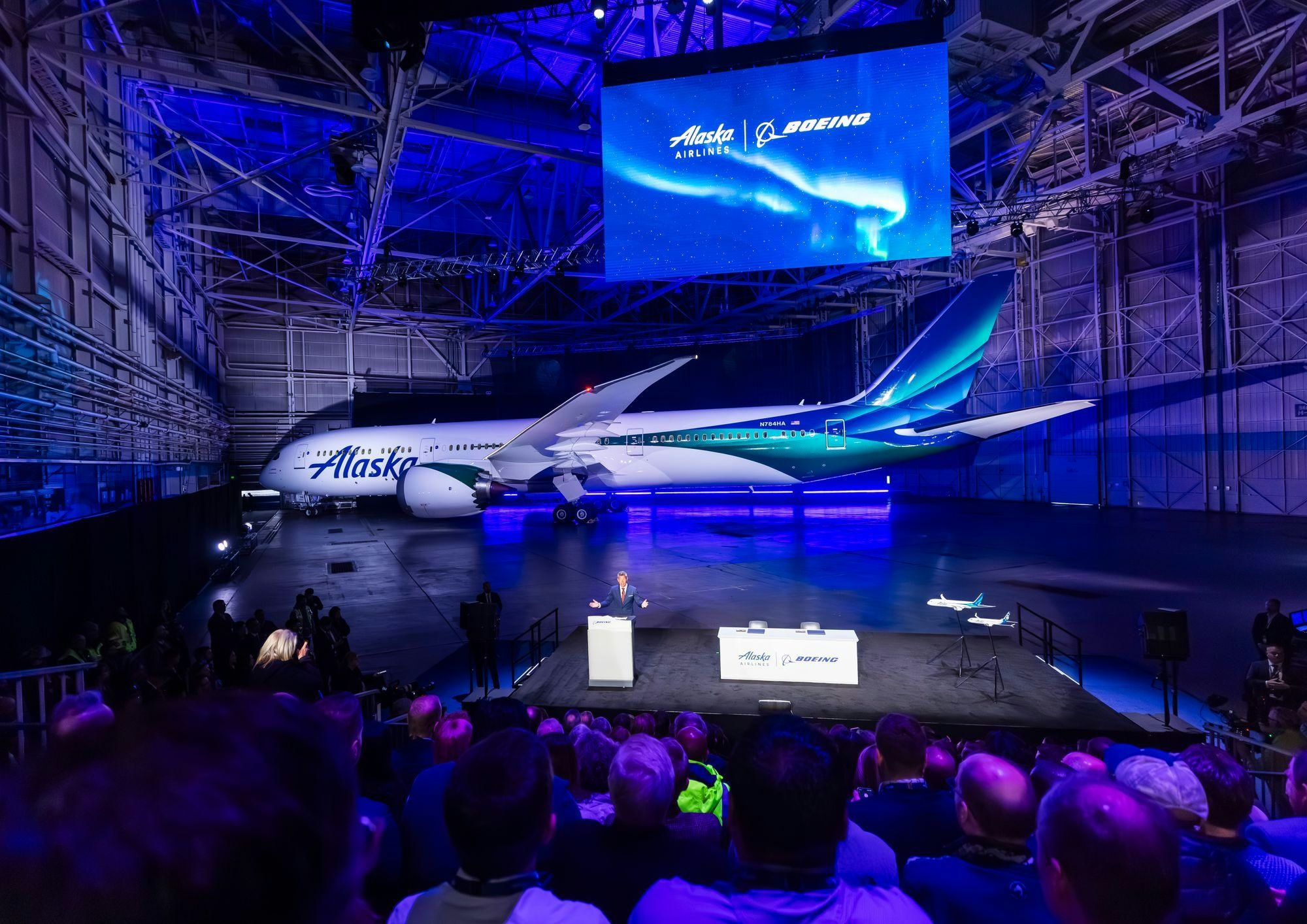
Alaska Airlines Debuts First Branded Widebody Jet Amid Major Boeing Order
Alaska Airlines has introduced its first branded widebody aircraft, a Boeing 787-9 Dreamliner, marking a pivotal moment in the carrier’s expansion into long-haul international markets. The Dreamliner, now operating routes such as Seattle to Tokyo, coincides with Alaska’s announcement of its largest-ever aircraft order: 110 planes from Boeing, comprising 105 737 Max-10s and five 787-10 Dreamliners. This strategic investment signals the airline’s commitment to growing its global footprint and modernizing its fleet.
Overcoming Past Safety Challenges
This significant order follows a challenging period for Alaska Airlines and Boeing. In January 2024, a safety incident involving a Boeing 737 Max-9 raised serious concerns when a mid-cabin door plug, missing critical bolts, detached at 14,800 feet. The event prompted Alaska to ground its entire 737 Max-9 fleet. An investigation by the National Transportation Safety Board subsequently identified major lapses in Boeing’s manufacturing oversight and quality control, concluding that the door plug had not been properly secured during production.
Despite these setbacks, Alaska Airlines’ renewed partnership with Boeing reflects restored confidence in the manufacturer’s ability to deliver safe, reliable aircraft. At the Dreamliner unveiling in Seattle, Alaska CEO Ben Minicucci addressed Boeing employees, acknowledging their efforts over the past two years. He emphasized the airline’s high standards for quality, safety, performance, and efficiency, affirming a shared commitment to success between the carrier and the manufacturer.
Strategic Vision and Industry Impact
Minicucci outlined an ambitious vision to elevate Alaska Airlines to become America’s fourth-largest global carrier, positioning it to compete directly with United, Delta, and American Airlines. The launch of the Dreamliner on direct Seattle-Tokyo flights represents a tangible step toward this goal, with ticket sales already underway.
The debut of Alaska’s branded widebody jet and its substantial Boeing order have attracted considerable attention within the aviation sector. Market responses have been predominantly positive, reflecting increased investor confidence in Boeing’s capacity to address prior safety issues and meet delivery schedules. Alaska’s endorsement is widely viewed as a significant vote of confidence in Boeing’s ongoing recovery, particularly as the manufacturer accelerates production of both the 737 Max and 787 Dreamliner following recent certification milestones.
Competitors are closely monitoring Alaska’s fleet expansion, with some reportedly reevaluating their own aircraft orders and production timelines. As Boeing strives to rebuild its reputation and satisfy growing demand, the industry is poised for further adjustments in fleet strategies and competitive positioning.
Alaska Airlines’ bold expansion highlights the complex interplay of opportunity and challenge confronting U.S. carriers and aircraft manufacturers alike, as they navigate evolving safety standards, operational reliability, and intensifying global competition.

Etihad Airways Suspends Airbus A380 Flights on Key Route

Aditya Birla Group Seeks Approval for Aircraft Leasing in GIFT City

Qatar Airways Highlights Innovation and Connectivity at Arabian Travel Market 2026

Hong Kong's Five-Year Plan Includes Andrew Fan's Aircraft Parts Processing Hub Proposal

ACIA Aero Leasing Delivers ATR72-600 to Air Nostrum

RTX Appoints Jill Albertelli as Head of Pratt & Whitney

TAT Technologies Joins Beyond Aero Hydrogen Aircraft Program

AURAK Study Highlights Barriers to Air Taxi Adoption in Emerging Economies

Xiamen Air Selects Altitude for 787 Maintenance at Heathrow

Etihad and Swissport Extend Global Partnership
