Изображение

AeroGenie — Ваш интеллектуальный второй пилот.

Спрашивайте что угодно. Анализируйте все. Действуйте незамедлительно.

В тренде

Categories

Alaska Airlines Orders Additional Boeing 787s, Plans Dreamliner Base in Seattle
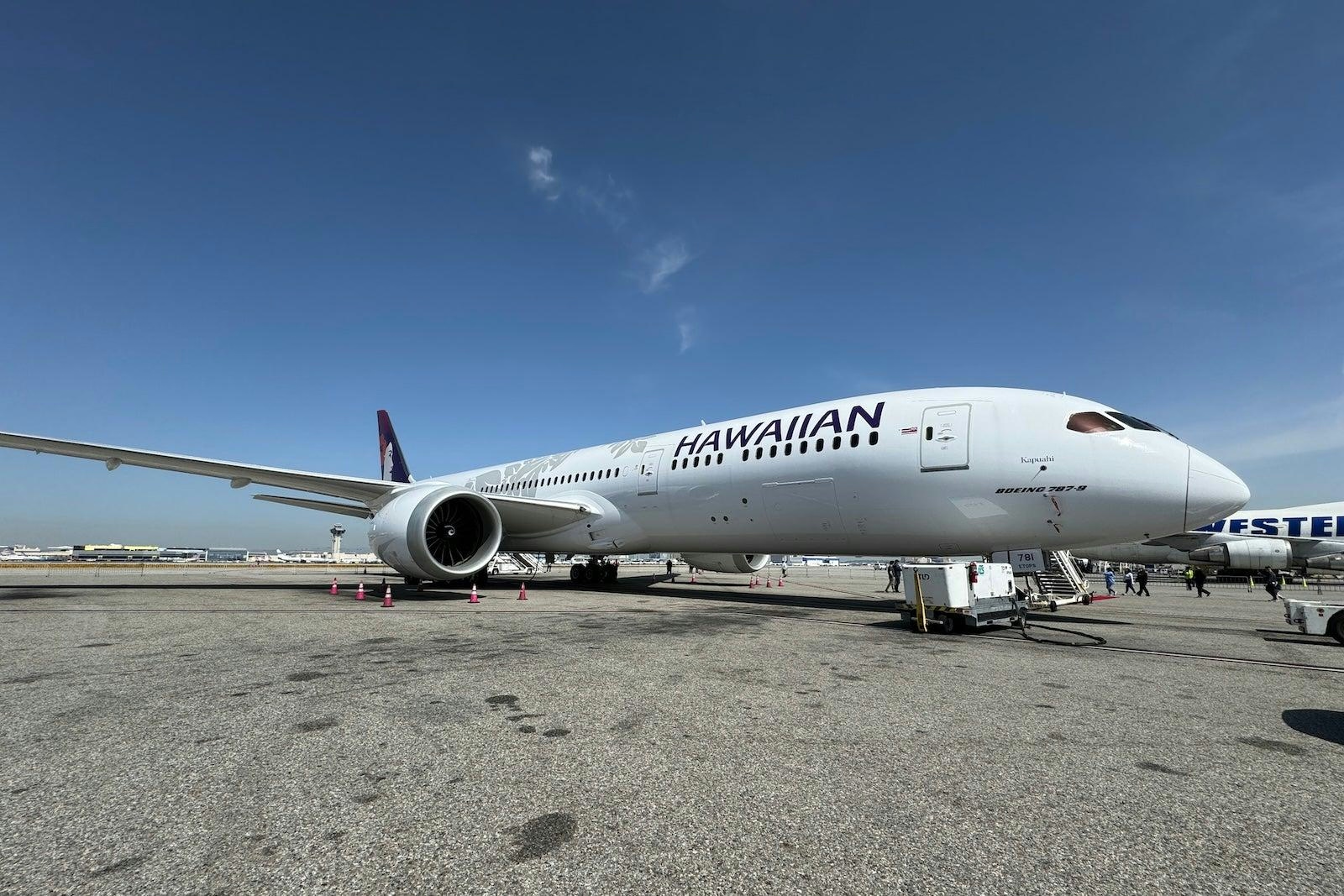
July 3, 2025By ePlane AI
Alaska Airlines Orders Additional Boeing 787s, Plans Dreamliner Base in Seattle
0
0
Alaska Airlines
Boeing 787 Dreamliner
Seattle-Tacoma International Airport

Alaska Airlines Expands Boeing 787 Fleet and Establishes Dreamliner Base in Seattle

Alaska Airlines is intensifying its long-haul expansion from Seattle-Tacoma International Airport (SEA) with an order for five additional Boeing 787-9 Dreamliners. The Seattle-based Oneworld carrier has exercised purchase rights for these aircraft from the Hawaiian Airlines orderbook, as confirmed by Larry Payne, chair of the Hawaiian Airlines Master Executive Council at the Air Line Pilots Association (ALPA), during the Alaska Pilots Podcast. This acquisition increases Alaska’s firm commitments for the 787-9 to 13, supplementing the four already in its fleet as of March 2024. In addition to the Dreamliners, Alaska has also exercised options for 12 more Boeing 737 MAX 10s and plans to open a Hawaiian 787 pilot base in Seattle by March 2026.

Strategic Growth Following Hawaiian Merger

These fleet developments reflect Alaska’s broader strategy following its merger with Hawaiian Airlines, which was finalized in September 2024. Alaska’s management has emphasized that Hawaiian’s 787s will play a pivotal role in connecting Seattle with international destinations. The airline inaugurated its first long-haul flight from Seattle in May, operated by Hawaiian using an Airbus A330, to Tokyo Narita. Service to Seoul’s Incheon International Airport is scheduled to commence on September 12, with flights to Rome Fiumicino—the first European destination jointly served by Alaska and Hawaiian—planned for May 2026. Hawaiian will operate the Seoul route with an A330 and the Rome route with a 787, introducing Alaska’s new flagship international experience.

Navigating a Crowded Market

Alaska’s expansion occurs amid intensifying competition at SEA. The airline aims to operate at least 12 long-haul intercontinental routes from Seattle by the end of the decade, but this ambition faces challenges from market saturation and direct rivalry. Delta Air Lines, Alaska’s largest competitor in Seattle, has responded promptly to Alaska’s transatlantic plans. Shortly after Alaska announced its Rome service, Delta revealed nonstop flights from Seattle to Rome and Barcelona, both launching in May 2026. With an established long-haul base in Seattle and existing flights to Asia and Europe, Delta is well-positioned to counter Alaska’s international growth.

Delta’s expansion represents a strategic effort to maintain its market dominance in Seattle as Alaska broadens its global footprint. While Alaska remains the largest carrier in the Puget Sound region and a favored hometown brand, it now confronts a more crowded and competitive international market.

Looking Ahead

As Alaska Airlines expands its Dreamliner fleet and prepares to establish a 787 base in Seattle, the airline is placing significant emphasis on enhanced global connectivity to drive its next phase of growth. However, with major competitors like Delta increasing their international offerings from Seattle, Alaska’s long-haul ambitions will face considerable tests from evolving market dynamics and heightened competition.

More news
The New Aircraft Succeeding the Boeing 777-200

The New Aircraft Succeeding the Boeing 777-200

The New Aircraft Succeeding the Boeing 777-200 As the Boeing 777-200 approaches the end of its operational lifespan—having first taken to the skies in 1994—major legacy airlines are actively pursuing modern replacements to sustain their fleets into the late 2020s and beyond. With these aircraft now exceeding 30 years in service, carriers such as American Airlines and United Airlines are shifting focus toward newer, more efficient models that align with evolving market demands and increasingly stringent regulatory requirements. Fleet Transition and Replacement Strategies Data from ch-aviation reveals that both American and United Airlines continue to operate substantial fleets of 777-200 and 777-200ER aircraft, yet their strategic emphasis is clearly moving toward the Boeing 787 Dreamliner family, particularly the 787-9 variant. United Airlines also maintains a significant number of aging 767s, which are similarly slated for replacement in the near future. American Airlines currently operates 40 active 777-200ERs alongside 33 active 787-8s and 29 active 787-9s, with an additional 19 Dreamliners on order. United Airlines’ fleet includes 13 active 777-200s and 45 active 777-200ERs, complemented by 47 active 767-300ER/400ERs. The carrier also fields 11 active 787-8s, 47 active 787-9s with 85 more on order, and 20 active 787-10s with 56 additional units pending delivery. This substantial investment in the Dreamliner family underscores both airlines’ commitment to phasing out older 777-200s and, in United’s case, replacing the 767 fleet as well. The Boeing 787-9: A Superior Successor The Boeing 787-9 Dreamliner has emerged as the preferred successor to the 777-200, distinguished by its enhanced range and operational versatility. Capable of flying up to 7,565 nautical miles, the 787-9 surpasses the standard 777-200’s range of 5,240 nautical miles and even exceeds the 777-200ER’s 7,065 nautical miles. Furthermore, the 787-9 requires a shorter takeoff distance—8,500 feet compared to 11,100 feet for the 777-200ER—enabling access to a broader array of airports. Beyond range and runway performance, the 787-9 offers significant improvements in fuel efficiency, reliability, and overall operating costs. These factors are critical in a highly competitive airline market, making the Dreamliner family not only a natural replacement for the 777-200 but also a viable option to supplant the aging 767 fleet. Industry Challenges and Market Dynamics Despite the clear momentum behind the 787-9, the transition to newer aircraft is not without obstacles. Both Boeing and Airbus face mounting pressure to accelerate production rates to satisfy growing demand, a challenge that will dominate industry management agendas through 2026. Delivery delays, particularly in the Asia-Pacific region, continue to test airline patience, even as confidence in long-term market growth remains robust. The Boeing 777X, once considered a potential replacement for older 777 variants, has encountered repeated production setbacks. Notably, no major U.S. carrier—including American and United—has placed significant orders for the 777X, reflecting skepticism about its near-term viability. Meanwhile, competitors such as Embraer are recalibrating their strategies, prioritizing sales of their E2 jets and focusing on expansion in defense and emerging electric vertical takeoff and landing (eVTOL) markets rather than launching new commercial airliner programs. Conclusion As legacy carriers retire their aging 777-200 fleets, the Boeing 787-9 Dreamliner has established itself as the leading replacement, offering superior efficiency, range, and operational flexibility. However, ongoing production and delivery challenges continue to shape the competitive landscape, influencing fleet decisions and industry dynamics for years to come.
Pegasus Airlines Opens New MRO Facility in Istanbul

Pegasus Airlines Opens New MRO Facility in Istanbul

Pegasus Airlines Opens Advanced MRO Facility in Istanbul Expansion of Technical Capabilities at Sabiha Gökçen Airport Pegasus Airlines has officially inaugurated a cutting-edge aircraft maintenance, repair, and overhaul (MRO) centre at Istanbul Sabiha Gökçen Airport, marking a pivotal enhancement of its technical infrastructure. The new facility, emphasising digitalisation, operational efficiency, and sustainability, is capable of servicing up to five narrow-body aircraft simultaneously. This development significantly strengthens the airline’s operational resilience and maintenance capacity. The project, initiated in January 2025 with an investment of $40 million, was completed within a year and features two maintenance hangars alongside a dedicated paint hangar. These facilities support a comprehensive range of services, including line and base maintenance, engine and landing gear replacements, avionics and structural modifications, full aircraft painting and livery design, component maintenance, and training programmes. Pegasus aims to reduce maintenance turnaround times, optimise resource utilisation, and minimise aircraft downtime through this expansion. Future Growth and Strategic Importance Pegasus plans to further expand the MRO centre in two additional phases. The second phase, expected to conclude by late 2026, will introduce another hangar, increasing base maintenance capacity to accommodate five more narrow-body aircraft. A third phase, projected to commence within four to five years, will further enlarge the facility to handle up to ten aircraft, completing the airline’s vision for a comprehensive maintenance hub. Güliz Öztürk, CEO of Pegasus Airlines, described the investment as a strategic milestone in the company’s sustainable growth trajectory. She emphasised that the new hangars will enhance the airline’s ability to manage the maintenance demands of its expanding fleet more effectively while accelerating its digital transformation and operational efficiency. Öztürk highlighted that optimising maintenance processes is integral to delivering a seamless travel experience for passengers. Context Within the Global MRO Landscape The launch of Pegasus’s MRO facility occurs amid intensifying competition in the global aircraft maintenance sector. Established industry players such as AAR, which recently opened a new hangar in Oklahoma City, and RTX, with a $139 million investment in Singapore, are actively expanding their operations to meet growing demand. Industry analysts suggest that Pegasus’s facility will be closely monitored as it addresses increasing regional maintenance needs, particularly with the rising aviation market in Latin America. In response, competitors may pursue further expansions or strategic partnerships to maintain their market positions, reflecting ongoing consolidation and innovation trends within the MRO industry. Pegasus’s investment highlights both the opportunities and challenges airlines face as they seek to bolster their technical infrastructure amid shifting global dynamics in aviation maintenance.
ARCO Names Rightnowar Head of Commercial Aviation

ARCO Names Rightnowar Head of Commercial Aviation

ARCO Appoints Scott Rightnowar as Head of Commercial Aviation ARCO National Construction has announced the appointment of Scott Rightnowar as the new head of its commercial aviation division. In this capacity, Rightnowar will oversee the company’s national aviation business, focusing on the growth and execution of complex development programs involving airports, airlines, hangars, and maintenance, repair, and overhaul (MRO) facilities across the United States. Extensive Experience in Aviation Infrastructure ARCO, a prominent national design-build contractor, has established a strong reputation for delivering critical aviation infrastructure, including aircraft hangars, MRO facilities, flight training centers, cargo buildings, and terminal support spaces. The company collaborates closely with airlines, airport authorities, original equipment manufacturers (OEMs), and aviation service providers to execute projects of significant scale and complexity. Rightnowar brings more than a decade of executive leadership experience in aviation and industrial development. His career includes managing global real estate portfolios exceeding 84 million square feet and overseeing capital programs valued in the billions. He has held senior roles in aviation infrastructure, MRO developments, manufacturing, and mission-critical facilities worldwide. Prior to joining ARCO, Rightnowar directed aviation and industrial real estate initiatives nationwide, including large-scale MRO hangars, multi-phase campus relocations, and airline infrastructure planning aligned with major fleet expansions. His expertise also extends to enterprise projects involving public-private partnerships, long-term ground leases, and complex airport developments in collaboration with federal agencies, airport authorities, and international stakeholders. Strategic Vision Amid Industry Challenges In his new role, Rightnowar is tasked with expanding ARCO’s established aviation portfolio and strengthening partnerships across the commercial aviation sector. The company’s capabilities encompass widebody and narrowbody hangars, integrated MRO campuses, specialized structural systems, and intricate airside coordination. ARCO also undertakes infrastructure upgrades that require meticulous phasing within active airport environments. Rightnowar will lead projects ranging from large-scale hangars and integrated maintenance campuses to airside-support infrastructure, aligning ARCO’s turnkey delivery model with the evolving demands of commercial aviation clients. Rightnowar assumes leadership at a time of significant challenges within the commercial aviation industry. The sector faces intensified competition and shifting market dynamics, with major manufacturers Airbus and Boeing adjusting production rates and making critical decisions regarding future aircraft programs. Under new leadership by Lars Wagner, Airbus aims to increase widebody production, while Boeing continues to dominate that segment, with Airbus leading in narrowbody aircraft. These strategic developments are expected to influence market demand and infrastructure needs, directly affecting ARCO’s aviation projects. Furthermore, the airline industry’s competitive landscape, combined with ongoing economic, regulatory, and geopolitical uncertainties, adds layers of complexity. Successfully navigating these factors will be crucial as Rightnowar guides ARCO’s efforts to deliver essential aviation infrastructure and respond to the sector’s rapidly evolving requirements. Rightnowar holds a Bachelor of Science in Business from Eastern Illinois University and is a Certified Commercial Investment Member (CCIM).
United Nigeria Airlines Plans New York Flights and Public Listing

United Nigeria Airlines Plans New York Flights and Public Listing

United Nigeria Airlines Announces Ambitious Expansion and Public Listing Plans United Nigeria Airlines has unveiled a comprehensive growth strategy that includes launching direct flights to New York and pursuing a listing on the Nigerian Stock Exchange within the next three to five years. Speaking at the airline’s fifth anniversary press conference in Lagos on February 12, Chairman Obiora Okonkwo emphasized the company’s intention to expand into intercontinental markets by the summer of 2026. Strategic Shift Toward Intercontinental Operations Okonkwo highlighted the stock exchange listing as a critical element of the airline’s medium-term financial strategy. The move aims to reduce dependence on expensive bank loans, which currently carry interest rates between 30% and 35%. “It is our midterm plan. Trust us, within the next three years, five years, we will be on the stock exchange,” he stated, underscoring the airline’s commitment to fulfilling regulatory, corporate governance, and financial prerequisites to attract external investors. As part of its five-year operational roadmap, United Nigeria Airlines plans to initiate intercontinental flights to key global destinations including Dubai, Jeddah, Rome, the United Kingdom, and notably, New York. Okonkwo confirmed that the airline intends to commence direct flights to New York by the end of the second quarter of 2026. These services will be operated using wet-leased Airbus A330-200 aircraft from Air Anka, with the first aircraft scheduled for delivery on July 26, 2026, and a second following in October. Navigating a Competitive Transatlantic Market The airline’s expansion into the transatlantic market comes amid intensifying competition. United Nigeria Airlines will need to secure regulatory approvals and effectively integrate new widebody aircraft into its fleet. Established carriers such as United Airlines are simultaneously expanding their international routes, particularly from hubs like Chicago, while emerging competitors like Sunrise Airways Dominicana are actively seeking permits for scheduled services to the United States, further heightening competition on these routes. In addition to its intercontinental ambitions, United Nigeria Airlines plans to introduce six new regional routes by mid-2026, targeting cities including Dakar, Monrovia, and Johannesburg. To support this regional growth, the airline has acquired six Boeing 737-800 NG aircraft from Southwest Airlines and is negotiating for three additional units, with deliveries expected to begin in March 2026. Fleet and Maintenance Developments Currently, United Nigeria Airlines operates a modest fleet comprising five in-house aircraft—four Embraer E145s (three of which are inactive) and one inactive Boeing 737-500. The airline also wet-leases seven aircraft, including four A320-200s from Fly2Sky, two CRJ900s from CemAir, and one E190 from Windrose Airlines, according to ch-aviation data. Okonkwo further revealed that the airline has transitioned to an approved maintenance organisation (AMO) structure, laying the foundation for establishing its own maintenance, repair, and overhaul (MRO) facility within the next three years. Founded in 2021 with a single route between Lagos and Enugu, United Nigeria Airlines is positioning itself as a growing force in both regional and international aviation markets, despite the challenges posed by increased competition and operational complexities.
Star Air's Approach to Regional Expansion

Star Air's Approach to Regional Expansion

Star Air’s Calculated Path to Regional Expansion Regional aviation in India presents a landscape of both significant opportunity and notable challenges. Star Air’s current expansion strategy exemplifies a cautious yet deliberate approach, balancing growth ambitions with the sector’s inherent limitations. The airline is actively broadening its network, securing capital, and preparing to increase its fleet size, all while remaining mindful of the constraints posed by thin routes, price-sensitive passengers, and infrastructure that often struggles to keep pace with demand. Strategic Focus on Operational Discipline Star Air’s expansion is underpinned by a commitment to operational discipline rather than rapid, unchecked growth. The airline is methodically building its foundation around fleet commonality, robust backend systems, cargo capabilities, and strong station-level operations. These elements are integral to sustainable scaling, ensuring that growth in routes and aircraft does not overwhelm the airline’s operational capacity. In a segment where overextension can quickly undermine progress, Star Air’s approach prioritizes stability and efficiency. Competitive Advantage on Thin Routes According to Simran Singh Tiwana, CEO of Star Air, the airline’s competitiveness on regional and thin routes is driven by a multi-faceted, cost-conscious strategy. Central to this is the standardisation of its fleet around efficient Embraer regional jets. These right-sized aircraft enable Star Air to maintain lower unit costs compared to larger narrow-body planes, particularly on routes with limited demand. The use of smaller aircraft also reduces airport charges and operating expenses, allowing the airline to align capacity closely with demand and avoid oversupply. A significant portion of Star Air’s network operates under the Government of India’s UDAN (Regional Connectivity Scheme), which provides viability gap funding (VGF) to support affordable fares and mitigate financial risks during the initial phases of route development. This framework assists the airline in controlling costs, stimulating regional demand, and maintaining competitiveness, even as larger carriers such as IndiGo and Cebu Pacific expand aggressively in the Asia-Pacific region with competitive pricing strategies. Phased Fleet Expansion Amid Industry Challenges Star Air is pursuing a phased approach to fleet expansion, with plans to increase its current fleet from 12 to approximately 25 aircraft by 2027. The airline is considering the addition of new Embraer regional jets, reflecting confidence in medium-term demand growth and a commitment to disciplined scaling. In late 2025, Star Air secured ₹150 crore in Series B funding—its first external capital infusion—to support fleet induction, network expansion, and infrastructure enhancements, including engineering and maintenance capabilities. Despite these positive developments, the expansion path is not without obstacles. Delivery delays and intensified competition from established players are testing Star Air’s resilience. As competitors increase their fleet sizes and implement aggressive pricing to defend market share, Star Air faces heightened scrutiny regarding its operational efficiency and financial stability. Building Technical Capability for Sustainable Growth Industry-wide shortages of pilots and technicians continue to pose significant challenges. Star Air has responded by investing in training, standardisation, and long-term partnerships rather than pursuing unsustainable growth. Operating a single aircraft family simplifies type-rating, recurrent training, and crew rostering, which helps maintain operational stability even as the airline scales. As Star Air navigates a competitive and evolving aviation landscape, its measured approach—emphasising efficiency, cost control, and operational readiness—will be essential to sustaining growth and establishing a durable presence in India’s regional aviation market.
Garmin Introduces New Devices to Advance Motorsports and Aviation

Garmin Introduces New Devices to Advance Motorsports and Aviation

Garmin Advances Motorsports and Aviation with New Devices and Facility Expansion Garmin (NYSE: GRMN) has unveiled two new products aimed at enhancing its presence in the motorsports and motorcycling markets, alongside a significant expansion of its aviation operations. The company introduced the Catalyst 2, a motorsports performance optimizer, and the zūmo XT3 GPS device tailored for motorcyclists. Concurrently, Garmin has acquired a substantial facility at Mesa Gateway Airport, signaling a strategic commitment to growing its aviation segment. Innovations in Motorsports and Motorcycling The launch of the Catalyst 2 and zūmo XT3 responds to increasing demand among motorsports and motorcycling enthusiasts for sophisticated, data-driven equipment. Both devices offer advanced performance metrics and coaching features, supported by subscription-based services such as the Garmin Performance Package and Catalyst Vault storage. These offerings represent a shift toward recurring revenue models, emphasizing software and data services that extend beyond traditional hardware sales. By deepening customer engagement through these premium, use-case-specific products, Garmin aims to solidify its foothold in these specialized markets. Expansion and Competition in Aviation Garmin’s acquisition of the new facility at Mesa Gateway Airport is designed to enhance its flight test capacity and aircraft certification capabilities. This expansion is a strategic move to strengthen the company’s aviation business amid intense competition from established players like Honeywell and Avidyne, who continue to dominate the aviation technology sector. The increased infrastructure will enable Garmin to respond more effectively to market demands and accelerate product development. In addition to hardware advancements, Garmin has partnered with Brazos Safety Systems to introduce aviation safety analytics, broadening its portfolio beyond traditional wearables and fitness devices. This collaboration aims to integrate enhanced data and software capabilities into Garmin’s aviation offerings. However, the partnership’s success will largely depend on adoption rates among aviation operators and regulatory bodies, which may progress slowly. Challenges and Strategic Considerations While these initiatives position Garmin for growth in high-value, performance-oriented segments, they also introduce potential risks. Increased investment in facilities and product development could pressure operating margins if revenue growth does not keep pace. The company faces formidable competition not only from aviation technology incumbents but also from consumer electronics firms such as TomTom, Apple, and Samsung, which may constrain pricing power and market share expansion. Additionally, skepticism from pilots and aviation professionals regarding the integration and effectiveness of Garmin’s new products could affect market reception. Garmin’s recent moves underscore a deliberate strategy to enhance its specialist hardware and data-driven service offerings. By expanding its aviation infrastructure and introducing advanced motorsports and motorcycling devices, the company seeks to diversify revenue streams and maintain competitiveness in a rapidly evolving landscape.
Companies Advance Development of Electric Vertical Takeoff Aircraft

Companies Advance Development of Electric Vertical Takeoff Aircraft

Companies Advance Development of Electric Vertical Takeoff Aircraft Progress in South Florida’s Urban Air Mobility The prospect of electric vertical takeoff and landing (eVTOL) aircraft operating as air taxis above Miami’s skyline is rapidly approaching reality. Several companies are intensifying efforts through strategic partnerships, infrastructure development, and regulatory engagement to launch initial operations in South Florida between late 2026 and 2027. While challenges remain in securing regulatory approval, technical expertise, and vertiport construction, industry leaders and local stakeholders are making significant strides toward establishing a functional urban air mobility ecosystem. UrbanLink Air Mobility, a South Florida-based enterprise, is among the leading companies driving this transformation. The firm aims to revolutionize urban transportation with zero-emission eVTOL aircraft. In a recent development, UrbanLink renewed its partnership with VertiPorts by Atlantic Aviation, gaining access to a network of fixed-base operators and potential vertiport locations across Miami-Dade, Broward, and Palm Beach counties. The company plans to commence all-electric operations in the latter half of 2027, aligning aircraft deliveries and infrastructure readiness with Federal Aviation Administration (FAA) certification timelines. Wisk Aero, supported by Boeing, is also playing a pivotal role in shaping Miami’s air taxi landscape. In June, Wisk formalized agreements with the Miami-Dade Aviation Department and the University of Miami’s Miami Engineering and Aviation Mobility Initiative (MEAMI). These collaborations focus on vertiport design, airspace integration, electrical infrastructure, and regulatory pathways to facilitate autonomous flight. Under the partnership with Miami-Dade County, Wisk will provide technical expertise for vertiport development at Miami International, Miami Executive, and Opa-Locka Executive Airports, ensuring these facilities are integrated into county planning and infrastructure projects. The MEAMI collaboration emphasizes research, transit network integration, and workforce development to prepare Miami as an early U.S. market for Wisk’s self-flying, four-passenger eVTOL aircraft. Adding to the momentum, Vertical Aerospace is preparing to introduce its Valo air taxi in Miami. Designed to carry up to six passengers on flights of approximately 100 miles, the Valo will be unveiled at an event on February 24 at the Bass Museum/Collins Park. Developed for urban, leisure, and event travel in partnership with American Airlines, the aircraft targets U.S. certification by 2028. Challenges and Market Dynamics Despite rapid advancements, the industry faces considerable obstacles. Securing adequate funding to cover the substantial costs associated with certification and industrialization remains a significant challenge, as noted by industry analysts. Market responses are varied: companies such as Eve Air Mobility continue to advance flight-test programs and secure customers like AirX, while competitors intensify research and development efforts and forge strategic partnerships. For example, Vertical Aerospace’s collaboration with JetSetGo aims to develop advanced air mobility services in India, reflecting the global scope of the emerging market. FAA approval stands as the critical milestone for initiating passenger service. The agency has progressed in establishing rules for powered-lift aircraft, with most forecasts indicating commercial operations could begin between 2026 and 2028. Local partners have identified multiple potential vertiport sites, including existing aviation facilities and locations in downtown and event-centric areas. Early adopters are expected to include high-value commuters, business travelers, and visitors seeking expedited travel to airports, beaches, and major events. Routes such as Brickell to South Beach could significantly reduce travel times, enhancing urban mobility. Miami’s approach aligns with national trends observed in cities like Los Angeles, New York, and San Francisco, all of which are preparing urban air mobility networks under federal pilot programs. Through robust partnerships, infrastructure planning, and ongoing aircraft development, Miami is positioning itself as one of the earliest U.S. markets to embrace commercial eVTOL passenger service.
Trends and Outlook for Solar-Powered UAVs Through 2033

Trends and Outlook for Solar-Powered UAVs Through 2033

Trends and Outlook for Solar-Powered UAVs Through 2033 The solar-powered unmanned aerial vehicle (UAV) market is experiencing significant growth, driven by increasing demand for unmanned aerial surveillance, expanding defense modernization programs, and a global emphasis on sustainable aviation. According to IMARC Group, the market reached a valuation of USD 401 million in 2024 and is projected to nearly double to USD 867.3 million by 2033, representing a compound annual growth rate (CAGR) of 8.5% from 2025 to 2033. Solar-powered UAVs are revolutionizing long-endurance aerial operations by utilizing solar energy to sustain flight for extended periods, often lasting several days. This capability makes them particularly suitable for missions where traditional fuel-powered aircraft are limited by cost and endurance constraints. The market is primarily segmented by drone type, with fixed-wing models dominating due to their superior aerodynamic efficiency. Missions covering distances greater than 300 kilometers constitute the largest range category, while defense applications remain the primary sector. Semi-autonomous operation is the prevalent mode of control, with ongoing innovation focused on propulsion systems and airframe design. Key Growth Drivers The defense and military sectors are at the forefront of solar-powered UAV adoption. Defense agencies worldwide are increasingly deploying these platforms for long-range surveillance, intelligence gathering, and communication relay missions, thereby reducing dependence on fuel resupply logistics. Significant investments have been made by the U.S. Department of Defense and NASA in advanced UAV propulsion research. A notable example is the Defense Advanced Research Projects Agency’s (DARPA) ANCILLARY program, which awarded Northrop Grumman a contract in July 2023 to develop autonomous vertical takeoff and landing (VTOL) uncrewed aircraft. The United States alone has registered over 855,000 drones, including more than 316,000 for commercial use, underscoring the critical role of government investment in market expansion. Commercial and agricultural sectors are also embracing solar-powered UAVs as cost-effective alternatives for various applications such as crop monitoring, pest detection, fertilizer spraying, solar panel inspection, and large-scale mapping. In January 2024, Sphere Drones introduced HubX, a self-sustaining mobile drone platform designed for remote aerial data collection. Similarly, Garuda Aerospace’s multifunctional agricultural drone, capable of pesticide spraying and pipeline inspection, exemplifies the rapid growth of commercial applications in this domain. Research and development efforts continue to push the boundaries of UAV endurance and capability. India’s National Aerospace Laboratories achieved a significant milestone with a high-altitude pseudo-satellite (HAPS) solar UAV capable of over ten days of continuous flight. NewSpace Research and Technologies’ HAPS completed a 21-hour maiden flight in late 2023, while the Indian Institute of Technology Kanpur’s ‘Maral’ solar surveillance drone highlights the impact of government-supported academic research on advancing next-generation UAV technologies. Market Trends and Challenges A prominent trend within the sector is the development of High-Altitude Pseudo-Satellites (HAPS), which are solar UAVs engineered for stratospheric operations lasting weeks or even months. Despite promising advancements, the industry faces several challenges, including technological limitations related to battery efficiency and energy storage, regulatory and safety concerns, and competition from conventional fuel-powered drones. These obstacles have spurred increased investment in research and development, as well as strategic partnerships with technology firms. Market players are responding by advancing battery technologies and forming alliances to enhance their competitive positions. Outlook Through 2033 The outlook for solar-powered UAVs remains optimistic despite existing challenges. Ongoing improvements in solar energy capture and battery storage technologies, combined with growing demand for efficient and sustainable aerial platforms, are expected to drive substantial market growth through 2033. As governments and industries prioritize greener and longer-endurance solutions, solar-powered UAVs are set to become indispensable assets across defense, commercial, and research sectors worldwide.
Delays Hamper Development of eVTOL Air Taxis in the U.S.

Delays Hamper Development of eVTOL Air Taxis in the U.S.

Delays Hamper Development of eVTOL Air Taxis in the U.S. The development of electric vertical takeoff and landing (eVTOL) air taxis, once hailed as a transformative advancement in urban transportation, continues to face significant setbacks in the United States. Despite the technological promise, progress remains stalled due to a combination of regulatory complexities, engineering challenges, and infrastructural deficiencies. More than a century after the Wright brothers’ historic flight, the U.S. aviation sector now confronts a new era of uncertainty—not from unproven technology, but from evolving safety regulations, the absence of necessary infrastructure, and intricate certification procedures. Regulatory and Certification Challenges Unlike the early days of aviation, today’s eVTOL innovators must navigate a complex and evolving regulatory environment. The Federal Aviation Administration (FAA) is still in the process of establishing comprehensive standards for eVTOL certification, vertiport infrastructure, and pilot training. This regulatory uncertainty has pushed back the anticipated launch of commercial air taxi services, which were initially expected to debut by the mid-2020s. Industry insiders report that leading U.S. developers such as Joby Aviation and Archer Aviation are unlikely to secure certification before 2027 or 2028. The certification process itself presents formidable technical and financial obstacles. Analysts estimate that the likelihood of any eVTOL receiving FAA type certification by the end of 2027 stands at only 20 to 30 percent. The high costs associated with certification and industrial-scale production mean that companies must sell thousands of aircraft to reach profitability, raising questions about the near-term commercial viability of the sector. Competitive Pressures and Industry Dynamics The U.S. eVTOL industry is also contending with intensifying competition from international players. Chinese companies like EHang and AutoFlight are aggressively pursuing passenger certification, with targets set for as early as 2026. Meanwhile, U.S. firms face additional challenges beyond regulatory delays. Archer Aviation, for instance, is embroiled in a legal dispute with Joby Aviation over alleged trade secret violations—a case Archer has sought to dismiss as without merit. Despite these hurdles, Archer is expanding its global footprint by establishing a new aerospace engineering hub in the United Kingdom. Joby Aviation, on the other hand, is diversifying its portfolio by entering defense and other emerging eVTOL markets to sustain growth. Infrastructure and Legislative Efforts Infrastructure development remains a critical bottleneck. Operational vertiports are virtually non-existent across the United States, and essential components such as energy supply chains and pilot training programs are still under development. Kalea Texeira, the FAA’s National Training Program Manager, emphasized that the primary challenge has shifted from technical capability to regulatory synchronization. The FAA, guided by the Department of Transportation’s Advanced Air Mobility (AAM) National Strategy, is working to streamline regulations and foster infrastructure development, but progress has been slow. In response to these challenges, lawmakers have introduced bipartisan legislation aimed at accelerating the FAA’s certification process for eVTOLs and other advanced air mobility aircraft. The Aviation Innovation and Global Competitiveness Act seeks to delegate more routine certification tasks to FAA-approved organizations, potentially freeing agency resources and expediting approvals. Proponents argue that such measures are vital to maintaining U.S. competitiveness as other nations advance their air taxi programs. For the foreseeable future, the U.S. eVTOL industry remains in a state of limbo. The realization of safe, commercially viable air taxis depends not only on overcoming technological hurdles but also on navigating a complex regulatory and financial landscape that will ultimately determine the timing and success of eVTOL integration into American urban airspace.
The Impact of Predictive Maintenance on Aircraft Parts Demand

The Impact of Predictive Maintenance on Aircraft Parts Demand

The Impact of Predictive Maintenance on Aircraft Parts Demand The aviation industry is experiencing a profound transformation as predictive maintenance redefines how airlines and maintenance providers manage aircraft performance and parts procurement. By harnessing real-time data, advanced analytics, and onboard diagnostics, operators can now anticipate maintenance requirements with greater accuracy. This shift is fundamentally altering demand patterns for aircraft components and fostering new efficiencies throughout the global aerospace supply chain. From Reactive Replacement to Data-Driven Forecasting Historically, airlines depended on scheduled inspections or responded to unexpected equipment failures, often resulting in imbalanced inventories characterized by surplus stock of some parts and shortages of others. This reactive maintenance approach not only increased operational costs but also occasionally led to aircraft being grounded due to unavailable components. Predictive maintenance, in contrast, allows airlines to forecast parts demand based on actual usage and the health status of components rather than relying on predetermined maintenance intervals. Through sensors and performance monitoring software that track parameters such as vibration, temperature, pressure, and electrical signals, maintenance teams receive early warnings of wear and potential failures. This proactive methodology enhances flight safety and reliability while enabling procurement teams to optimize inventory levels, reduce excess stock, and ensure the timely availability of critical parts. Shifting Dynamics in Rotable and Consumable Parts Demand The implementation of predictive maintenance is influencing demand for both rotable and consumable parts. For high-value rotable components—including avionics, hydraulic pumps, and actuators—real-time monitoring facilitates the extension of component lifecycles and the precise scheduling of overhauls, thereby avoiding premature replacements. Consumable items such as filters, seals, and fasteners also benefit from improved demand forecasting, which supports streamlined ordering processes and more effective supplier agreements. This balanced approach reduces unnecessary expenditures while maintaining rigorous airworthiness standards. Market Momentum and Industry Challenges With global air traffic demand remaining robust, predictive maintenance is generating significant momentum within the maintenance, repair, and overhaul (MRO) sector. The outlook for 2026 anticipates strong aftermarket support, particularly for aging aircraft models, presenting new opportunities for aftermarket providers. Nonetheless, the sector continues to face challenges, notably the ongoing grounding of Pratt & Whitney geared turbofan (GTF)-powered aircraft, a situation expected to persist until at least 2028 despite remediation efforts. In response to these evolving market conditions, competitors such as Duncan Aviation have adjusted component repair pricing to reflect the changing landscape. Strengthening Supplier Collaboration and Transparency The growing reliance on operational data is also transforming supplier relationships. Airlines and procurement teams are increasingly collaborating with manufacturers and distributors by sharing real-time information to enhance coordination and ensure traceable documentation. This approach, long established in industrial manufacturing, improves transparency, builds trust, and mitigates procurement risks. Consequently, the supply chain becomes more agile and resilient, better aligned with the demands of contemporary aviation operations. Policy Support and Cost Reduction Initiatives Government policy is playing a supportive role in the industry’s evolution. The Union Budget 2026’s removal of basic customs duty on aircraft components is expected to reduce maintenance costs and strengthen India’s aviation manufacturing ecosystem. This policy change further facilitates the adoption of predictive maintenance strategies by airlines and contributes to the streamlining of operational processes. Reducing Downtime and Operational Costs One of the most significant advantages of predictive maintenance lies in its ability to minimize aircraft downtime. By identifying potential failures early, maintenance can be scheduled during planned service windows, thereby reducing operational disruptions, enhancing fleet availability, and enabling more effective budgeting across the industry. As predictive maintenance becomes the prevailing standard, it is poised to redefine aircraft parts demand and reshape the future of aviation supply chains.
line










