Изображение

AeroGenie — Ваш интеллектуальный второй пилот.

Спрашивайте что угодно. Анализируйте все. Действуйте незамедлительно.

В тренде

Categories

ANA Boeing 777 Experiences Engine Failure on Tokyo-Sapporo Flight
April 1, 2026By ePlane AI
ANA Boeing 777 Experiences Engine Failure on Tokyo-Sapporo Flight
0
0
ANA
Boeing 777
Engine Failure

ANA Boeing 777 Experiences Engine Failure on Tokyo–Sapporo Flight

Incident Overview and Response

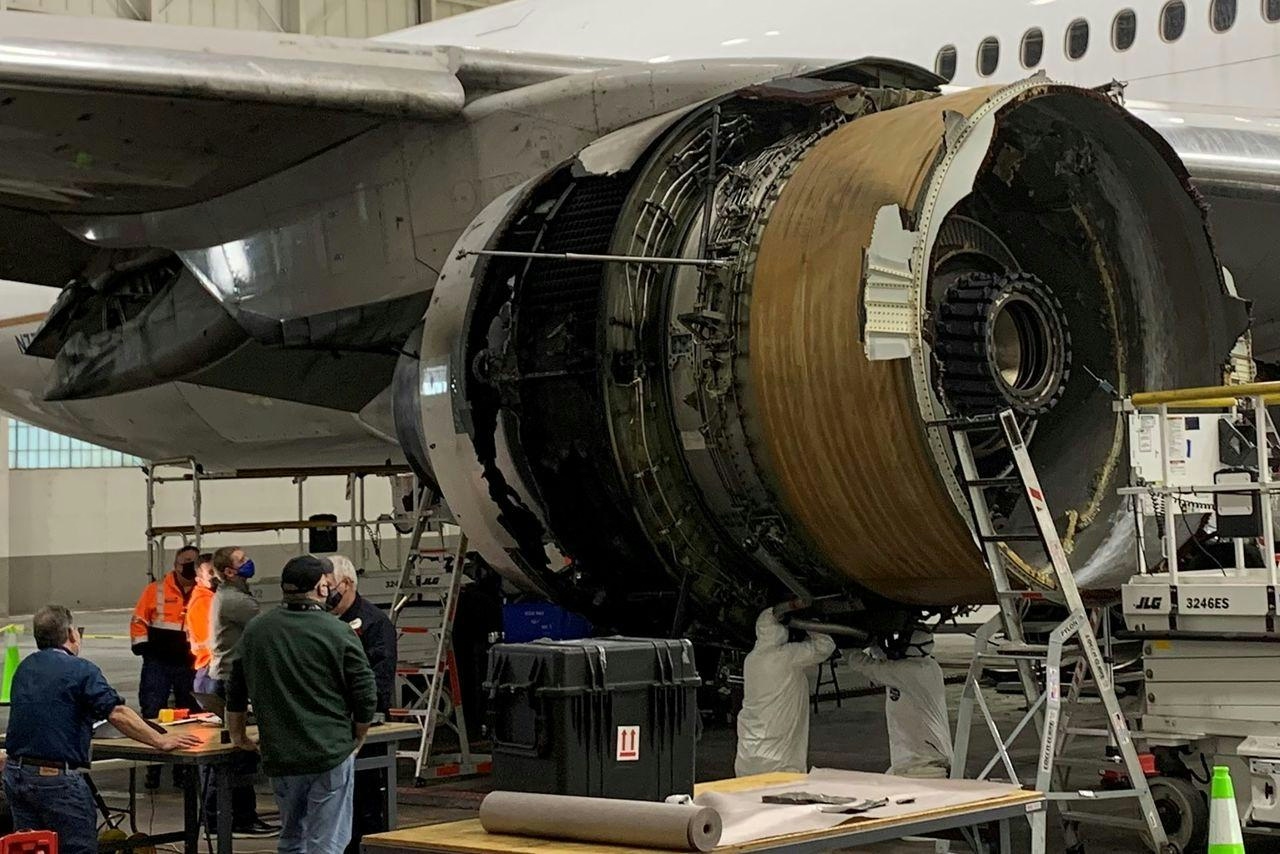
On June 6, All Nippon Airways (ANA) encountered a technical issue on flight NH65, a Boeing 777-200ER operating between Tokyo Haneda and Sapporo. During the afternoon arrival sequence at New Chitose Airport, the aircraft’s No. 1 engine was shut down after the flight crew detected an abnormally high oil temperature in the left-hand engine shortly following a go-around maneuver on approach to runway 01R. Following established safety protocols, the crew secured the affected engine and requested fire and rescue services to stand by. The aircraft subsequently landed safely on runway 19L at 14:57 local time, remaining on the runway for approximately ten minutes while emergency personnel conducted external inspections. No fire or fluid leakage was observed, and the plane taxied under its own power to the terminal.

ANA clarified that no formal emergency declaration was made, despite some media reports suggesting otherwise. All 327 passengers and crew members were unharmed, and the airline emphasized that the landing was executed safely and in full compliance with operational procedures.

Aircraft Details and Operational Impact

The aircraft involved, registered JA745A, is a 12.8-year-old Boeing 777-200ER that has been in ANA’s fleet since its delivery in 2013. This particular jet has undergone multiple cabin reconfigurations and was previously adorned with ANA’s Demon Slayer promotional livery. It is regularly deployed on high-density domestic routes such as Tokyo–Sapporo, underscoring its importance to ANA’s domestic network.

In the aftermath of the incident, ANA cancelled the return flight NH68 to Tokyo to facilitate thorough inspections and maintenance of the affected engine and associated systems. The airline’s prompt and professional handling of the situation has highlighted the operational resilience of twin-engine widebody aircraft on short-haul domestic routes, as well as the high standards maintained by ANA’s flight crews during abnormal events.

Challenges and Industry Implications

Despite the successful management of the incident, ANA now faces heightened scrutiny from aviation regulators and potential reputational challenges. Passengers may seek reassurances regarding the safety of the airline’s fleet, and competitors could leverage the event to emphasize their own safety records in a competitive market. Financial repercussions may also arise from repair costs and possible compensation claims.

The timing of the incident is significant, as ANA has recently been focusing on product enhancements and expanding its long-haul service offerings to maintain a competitive edge. The airline’s approach to communication and safety assurances in the coming weeks will be closely monitored by both regulatory bodies and the traveling public.

ANA reiterated its commitment to safety and transparency as investigations continue. The event underscores the critical importance of rigorous operational procedures and the professionalism required to manage technical challenges during crucial phases of flight.

More news
Indonesia Launches First Aviation Leasing Fund

Indonesia Launches First Aviation Leasing Fund

Indonesia Launches First Aviation Leasing Fund Indonesia has inaugurated its first aviation leasing fund, a landmark development aimed at bolstering the nation’s aviation sector and attracting substantial investment. This initiative is designed to enhance airlines’ access to financing for aircraft acquisition and fleet expansion, thereby positioning Indonesia as a more competitive force within the regional aviation market. Strategic Importance and Market Potential The newly established fund is anticipated to attract interest from both domestic and international investors seeking to leverage Indonesia’s strong economic growth and rising demand for air travel. Industry analysts suggest that this move could help bridge the financing gap faced by local airlines, enabling them to modernize their fleets and broaden their route networks. By facilitating easier access to capital, the fund is expected to stimulate growth and innovation within the sector. Challenges and Industry Perspectives Despite the positive outlook, the launch occurs against a backdrop of significant challenges. Indonesia’s aviation infrastructure remains comparatively underdeveloped relative to more mature markets, a concern shared by industry leaders such as the CEO of Brazil’s Azul, who has pointed to similar obstacles in emerging aviation markets. The ultimate success of the leasing fund will hinge on the establishment of effective financing mechanisms alongside improvements in airport infrastructure, maintenance capabilities, and regulatory frameworks. Market Response and Future Outlook Market reactions have been predominantly favorable, with expectations that the fund will intensify competition and encourage innovation among regional carriers. Airlines may respond by negotiating more advantageous leasing terms or accelerating fleet expansion efforts to safeguard their market positions. This dynamic could prompt strategic shifts, including increased collaboration with leasing companies and heightened investment in new aircraft. Nonetheless, experts emphasize the necessity for Indonesia to address existing infrastructure constraints and ensure transparent, efficient management of the fund to fully realize its potential benefits. The government’s role in supporting the aviation industry through policy reforms and investment incentives will be pivotal in maintaining momentum and attracting sustained capital inflows. As Indonesia embarks on this ambitious venture, the aviation leasing fund stands as both an opportunity and a critical test of the country’s capacity to compete with established aviation hubs in the region. The coming months will be decisive in determining whether the fund can fulfill its promise to transform Indonesia’s aviation landscape.
Manna Creates 400 Jobs Following $50 Million Funding Round

Manna Creates 400 Jobs Following $50 Million Funding Round

Manna to Create 400 Jobs Following $50 Million Funding Round Irish aviation technology company Manna is poised to expand significantly after securing $50 million in a Series B funding round, increasing its total investment to $110 million. This capital injection will enable the Dublin-based drone logistics firm to create 400 new jobs across Ireland and the United States, raising its global workforce from 170 to over 570. Founded and led by CEO Bobby Healy, Manna is marking a pivotal moment in its growth trajectory. Expansion Across Key Disciplines and Regions The new positions will encompass a broad range of specializations, including robotics, software engineering, mechanical engineering, aviation operations, ground operations, and regulatory affairs, with a strong focus on STEM fields. These roles will be distributed between Manna’s established operations in Ireland and its expanding presence in the US, particularly in Texas, where the company already conducts drone flights. Healy emphasized Ireland’s central role in the company’s development, stating, “Ireland is the foundation of everything we do. We design and build our drones here, develop our software here, and have spent seven years refining our operations in communities across the country.” He added that the new roles are highly competitive STEM positions, highlighting Manna’s ability to attract talent despite competition from some of the world’s largest companies. The funding will also support scaling efforts in the United States, where several cities and states have shown enthusiasm for aerial delivery solutions. Strategic Investment and Industry Position The funding round attracted prominent investors, including ARK Invest—known for backing major technology firms such as OpenAI, Anthropic, Tesla, and SpaceX—alongside the Ireland Strategic Investment Fund (ISIF), Schooner Capital, and existing investors Coca-Cola HBC, Molten Ventures, and Enterprise Ireland. Manna’s proprietary drones and software are designed and manufactured in Dublin, establishing the company as a leading indigenous player in Ireland’s aviation and autonomous technology sectors. The firm holds a Gold Standard Light UAS Operator Certificate (LUC) under the European Union Aviation Safety Agency (EASA) framework and has completed over 250,000 regulated drone flights, underscoring its operational expertise and regulatory compliance. Navigating a Challenging Market Environment Manna’s expansion occurs amid a challenging global venture capital landscape, characterized by liquidity constraints and macroeconomic and geopolitical pressures impacting the broader technology sector. Additional complexities arise from underdeveloped markets such as Brazil’s aviation sector and recent emergency oil releases, which highlight the volatile environment in which the company operates. Nonetheless, Manna’s focus on AI-driven logistics and its potential applications in sectors like agriculture position it to leverage emerging growth opportunities despite these headwinds. Minister for Enterprise, Trade and Employment Peter Burke welcomed the announcement, describing it as “a powerful endorsement of Ireland’s standing as a global centre for innovation and advanced manufacturing.” He noted that the creation of numerous highly skilled roles across robotics, software engineering, aviation, and regulatory disciplines reflects the depth and quality of Ireland’s STEM talent and the strength of indigenous firms. With its comprehensive technology stack—from airframe design and manufacturing to flight orchestration software—Manna continues to bolster Ireland’s reputation as a global leader in autonomous aerial logistics, while adeptly navigating the evolving challenges and opportunities of the sector.
Pilot Seriously Injured After Delayed Use of Carburetor Heat

Pilot Seriously Injured After Delayed Use of Carburetor Heat

Pilot Seriously Injured After Delayed Use of Carburetor Heat A serious aviation accident near Bemidji Regional Airport (KBJI) in Minnesota has highlighted the critical importance of timely carburetor heat application. In April 2024, a pilot suffered significant injuries following a loss of engine power that culminated in a crash, attributed to a delayed response in activating carburetor heat. The incident has sparked renewed attention within the aviation community regarding safety protocols and regulatory oversight. Sequence of Events and Investigation Findings The flight originated from Stanley Municipal Airport (08D) in North Dakota, operating under instrument flight rules. After clearance for the GPS 13 approach to KBJI, the pilot reported a sudden and severe drop in engine RPM, likening it to the sensation of "the key was shut off." In reaction, the pilot engaged the carburetor heat; however, this action did not immediately restore engine performance. Further attempts to enrich the fuel mixture and advance the throttle also failed to regain power. Operating at night under instrument meteorological conditions, the pilot focused on maintaining control of the aircraft. During descent, he altered course toward the town of Clearbrook but subsequently lost memory of the events that followed. Security footage later revealed the aircraft made contact with the roof of a one-story building before colliding with a retaining wall and the ground. The impact caused substantial damage to the engine mounts and forward fuselage, and the pilot sustained serious injuries. A thorough post-accident examination found no mechanical defects that would have impeded normal engine operation. The aircraft owner’s representative confirmed the airplane had departed KBJI with full fuel tanks and had received an additional 16 gallons at 08D prior to the accident. Weather conditions at the time—approximately 37°F with a dew point of 35°F—were consistent with conditions conducive to serious carburetor icing at cruise power, as outlined in Federal Aviation Administration (FAA) guidance. The National Transportation Safety Board (NTSB) concluded that the probable cause of the accident was the pilot’s delayed application of carburetor heat, which led to engine power loss due to carburetor icing. Industry Implications and Safety Considerations Beyond the immediate consequences for the pilot, this accident underscores broader challenges facing the aviation sector. Incidents of this nature often prompt increased regulatory scrutiny and may lead to litigation, while operators can experience operational disruptions and rising insurance costs. The aviation industry is closely monitoring such events, with some competitors responding by strengthening safety protocols and initiating public relations campaigns to reassure customers. This case exemplifies the ongoing commitment within the industry to learn from accidents and enhance preventive measures. The NTSB’s report, published as an educational resource, reinforces the vital importance of timely carburetor heat application and sustained vigilance to ensure flight safety.
Royal Air Maroc Receives First Boeing 737 MAX 8

Royal Air Maroc Receives First Boeing 737 MAX 8

Royal Air Maroc Takes Delivery of First Boeing 737 MAX 8 in Fleet Modernization Drive Aviation Capital Group LLC (ACG) has delivered the first Boeing 737-8 MAX aircraft to Compagnie Nationale Royal Air Maroc, marking a pivotal moment in the Moroccan carrier’s ongoing fleet renewal programme. This initial aircraft, powered by advanced CFM LEAP-1B engines, is the first of six 737-8 MAX jets that Royal Air Maroc will incorporate under a leasing agreement with ACG. The remaining five aircraft are scheduled for delivery through 2026, sourced from ACG’s existing order book. Abdelhamid Addou, Chairman and Chief Executive Officer of Royal Air Maroc, emphasized the strategic importance of this acquisition. He noted that the integration of these new aircraft represents a significant advancement in the airline’s efforts to modernize and expand its fleet, particularly enhancing its short- and medium-haul network capabilities. Addou highlighted that the 737 MAX 8 jets will support Royal Air Maroc’s ambition to become a leading global connector, improving resilient and high-performance connectivity between Africa, Europe, and the broader international market. Industry Context and Production Challenges Royal Air Maroc’s fleet expansion aligns with a wider regional trend, as several airlines invest in next-generation aircraft to improve operational efficiency and network connectivity. Competitors such as Air Algérie are also incorporating Boeing 737 MAX models, underscoring the industry’s shift towards modernizing fleets with this aircraft type. Nevertheless, Boeing’s production of the 737 MAX 8 has encountered challenges that may affect delivery timelines. Recent reports have identified wiring flaws and other quality control issues, resulting in delays to first-quarter deliveries. These setbacks raise concerns about Boeing’s capacity to meet scheduled commitments, potentially impacting Royal Air Maroc’s operational planning and market confidence in the aircraft’s reliability and punctuality. Despite these obstacles, Royal Air Maroc remains steadfast in its commitment to fleet renewal. The introduction of the 737 MAX 8 is expected to play a crucial role in reinforcing the airline’s position as a key connector between Africa, Europe, and the global aviation network.
DHL Supply Chain Expands Airport Role With Air France-KLM

DHL Supply Chain Expands Airport Role With Air France-KLM

DHL Supply Chain Expands Airport Role With Air France-KLM DHL Supply Chain is enhancing its footprint in European airport logistics through a new partnership with Air France-KLM. This collaboration supports the airline’s introduction of two daily Airbus A220 flights between London Gatwick and Paris Charles de Gaulle, highlighting DHL’s commitment to improving ground operations—a vital component in maintaining punctual airline schedules and ensuring efficient aircraft turnarounds. Strengthening Ground Operations and Service Excellence David Johnson, Vice President of Operations for Aviation & Travel at DHL Supply Chain UK, emphasized the importance of the partnership, stating, “Ground operations are critical to keeping airline schedules running smoothly, and our role is to bring the service and technical expertise needed to keep every turnaround running to plan.” DHL’s involvement aims to provide the necessary operational support to ensure seamless ground handling for Air France-KLM’s new route. DHL Supply Chain operates significant logistics centres in Toulouse, France, and Valencia, Spain, and manages approximately 1,300 warehouses worldwide. The company prioritizes reducing lead times, maintaining high service standards, and ensuring strict regulatory compliance across its diverse logistics portfolio. Through investments in technology, staff training, and process optimisation, DHL seeks to enhance efficiency and minimise delays for its airline and airport partners. Expanding Presence Amid Industry Challenges This latest agreement with Air France-KLM reflects DHL’s broader ambition to expand its role in airport operations throughout Europe. The company has built a reputation for delivering integrated logistics solutions tailored to the complex requirements of the aviation sector. As the air travel industry continues its recovery and transformation, DHL’s expertise positions it as a trusted partner for airlines aiming to streamline ground handling and logistics. Nonetheless, DHL’s expansion into airport logistics faces several challenges. Regulatory hurdles, intense competition from other logistics providers, and the need for substantial infrastructure investment to support growing operations present ongoing obstacles. Market dynamics may evolve as competitors enhance their airport logistics capabilities or forge new strategic partnerships to maintain their market share. In addition to airport logistics, DHL is focusing on expanding its network to meet the increasing demands of data centre infrastructure. This strategic direction may influence the company’s approach to airport logistics, as both sectors require robust, scalable, and highly reliable supply chain solutions. The partnership with Air France-KLM is designed to serve both business and leisure travellers while strengthening connectivity between the UK and Europe. As DHL Supply Chain continues to invest in its capabilities and adapt to shifting market demands, its role in supporting efficient, compliant, and high-quality airport operations is expected to grow significantly.
Dangote Refinery Begins Exporting Aviation Fuel to Europe

Dangote Refinery Begins Exporting Aviation Fuel to Europe

Dangote Refinery Begins Exporting Aviation Fuel to Europe The global aviation fuel market is experiencing a profound transformation as disruptions in supply chains compel buyers to reconsider traditional procurement strategies. Heightened geopolitical tensions, particularly in the Middle East, have unsettled key shipping corridors, prompting European purchasers to diversify their sources. This shift has elevated West African refineries, with Nigeria’s Dangote Refinery at the forefront, into pivotal roles within the evolving framework of global energy security. West African Refineries as Emerging Strategic Suppliers Nigeria’s Dangote Refinery, the largest on the African continent, has rapidly expanded its operational capacity to 650,000 barrels per day, with ambitions to nearly double this output to 1.4 million barrels daily by 2028. This expansion signifies more than industrial growth; it marks Africa’s emergence as a strategic supplier in global energy markets amid widespread disruption. To date, the refinery has dispatched twelve cargoes amounting to 456,000 tonnes of refined products—including aviation fuel, gasoline, and diesel—to various African nations such as Ghana, Cameroon, Côte d'Ivoire, Tanzania, and Togo, as well as to the United Kingdom, underscoring its expanding international footprint. Responding to Global Supply Disruptions Historically, approximately 40% of Europe’s jet fuel supply has transited the Strait of Hormuz, a route now compromised by ongoing geopolitical tensions. This vulnerability has compelled European energy planners to adopt multi-continental sourcing strategies, broadening procurement to include suppliers from India, the United States, the Netherlands, and now Nigeria. The recent arrival of Dangote’s aviation fuel at the UK’s Milford Haven port represents a significant milestone, demonstrating that African refining infrastructure can reliably serve European markets through established maritime channels. This development comes amid soaring benchmark jet fuel prices, which have reached $1,744 per tonne—nearly double pre-disruption levels. The elimination of roughly 21% of global seaborne jet fuel supply due to shipping constraints has intensified the urgency for alternative sources. European buyers are thus moving swiftly to secure diversified supplies, with Dangote’s entry into the market providing a timely and strategic option. Regional and Global Implications The conflict in the Middle East has disrupted not only European supply chains but also global crude oil flows, affecting refineries such as India’s MRPL, which recently declared force majeure on fuel exports. This disruption has reverberated across Africa, a continent that remains a net importer of refined petroleum products. In response, countries including South Africa, Kenya, and Ghana are increasingly relying on Nigeria’s Dangote Refinery to meet their fuel demands amid rising prices and escalating costs of goods and services. Despite these challenges, market analysts suggest that Europe is expected to maintain adequate jet fuel supplies in the near term, largely due to the rapid diversification of sourcing and the integration of new suppliers like Dangote. The Unique Vulnerability of Aviation Fuel Markets Aviation fuel markets are particularly sensitive to supply shocks because of their concentrated production sources and specialized refining requirements. Unlike crude oil, which is widely available, jet fuel production necessitates specific technical capabilities that have historically been confined to select regions. The current crisis highlights the critical need to expand refining capacity and diversify supply chains to bolster global energy security. Dangote Refinery’s successful entry into the European aviation fuel market signals a significant and potentially enduring shift in global energy flows. West Africa is increasingly positioned to play a strategic role in meeting international demand, reshaping the dynamics of the aviation fuel sector on a global scale.
StandardAero Appoints G. Spitale as President of Business Aviation

StandardAero Appoints G. Spitale as President of Business Aviation

StandardAero Appoints Giovanni Spitale as President of Business Aviation StandardAero has announced the appointment of Giovanni Spitale as President of its Business Aviation division, effective immediately. Spitale succeeds Anthony (Tony) Brancato III, who is retiring after nearly a decade of leadership at StandardAero and over 40 years in the aviation industry. This leadership transition marks a significant moment for the company as it seeks to navigate a rapidly evolving business aviation landscape. Leadership Experience and Strategic Vision Giovanni Spitale brings more than 30 years of extensive experience spanning engineering, operations, and global leadership roles. He will be responsible for overseeing strategic growth initiatives, operational performance, and customer support within StandardAero’s Business Aviation segment. Based at the company’s headquarters in Scottsdale, Arizona, Spitale will report directly to Chief Operating Officer Kim Ernzen. Prior to joining StandardAero, Spitale served as Chief Executive Officer of Davis-Standard, LLC, a private equity-backed enterprise generating approximately $1 billion in revenue. During his tenure, he successfully drove both organic growth and mergers and acquisitions. His career also includes senior executive positions at Boeing, as well as leadership roles at Milacron Holdings Corp., GE Aviation, Moog, and Honeywell International, with a particular focus on business aviation programs. Industry Context and Challenges Spitale’s appointment comes at a critical juncture for StandardAero amid intensifying competition within the business aviation sector. Industry observers have expressed concerns regarding the growing influence of private equity capital, which they argue may pose challenges to long-term stability and innovation. StandardAero’s recent strategic moves, including partnerships and acquisitions in avionics and maintenance services, have attracted considerable market attention as the company seeks to solidify its position. Competitors are also adapting to the shifting environment. Notably, Innovative Aerosystems’ acquisition of the S-TEC 3100 autopilot line exemplifies a broader industry trend toward leveraging advanced avionics and flight control technologies to enhance market share and technological leadership. Under Spitale’s leadership, StandardAero will be closely watched for its strategic decisions and ability to deliver sustained value amid these dynamic market forces. With this leadership change, StandardAero aims to reinforce its standing in the business aviation sector while addressing the opportunities and challenges presented by evolving industry dynamics and heightened competition.
BEB Case Against Former UIA Officials Over Lease Taxation Relies on Flawed Interpretation of International Law

BEB Case Against Former UIA Officials Over Lease Taxation Relies on Flawed Interpretation of International Law

BEB Case Against Former UIA Officials Over Lease Taxation Relies on Flawed Interpretation of International Law Ukrainian airlines, already burdened by the operational challenges posed by the ongoing conflict, are now confronting increasing legal and fiscal pressures domestically. A notable instance is the criminal investigation targeting former executives of PJSC "Ukraine International Airlines" (UIA), who stand accused of evading taxes related to aircraft leasing agreements. According to Oleg Ishchenko, legal counsel for former UIA president Yevhen Dykhne, the Bureau of Economic Security (BEB) is advancing charges grounded in a legally unsound interpretation of both international law and the Ukrainian Tax Code. Disputed Taxation on Aircraft Leasing The BEB’s investigation centers on lease agreements involving Boeing 737 and Embraer aircraft. Between 2017 and 2022, UIA made lease payments exceeding UAH 3.4 billion to a Cypriot company that owns the aircraft. Invoking the 2013 Convention between Ukraine and Cyprus, which aims to prevent double taxation, UIA’s former management applied a 0% repatriation tax rate on these payments. However, BEB challenges this application, arguing that the preferential tax rate was improperly used. The agency contends that the terms of the lease agreements and the actual utilization of the aircraft do not justify the exemption, asserting that UIA should have remitted a 10% tax to the Ukrainian budget despite taxes already paid in Cyprus. Initially, the investigation involved seven aircraft, but only two remain central to the case, with no clear explanation provided for the narrowing of focus. Legal and Market Implications The case fundamentally depends on BEB’s interpretation of international tax law, a position that legal experts have criticized as flawed. Ishchenko emphasizes that, irrespective of other legal complexities, Dykhne should not bear personal responsibility for tax compliance, as UIA’s corporate governance explicitly delegated financial policy and tax obligations to the financial director. He stated, “The head of the company, in this case Dykhne, should not bear any responsibility for paying these taxes, even if they existed,” underscoring the clear division of duties outlined in the company charter. This reliance on an erroneous legal framework not only weakens the prosecution’s case against the former UIA officials but also risks creating broader market uncertainty. Competitors and industry observers are likely to scrutinize the BEB’s methodology, potentially leading to legal challenges or calls for policy reform in response to what is perceived as regulatory overreach. Potential Precedent for Future Disputes The resolution of this case carries significant implications for the authority of the BEB in future international tax disputes. Should the agency’s interpretation prevail, it may encourage further prosecutions based on similarly contested legal grounds. Conversely, a dismissal or acquittal could compel a reassessment of BEB’s approach to international taxation, with consequential effects on Ukraine’s investment climate and its compliance with international agreements. In essence, the BEB’s case against former UIA officials raises critical questions regarding individual accountability and the interpretation of international law, while also highlighting the potential for substantial repercussions within Ukraine’s aviation sector and regulatory framework.
FTE Appoints Max Gosney as Managing Director, Emphasizes Commitment to Innovation

FTE Appoints Max Gosney as Managing Director, Emphasizes Commitment to Innovation

FTE Appoints Max Gosney as Managing Director, Emphasizes Commitment to Innovation Future Travel Experience (FTE) has announced the appointment of Max Gosney as its new Managing Director, marking a significant leadership transition as founder Daniel Coleman steps back from daily operations. Gosney assumes leadership during FTE’s 20th anniversary year, a milestone that underscores the organization’s ongoing commitment to driving innovation within the air transport industry. Leadership Background and Vision Max Gosney brings extensive experience from the aviation media and events sector, having begun his career in journalism and magazine editing before transitioning into event management. He has been instrumental in launching think tanks, awards, and conferences designed to engage industry stakeholders. During his tenure at Ground Handling International (GHI), Gosney expanded the company’s premium networking services and customer offerings. Despite the challenges posed by the COVID-19 pandemic, he successfully guided GHI through a period of recovery, culminating in record-breaking events such as GSE Expo Europe. Reflecting on his career, Gosney attributes his passion for aviation to early formative experiences and the influence of mentors and colleagues. He emphasizes a customer-centric approach, stating, “We built the events through a focus on delivering premium networking services and outstanding customer service. COVID smashed everything down, so we doubled down and built it back up all over again.” At FTE, Gosney aims to build upon the organization’s established foundations while adapting to the rapidly evolving demands of the aviation sector. His strategic priorities include enhancing customer value, fostering deeper industry collaboration, and preserving FTE’s reputation as a platform for meaningful dialogue and innovation. Challenges and Industry Context Gosney’s appointment arrives amid both opportunities and challenges for FTE. The organization faces the dual imperative of maintaining market competitiveness while advancing innovation. This requires navigating complex regulatory frameworks and managing potential internal resistance to new strategic initiatives. Industry observers are closely monitoring how Gosney’s leadership will influence FTE’s future direction, particularly regarding its ability to deliver value to airlines, airports, and partners worldwide. Competitors are expected to respond by intensifying their own innovation efforts or adjusting strategies to remain competitive in a transforming aviation landscape. Against this backdrop, Gosney’s vision for FTE is to ensure the organization remains at the forefront of shaping the future of air transport. Expressing enthusiasm for his new role, Gosney remarked, “I’m excited to work with the talented team at FTE and our customers to achieve great things. This is a much-loved brand dealing with fascinating subject matter that will transform the way we move around the world. I’m committed to ensuring FTE continues to play a meaningful role in that journey.”
ACC Aviation Remarkets Six CF34-8C Engines

ACC Aviation Remarkets Six CF34-8C Engines

ACC Aviation Successfully Remarkets Six CF34-8C Engines Amid Market Challenges ACC Aviation has completed the remarketing of six CF34-8C engines and their associated Life-Limited Parts (LLPs) on behalf of OÜ Transpordi Varahaldus (TVH), Estonia’s state-owned transport asset management company. These assets were repossessed from the former operator Xfly, and ACC Aviation was entrusted with monetising the portfolio under stringent deadlines and complex recovery conditions. Navigating a Competitive and Complex Market The remarketing took place within a highly competitive used aircraft engine market, characterized by intense rivalry and fluctuating prices. Industry players such as AerSale have highlighted the hypercompetitive nature of the feedstock environment, where demand consistently outpaces supply. This scarcity has increased pressure on remarketing firms to differentiate their offerings and pricing strategies to secure transactions. ACC Aviation faced these challenges head-on, contending with difficulties in sourcing quality feedstock while maintaining market share amid evolving competitive dynamics. To address these challenges, ACC Aviation implemented a data-driven pricing strategy based on a current market value (CMV) analysis. The company initiated a targeted request-for-proposal (RFP) process, engaging a select group of qualified buyers. This methodical approach allowed ACC Aviation to oversee the entire transaction lifecycle—from initial market engagement and commercial negotiations to technical acceptance and final delivery—ensuring a structured and efficient process despite the market complexities. Successful Placement and Market Implications The campaign culminated in the full placement of all six engines, underscoring both the robust demand for such assets and ACC Aviation’s effective execution. Regional One acquired two engines along with their LLPs, while KP Aviation secured the remaining four. This successful transaction not only demonstrates ACC Aviation’s capability to manage complex, multi-stakeholder asset recovery and remarketing mandates but also highlights its role in supporting institutional and government-backed entities in maximising asset value under time-sensitive and constrained conditions. The outcome reflects broader trends within the used engine market, where strong demand persists amid fierce competition for available assets. ACC Aviation’s results exemplify how strategic, data-led approaches can generate value and navigate the evolving supply and demand dynamics that define the current marketplace.
line










