
Превращайте аналитические выводы ИИ в реальные действия

В тренде
Categories
Army Aviators Adopt 3D Spatial Audio to Enhance Cockpit Communication
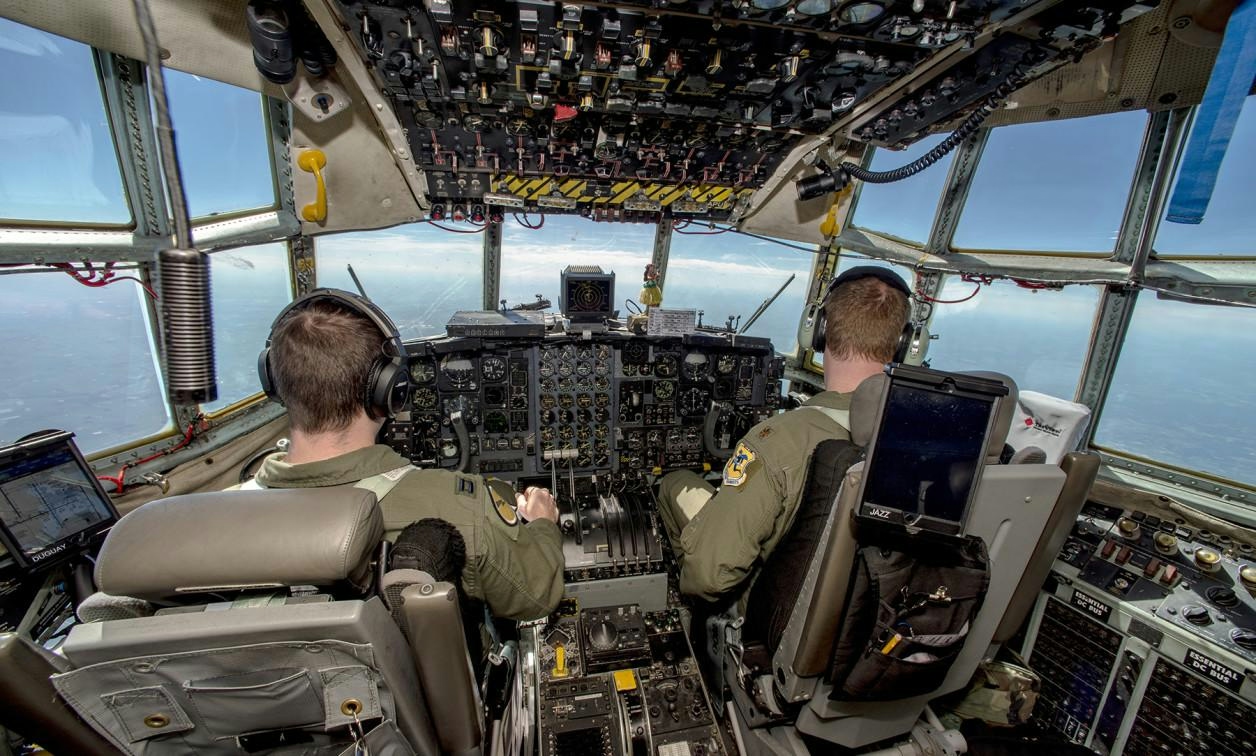
Army Aviators Adopt 3D Spatial Audio to Enhance Cockpit Communication
Advancing Situational Awareness Through Innovative Audio Technology
The U.S. Army is pioneering a significant advancement in cockpit communication with the integration of 3D spatial audio technology on two Black Hawk helicopters at the Army Aviation Center of Excellence. This development is designed to improve pilot situational awareness and operational effectiveness, aligning with the Army’s broader goals of modernization and enhanced training.
Historically, Army aviators have relied on mono-channel headsets that deliver all communications—radios, crew intercoms, and alerts—through a single audio stream. This setup requires pilots to mentally separate overlapping messages, increasing cognitive load during complex missions. The newly implemented 3D spatial audio system addresses this challenge by simulating a 360-degree sound environment, allowing pilots to perceive each communication channel as originating from a distinct direction. This approach mirrors natural human hearing, enabling pilots to prioritize messages more effectively and reduce mental strain.
Captains William Bradley and Brandon Allen, research pilots at the U.S. Army Aeromedical Research Laboratory (USAARL), have described the technology as transformative. Captain Allen noted that when managing multiple radios, the 3D spatial audio distinctly separates each channel, making it easier to identify who is speaking. Both pilots reported enhanced speech intelligibility, decreased cognitive fatigue, and improved situational awareness during demanding flight operations.
From Experimental Deployment to Operational Integration
The initiative began with the installation of 3D spatial audio on USAARL’s MEDEVAC research Black Hawk, marking the first use of this technology in a U.S. Army helicopter. Feedback and engineering evaluations from this initial deployment informed subsequent installations on additional aircraft. The recent upgrade at Lowe Army Heliport involved over 231 man-hours and two days of flight testing, reflecting a collaborative effort among USAARL, the Aviation & Missile Command, CATI Training Systems, TTM Technologies, and other partners.
Addressing Security Concerns Amidst a Competitive Technological Landscape
While the operational benefits of 3D spatial audio are clear, the technology also introduces new challenges, particularly regarding data security and privacy. The National Transportation Safety Board has expressed concerns about the potential for analytical tools to reconstruct cockpit audio from ancillary data sources, highlighting the sensitive nature of verbal communications in military aviation. This underscores the necessity for robust safeguards as audio systems become increasingly sophisticated.
The Army’s adoption of 3D spatial audio occurs within a rapidly evolving technological environment. Defense firms such as Anduril, which recently secured $5 billion in Series H funding, and consumer technology companies like Meta, with its latest Ray-Ban smart glasses, are advancing augmented reality and spatial audio capabilities. This competitive landscape is accelerating innovation but also intensifying scrutiny over data protection and user privacy.
Ongoing Evaluation and Future Prospects
Colonel Thomas Summers, commander of USAARL, emphasized the importance of iterative, user-driven development. He stated that pilots are encouraged to actively engage with the technology, providing feedback to refine and optimize its application in Army aviation. The Black Hawks equipped with 3D spatial audio are currently supporting the 1st Battalion, 212th Aviation Regiment’s Aviation Tactics Instructor Course, facilitating continued operational assessment.
Looking ahead, as the Army prepares for next-generation platforms such as the Cheyenne II (MV-75), USAARL and its partners remain committed to integrating technologies that reduce cognitive burden and enhance pilot awareness. Sustained collaboration across Army agencies will be critical to delivering advanced and secure warfighting capabilities to aviation formations.

Etihad Airways Suspends Airbus A380 Flights on Key Route

Aditya Birla Group Seeks Approval for Aircraft Leasing in GIFT City

Qatar Airways Highlights Innovation and Connectivity at Arabian Travel Market 2026

Hong Kong's Five-Year Plan Includes Andrew Fan's Aircraft Parts Processing Hub Proposal

ACIA Aero Leasing Delivers ATR72-600 to Air Nostrum

RTX Appoints Jill Albertelli as Head of Pratt & Whitney

TAT Technologies Joins Beyond Aero Hydrogen Aircraft Program

AURAK Study Highlights Barriers to Air Taxi Adoption in Emerging Economies

Xiamen Air Selects Altitude for 787 Maintenance at Heathrow

Etihad and Swissport Extend Global Partnership
