
Превращайте аналитические выводы ИИ в реальные действия

В тренде
Categories
Artificial Intelligence and the Future of Aircraft Propulsion
Artificial Intelligence and the Future of Aircraft Propulsion
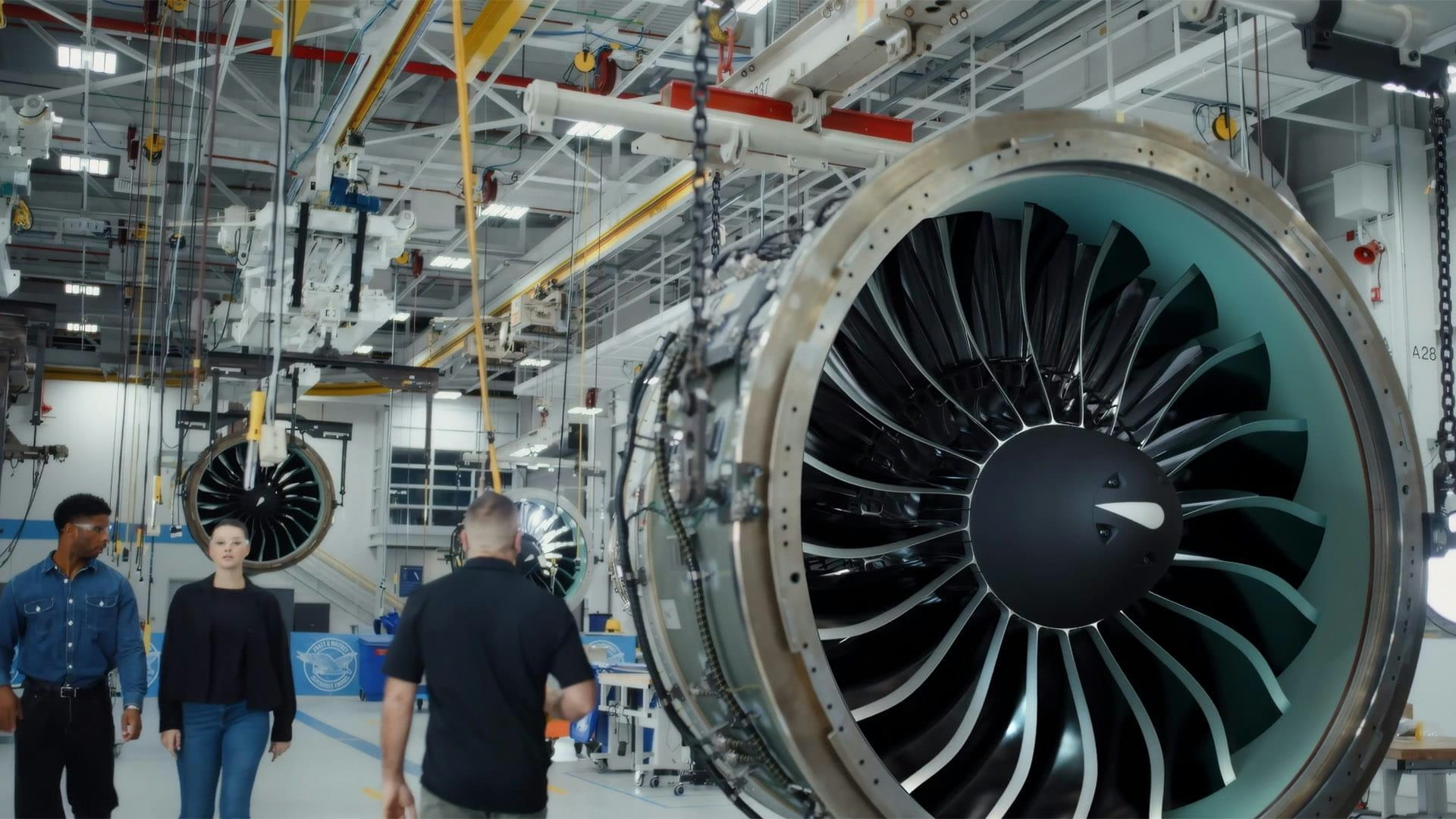
Imagine cruising thousands of feet above the Earth on a long-haul flight. While the experience may seem routine and safe, the aircraft engine powering the journey represents one of the most sophisticated machines ever constructed. Today, these engines are entering a new era—one defined by artificial intelligence (AI). This technology is transforming conventional propulsion systems into intelligent entities capable of learning, adapting, and optimizing performance in real time.
From Conventional Engines to Intelligent Systems
For decades, advancements in aircraft engines centered on enhancing thrust, fuel efficiency, and reliability through engineering innovations and materials science. Despite these improvements, engines remained largely passive, dependent on human oversight and scheduled maintenance protocols. The advent of AI is fundamentally altering this dynamic. Modern engines, outfitted with hundreds of sensors, continuously collect and analyze vast streams of operational data. This capability enables them to detect anomalies, optimize performance, and learn from each flight, marking a significant shift toward truly intelligent aviation systems.
The Role of AI in Engine Operation
Artificial intelligence empowers engines to process immense volumes of data, identify patterns, and make informed decisions autonomously. Parameters such as temperature, pressure, vibration, fuel flow, rotational speed, exhaust gas temperature, and various engine health metrics are constantly monitored. Machine learning algorithms compare real-time sensor data against millions of historical records, allowing engines to detect unusual operating conditions, predict potential failures, recommend corrective actions, and optimize performance throughout the flight. This integration of AI is transforming aircraft engines from purely mechanical devices into adaptive propulsion systems.
Predictive Maintenance and Operational Efficiency
One of the most significant applications of AI in aviation is predictive maintenance. Traditionally, airlines have relied on scheduled maintenance or reactive repairs, approaches that often result in unnecessary part replacements or costly delays. AI enables engines to monitor their own health continuously, using machine learning to predict component wear, identify hidden faults, estimate remaining service life, and schedule maintenance only when necessary. Companies such as GE Aerospace have already implemented AI-powered engine health monitoring across global fleets, yielding reduced operational costs, minimized downtime, and enhanced aircraft availability.
Enhancing Fuel Efficiency and Environmental Sustainability
Fuel consumption remains one of the largest expenses and environmental challenges in aviation. AI contributes to addressing these issues by enabling engines to make intelligent adjustments during every phase of flight. By optimizing fuel-air mixtures, combustion efficiency, and other engine parameters, AI systems help reduce fuel consumption and emissions. This not only lowers operational costs for airlines but also supports broader efforts to achieve greener skies.
Challenges and Market Dynamics
Despite the promising advances, the integration of AI into aircraft propulsion faces considerable challenges. The industry must navigate physical infrastructure limitations and power constraints as it moves beyond initial returns on investment. Market responses have been mixed, with aerospace and technology stocks experiencing volatility amid skepticism regarding the sustainability of AI-related expenditures. Economic pressures and tightening IT budgets have contributed to doubts about the continuation of rapid gains in this sector.
Industry competitors are adopting varied strategies in response. Some emphasize AI’s potential to create new jobs, while others advocate for strategic investments to maintain competitive advantage. As the aerospace sector contends with these economic and operational headwinds, the incorporation of AI into aircraft propulsion remains a transformative development—one that promises smarter, safer, and more efficient flight in the years ahead.

Etihad and Swissport Extend Global Partnership

Sepehran Airlines B737 Returns to Mashhad After Tyre and Engine Issues

Etihad Deploys Widebody Fleet to Meet Strong Demand

Korean Air Finalizes $36.2 Billion Deal with Boeing

Australia’s RFDS Queensland Section Orders Six King Air 260Cs

Korean Air Finalizes Order for 103 Boeing Jets and Engines

Embraer E195-E2 Features Distinctive Engine Placement Among Regional Jets

What Passengers Can Expect on Boeing’s New 777X Jet

How Ethiopian Airlines Became Africa’s Leading Carrier Amid Gulf Competition

Joby Aviation Extends Autonomous Flight Capabilities with Cross-Country Tour
