
Превращайте аналитические выводы ИИ в реальные действия

В тренде
Categories
Ascendance and Airbus Collaborate to Advance Hybrid-Electric Aviation Technology
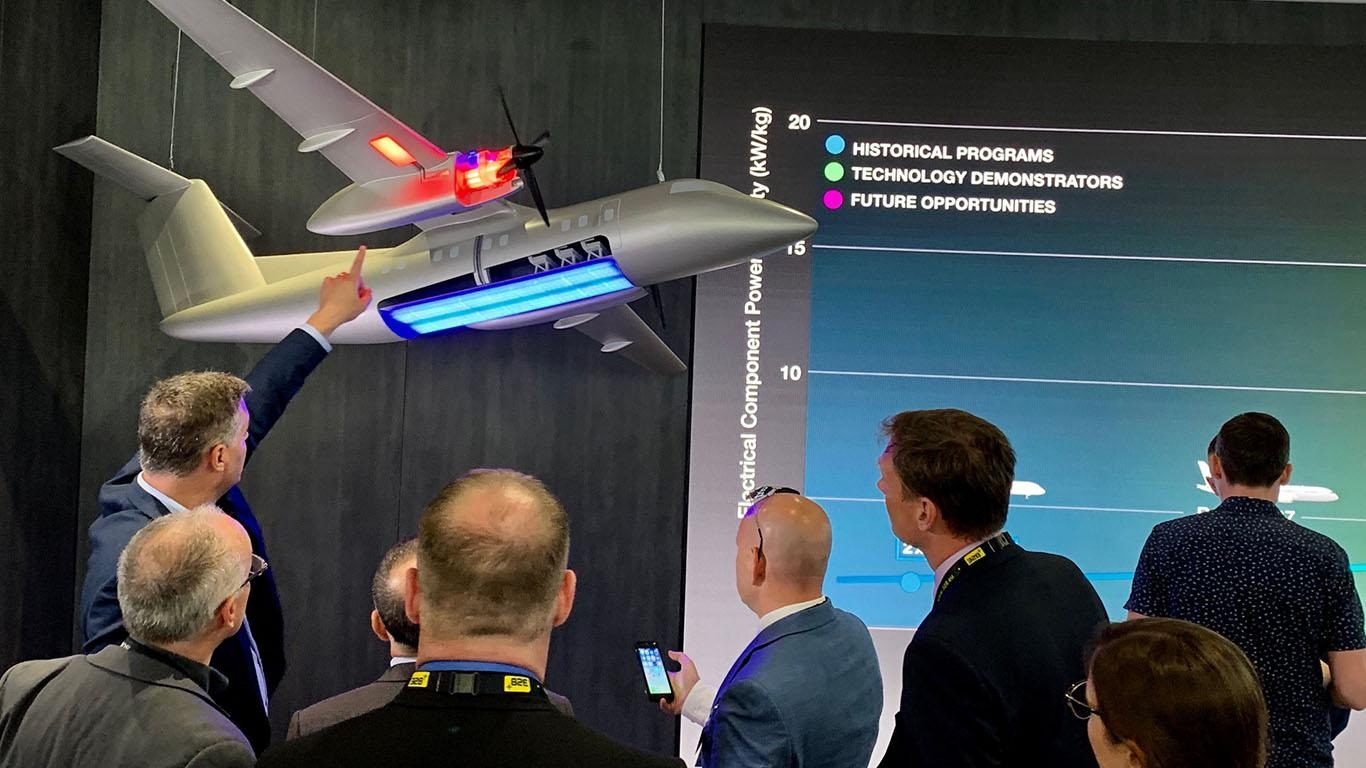
Ascendance and Airbus Collaborate to Advance Hybrid-Electric Aviation Technology
Strategic Partnership to Accelerate Decarbonization
Ascendance, a leading innovator in hybrid-electric aviation since 2018, has entered into a strategic partnership with Airbus to jointly develop advanced hybrid-electric propulsion technologies. This collaboration highlights both companies’ dedication to creating practical, low-carbon propulsion systems aimed at accelerating the aviation sector’s transition toward sustainability. By combining Ascendance’s expertise in modular and certifiable hybrid-electric systems with Airbus’s industrial capabilities and global presence, the partnership seeks to deliver propulsion solutions that comply with stringent aviation certification standards while significantly reducing emissions.
Jean-Christophe Lambert, CEO and co-founder of Ascendance, emphasized the significance of the alliance, stating that it validates their vision of providing realistic and practical technology tailored to the demands of modern aviation. He described the partnership as a pivotal step toward making cleaner and more accessible air travel a tangible reality. Karim Mokaddem, head of Aircraft of Tomorrow Technologies at Airbus, echoed this sentiment, praising Ascendance’s innovative yet pragmatic approach. Mokaddem highlighted the company’s ability to transform disruptive concepts into certifiable, real-world applications as a valuable asset in advancing aviation’s energy transition. He further noted that the collaboration aligns closely with Airbus’s decarbonization roadmap and its broader ambition to shape the future of flight.
Challenges and Industry Context
Despite the promising outlook, the development of hybrid-electric aviation technology faces significant challenges. The partnership must navigate complex regulatory frameworks, integrate new technologies seamlessly, and contend with a competitive market environment. Industry experts caution that traditional aviation stakeholders may remain skeptical of hybrid-electric solutions due to their nascent stage and the rigorous safety and certification requirements inherent to the sector.
This collaboration emerges amid a wider industry movement toward hybrid-electric propulsion. Competitors such as XTI Aerospace and VerdeGo Aero have intensified their research and development efforts, while Vertical Aerospace is advancing a hybrid-electric variant of its VX4 EVTOL aircraft. Additionally, Maeve has redesigned its regional aircraft to incorporate hybrid-electric systems, aiming to replace conventional regional jets. These developments underscore a growing consensus that hybrid-electric technology will play a crucial role in the future of aviation, intensifying competition among innovators.
As Ascendance and Airbus progress with their joint efforts, their partnership will be closely observed as a potential catalyst for innovation and a benchmark for the viability of hybrid-electric solutions in commercial aviation. The success of this endeavor will depend not only on technological advancements but also on securing certification, integrating new systems within existing aviation infrastructure, and persuading a cautious market of the benefits offered by hybrid-electric flight.

Etihad Airways Suspends Airbus A380 Flights on Key Route

Aditya Birla Group Seeks Approval for Aircraft Leasing in GIFT City

Qatar Airways Highlights Innovation and Connectivity at Arabian Travel Market 2026

Hong Kong's Five-Year Plan Includes Andrew Fan's Aircraft Parts Processing Hub Proposal

ACIA Aero Leasing Delivers ATR72-600 to Air Nostrum

RTX Appoints Jill Albertelli as Head of Pratt & Whitney

TAT Technologies Joins Beyond Aero Hydrogen Aircraft Program

AURAK Study Highlights Barriers to Air Taxi Adoption in Emerging Economies

Xiamen Air Selects Altitude for 787 Maintenance at Heathrow

Etihad and Swissport Extend Global Partnership
