
Превращайте аналитические выводы ИИ в реальные действия

В тренде
Categories
Autonomous Drone Race in Abu Dhabi Highlights Advances in AI Pilot Technology
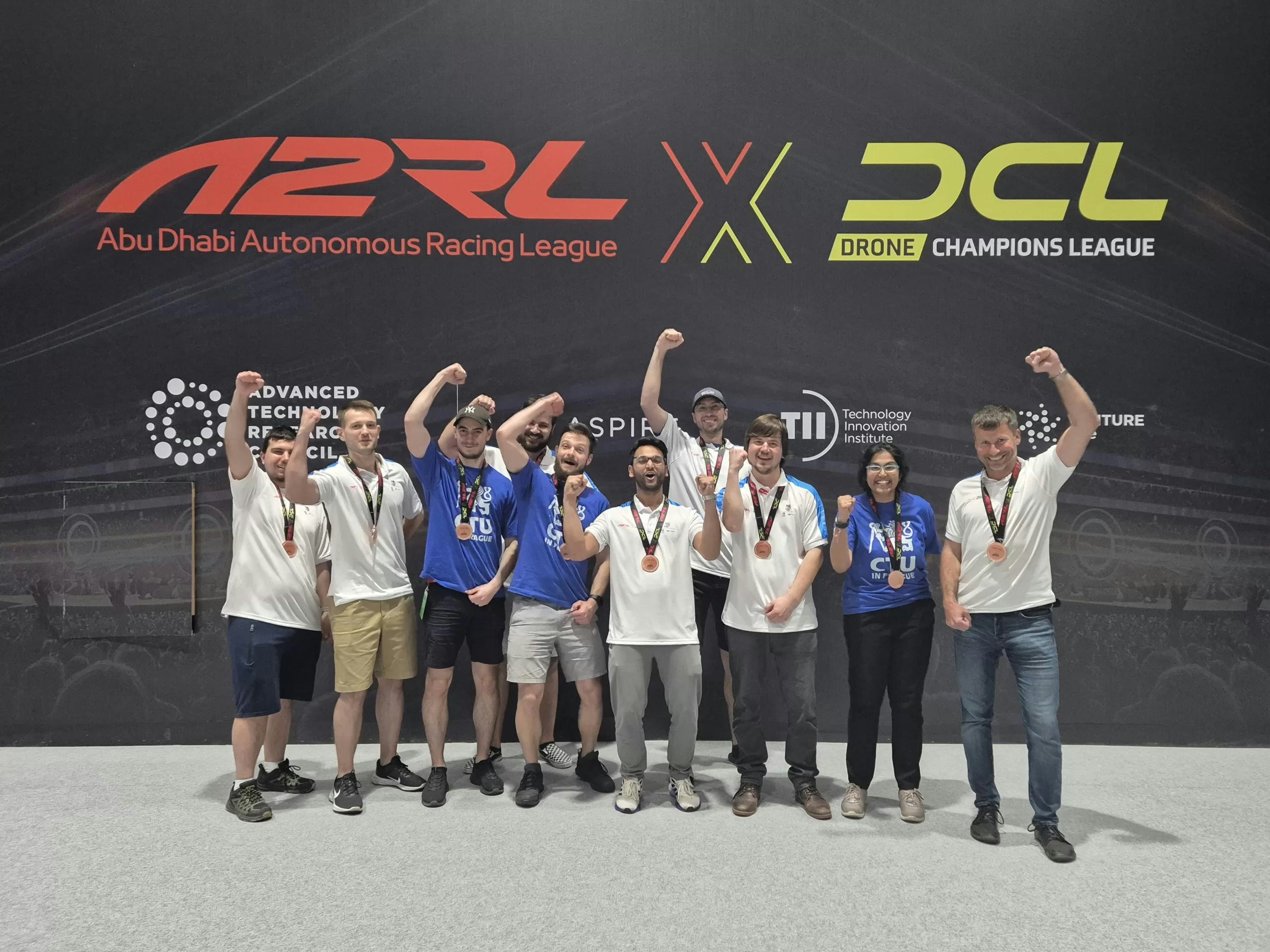
Autonomous Drone Race in Abu Dhabi Highlights Advances in AI Pilot Technology
A Tense Showdown Between Human and Machine
In a gripping contest held at Abu Dhabi’s race arena, the future of autonomous flight was dramatically underscored by a narrow victory for human intuition over artificial intelligence. The final race of the A2RL Drone Championship saw Minchan Kim, the world champion first-person-view (FPV) drone pilot, edge out an AI-controlled drone after the machine clipped a gate and failed to recover. With the competition tied at four races apiece, Kim’s experience and instinct ultimately prevailed in a contest that pitted human skill against cutting-edge AI technology.
The championship, held on January 21-22 during the UMEX event and organized by ASPIRE under the Advanced Technology Research Council, was more than a mere spectacle. It functioned as a rigorous real-world testing ground for the latest developments in AI pilot systems. Elite FPV pilots and leading AI research teams competed across various race formats, pushing the boundaries of both human and machine capabilities.
Testing AI Under Realistic Constraints
The event’s $600,000 prize pool reflected the high stakes involved, but for many participants, the primary objective was to gather valuable data and validate their technologies in a domain where milliseconds can determine outcomes. The competition imposed strict limitations on drone sensors: GPS, LiDAR, stereo cameras, and external positioning systems were prohibited. Instead, each drone relied solely on a single forward-facing RGB camera paired with an inertial measurement unit. This constraint closely mirrored the sensory input available to human pilots, ensuring that performance improvements were driven predominantly by software innovation rather than hardware advantages.
This approach yielded impressive results, particularly in the AI Speed Challenge, where TII Racing’s autonomous drone recorded the fastest lap of the championship at 12.032 seconds. Giovanni Pau, technical director at TII Racing, attributed this success to disciplined software development and extensive testing, highlighting the increasing sophistication of AI-driven flight systems.
The Human Advantage in FPV Piloting
FPV drone pilots operate their machines through live video feeds transmitted directly to goggles, providing an immersive, real-time perspective that enables precise control and rapid decision-making. These skills remain challenging for AI to replicate fully, as evidenced by the championship’s final race outcome. The human capacity for intuition and adaptability continues to offer a competitive edge in the fast-paced, dynamic environment of drone racing.
Industry Implications and Future Prospects
Beyond the competition itself, the Abu Dhabi event illuminated broader challenges and opportunities facing autonomous flight technology. Regulatory frameworks and safety concerns remain significant obstacles as AI-piloted drones approach real-world applications. The demonstrated success of AI systems in high-profile competitions like the A2RL Drone Championship may positively influence market sentiment, potentially accelerating investment in AI-driven technologies and supporting forthcoming initial public offerings from companies such as Anthropic and OpenAI.
Industry leaders and competitors, including firms like Anduril and SpaceX, are expected to intensify their research and development efforts to maintain a competitive edge in autonomous systems. As the market evaluates the viability and potential of AI pilots, the outcomes of events like this championship will play a crucial role in shaping the trajectory of innovation and investment within the autonomous technology sector.

Etihad Airways Suspends Airbus A380 Flights on Key Route

Aditya Birla Group Seeks Approval for Aircraft Leasing in GIFT City

Qatar Airways Highlights Innovation and Connectivity at Arabian Travel Market 2026

Hong Kong's Five-Year Plan Includes Andrew Fan's Aircraft Parts Processing Hub Proposal

ACIA Aero Leasing Delivers ATR72-600 to Air Nostrum

RTX Appoints Jill Albertelli as Head of Pratt & Whitney

TAT Technologies Joins Beyond Aero Hydrogen Aircraft Program

AURAK Study Highlights Barriers to Air Taxi Adoption in Emerging Economies

Xiamen Air Selects Altitude for 787 Maintenance at Heathrow

Etihad and Swissport Extend Global Partnership
